Fiat

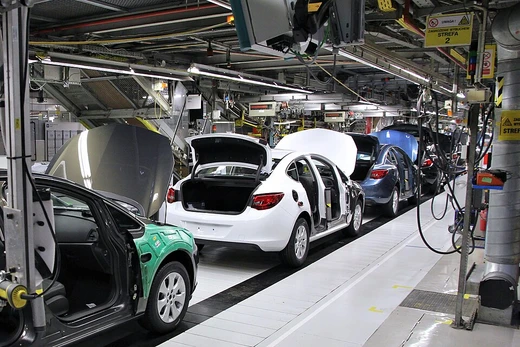
FIAT Automobiles S.p.A., the Italian carmaker commonly called FIAT, became a subsidiary of Stellantis in 2021 after its parent, Fiat Chrysler Automobiles, merged with French Peugeot SA. The company itself was created in January 2007 during a reorganization of the FIAT Group, but its roots go back to 1899, when the first FIAT—the 3½ HP—rolled out. It joined forces with Chrysler in 2014 to form FCA. FIAT remains Italy’s biggest car manufacturer. For more than twenty years, until the late-1980s industry slump, it was Europe’s largest automaker and ranked third globally, behind General Motors and Ford. In 2013, FIAT was the second-largest European producer by volume and seventh worldwide, while FCA held eighth place globally. At its peak in 1970, FIAT employed over 100,000 people in Italy and built 1.4 million cars there. By 2002, it still produced more than one million vehicles annually across six Italian plants, which generated over a third of its revenue. Beyond cars, FIAT has made railway engines, military vehicles, farm tractors, aircraft, and weapons like the FIAT-Revelli Modello 1914. FIAT-brand cars are assembled in several countries; outside Italy, Brazil is the biggest production hub and was the market leader there for years. Other factories operate in Argentina, Poland, and Mexico—the last of which builds FIATs for export to the United States, Brazil, Italy, and elsewhere. FIAT has also long licensed its designs for manufacture abroad. The company has won nine European Car of the Year awards, more than any other manufacturer, and has frequently ranked lowest in CO2 emissions among vehicles sold in Europe.
- field
- Automobile manufacturing
- nationality
- Italian
- known_for
- Largest automobile manufacturer in Italy; nine European Car of the Year awards;
Verified Timeline
Lore & Background
On 11 July 1899, Giovanni Agnelli was part of the group of founding members of FIAT, Fabbrica Italiana Automobili Torino. The first FIAT plant opened in 1900 with 35 staff making 24 cars. By 1903 Fiat made a small profit and produced 135 cars; this grew to 1,149 cars by 1906. Its first car, the 3 ½ HP, had a 697 cc boxer twin engine. In 1903, FIAT produced its first truck. In 1908, the first FIAT was exported to the US and the first FIAT aircraft engine was produced. By 1910, FIAT was the largest automotive company in Italy. During World War I, FIAT devoted all its factories to supplying the Allies with aircraft, engines, machine guns, trucks, and ambulances. After the war, FIAT introduced its first tractor, the 702. By the early 1920s, FIAT had a market share in Italy of 80%. In 1922, FIAT began to build the Lingotto car factory—then the largest in Europe—which opened in 1923. By 1925, FIAT controlled 87% of the Italian car market. FIAT made military machinery and vehicles during World War II for the Army and Regia Aeronautica and later for the Germans, including fighter aircraft like the biplane CR.42 Falco and the G.55 fighter. In 1970, FIAT employed more than 100,000 in Italy when its production reached the highest number, 1.4 million cars. As of 2002, FIAT built more than 1 million vehicles at six plants in Italy. In 2013, FIAT was the second-largest European automaker by volumes produced and the seventh in the world.
Reader's Guide
FIAT's significance lies in its long history as a dominant force in European and global automobile manufacturing. It was the largest automaker in Italy and for over two decades held the top spot in Europe and third worldwide. FIAT has received many international awards, including nine European Car of the Year awards, the most of any other manufacturer, and it ranked many times as the lowest level of CO2 emissions by vehicles sold in Europe. FIAT-brand cars are built in several locations around the world; outside Italy, the largest country of production is Brazil, where the FIAT brand was the market leader for many years. The group also has factories in Argentina, Poland and Mexico. FIAT has also manufactured railway engines, military vehicles, farm tractors, aircraft, and weapons such as the FIAT-Revelli Modello 1914. Its merger with Chrysler in 2014 and subsequent incorporation into Stellantis in 2021 reflect the consolidation trends in the global auto industry.
Did You Know?
- The first FIAT automobile, the 3½ HP, had a 697 cc boxer twin engine and only 24 copies were built.
- By 1910, FIAT was the largest automotive company in Italy, and by 1925 it controlled 87% of the Italian car market.
- During World War I, FIAT devoted all its factories to supplying the Allies with aircraft, engines, machine guns, trucks, and ambulances.
- FIAT has won nine European Car of the Year awards, the most of any manufacturer.
- In 1970, FIAT employed more than 100,000 people in Italy and produced 1.4 million cars, its highest production number in that country.
Frequently Asked Questions
How big was Fiat at its peak?
At its height, Fiat was the largest carmaker in Italy, the largest in all of Europe, and ranked third globally behind only General Motors and Ford. That top-tier position lasted for over twenty years until the late-1980s crisis.
What happened to Fiat after 2014?
In 2014, Fiat merged with Chrysler to form Fiat Chrysler Automobiles (FCA). By 2021 it became a subsidiary of the newly created Stellantis group, ending its era as a standalone brand.
What is Fiat most known for?
Beyond its sheer production scale, Fiat has collected nine European Car of the Year awards and spent many years leading the continent in lowest CO2 emissions per vehicle. These achievements cemented its reputation for efficient, accessible design.
Why does Fiat matter in automotive history?
As one of the oldest continuously operating car brands, Fiat shaped European motoring culture from the late 19th century onward. Its rise to the top of the global market and later restructuring into Stellantis illustrate the full arc of 20th- and 21st-century auto-industry consolidation.
More in Automotive Industry 1-22
Spotted an error? Know more?
This is a living reference — every entry is fact-audited, and reader corrections feed straight into our audit queue. Suggest an edit · See this site's audit record