Toyota
Japanese automaker; world's largest vehicle producer.

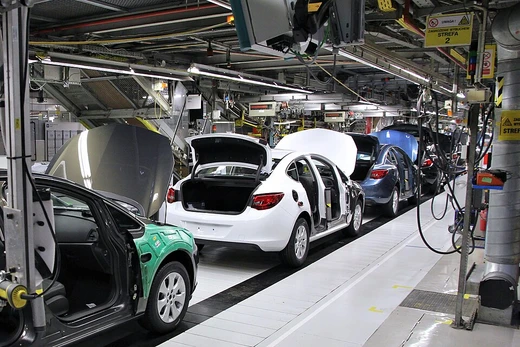
Toyota Motor Corporation, a Japanese multinational automaker, is based in Toyota City, Aichi, Japan. Kiichiro Toyoda founded the company, which was officially incorporated on August 28, 1937. It now holds the title of the world’s largest car manufacturer, churning out roughly 10 million vehicles annually.
The business began as a spinoff from Toyota Industries, a machinery company founded by Kiichiro’s father, Sakichi Toyoda. Both firms are now part of the Toyota Group, a major global conglomerate. While still a division of Toyota Industries, the team developed its first product—the Type A engine—in 1934, followed by its first passenger car, the Toyota AA, in 1936.
During the 1960s, Toyota capitalized on Japan’s booming economy, selling cars to a growing middle class. This led to the Toyota Corolla, which became the best-selling car of all time. The economic surge also funded international expansion, turning Toyota into one of the world’s largest automakers, Japan’s biggest company, and the ninth-largest globally by revenue. In 2012, it became the first automaker to produce over 10 million vehicles in a single year, also marking its 200 millionth vehicle. By September 2023, total production had hit 300 million vehicles. Toyota Motor Corporation’s market capitalization stands at roughly US$259.7 billion, making it one of the largest car manufacturers by that measure.
Toyota earned praise as a pioneer in fuel-efficient hybrid electric vehicles, starting with the original Prius in 1997. It now sells over 40 hybrid models worldwide. More recently, it has faced criticism for being slow to adopt all-electric cars, instead pushing hydrogen fuel cell vehicles like the Mirai—a technology that remains costly and has lagged far behind battery-electric adoption.
Today, Toyota Motor Corporation sells vehicles under four brands: Century, Daihatsu, Lexus, and Toyota itself. It also holds stakes in several other companies: 25% of Archion, 20% of Subaru Corporation, 5.1% of Mazda, 4.9% of Suzuki, 4.6% of Isuzu, and 3.8% of Yamaha Motor Corporation. Additionally, it has joint-venture manufacturing operations in China (FAW Toyota and GAC Toyota), the Czech Republic (TPCA), India (Toyota Kirloskar), and the United States (MTMUS).
Toyota is listed on the London, Nagoya, New York, and Tokyo stock exchanges. On the Tokyo exchange, its stock is part of the Nikkei 225 and TOPIX Core30 indices.
**History**
**1920s–1930s**
In 1924, Sakichi Toyoda invented the Toyoda Model G Automatic loom. Its principle of jidoka—where the machine stops itself when a problem occurs—later became a cornerstone of the Toyota Production System. These looms were built on a small production line. In 1929, the patent for the automatic loom was sold to the British firm Platt Brothers, providing the seed money for automobile development.
Under Kiichiro Toyoda’s direction, Toyoda Automatic Loom Works set up an Automobile Division on September 1, 1933, and formally announced its intent to manufacture cars on January 29, 1934. A prototype Type A engine was finished on September 25, 1934, and the first sedan prototype, the A1, was completed the following May. However, the government prioritized truck production, so the company focused on the G1 truck. Completed on August 25, 1935, the G1 debuted in Tokyo on November 21, becoming the company’s first production model. Based on a period Ford truck, its chassis sold for ¥2,900—¥200 less than Ford’s version. A total of 379 G1 trucks were built.
In April 1936, Toyoda’s first passenger car, the Model AA, was finished, priced at ¥3,350—¥400 cheaper than Ford or GM cars. The Kariya plant was completed in May. That July, the company filled its first export order: four G1 trucks sent to northeastern China. On September 19, 1936, the Japanese imperial government officially recognized Toyoda Automatic Loom Works as an automotive manufacturer.
Vehicles were originally sold under the name “Toyoda,” derived from the founder’s family name. In September 1936, the company held a public contest for a new logo. Out of 27,000 entries, the winner featured the three Japanese katakana letters for “Toyoda” inside a circle. But Rizaburo Toyoda—who married into the family and was not born with that surname—preferred “Toyota.” He argued it took eight brush strokes (a lucky number) to write in Japanese, was visually simpler (dropping the diacritic at the end), and used a voiceless consonant instead of a voiced one (voiced consonants are considered “murky” or “muddy,” while voiceless ones are “clear”). Since “toyoda” literally means “fertile rice paddies,” the change also avoided any association with old-fashioned farming. The new word was trademarked, and on August 28, 1937, the company began trading as Toyota Motor Company Ltd. Rizaburo Toyoda became the first president, with Kiichiro as vice-president. Toyota Automatic Loom Works formally transferred its automobile manufacturing to the new entity on September 29. The company’s founding is celebrated every November 3, marking the inauguration of the Koromo Plant on that date.
- field
- Automotive manufacturing
- nationality
- Japanese
- known_for
- Largest automobile manufacturer in the world; pioneer of hybrid electric vehicles; Toyota Production System
- founder
- Kiichiro Toyoda
- headquarters
- Toyota City, Aichi, Japan
Lore & Background
The patent for the automatic loom was sold in 1929, providing capital for automobile development. The company was formally incorporated as Toyota Motor Company Ltd. During World War II, Toyota produced standard-sized trucks for the Japanese Army. After the war, U.S.-led occupying forces initially banned passenger car production, but allowed truck production for civilian rebuilding. The Korean War brought an order for 1,000 trucks from the U.S. Army, which improved the company's finances. manufacturers, leading to The Toyota Way and the Toyota Production System. In the 1960s, Toyota leveraged Japan's growing economy to sell cars to the middle class, leading to the Toyota Corolla, the best-selling automobile of all time. International expansion followed. The company has been criticized for slow adoption of all-electric vehicles, focusing instead on hydrogen fuel cell vehicles like the Mirai. As of 2026, Toyota produces vehicles under four brands: Century, Daihatsu, Lexus, and Toyota.
Reader's Guide
Toyota’s significance stems from its evolution from a loom-making enterprise into the world’s largest automobile manufacturer, a status built on manufacturing and product innovations. The company’s production system, rooted in the jidoka principle—where machinery halts automatically upon detecting a problem—became a global standard for lean manufacturing. This approach, combined with the development of the Corolla, the best-selling car of all time, cemented Toyota’s reputation for quality and efficiency. Ecologically, Toyota pioneered the mass adoption of hybrid electric vehicles, beginning with the Prius in 1997, and now offers over 40 hybrid models worldwide. However, the company has faced criticism for its slow transition to all-electric vehicles, instead investing heavily in hydrogen fuel cell technology, as seen with the Mirai, which has struggled with higher costs and lower adoption than battery-electric alternatives. Toyota’s behavior in the market includes strategic partnerships and joint ventures across China, India, the Czech Republic, and the United States, as well as stakes in Subaru, Mazda, Suzuki, Isuzu, and Yamaha Motor. The company produces vehicles under four brands—Toyota, Lexus, Daihatsu, and Century—and its stock is listed on major exchanges including the Tokyo, New York, and London exchanges. Its history, from the 1934 Type A engine to producing over 300 million vehicles by 2023, illustrates a sustained impact on automotive engineering, global supply chains, and the shift toward more fuel-efficient transportation.
Did You Know?
- Toyota was originally named 'Toyoda' but changed to 'Toyota' because the new name required eight brush strokes, considered a lucky number in Japanese.
- Toyota was the world's first automobile manufacturer to produce more than 10 million vehicles per year, a record set in 2012.
From Steam Buses to Military Trucks — The Humble Beginnings
The Japanese automotive story did not start with sleek sedans. In 1904, Torao Yamaba rolled out the first domestically built bus, powered not by gasoline but by a steam engine. A decade later, Kaishinsha Motorcar Works was producing a vehicle called the DAT, and by 1920, William R. Gorham's Jitsuyo Jidosha Seizo Co. was assembling the Gorham and Lila. Yet passenger cars remained a niche; the real demand came from trucks, especially as the military buildup before World War II pulled manufacturers out of their shells. Toyota itself, originally a textile company, did not begin building cars until 1936. Most pre-war Japanese vehicles were essentially copies of European or American designs — Mitsubishi's 1917 Model A traced its lineage to Fiat's A3-3, Nissan's 1930s cars drew on Austin 7 and Graham-Paige blueprints, and Toyota's AA model mirrored the Chrysler Airflow. The 1923 Great Kantō earthquake further disrupted the fledgling industry, and between 1925 and 1936, American giants Ford, GM, and Chrysler produced nearly 209,000 vehicles in Japan while domestic makers managed only about 12,000.
Overtaking the World — The Production Ascent
For much of the early twentieth century, Japan's auto sector was a shadow of the American and European industries it admired. That changed dramatically after the war. From the 1970s through the 1990s, Japanese output surged as manufacturers oriented production for both home consumption and worldwide export. By the 1980s and 1990s, Japan had displaced the United States as the world's leading automobile producer, churning out as many as 13 million vehicles annually and shipping significant volumes abroad. Japan had held a top-three manufacturing position since the 1960s, having already surpassed Germany, but the 1980s marked the true leap. A key technological edge came in the 1970s, when Japanese plants became pioneers in deploying robotics on the assembly line, a move that boosted both speed and consistency. After China's massive ramp-up in the 2000s and fluctuating American output, Japan settled into the third-largest producer role, with 9.9 million automobiles built in 2012. Yet the legacy of that peak era — the infrastructure, the workforce, the export networks — continued to shape the industry's global footprint.
Erasing the Stigma — Quality as a Philosophy
When Japanese cars first appeared on international roads in the 1950s and 1960s, they carried a reputation for cheapness and unreliability. That image was dismantled not by a single breakthrough but by a sustained, almost obsessive commitment to improvement. Toyota led the charge, embedding a culture of continual product and process refinement that extended to the Five Whys root-cause technique and early adoption of Lean Six Sigma methodology. The results were visible in award showrooms: cars designed in Japan went on to win the European Car of the Year, International Car of the Year, and World Car of the Year titles repeatedly. Domestically, the regulatory environment reinforced this discipline. Japanese Government dimension regulations constrained vehicle size, and engine displacement was further limited by road-tax bracket rules — constraints that applied equally to imported cars sold in Japan. These rules pushed engineers to extract maximum performance and efficiency from smaller, more compact platforms, a design philosophy that would later resonate with global buyers seeking fuel economy without sacrificing driving character.
A National Ecosystem and Global Reach
Japan's automotive strength is not the story of a single company but of an entire industrial ecosystem. The country is home to manufacturers spanning cars, construction vehicles, motorcycles, ATVs, and engines — Toyota, Honda, Daihatsu, Nissan, Suzuki, Mazda, Mitsubishi, Subaru, Isuzu, Hino, Kawasaki, Yamaha, and Mitsuoka all operate within its borders. At the luxury tier, Toyota fields Lexus and Century, Honda offers Acura, and Nissan markets Infiniti, giving each parent a premium voice in global markets. Beyond its own shores, Japanese capital and expertise helped seed auto industries in numerous other countries over the last few decades, creating a web of overseas plants and supply chains that amplified the sector's influence. The early days of licensed production — Isuzu building Wolseley designs, Nissan assembling Austin cars, Mitsubishi adapting Fiat's Tipo 3 — laid the groundwork for a generation of engineers who would later design original vehicles. That trajectory, from imitating European and American blueprints to setting the global benchmark for manufacturing excellence, remains the defining arc of Japanese automotive history.
Frequently Asked Questions
How big is Toyota's production output?
Toyota manufactures roughly ten million vehicles each year, making it the first automaker in history to cross that annual production threshold. This scale solidifies its position as the global leader in automobile manufacturing.
Where is Toyota based?
Toyota's global headquarters sits in Toyota City, Aichi Prefecture, Japan. The city itself was named after the company, reflecting how central the automaker is to that region's identity.
More in Automotive Industry 1-22
Spotted an error? Know more?
This is a living reference — every entry is fact-audited, and reader corrections feed straight into our audit queue. Suggest an edit · See this site's audit record