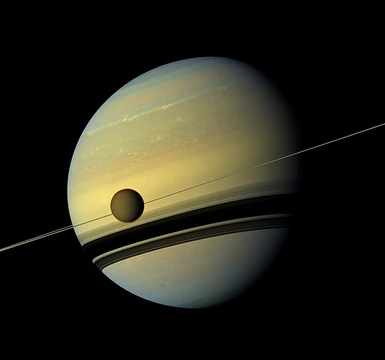
Cosmic ray
High-energy particles from space, discovered via balloon flights in 1912.

Vahram Mekhitarian · CC BY-SA 4.0
Cosmic rays, or astroparticles, are fast-moving particles—mostly protons and atomic nuclei—that zip through space at close to the speed of light. They come from beyond the Solar System: from the Milky Way, other galaxies, and the Sun. When they hit Earth’s atmosphere, they trigger cascades of secondary particles. Most of these are either pushed away by Earth’s magnetic field (the magnetosphere) or by the heliosphere, though some reach the ground. Victor Hess discovered cosmic rays in 1912 using balloon experiments, a feat that earned him the 1936 Nobel Prize in Physics.
The term “ray” stuck from an early assumption that cosmic rays were a form of electromagnetic radiation, like light. Even after scientists realized they were mostly massive particles, the name remained—consistent with other historical terms like cathode rays or alpha rays. Photons from cosmic sources, being massless, are instead called gamma rays or X-rays depending on their energy.
About 99% of primary cosmic rays—those arriving from outside the atmosphere—are bare atomic nuclei (stripped of electrons), and 1% are solitary electrons. Among the nuclei, roughly 90% are simple protons (hydrogen nuclei), 9% are alpha particles (helium nuclei), and 1% are heavier nuclei, known as HZE ions. These proportions shift with energy. A tiny fraction consists of stable antimatter particles, like positrons or antiprotons; as of 2019, searches for anti-alpha particles from orbit had turned up no clear evidence.
When primary cosmic rays slam into the atmosphere, they shatter atoms, producing many pions and muons (muons come from charged pions, which decay quickly), plus neutrinos. The neutron share of the resulting particle shower grows at lower altitudes, making up 40% to 80% of radiation at airplane cruising heights. Secondary cosmic rays include charged pions that decay into muons; these muons barely interact with matter and can zip through the atmosphere and even underground. About one muon passes through a head-sized volume every second. Along with natural local radioactivity, these muons cause the ground-level atmospheric ionization that first piqued scientists’ curiosity, leading to the discovery of primary cosmic rays.
Cosmic rays are practically important because they damage microelectronics and pose risks to life outside a protective atmosphere and magnetic field. Scientifically, they’re fascinating because the most energetic ultra-high-energy cosmic rays can reach energies near 3 × 10²⁰ eV—over 10 million times the design energy of particles in the Large Hadron Collider (7 TeV). Such extreme energies might come from a centrifugal acceleration mechanism in active galactic nuclei. The highest-energy cosmic ray ever recorded, the OMG particle in 1991, packed about 50 joules—comparable to the kinetic energy of a baseball thrown at 90 km/h (56 mph). Most cosmic rays, however, are far less energetic; their energy distribution peaks around 300 MeV.
After Henri Becquerel discovered radioactivity in 1896, scientists thought atmospheric electricity came only from radioactive elements in the ground or radon gases. Measurements from 1900 to 1910 showed ionization rates rising with altitude, which was explained as absorption of radiation by the air. In 1909, Theodor Wulf built an electrometer to measure ion production in a sealed container and found higher radiation atop the Eiffel Tower than at its base, though his results weren’t widely accepted. In 1911, Domenico Pacini observed that ionization rates varied similarly over a lake, the sea, and 3 meters underwater, concluding that some ionization must come from sources other than Earth’s radioactivity. Then, in 1912, Victor Hess took three improved Wulf electrometers on balloon flights, confirming the extraterrestrial origin of this radiation.
Direct measurements of cosmic rays, especially at lower energies, became possible with the first satellites in the late 1950s. Particle detectors like those used in nuclear and high-energy physics now fly on satellites and space probes. Data from the Fermi Space Telescope in 2013 suggested that a significant fraction of primary cosmic rays come from supernova explosions. Observations of neutrinos and gamma rays from the blazar TXS 0506+056 in 2018 indicated that active galactic nuclei also produce cosmic rays.
- discovered_by
- Victor Hess
- year_discovered
- 1912
- primary_composition
- About 99% bare atomic nuclei (90% protons, 9% alpha particles, 1% heavier nuclei) and 1% solitary electrons
- typical_energy_peak
- 300 megaelectronvolts (MeV)
Lore & Background
Cosmic rays are high-energy particles or clusters of particles, primarily protons or atomic nuclei, that travel through space at nearly the speed of light. They originate from outside the Solar System, including the Milky Way, distant galaxies, and the Sun. Upon striking Earth’s atmosphere, they produce showers of secondary particles; while most are deflected into space by the magnetosphere or heliosphere, some secondary particles reach the surface. The term "ray" arose from an initial belief that they were mostly electromagnetic radiation, but they are now understood as particles with intrinsic mass, distinct from massless cosmic ray photons like gamma rays. Primary cosmic rays are about 99% bare atomic nuclei (stripped of electrons) and 1% solitary electrons. Of the nuclei, roughly 90% are protons, 9% are alpha particles, and 1% are heavier nuclei (HZE ions). A very small fraction are antimatter particles such as positrons or antiprotons. When primary cosmic rays hit the atmosphere, they produce pions, muons (from charged pion decay), and neutrinos. Muons do not interact strongly with matter and can penetrate below ground; about one muon per second passes through a volume the size of a human head. These muons, along with natural radioactivity, cause ground-level atmospheric ionization. The energy distribution of cosmic rays peaks at 300 MeV, but the most energetic ultra-high-energy cosmic rays approach energies over 10 million times that of particles accelerated by the Large Hadron Collider. Such extreme energies may be achieved by centrifugal acceleration in active galactic nuclei. The highest-energy cosmic ray recorded, the OMG particle in 1991, had an energy comparable to the kinetic energy of a 90 kph baseball.
Reader's Guide
Cosmic rays are central to understanding high-energy astrophysics and the origins of matter in the universe. Their discovery overturned the belief that atmospheric ionization was solely Earth-bound, revealing a constant influx of particles from beyond the Solar System. The term 'cosmic ray' was coined by Robert Millikan in the 1920s, who initially thought they were gamma rays, but experiments by Jacob Clay (1927) showing intensity variations with latitude, and by Bothe and Kolhörster (1929) detecting charged particles penetrating gold, proved they are charged particles. Direct measurement became possible with satellites in the late 1950s. Cosmic rays damage microelectronics and pose risks to life beyond Earth's protection, while their highest energies—approaching 3 × 10^20 eV—challenge known acceleration mechanisms, possibly involving active galactic nuclei.
Did You Know?
- Victor Hess discovered cosmic rays in 1912 during a balloon flight to 5,300 meters, finding ionization twice that at ground level.
- About 99% of primary cosmic rays are bare atomic nuclei, with 90% being simple protons.
The Messengers from Deep Space
Cosmic ray astronomy stands apart from every other branch of observational astronomy because its primary carriers of information are not photons but charged particles. These particles—protons, electrons, positrons, and atomic nuclei ranging from helium to potentially every chemical element—race through the void at nearly light speed, carrying energies that span an astonishing range from 1 MeV to beyond 1 EeV. The most extreme example, the so-called "Oh-My-God particle," represents the upper reaches of this spectrum. Because these particles interact with Earth's atmosphere before reaching the surface, astronomers must detect the cascades of secondary particles—electrons, muons, photons, and positrons—that result from the initial collision. Ground-based arrays like the Pierre Auger Observatory in Argentina, spread across 3,000 square kilometers, and China's Large High Altitude Air Shower Observatory in Sichuan, combine surface detector arrays with air fluorescence detectors to reconstruct the original particle's energy and arrival direction. Meanwhile, high-altitude balloons and satellites such as DAMPE and AMS-02 capture the pristine particles before atmospheric interference, offering a direct view of the cosmic source.
A Window into the Universe's Most Violent Processes
Studying the energy, direction, and composition of cosmic rays has unlocked a remarkable catalogue of astrophysical knowledge. These particles are born in some of the most extreme environments in the cosmos—supernova explosions, black hole accretion disks, and galactic collisions—making them a rare probe into processes that are otherwise invisible. Their study led to the identification of the positron and the muon in the 1930s, particles that expanded the known subatomic particle zoo and laid the groundwork for modern particle physics. Cosmic rays also reveal the nucleosynthetic pathways responsible for the origin of chemical elements, confirm the presence of magnetic fields and radiation throughout the Solar System, and allow scientists to estimate the total matter content of the universe. Beyond fundamental physics, practical applications have emerged: monitoring soil moisture for agricultural irrigation and producing carbon-14 for dating archaeological artifacts and geological formations. Even meteorites bear the isotopic fingerprints of cosmic ray interactions, enabling researchers to date when they formed and when they fell to Earth, thereby illuminating the history of our own Solar System.
A Century of Discovery
The story of cosmic ray astronomy begins in 1912, when Victor Hess carried instruments on balloon flights and detected radiation that could not originate from the ground, revealing the existence of particles arriving from beyond Earth's atmosphere. The 1930s brought the identification of the positron and the muon, reshaping particle physics. Pierre Victor Auger then uncovered the phenomenon of extensive particle showers produced when cosmic rays strike the upper atmosphere. By the 1940s and 1950s, ground-based detectors were measuring cosmic ray flux and energy spectra, and the 1960s saw the establishment of the Volcano Ranch observatory, which pioneered large-scale experiments. That same decade, astronomers discovered cosmic ray anisotropy—the non-uniform arrival of particles from different sky regions—revealing variations in flux and direction. The 1980s and 1990s introduced high-energy gamma-ray telescopes, while the 2000s brought space-based instruments like AMS-02 aboard the International Space Station. The 2010s marked the rise of multi-messenger astronomy, weaving cosmic ray data together with other astrophysical signals for a richer picture of the universe.
The Road Ahead
Despite decades of progress, pinpointing the exact origins of cosmic rays remains one of the field's central challenges. Because these particles carry electric charge, they are deflected by interstellar and intergalactic magnetic fields, scrambling the directional information they carry. Reconstructing their source locations therefore demands sophisticated modeling and the integration of multiple observational channels. Additionally, the sheer energy of these particles, the requirement for full-sky exposure, the need to minimize magnetic deflection, and the elimination of background signals from distant sources all present formidable technical hurdles. Looking forward, advances in detection technology and the deployment of next-generation observatories such as the Cherenkov Telescope Array promise to change the landscape. By detecting the gamma rays produced when cosmic rays interact with Earth's atmosphere, these facilities will offer the most sensitive means of studying cosmic rays near their sources, enabling astronomers to probe their origins, acceleration mechanisms, and propagation with unprecedented precision and a deeper understanding of the physics governing the cosmos.
Gallery


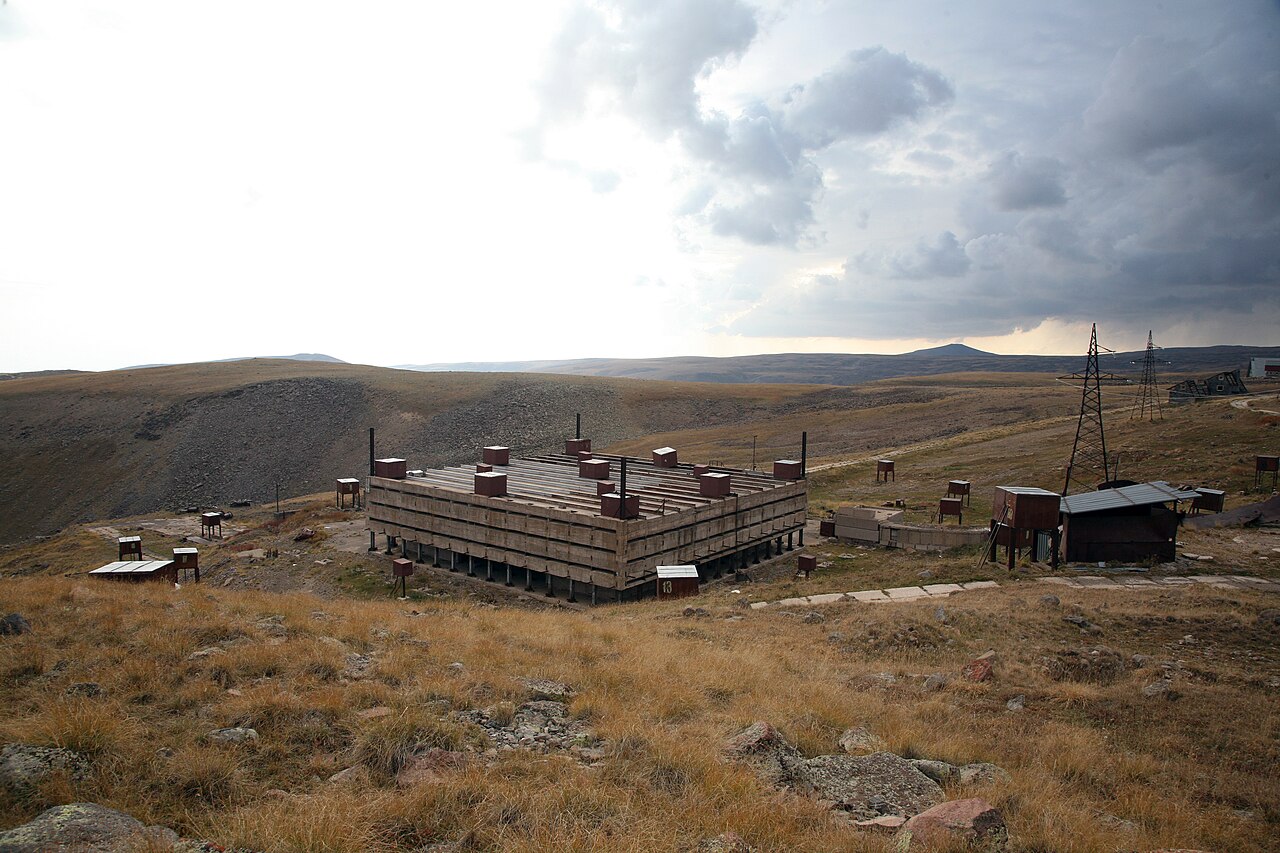

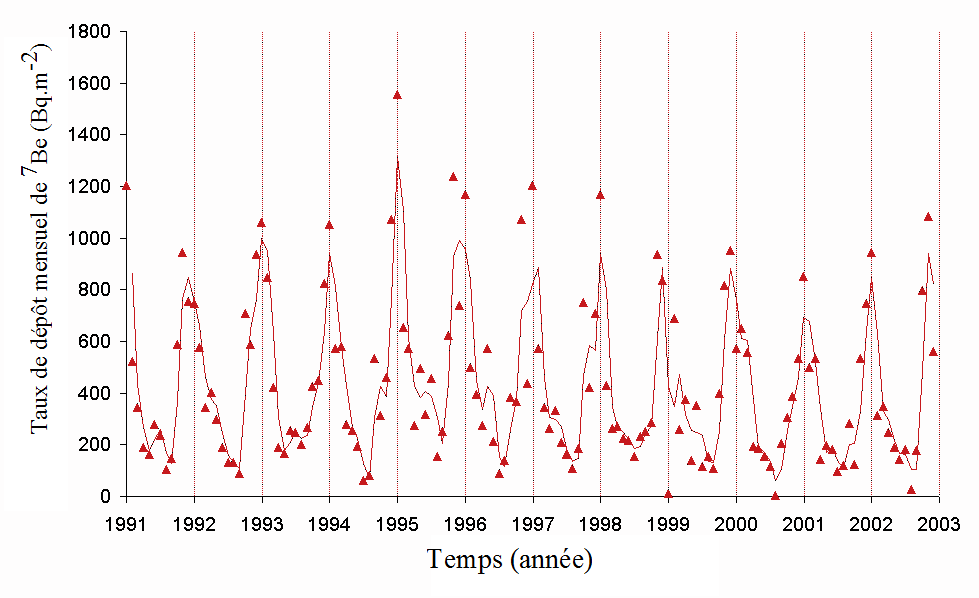
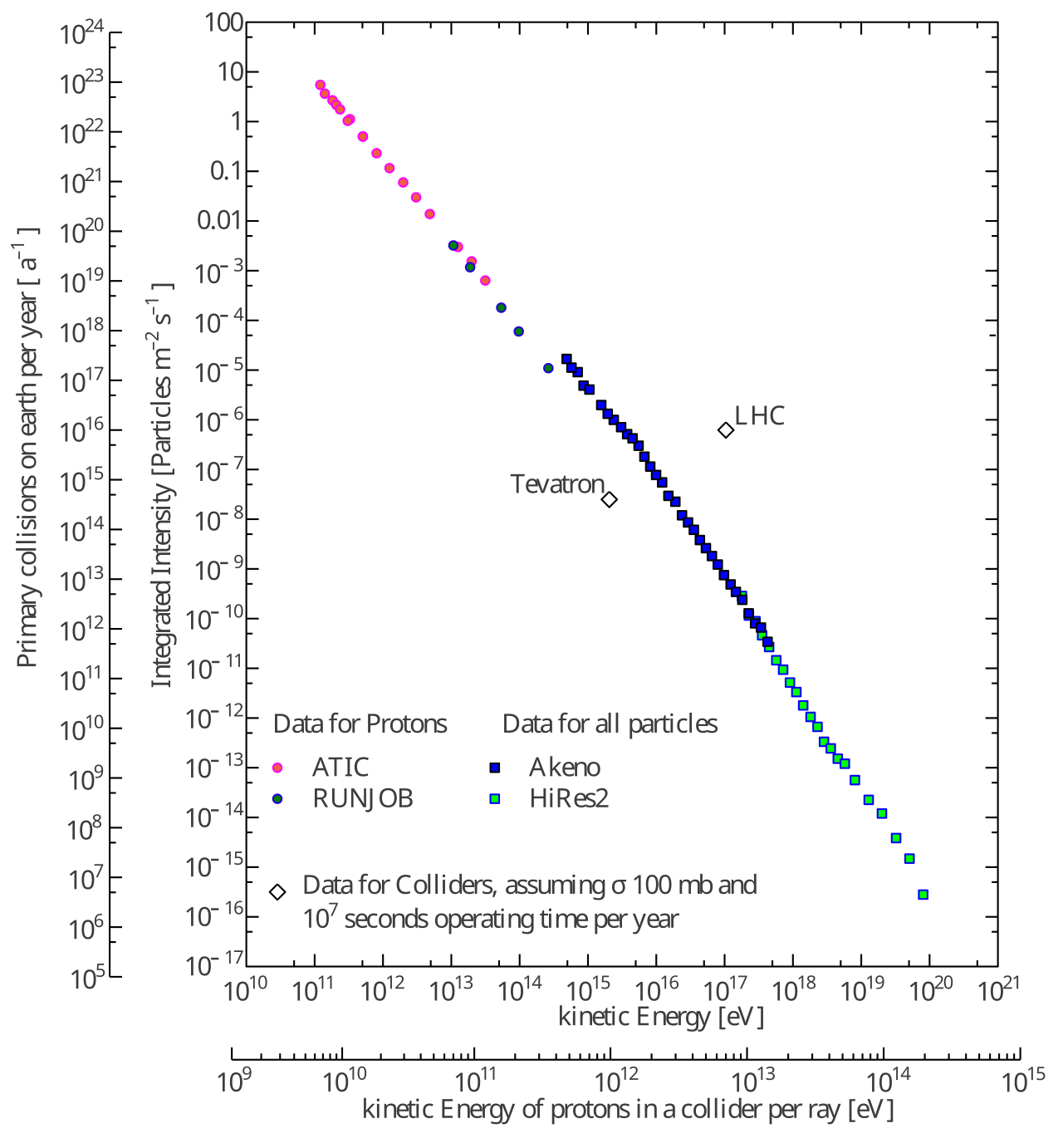
Frequently Asked Questions
What are cosmic rays?
Cosmic rays are extremely high-energy particles, mostly protons and atomic nuclei, that zip through interstellar space at nearly light speed. When they slam into Earth's atmosphere they trigger cascades of secondary particles, though our magnetic field and the heliosphere deflect a significant portion before they reach the surface.
Who discovered cosmic rays and how?
Victor Hess identified them in 1912 by carrying electroscopes on balloon flights and noticing that atmospheric ionization increased with altitude rather than decreasing. This proved the radiation originated beyond the atmosphere instead of from radioactive material in the ground.
What is the typical composition of cosmic rays?
Roughly 99 percent of cosmic rays are bare atomic nuclei—about 90 percent hydrogen (protons), 9 percent helium (alpha particles), and 1 percent heavier elements. The remaining 1 percent consists of lone electrons.
More in Astronomy 1-24
Spotted an error? Know more?
This is a living reference — every entry is fact-audited, and reader corrections feed straight into our audit queue. Suggest an edit · See this site's audit record