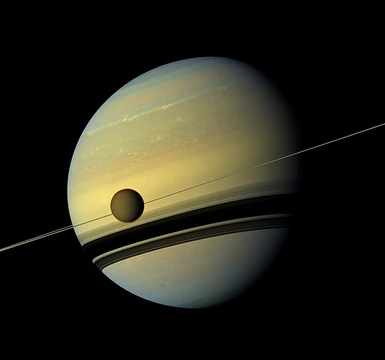
Exoplanet

European Space Agency · CC BY-SA 3.0 igo
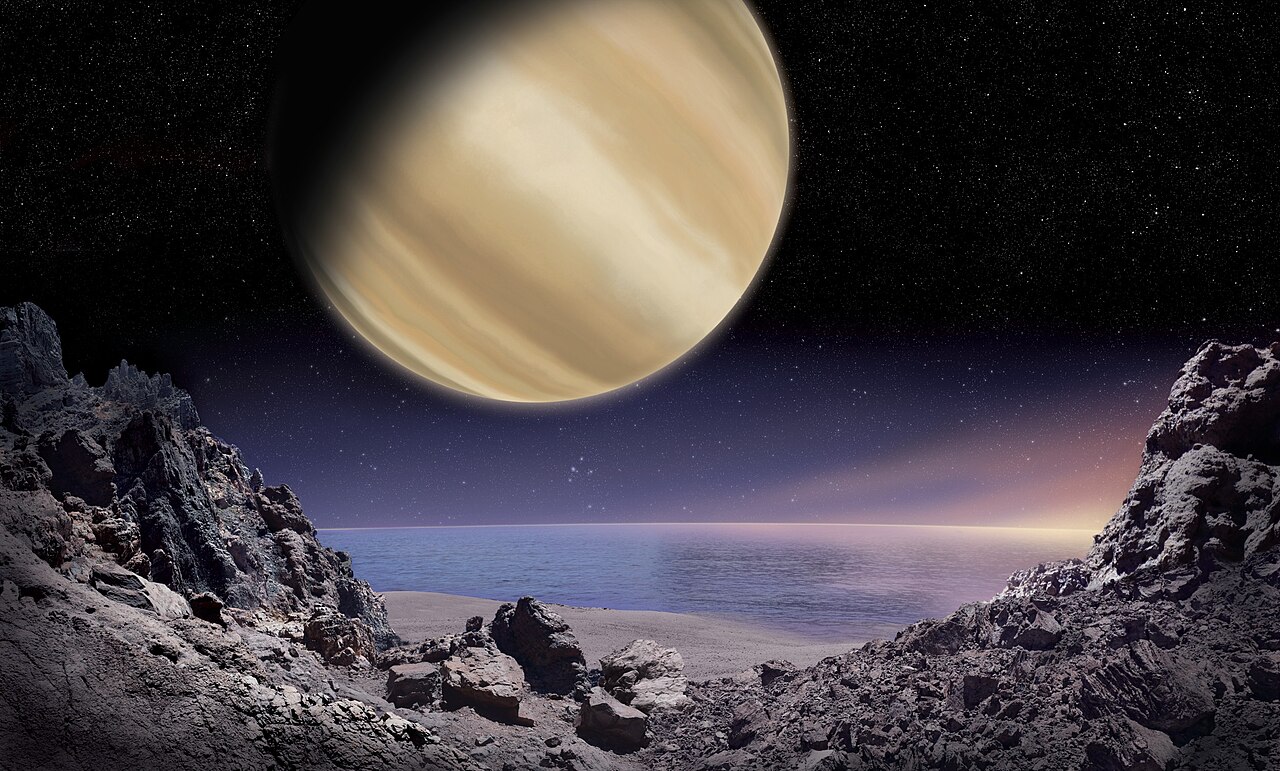
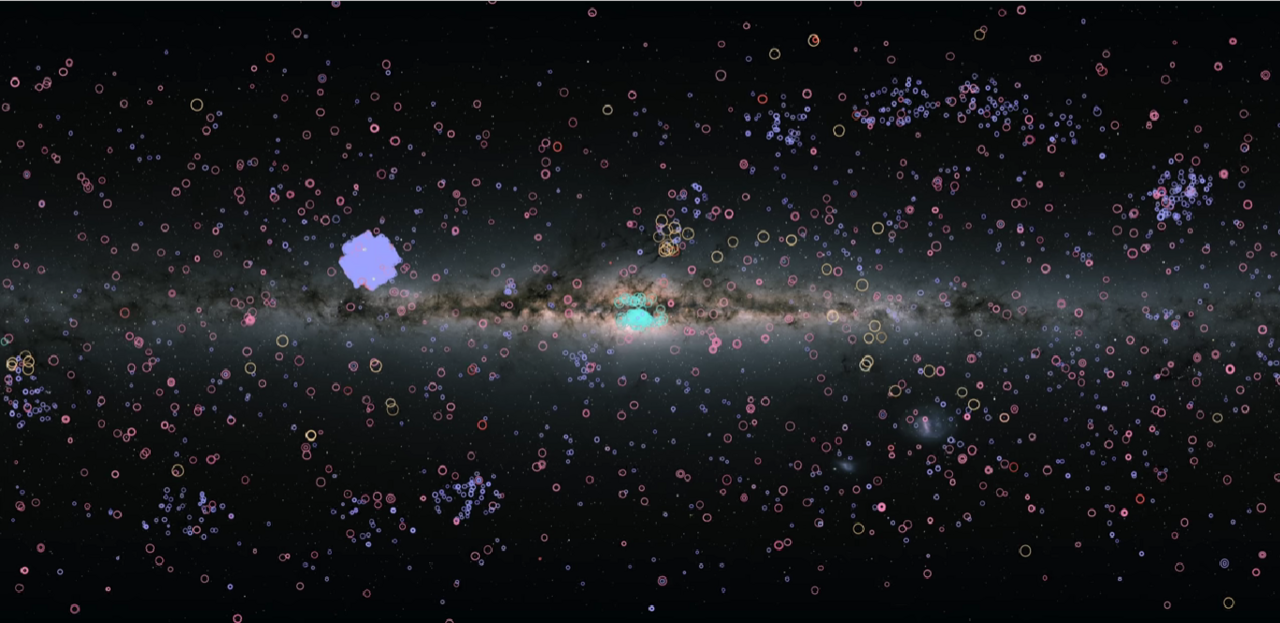
An exoplanet, also called an extrasolar planet, is any planet that exists beyond our Solar System. The first confirmed detection of one came in 1992, found orbiting a pulsar, followed by the first detection around a main-sequence star in 1995. Another planet, initially spotted in 1988, was not confirmed until 2003. It was later recognized that the earliest possible evidence of an exoplanet had actually been recorded in 1917, a case of precovery. As of August 20, 2026, scientists have confirmed 6,354 exoplanets across 4,756 planetary systems, with 1,060 of those systems containing more than one planet.
Most exoplanets are found using transit photometry or Doppler spectroscopy, though these methods are biased toward detecting large planets that orbit very close to their stars. Estimates suggest that about one in five Sun-like stars hosts an Earth-sized planet within the habitable zone. Given that the Milky Way contains roughly 200 billion stars, this implies there could be 11 billion potentially habitable Earth-sized planets in our galaxy, a number that rises to 40 billion if planets around the abundant red dwarfs are included.
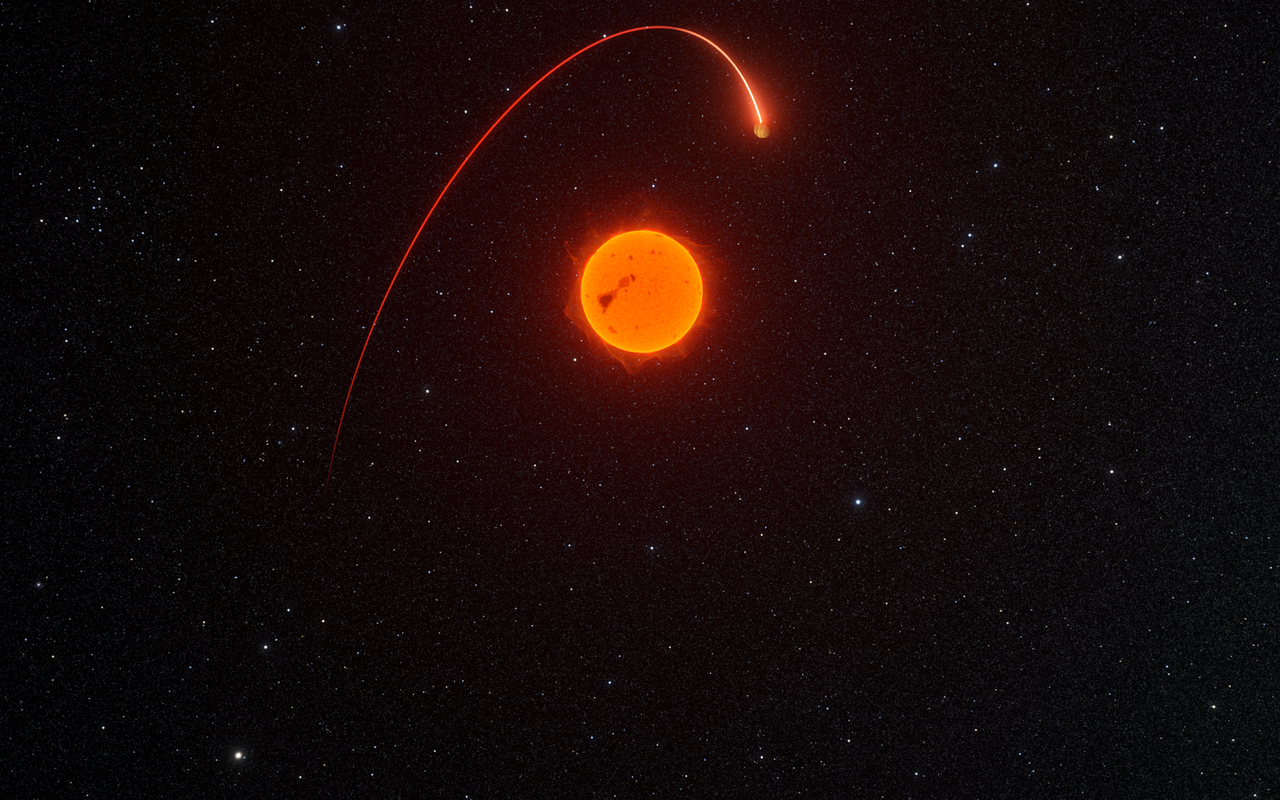
The least massive known exoplanet, Draugr, has only about twice the mass of Earth’s Moon. The most massive listed in the NASA Exoplanet Archive is HR 2562 b, at roughly 30 times the mass of Jupiter—though by some definitions based on deuterium fusion, it may be too massive to be a planet and could instead be a brown dwarf. Orbital periods for exoplanets range from less than an hour for those extremely close to their star to thousands of years for those far out. Some exoplanets are so distant from their star that it is unclear whether they are truly gravitationally bound.
The nearest exoplanets lie 4.2 light-years away, orbiting Proxima Centauri, the closest star to the Sun. At the other extreme, there is evidence for extragalactic planets—exoplanets located in other galaxies.
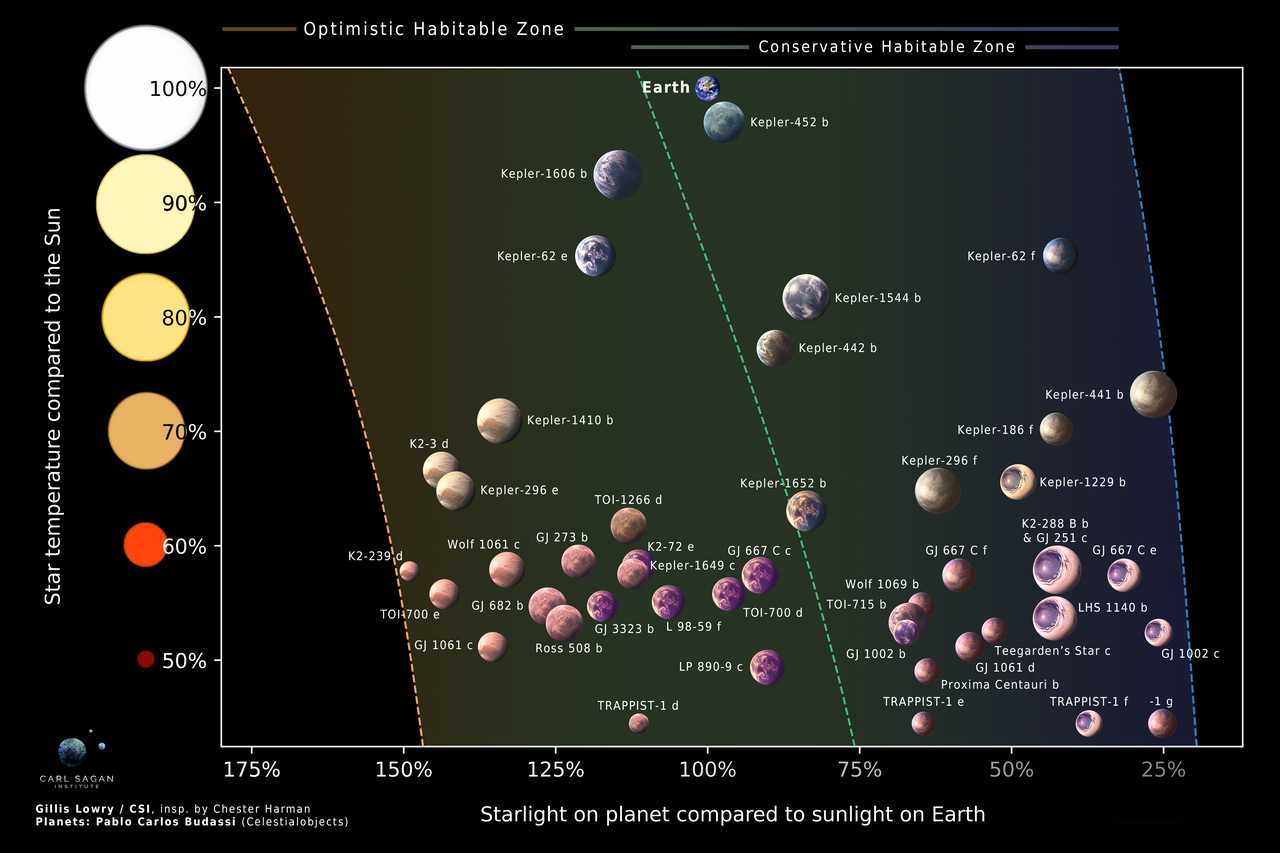
The discovery of exoplanets has sparked greater interest in the search for extraterrestrial life. Special attention goes to planets within a star’s habitable zone, sometimes called the “Goldilocks zone,” where liquid water—essential for life as we know it—could exist on the surface. However, studies of planetary habitability also consider many other factors when assessing a planet’s potential to host life.
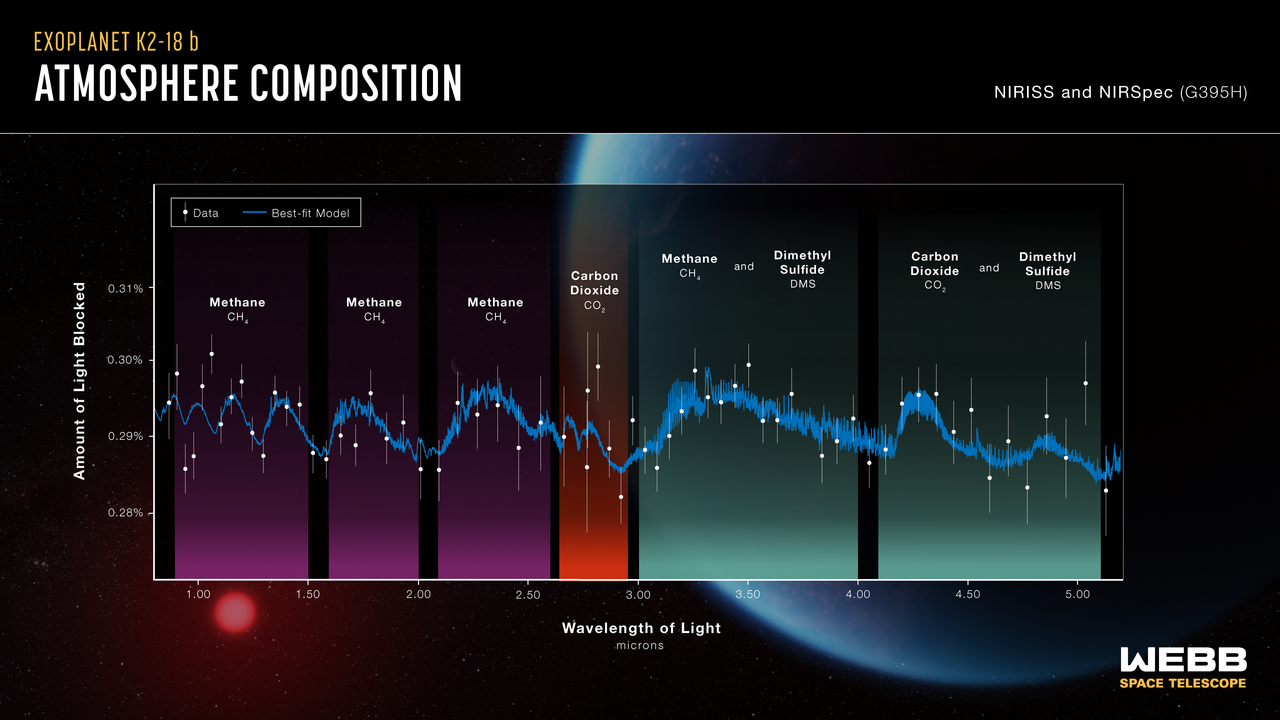
The James Webb Space Telescope, working with ground-based and other space observatories, is expected to provide deeper insights into exoplanet characteristics such as composition, environmental conditions, and habitability.
Rogue planets are those not part of any planetary system. They are generally treated as a separate category, especially if they are gas giants, and are often classified as sub-brown dwarfs. The Milky Way may contain billions of such rogue planets.
Regarding definition, the International Astronomical Union’s official definition of “planet” applies only to the Solar System, so it does not cover exoplanets. In 2001, the IAU Working Group on Extrasolar Planets issued a working definition, modified in 2003, which stated that objects with true masses below the deuterium fusion limit (about 13 Jupiter masses for solar-metallicity objects) that orbit stars or stellar remnants are considered planets, regardless of how they formed. The minimum mass and size for an extrasolar object to be a planet should match that used in the Solar System. Objects above that mass limit are brown dwarfs. Free-floating objects in young star clusters below the deuterium fusion limit are not planets but sub-brown dwarfs.
This definition was amended in August 2018 by the IAU’s Commission F2: Exoplanets and the Solar System. The current official working definition states that objects with true masses below the deuterium fusion limit that orbit stars, brown dwarfs, or stellar remnants, and whose mass ratio with the central object is below the L4/L5 instability threshold, are planets. The minimum mass and size requirement remains the same as in the Solar System.
This working definition is not universally accepted. An alternative suggestion distinguishes planets from brown dwarfs based on formation. Giant planets are thought to form through core accretion, which can sometimes produce planets above the deuterium fusion threshold. Brown dwarfs, in contrast, form like stars via direct gravitational collapse of gas clouds, and this process can produce objects as low as 1 Jupiter mass. Objects in this mass range that orbit their stars at very wide separations (hundreds or thousands of AU) and have large mass ratios likely formed as brown dwarfs; their atmospheres would resemble their host star’s composition more closely than accretion-formed planets, which tend to have higher abundances of heavier elements. Most directly imaged planets as of April 2014 are massive with wide orbits, suggesting they represent the low-mass end of brown dwarf formation. One study argues that objects above 10 Jupiter masses formed through gravitational instability and should not be considered planets.
- least_massive_exoplanet
- Draugr (about twice the mass of the Moon)
- nearest_exoplanets
- 4.2 light-years from Earth, orbiting Proxima Centauri
Lore & Background
Exoplanets, or extrasolar planets, are planets located beyond our Solar System. Their appearances are not directly visible in most cases, but a few have been directly imaged, such as the four exoplanets orbiting the star HR 8799, captured in timelapse imagery by the W. M. Keck Observatory. Their sizes vary dramatically, as illustrated by comparisons of exoplanets around the star Kepler-37 with Mercury, Mars, and Earth. The least massive known exoplanet, Draugr, has about twice the mass of Earth’s Moon, while the most massive listed on the NASA Exoplanet Archive, HR 2562 b, is roughly 30 times Jupiter’s mass—though some definitions would classify it as a brown dwarf rather than a planet. Orbital periods range from less than an hour for planets extremely close to their star to thousands of years for those far out; some are so distant it is unclear if they are gravitationally bound. The nearest exoplanets are located 4.2 light-years away, orbiting Proxima Centauri, the closest star to the Sun. Evidence also suggests exoplanets exist in other galaxies. Rogue planets, which are not part of any planetary system, may number in the billions within the Milky Way. The James Webb Space Telescope, working with ground-based and other space observatories, is expected to reveal more about exoplanet composition, environmental conditions, and potential habitability.
Reader's Guide
Exoplanets have reshaped humanity's understanding of planetary systems and the potential for life beyond Earth. Their discovery confirmed centuries of speculation and opened a new field of astronomy. The IAU's working definition of an exoplanet—objects below the deuterium fusion limit (about 13 Jupiter masses) that orbit stars, brown dwarfs, or stellar remnants—remains a subject of debate, with alternative criteria based on formation or core pressure. The naming convention uses lowercase letters after the star's name, starting with 'b' for the first discovered planet. As detection methods improve, the catalog of exoplanets continues to grow, with the James Webb Space Telescope poised to analyze their atmospheres and habitability. The existence of billions of potentially habitable Earth-sized planets in the Milky Way alone underscores the profound implications for the search for extraterrestrial life.
Did You Know?
- The least massive exoplanet known, Draugr, is about twice the mass of the Moon.
- The nearest exoplanets orbit Proxima Centauri, 4.2 light-years from Earth.
- Rogue planets in the Milky Way may number in the billions.
The Framework for Assessing Habitable Worlds
The search for potentially habitable exoplanets rests on a structured framework maintained by the Planetary Habitability Laboratory at the University of Puerto Rico at Arecibo, which curates the Habitable Worlds Catalog. Their work draws heavily on data from the NASA Exoplanet Archive to evaluate which distant worlds might support conditions resembling those on Earth. At the heart of this assessment is the requirement that a planet orbits at a distance from its host star where liquid water could persist on the surface. However, orbital position alone is far from sufficient. Researchers must also weigh geophysical and geodynamical characteristics, the density and composition of any atmosphere, the type and intensity of stellar radiation, and the broader plasma environment surrounding the host star. Together, these factors form a multidimensional picture of habitability that goes well beyond the simple Goldilocks-zone shorthand often used in popular science. The catalog serves as a living document, updated as new observations refine our understanding of which worlds truly deserve a closer look.
Criteria and Caveats for Confirmed Candidates
The primary list of confirmed potentially habitable exoplanets applies specific physical thresholds to narrow the field. A planet must reside within the circumstellar habitable zone of its star and fall below either ten Earth masses or 2.5 Earth radii, criteria chosen because they suggest a plausible rocky composition. Earth itself appears on the list as a baseline for comparison, while Venus and Mars are included purely as reference points. A critical caveat accompanies every entry: placement on this list does not constitute a guarantee of actual habitability. The larger bodies near the upper size limit carry a meaningful risk of being mini-Neptunes rather than true terrestrial worlds, which would dramatically alter their surface conditions. Additionally, some mass and radius figures carry a tilde prefix, indicating they were not directly measured but instead estimated through a mass-radius relationship. This distinction matters because predicted values introduce uncertainty into the habitability assessment, reminding researchers and the public alike that the catalog represents informed estimates rather than settled conclusions.
The Long List of Demoted Candidates
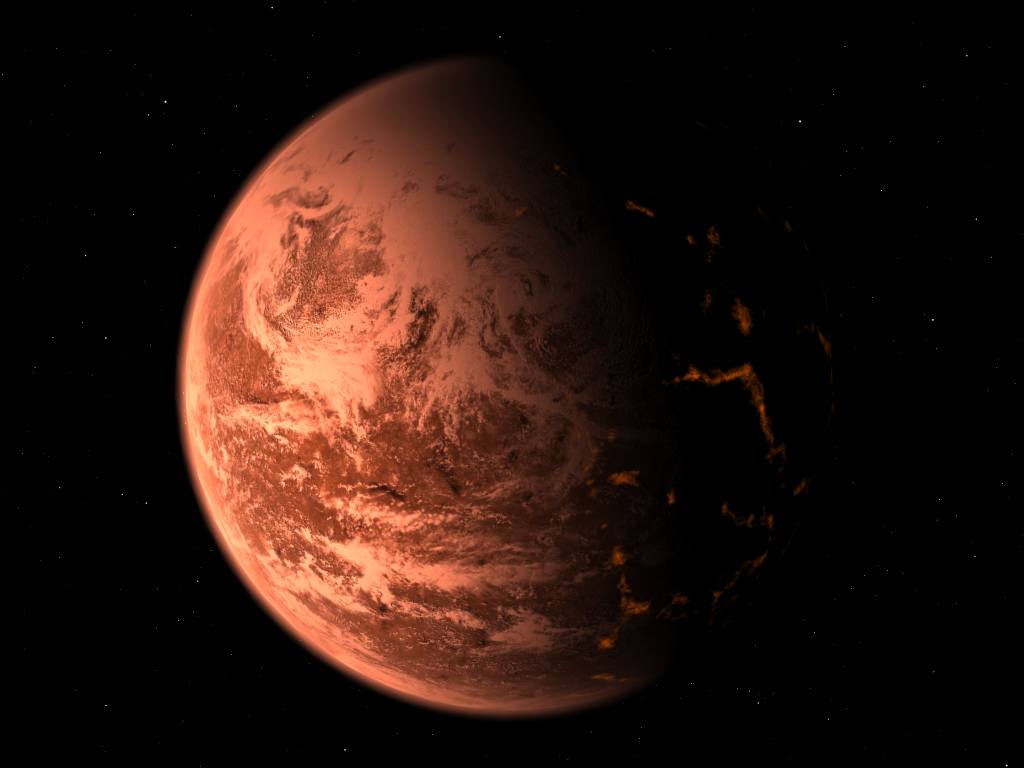
Perhaps the most striking aspect of the habitable exoplanet catalog is how many once-celebrated candidates have since been reclassified. A substantial group of radial-velocity detections, including Gliese 581 d and g, Gliese 667 Ce and f, Gliese 682 b and c, Kapteyn b, Gliese 229 Ac, HD 85512 b, and Gliese 832 c, were questioned by some studies as possible stellar artifacts rather than genuine planets. Others, such as Gliese 180 b, turned out to orbit interior to the habitable zone once better orbital parameters were established. Kepler-438b, initially heralded as a promising candidate, was later found to be subjected to powerful stellar flares capable of stripping a planet's atmosphere, leading to its reclassification as non-habitable. K2-3d and K2-18b, once speculated to be Hycean worlds, were shown by recent studies to be gaseous sub-Neptunes with little prospect for surface habitability. KOI-1686.01 was ultimately proven a false positive by NASA in 2015. This pattern underscores how provisional early claims can be.
How Newer Instruments Reshape the Picture
The trajectory of exoplanet habitability research is deeply shaped by successive generations of observational technology. Kepler-1638b, for instance, was initially validated with a radius below two Earth radii, suggesting a potentially rocky and habitable world. Yet when the Gaia mission provided a more precise parallax measurement of its host star, the planet's radius was revised upward to roughly 3.2 Earth radii, reclassifying it as a likely ice giant with poor habitability prospects. Similarly, Tau Ceti e, HD 85512 b, and Kepler-69c were once considered likely habitable, but improved models of the circumstellar habitable zone led the Planetary Habitability Laboratory to remove them from consideration. At the other end of the spectrum, TRAPPIST-1 d was long regarded as a potentially habitable world until data from the James Webb Space Telescope's NIRSpec instrument revealed little evidence for an atmosphere with Earth-like surface pressure, effectively ruling out habitability. These examples illustrate a recurring theme: each new instrument or refined model has the power to confirm, revise, or entirely overturn earlier conclusions about which distant worlds might one day be visited.
Gallery
Frequently Asked Questions
What is an exoplanet?
An exoplanet is any planet that orbits a star outside our own Solar System. The formal term is "extrasolar planet," though most people simply say "exoplanet."
Why do astronomers care so much about exoplanets?
Discovering worlds beyond the Solar System has supercharged the search for extraterrestrial life, particularly on planets sitting in a star's habitable zone where liquid water could persist. It essentially opened the door to asking whether we are truly alone in the universe.
More in Astronomy 1-24
Spotted an error? Know more?
This is a living reference — every entry is fact-audited, and reader corrections feed straight into our audit queue. Suggest an edit · See this site's audit record