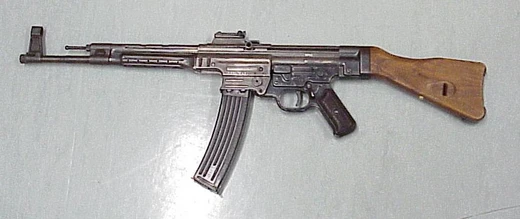
FN FNC
Belgian assault rifle adopted by several nations and license-produced.

The FN FNC is a 5.56×45mm NATO assault rifle from Belgian manufacturer FN Herstal, first appearing in the late 1970s. Its development ran from 1975 to 1977 for NATO standardization trials, aiming to offer a cheaper option than the M16. The design evolved from the FNC 76 prototype, which itself was a major simplification of the earlier, commercially unsuccessful FN CAL. That prototype was pulled from the NATO competition after poor performance due to its hasty development.
Indonesia became the first adopter of the finalized FNC 80, buying about 10,000 rifles for its air force in 1982. It later licensed production to Indonesian firm PT Pindad, which made it for all military branches as the Pindad SS1 and SS2. Sweden tested the FNC 80 between 1981 and 1982, and the results impressed both Swedish and Belgian military officials. Sweden adopted a modified version for domestic production in 1986, calling it the Automatkarbin 5; with slight changes, it remains the main Swedish service rifle until replaced by the automatkarbin 24. The Belgian Armed Forces adopted the FNC 80 in 1989 as a service-wide replacement for the 7.62×51mm FN FAL, though it had already been issued in small numbers to airborne units for several years. Tonga’s armed forces also use it as their service rifle.
The FNC is a selective-fire weapon with a gas-operated long-stroke piston system and a rotating bolt that locks via two lugs into the barrel extension. A cam pin interacting with a guide in the bolt carrier rotates and unlocks the bolt. The mechanism strongly resembles the Kalashnikov design but uses more advanced production methods. The cocking handle slot on the upper receiver has a spring-loaded cover that opens as the handle moves rearward and closes when it returns forward.
The extractor sits inside the bolt head, while the ejector is fixed and riveted inside the receiver. A two-position gas valve, hammer-type firing mechanism, and a selector switch that also serves as a manual safety are standard. The selector on the left side of the receiver has four settings: safe, single fire, three-round burst, and automatic. The barrel’s flash suppressor can launch NATO 22mm rifle grenades (on the standard model only).
Quick Facts
- Origin
- Belgium
- Is Ranged
- YES
- Service
- 1979–present
- Designer
- FN Herstal
- Design Date
- 1975–1977
- Manufacturer
- FN Herstal / Carl Gustafs Stads Gevärsfaktori / PT Pindad
- Production Date
- 1979–2004
- Weight
- Rifle: 3.840 kg / Carbine: 3.7 kg
- Length
- Rifle: 997 mm stock extended / 766 mm stock folded / Carbine: 911 mm stock extended / 667 mm stock folded
- Part Length
- Rifle: 450 / mm (rifle) / Carbine: 363 mm
- Height
- 238 mm
- Cartridge
- 5.56×45mm NATO
Facts from the source article.
Lore & Background
The FNC was developed between 1975 and 1977 for NATO standardization trials. Its design is based on the FNC 76 prototype, a deep rework and simplification of the commercially unsuccessful FN CAL rifle. The FNC 76 was withdrawn from the NATO competition after performing poorly due to rushed development. The first state to adopt the finalized FNC 80 was Indonesia, which purchased approximately 10,000 rifles in 1982 for its air force; Indonesia later acquired a license for PT Pindad to manufacture the rifle as the Pindad SS1 and SS2. Sweden held trials between 1981 and 1982 using the FNC 80, adopted a version for domestic production in 1986 as the Automatkarbin 5, and it remains the main service rifle of the Swedish Armed Forces until replaced with the automatkarbin 24. The FNC 80 was adopted by the Belgian Armed Forces in 1989 as a service-wide replacement for the FN FAL. The rifle is also used by the armed forces of Tonga.
Reader's Guide
The FNC's significance lies in its adoption by multiple nations and its role as a cost-effective alternative to the M16 during NATO standardization. Its gas-operated long-stroke piston system and rotating bolt, resembling the Kalashnikov design, contributed to its reliability. The rifle's ability to use STANAG 4179 magazines and its compatibility with M16 magazines enhanced its interoperability. Licensed production in Indonesia and Sweden extended its service life and influence, with the Swedish Ak 5 remaining in service for decades. The FNC was eventually replaced in Belgian service by the FN SCAR-L, but its variants continue to be used by various military and police forces worldwide.
Did You Know?
- The FNC was developed as a less expensive alternative to the M16 rifle.
- Indonesia was the first state to adopt the finalized FNC 80, purchasing about 10,000 rifles in 1982.
- The FNC's magazines are interchangeable with those of the American M16 rifle.
- The Swedish version, the Ak 5, lacks the 3-round burst fire control setting.
More in Assault Rifles, Part 2 1-24
Spotted an error? Know more?
Reader corrections go straight into our review queue. Suggest an edit · How this site is sourced