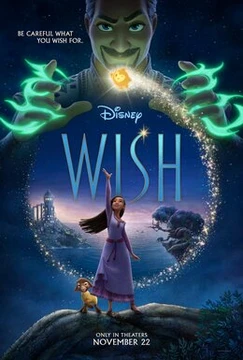
Monster High: 13 Wishes
A first-generation 3D Monster High film.

Stratemeyer Syndicate · Public domain
Monster High: 13 Wishes is a film within the Monster High franchise, an American fashion doll and media franchise launched by Mattel on June 11, 2010. The film belongs to the first-generation (3D) films period (2012–2016), with animation produced by Nerd Corps Entertainment.
- Franchise launch
- June 11, 2010
- Generation
- First-generation (3D) films (2012–2016)
- Animation provider
- Nerd Corps Entertainment
- Broadcaster
- Nickelodeon (United States)
- Home video distributor
- Universal Pictures Home Entertainment (until 2017)
Lore & Background
Monster High: 13 Wishes is part of the first-generation 3D films produced between 2012 and 2016. Animation for this generation was provided by Nerd Corps Entertainment. The film was broadcast on Nickelodeon in the United States and released on home video formats by Universal Pictures Home Entertainment until 2017.
Reader's Guide
Monster High: 13 Wishes represents the first-generation 3D era of the franchise, which ran from 2012 to 2016. During this period, Nerd Corps Entertainment handled animation production. The film was distributed on home video by Universal Pictures Home Entertainment and aired on Nickelodeon. This generation preceded the 2016 reboot, which introduced updated character designs and origin stories with animation by Flaunt Productions/Studios. The film's significance lies in its place within the original 3D continuity before the franchise underwent a second relaunch in 2021, leading to a live-action musical film and animated TV series released in October 2022 on Nickelodeon and Paramount+.
Did You Know?
- Animation for this film was produced by Nerd Corps Entertainment.
- Home video releases were handled by Universal Pictures Home Entertainment until 2017.
A Decade-Long Road to Production
The journey to bring this live-action adaptation to screen stretched across nearly four decades. As early as 1985, Disney explored the concept, reaching out to Jim Henson and director Steve Barron, yet the studio ultimately shelved the idea. The project resurfaced in April 2015 when Disney officially announced it, with Peter Hedges initially attached to write the screenplay. By May 2017, Chris Weitz had taken over the writing duties alongside Zemeckis. The directorial chair saw multiple candidates before Robert Zemeckis was locked in during January 2020, after Sam Mendes and Paul King had been considered. Tom Hanks first entered early discussions about portraying Geppetto by November 2018 but stepped away following King's exit, only to return in August 2020. The full ensemble was unveiled in January and March 2021, and principal photography ran from March through April of that same year. The production was a collaboration between Walt Disney Pictures, Depth of Field, and ImageMovers.
Creative Vision and Musical Identity
Robert Zemeckis helmed the project, co-writing the screenplay with Chris Weitz, and assembled a cast that blended live-action performers with voice artists. Tom Hanks embodied Geppetto, the grieving widowed woodcarver, while Cynthia Erivo, Giuseppe Battiston, and Luke Evans rounded out the principal live-action roles. The puppet and animal characters were brought to life through voice work by Benjamin Evan Ainsworth as Pinocchio, Joseph Gordon-Levitt as Jiminy Cricket, Keegan-Michael Key as the fox con artist Honest John, and Lorraine Bracco. Musically, the film leaned heavily on the long-standing partnership between Zemeckis and composer Alan Silvestri, who had scored every one of the director's prior films. Silvestri not only composed the orchestral score but also co-wrote new songs with Glen Ballard, giving the picture its musical-fantasy identity. The blend of a seasoned director, a veteran composer, and a mix of A-list and character actors defined the film's creative DNA.
Narrative Arc and Thematic Core
Set in a small 19th-century Italian village, the story centers on Geppetto, a widowed elderly woodcarver who carves a puppet modeled after his late young son. A star grants the boy's wish, and the Blue Fairy breathes life into the wooden figure, appointing Jiminy Cricket as his moral guide. Pinocchio's quest to become a real boy leads him through a series of trials: the manipulative schemes of the fox Honest John and his cat partner Gideon, the exploitative theater of the puppet master Stromboli, and the sinister Pleasure Island where a charismatic Coachman turns misbehaving children into donkeys for sale to salt mines. Pinocchio even begins transforming himself, growing donkey ears and a tail before escaping. The climax involves a reunion with Geppetto aboard a boat in the Mediterranean, only for the group to be swallowed by the giant sea creature Monstro. Pinocchio's ingenuity—setting a fire inside the beast—forces it to sneeze them free. A final magical tear from Pinocchio's eye revives his apparently deceased father, and Jiminy's closing narration leaves the question of whether Pinocchio truly became a real boy deliberately open.
Release Strategy and Critical Reception
Rather than a traditional theatrical rollout, the film was delivered to audiences on September 8, 2022, as a centerpiece of Disney+ Day, the streaming platform's annual event. This distribution choice placed the project squarely in the realm of direct-to-consumer entertainment, bypassing cinemas entirely. The critical response was largely unfavorable; reviewers generally panned the adaptation, and the film accumulated six nominations at the Golden Raspberry Awards, the ceremony known for honoring the year's most widely criticized releases. Among those nominations, the film took home the prize for Worst Remake, Rip-off or Sequel, a category that specifically targets reimagined properties. The Razzie recognition underscored the gap between the film's ambitious production values—Zemeckis's direction, Silvestri's score, Hanks's performance—and the reception it ultimately received from critics. The negative critical consensus stands in contrast to the decades of development and the high-profile creative team behind the project.
Gallery
Frequently Asked Questions
What is Monster High: 13 Wishes?
It is a 3D-animated feature film set within the Monster High universe, produced by Nerd Corps Entertainment and originally aired on Nickelodeon in the United States. It belongs to the franchise's first-generation 3D film era (2012–2016).
What is the central premise of Monster High: 13 Wishes?
The story revolves around a wish-granting scenario in which a character is given thirteen wishes to make, and the plot follows the complications and unintended consequences that spiral out of those wishes. The events unfold within the familiar Monster High school setting alongside the core cast of monster-student characters.
Who handled production and distribution for Monster High: 13 Wishes?
Nerd Corps Entertainment created the 3D animation, and Nickelodeon served as the original U.S. broadcast network. Home-video release was handled by Universal Pictures Home Entertainment until 2017.
Where does Monster High: 13 Wishes sit in the Monster High franchise timeline?
It is one of the early 3D animated features produced during the 2012–2016 first-generation window, a period that followed Mattel's original launch of the Monster High doll line on June 11, 2010. The film predates the franchise's later shift to a different animation style and production team.
Why do fans of wish-fulfillment stories point to Monster High: 13 Wishes?
It applies the classic 'thirteen wishes' fantasy structure to a gothic monster-school setting, giving the standard genie-lamp trope a distinctly Monster High twist. As part of the early 3D film run, it also marked one of the franchise's first forays into a full feature-length narrative beyond its toy-line origins.
More in Animated films about wish fulfillment 1-24
Spotted an error? Know more?
Reader corrections go straight into our review queue. Suggest an edit · How this site is sourced