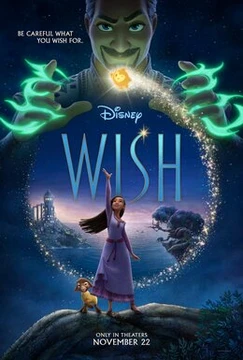
Cinderella (1950 film)
A 1950 animated musical fantasy that saved Disney from bankruptcy.

RKO Pictures · Public domain
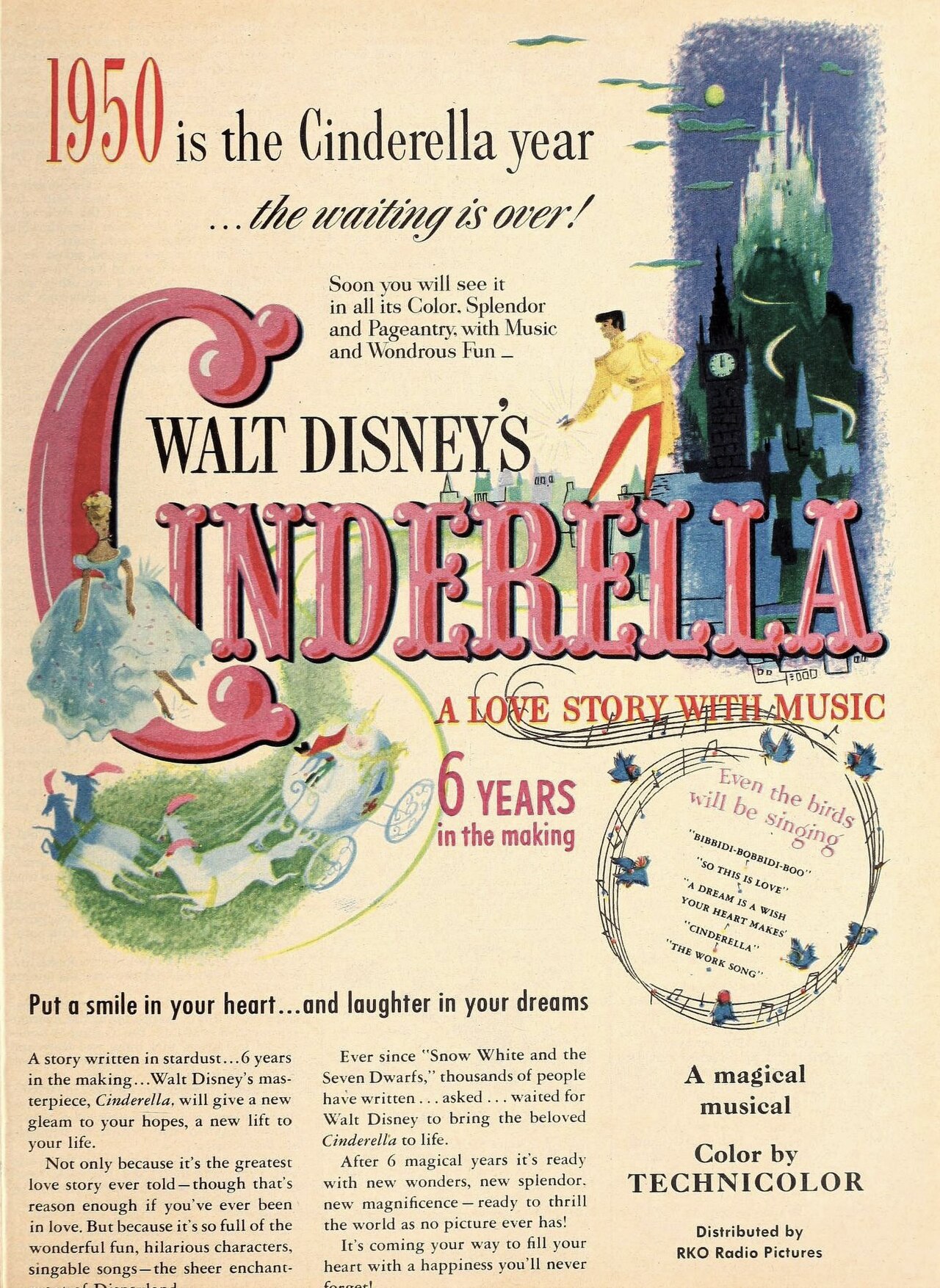
Cinderella is a 1950 American animated musical fantasy film from Walt Disney Productions, distributed by RKO Radio Pictures. It adapts Charles Perrault's 1697 fairy tale, telling the story of a young woman, the daughter of a widowed aristocrat, who is reduced to servitude by her cruel stepmother and stepsisters. Her fairy godmother eventually helps her attend a royal ball, where she meets the prince. The production was overseen by Ben Sharpsteen and directed by Wilfred Jackson, Hamilton Luske, and Clyde Geronimi. The voice cast includes Ilene Woods, Eleanor Audley, Verna Felton, Rhoda Williams, June Foray, James MacDonald, and Luis van Rooten.
In the early 1940s, Walt Disney Productions faced financial hardship after losing access to European film markets due to World War II. The studio saw commercial disappointments with *Pinocchio*, *Fantasia* (both 1940), and *Bambi* (1942)—films that later gained success through re-releases and home video. By 1947, the company was over $4 million in debt and near bankruptcy. Walt Disney and his animators returned to feature film production in 1948, after a series of package films, by adapting Perrault's *Cendrillon* into an animated feature.
Released on February 15, 1950, *Cinderella* earned critical praise and strong box office returns, becoming Disney's biggest hit since *Snow White and the Seven Dwarfs* (1937) and helping to turn the studio's finances around. It received three Academy Award nominations: Best Scoring of a Musical Picture, Best Sound Recording, and Best Original Song for "Bibbidi-Bobbidi-Boo." Two direct-to-video sequels followed—*Cinderella II: Dreams Come True* (2002) and *Cinderella III: A Twist in Time* (2007)—along with a live-action remake in 2015. In 2018, the Library of Congress selected the film for preservation in the United States National Film Registry, citing it as "culturally, historically, or aesthetically significant."
The plot is set in 19th-century France. Cinderella, the daughter of a widowed aristocrat, lives in a small but prosperous French kingdom. As a child, her father remarries Lady Tremaine, a cold-hearted widow with two daughters, Drizella and Anastasia, but dies soon after. Jealous of Cinderella's charm and beauty, Lady Tremaine and her daughters abuse her and force her to become a scullion in her own château.
Quick Facts
- Director
- Wilfred Jackson / Hamilton Luske / Clyde Geronimi
- Story
- William Peet / Ted Sears / Homer Brightman / Kenneth Anderson / Erdman Penner / Winston Hibler / Harry Reeves / Joe Rinaldi
- Based On
- "Cinderella" · Charles Perrault
- Producer
- Walt Disney
- Starring
- Ilene Woods / Eleanor Audley / Verna Felton / Rhoda Williams / James MacDonald / Luis van Rooten
- Editing
- Donald Halliday
- Music
- Oliver Wallace / Paul Smith
- Studio
- Walt Disney Productions
- Distributor
- RKO Radio Pictures
- Released
- 15 February 1950 · Boston · 1950 · 3 · 4 · United States
- Runtime
- 74 minutes
- Country
- United States
Facts from the source article.
Lore & Background
During the early 1940s, Walt Disney Productions suffered financially after losing connections to European film markets due to World War II. The studio endured commercial failures such as Pinocchio, Fantasia (both 1940) and Bambi (1942), and by 1947 was over $4 million in debt. Walt Disney and his animators returned to feature film production in 1948 after producing a string of package films, adapting Charles Perrault's Cendrillon into an animated film. The production was supervised by Ben Sharpsteen and directed by Wilfred Jackson, Hamilton Luske, and Clyde Geronimi, featuring voices including Ilene Woods, Eleanor Audley, and Verna Felton.
Reader's Guide
Cinderella was released to theatres on February 15, 1950, receiving critical acclaim and becoming Disney's biggest hit since Snow White and the Seven Dwarfs (1937). It helped reverse the studio's fortunes and received three Academy Award nominations: Best Scoring of a Musical Picture, Best Sound Recording, and Best Original Song for 'Bibbidi-Bobbidi-Boo'. The film was followed by two direct-to-video sequels, Cinderella II: Dreams Come True (2002) and Cinderella III: A Twist in Time (2007), and a live-action remake in 2015. In 2018, Cinderella was selected for preservation in the United States National Film Registry by the Library of Congress as being 'culturally, historically, or aesthetically significant'.
Did You Know?
- The film was based on Charles Perrault's 1697 fairy tale.
- The film received three Academy Award nominations, including Best Original Song for 'Bibbidi-Bobbidi-Boo'.
The Studio's Financial Rebirth
By the mid-1940s, Walt Disney Productions found itself in a precarious position. The outbreak of World War II had severed the studio's access to European film markets, and the ambitious features that followed—Pinocchio and Fantasia in 1940, Bambi in 1942—failed to recoup their costs at the box office. By 1947 the company carried more than four million dollars in debt and teetered on the edge of collapse. After a period devoted to shorter package films, Walt Disney and his animators committed to returning to full-length animation in 1948, choosing to adapt Charles Perrault's 1697 tale Cendrillon. The project was produced under the supervision of Ben Sharpsteen and directed by the trio of Wilfred Jackson, Hamilton Luske, and Clyde Geronimi, with distribution handled by RKO Radio Pictures. What began as a financial lifeline would ultimately become the feature that pulled the studio back from the brink.
Narrative Architecture and Character Dynamics
Set in a small, prosperous kingdom in nineteenth-century France, the story centers on a young woman whose late father's remarriage to the cold Lady Tremaine—and his subsequent death—reduces her to a scullion in her own château. Despite years of mistreatment from her stepmother and stepsisters Drizella and Anastasia, Cinderella retains her gentleness, befriending the mice Jaq and Gus and shielding them from the household cat Lucifer. The turning point arrives when the King announces a royal ball so his son may select a bride. After the stepsisters destroy a dress Cinderella had salvaged from her mother's belongings, the Fairy Godmother intervenes, transforming a pumpkin into a carriage, mice into horses, and bestowing a silver gown and glass slippers under the condition that the enchantment expires at midnight. The ball becomes a sequence of escalating romance: the Prince is immediately captivated, the Grand Duke shields their courtship, and the clock's tolling sends Cinderella fleeing, one slipper left on the palace staircase. The second half pivots to a kingdom-wide shoe-fitting, culminating in Lady Tremaine's desperate act of breaking the glass slipper and Cinderella's triumphant reveal of the matching pair.
Critical Acclaim and Box Office Triumph
Released in theaters on February 15, 1950, the film was met with widespread critical praise and strong audience response. It quickly became Walt Disney Productions' most successful release since Snow White and the Seven Dwarfs in 1937, and its earnings played a decisive role in pulling the studio out of the financial crisis that had threatened its survival. The film earned three Academy Award nominations: Best Scoring of a Musical Picture, Best Sound Recording, and Best Original Song for the number "Bibbidi-Bobbidi-Boo." The voice cast, led by Ilene Woods as Cinderella, Eleanor Audley as the cruel Lady Tremaine, and Verna Felton as the whimsical Fairy Godmother, was joined by Rhoda Williams, June Foray, James MacDonald, and Luis van Rooten in supporting roles. The film's musical and vocal performances, combined with its animation, cemented its place as a landmark of mid-century American animation and demonstrated that the studio's return to feature-length storytelling could be both artistically ambitious and commercially viable.
Enduring Legacy and Institutional Recognition
The 1950 film's influence extended well beyond its initial theatrical run. It spawned two direct-to-video sequels—Cinderella II: Dreams Come True in 2002 and Cinderella III: A Twist in Time in 2007—each extending the story into new narrative territory for home audiences. In 2015, the character and plot received a live-action remake, further demonstrating the material's adaptability across formats and decades. Perhaps most significantly, in 2018 the Library of Congress selected the original animated feature for inclusion in the United States National Film Registry, citing its cultural, historical, or aesthetic significance. This designation placed Cinderella alongside other works deemed essential to the nation's film heritage. Together, the sequels, the remake, and the archival preservation underscore how a single 1950 production, born from a studio's near-bankruptcy, evolved into a multi-generational cultural touchstone whose narrative and visual language continue to resonate nearly three-quarters of a century after its premiere.
Gallery
Frequently Asked Questions
What is Cinderella (1950 film)?
It is a 1950 American animated musical fantasy produced by Walt Disney Productions and released through RKO Radio Pictures. The film adapts Charles Perrault's 1697 fairy tale and was directed by Wilfred Jackson, Hamilton Luske, and Clyde Geronimi under supervising producer Ben Sharpsteen.
What are Cinderella's powers or role in the story?
Cinderella herself possesses no inherent magic; she is a gentle young woman reduced to menial labor by her cruel stepmother and stepsisters. Her wish-fulfillment arc is driven entirely by her fairy godmother, who temporarily transforms her appearance and provides a carriage so she can attend a royal ball.
Why is Cinderella (1950 film) important?
The film is frequently credited with saving Walt Disney Productions from financial collapse during a difficult period in the late 1940s. It also marked the studio's triumphant return to hand-drawn feature animation after years focused on live-action and wartime projects.
Who is in the voice cast of Cinderella (1950 film)?
Ilene Woods voices the title character, while Eleanor Audley brings menace to the role of Lady Tremaine. Verna Felton provides the warm voice of the fairy godmother, and Rhoda Williams voices one of the stepsisters.
More in Animated films about wish fulfillment 1-24
Spotted an error? Know more?
Reader corrections go straight into our review queue. Suggest an edit · How this site is sourced