Yamnaya culture
Middle Bronze Age culture of the Southern Urals, origin of the Indo-Iranian languages and the earliest known chariots.

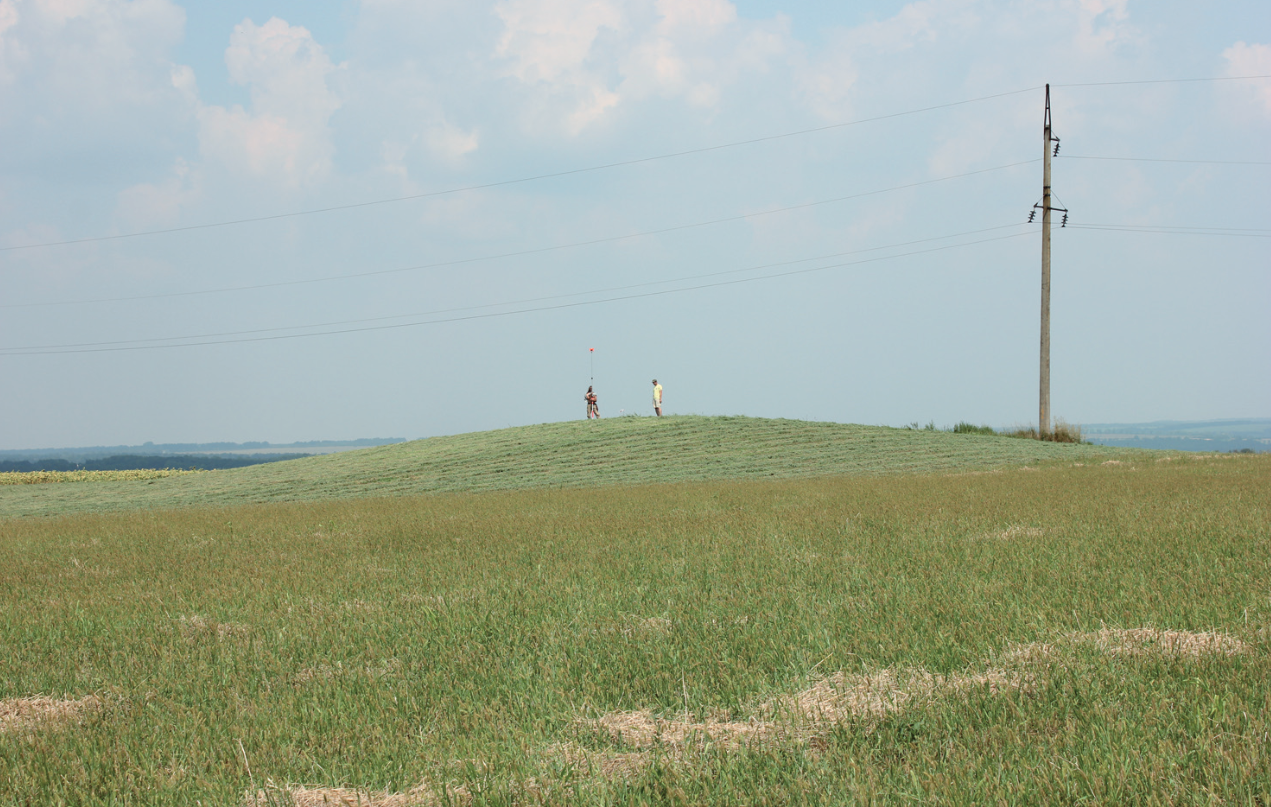
Photo by D. Żurkiewicz · CC BY 4.0
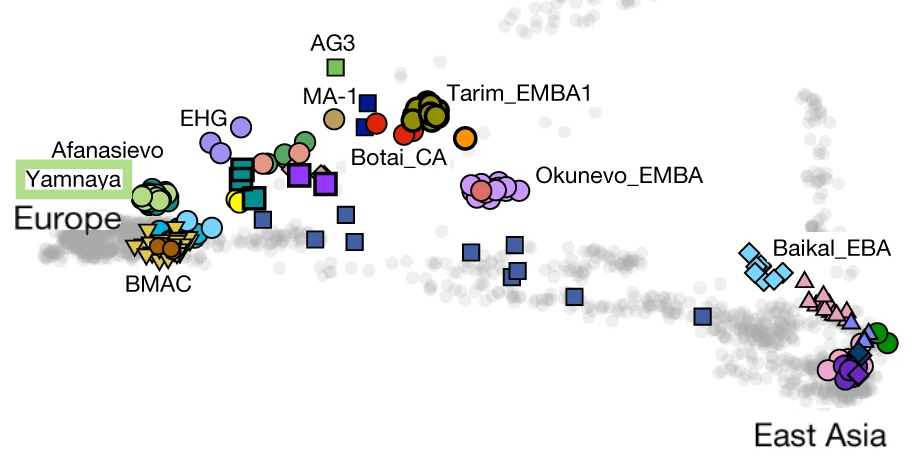
The Sintashta culture is a Middle Bronze Age archaeological culture of the Southern Urals, dated to the period c. 2200–1900 BCE. It is the first phase of the Sintashta–Petrovka complex, c. 2200–1750 BCE. The culture is named after the Sintashta archaeological site, in Chelyabinsk Oblast, Russia, and spreads through Orenburg Oblast, Bashkortostan, and Northern Kazakhstan. Widely regarded as the origin of the Indo-Iranian languages, Sintashta culture is thought to represent an eastward migration of peoples from the Corded Ware culture.
- label
- Sintashta culture
- also_known_as
- Sintashta–Petrovka complex (first phase)
- period
- Middle Bronze Age, c. 2200–1900 BCE
- region
- Southern Urals (Chelyabinsk Oblast, Orenburg Oblast, Bashkortostan, and Northern
- known_for
- Earliest known chariots; origin of Indo-Iranian languages; intensive copper mini
Verified Timeline
Quick Facts
- Region
- Pontic–Caspian steppe in Europe
- Period
- Copper Age, Bronze Age
- Dates
- c. 3300–2600 BC
- Followedby
- North: Corded Ware cultureAllentoft · Sikora · Sjögren · Rasmussen · 2015 · pp=167–168 / West: Catacomb culture, Vučedol culture / East: Poltavka culture
- Definedby
- Vasily Gorodtsov
Facts from the source article.
Lore & Background
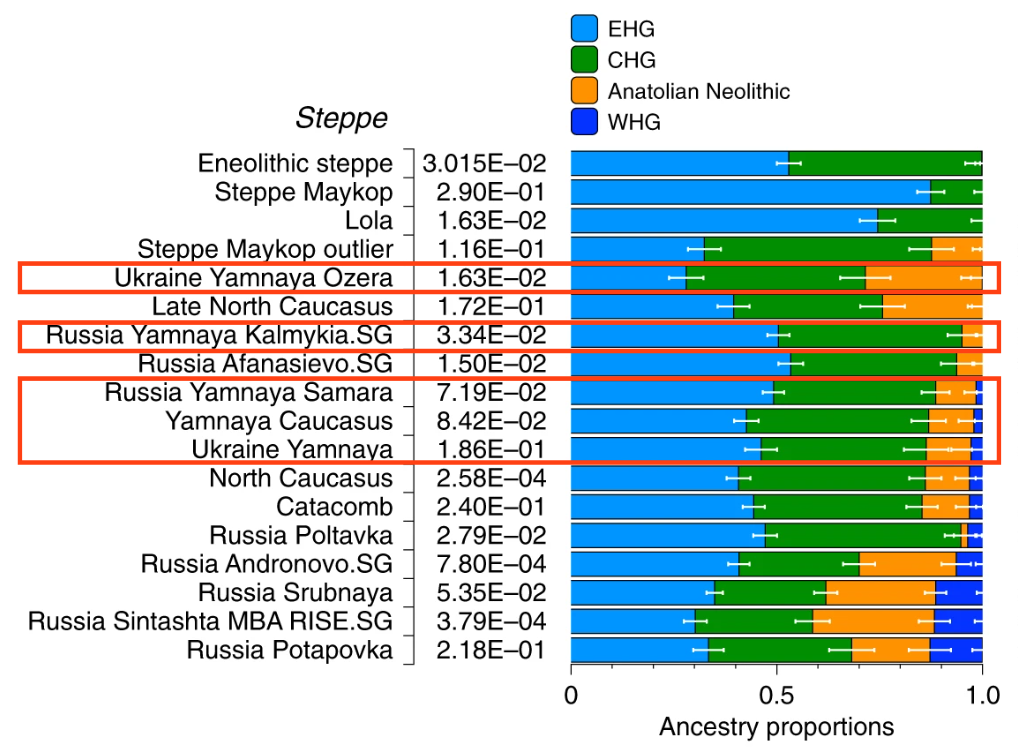
The Sintashta culture was only distinguished in the 1990s from the Andronovo culture because of the difficulty of identifying its remains beneath later settlements. It was then recognised as a distinct entity, forming part of the 'Andronovo horizon'. Koryakova (1998) concluded from archaeological findings that the Sintashta culture originated from the interaction of the two precursors Poltavka culture and Abashevo culture. Allentoft et al. (2015) concluded from genetic results that the Sintashta culture should have emerged from an eastward migration of peoples from the Corded Ware culture. Narasimshan et al. (2019) cautiously cite that 'morphological data has been interpreted as suggesting that both Fedorovka and Alakul' skeletons are similar to Sintashta groups, which in turn may reflect admixture of Neolithic forest hunter gatherers and steppe pastoralists, descendants of the Catacomb and Poltavka cultures'. Sintashta emerged during a period of climatic change that saw the already arid Kazakh steppe region become even colder and drier. The marshy lowlands around the Ural and upper Tobol rivers, previously favoured as winter refuges, became increasingly important for survival. Under these pressures both Poltavka and Abashevo herders settled permanently in river valley strongholds, eschewing more defensible hill-top locations. Its immediate predecessor in the Ural-Tobol steppe was the Poltavka culture, an offshoot of the cattle-herding Yamnaya horizon that moved east into the region between 2800 and 2600 BCE. Several Sintashta towns were built over older Poltavka settlements or close to Poltavka cemeteries, and Poltavka motifs are common on Sintashta pottery. Sintashta material culture also shows the influence of the late Abashevo culture, derived from the Fatyanovo–Balanovo culture, a collection of Corded Ware settlements in the forest steppe zone north of the Sintashta region that were also predominantly pastoralist.
Reader's Guide
Radiocarbon dating indicates that the Sintashta culture dates to between c. 2200 and 1750 BCE, roughly contemporary with the associated Abashevo and Petrovka cultures. Some authors date the Petrovka culture slightly later, from c. 1900 BCE. In Cis-Urals, burial sites Berezovaya and Tanabergen II showed Sintashta culture established there c. 2290–1750 BCE (68.2% probability), and the earliest values of this culture, in Trans-Urals, at the burial sites Sintashta II and Kamenny Ambar-5 (Kurgan 2) are c. 2200–2000 BCE. Chariots appear in southern Trans-Urals region in middle and late phases of the culture, c. 2050–1750 BC. According to Chechuskov & Epimakhov (2018) 'chariot technology likely developed before the year 2000 BC in the Sintashta homeland, which is the Don–Volga interfluve.' Blöcher et al. (2023) consider Sintashta-Petrovka period came to an end in Trans-Urals c. 1900–1800 BCE. Sintashta settlements are estimated to have a population of between 200 and 700 individuals with economies that 'heavily exploited domesticated cattle, sheep, and goats alongside horses with occasional hunting of wild fauna'. Anthony (2007) assumes that probably the people of the Sintashta culture spoke 'Common Indo-Iranian'. This identification is based primarily on similarities between sections of the Rigveda and the funerary rituals of the Sintashta culture as revealed by archaeology. Some cultural similarities to the Sintashta culture have also been found in the Nordic Bronze Age of Scandinavia. There is linguistic evidence of interaction between Finno-Ugric and Indo-Iranian languages, showing influences from the Indo-Iranians into the Finno-Ugric culture. From the Sintashta culture the Indo-Iranian followed the migrations of the Indo-Iranians to Anatolia, the Iranian plateau and the Indian subcontinent. From the 9th century BCE onward, Iranian languages also migrated westward with the Scythians back to the Pontic steppe where the Proto-Indo-Europeans came from. The preceding Abashevo culture was already marked by endemic intertribal warfare; intensified by ecological stress and competition for resources in the Sintashta period. This drove the construction of fortifications on an unprecedented scale and innovations in military technique such as the invention of the war chariot. Increased competition between tribal groups may also explain the extravagant sacrifices seen in Sintashta burials, as rivals sought to outdo one another in acts of conspicuous consumption analogous to the North American potlatch tradition. Sintashta artefact types such as spearheads, trilobed arrowheads, chisels, and large shaft-hole axes were taken east. Many Sintashta graves are furnished with weapons, although the composite bow associated later with chariotry does not appear. Higher-status grave goods include chariots, as well as axes, mace-heads, spearheads, and cheek-pieces. Sintashta sites have produced finds of horn and bone, interpreted as furniture (grips, arrow rests, bow ends, string loops) of bows; there is no indication that the bending parts of these bows included anything other than wood. Arrowheads are also found, made of stone or bone rather than metal. These arrows are short, 50–70 cm long, and the bows themselves may have been correspondingly short. Sintashta culture, and the chariot, are also strongly associated with the ancestors of modern domestic horses, the DOM2 population. DOM2 horses originated from the Western Eurasia steppes, especially the lower Volga-Don, but not in Anatolia, during the late fourth and early third millennia BCE, after which the single horse lineage would become the ancestor of nearly all modern horses, due to genes showing selection for easier domestication and stronger backs. The Sintashta economy came to revolve around copper metallurgy. Copper ores from nearby mines (such as Vorovskaya Yama) were taken to Sintashta settlements to be processed into copper and arsenical bronze. This occurred on an industrial scale: all the excavated buildings at the Sintashta sites of Sintashta, Arkaim and Ustye contained the remains of smelting ovens and slag. Around 10% of graves, mostly adult male, contained artefacts related to bronze metallurgy (molds, ceramic nozzles, ore and slag remains, metal bars and drops). However, these metal-production related grave goods rarely co-occur with higher-status grave goods. This likely means that those who engaged in metal production were not at the top of the social-hierarchy, even though being buried at a cemetery evidences some sort of higher status. Much of Sintashta metal was destined for export to the cities of the Bactria–Margiana Archaeological Complex (BMAC) in Central Asia. The metal trade between Sintashta and the BMAC for the first time connected the steppe region to the ancient urban civilisations of the Near East: the empires and city-states of modern Iran and Mesopotamia provided a large market for metals. These trade routes later became the vehicle through which horses, chariots and ultimately Indo-Iranian-speaking people entered the Near East from the steppe.
Did You Know?
- The earliest known chariots have been found in Sintashta burials, dating to c. 2050–1750 BC.
- Around 10% of graves, mostly adult male, contained artefacts related to bronze metallurgy, but these rarely co-occur with higher-status grave goods.
- Sintashta settlements are estimated to have had populations between 200 and 700 individuals.
- The Sintashta culture was only distinguished from the Andronovo culture in the 1990s.
- DOM2 horses, ancestors of nearly all modern domestic horses, are strongly associated with the Sintashta culture and originated from the lower Volga-Don region.
Gallery
Frequently Asked Questions
What is the Yamnaya culture?
The Yamnaya culture, also called the Pit Grave or Ochre Grave culture, was a late Copper Age to early Bronze Age archaeological culture of the Pontic-Caspian steppe. Its name derives from the Russian word meaning 'inhabited,' a nod to the dense clusters of burial mounds found across the region.
Why is the Yamnaya culture so important to linguists?
The widely accepted Kurgan hypothesis identifies the Yamnaya people as speakers of Proto-Indo-European, the ancestral tongue behind most of Europe's and parts of Asia's modern languages. This link makes the culture a pivotal piece in tracing how a single steppe language could eventually branch into hundreds of distinct modern languages.
What was everyday life like for the Yamnaya people?
They were mobile pastoralists who herded livestock across open steppe grasslands rather than relying on settled crop farming. Their society is best known for its elaborate kurgan burial mounds, indicating a deep cultural emphasis on honoring the dead with rich grave goods.
More in Ancient Empires And Kingdoms 1-22
Spotted an error? Know more?
This is a living reference — every entry is fact-audited, and reader corrections feed straight into our audit queue. Suggest an edit · See this site's audit record