Urartu
Iron Age kingdom centered on the Armenian highlands, rival of Assyria.

Esayi-Muse · CC BY 4.0
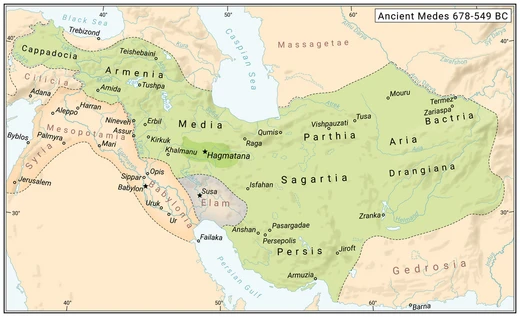
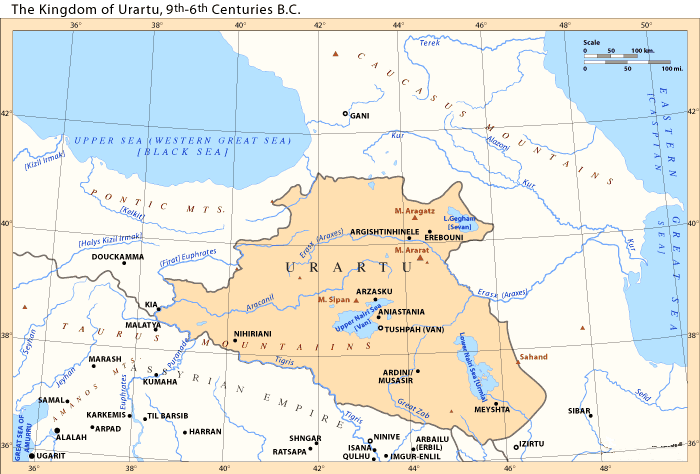
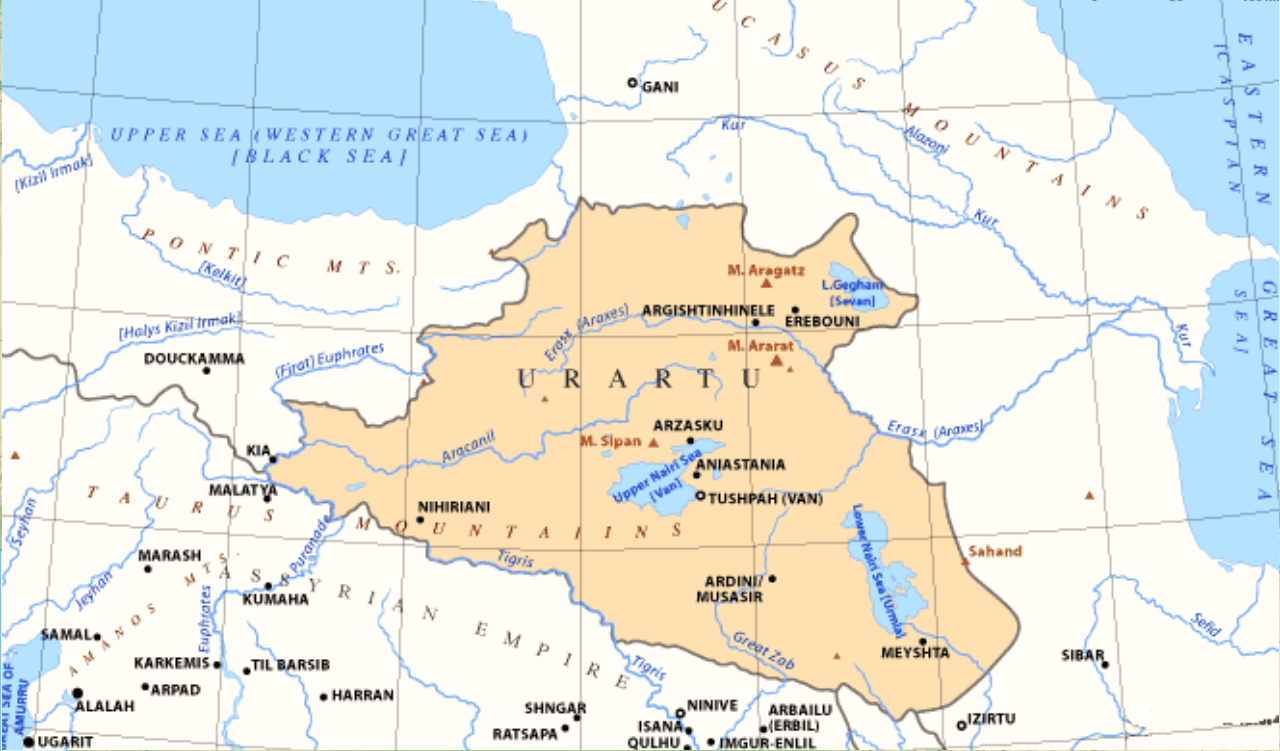
Urartu was an Iron Age kingdom based in the Armenian highlands, situated among Lake Van, Lake Urmia, and Lake Sevan. Its territory crossed what are now the borders of Turkey, Iran, Iraq, and Armenia. Its kings recorded their deeds in cuneiform inscriptions written in the Urartian language, which belongs to the Hurro-Urartian language family.
The kingdom first appeared around the middle of the 9th century BC and held sway over the Armenian highlands during the 8th and 7th centuries BC. It fought frequent wars with Assyria and at one point became the most powerful state in the Near East. Constant conflict eventually weakened it, and it was conquered either by the Iranian Medes early in the 6th century BC or by Cyrus the Great in the middle of that century. Archaeologists know Urartu for its large fortresses and skilled metalwork.
The region and its polity were known by several names. The Assyrians called it Urartu, a term first used by Shalmaneser I around 1263–1234 BC to describe a geographical area—not a kingdom—made up of eight separate lands. This name is related to the Biblical Ararat, the Akkadian Urashtu, and the Armenian Ayrarat. The Urartian kings themselves, starting with the co-reign of Ishpuini and his son Menua, referred to their kingdom as Biainili, meaning “those of the land of Bia,” though the identity of Bia remains unclear. The name “Kingdom of Van” comes from the theory that Biainili evolved into the Old Armenian word Van, and because the Urartian capital Tushpa lay near the city of Van and its lake. Earlier Assyrian records sometimes used the term Nairi for the region, and early Urartian rulers called their domain Nairi, though some scholars think Urartu and Nairi were separate polities. Other proposed names for the people include Khaldini (after the god Ḫaldi, a theory now rejected) and Shurili (a term appearing in royal titles, possibly linked to the Armenian word for sword or to a geographical area). By the late 6th or early 5th century BC, the name Urartu was used as a synonym for Armenia in the Behistun Inscription, and the name Ararat was translated as Armenia in later biblical and historical works. The name Armenia itself may derive from Armini, an Urartian word meaning “inhabitant of Arme,” possibly connected to the Arme tribe or the Urumu people.
- field
- Ancient Near Eastern kingdom
- known_for
- Iron Age kingdom dominating the Armenian highlands; rival of Assyria; large fortresses and sophisticated metalwork
- language
- Urartian (Hurro-Urartian family)
- capital
- Tushpa (near modern Van, Turkey)
- period
- Mid-9th century BC to early or mid-6th century BC
- conquered_by
- Iranian Medes (early 6th century BC) or Cyrus the Great (mid-6th century BC)
Lore & Background
Urartu first appears in Assyrian inscriptions of Shalmaneser I (c. It reemerged in the 9th century BC as a unified kingdom under King Arame (c. Sarduri I (c. His son Ispuini annexed Musasir, introduced the cult of Ḫaldi, and was the first Urartian king to write in the Urartian language.
Reader's Guide
Urartu's significance lies in its role as a major power in the ancient Near East, challenging the Neo-Assyrian Empire and dominating the Armenian highlands for centuries. Its kings left cuneiform inscriptions in the Urartian language, a member of the Hurro-Urartian family, providing key historical records. The kingdom's eventual conquest—either by the Iranian Medes in the early 6th century BC or by Cyrus the Great in the mid-6th century BC—marked its end, but its legacy persisted through the name Urartu being used as a synonym for Armenia in the Behistun Inscription. Archaeologically, its large fortresses and sophisticated metalwork attest to its advanced material culture. The uncertainty over its conquest and the various names applied to the region (Urartu, Biainili, Kingdom of Van, Nairi) reflect the complexity of its history and identity.
Did You Know?
- The Urartian kings referred to their kingdom as Biainili, possibly pronounced as Vanele, which became Van in Old Armenian.
- Urartu frequently warred with Assyria and became, for a time, the most powerful state in the Near East.
- The Urartian capital Tushpa was located near the city of Van and Lake Van.
Geography & Political Identity
Urartu was an Iron Age kingdom whose heartland lay in the Armenian highlands, bounded by the waters of Lake Van to the west, Lake Urmia to the east, and Lake Sevan to the north. At its height, the polity stretched across what are now the borders of Turkey, Iran, Iraq, and Armenia, making it a genuinely trans-regional power in the ancient Near East. The kingdom crystallized in the mid-ninth century BC and, during the eighth and seventh centuries, it stood as the dominant force across the highland plateau. For a stretch of that period, Urartu rivaled or even surpassed its great rival to the south, the Assyrian Empire, and could claim the title of the most powerful state in the entire Near East. Its rulers documented their deeds in cuneiform script, writing in the Urartian language—a tongue that belongs to the Hurro-Urartian family and has no direct modern descendant. This combination of strategic geography, military ambition, and a distinct written tradition set Urartu apart from its neighbors and gave it a place in the ancient world that persisted long after its political structures collapsed.
A Tapestry of Names
No single label captured Urartu's identity. Assyrian scribes from the thirteenth century BC onward called the region Uruatri or Urartu, a term that originally denoted a geographic area encompassing eight smaller lands rather than a unified state. The kings themselves, beginning with the co-reign of Ishpuini and his son Menua, preferred the name Biainili, meaning those of the land of Bia, though the identity of Bia remains a mystery. Earlier rulers had used the title Nairi, which may have referred to a broader tribal league or a distinct polity that was gradually absorbed. Linguists have also proposed that the Urartians called themselves Shurili, a word appearing in royal titles and possibly connected to weapons such as swords or chariots. The Biblical Ararat, the Old Armenian Van drawn from the capital Tushpa's proximity to Lake Van, and even the name Armenia itself all trace back to this same highland world. The sheer multiplicity of these names testifies to a civilization whose identity was layered, contested, and ultimately woven into the broader tapestry of Near Eastern and Armenian history.
From Tribal League to Conquest
The story of Urartu begins not as a kingdom but as a fragment within Nairi, a loose confederation of smaller states and tribal polities scattered across the Armenian Highlands from the thirteenth to the eleventh centuries BC. Assyrian annals from the reign of Shalmaneser I around 1274 BC record a campaign that subjugated the Uruatri, one component of this broader Nairi federation. For centuries, the highland states endured repeated invasions from the south by the Middle and Neo-Assyrian Empires, under rulers such as Tukulti-Ninurta I, Tiglath-Pileser I, and Ashur-bel-kala. It was against this backdrop of external pressure that a unified Urartian state emerged in the mid-ninth century BC. The new kingdom went on to dominate the highlands for two centuries, waging persistent and costly wars against Assyria. That very conflict, however, eroded its strength. By the early to mid-sixth century BC, the exhausted realm fell—either to the Iranian Medes or to Cyrus the Great—ending an era of highland sovereignty that had lasted barely two hundred years.
Archaeological Legacy & Enduring Echoes
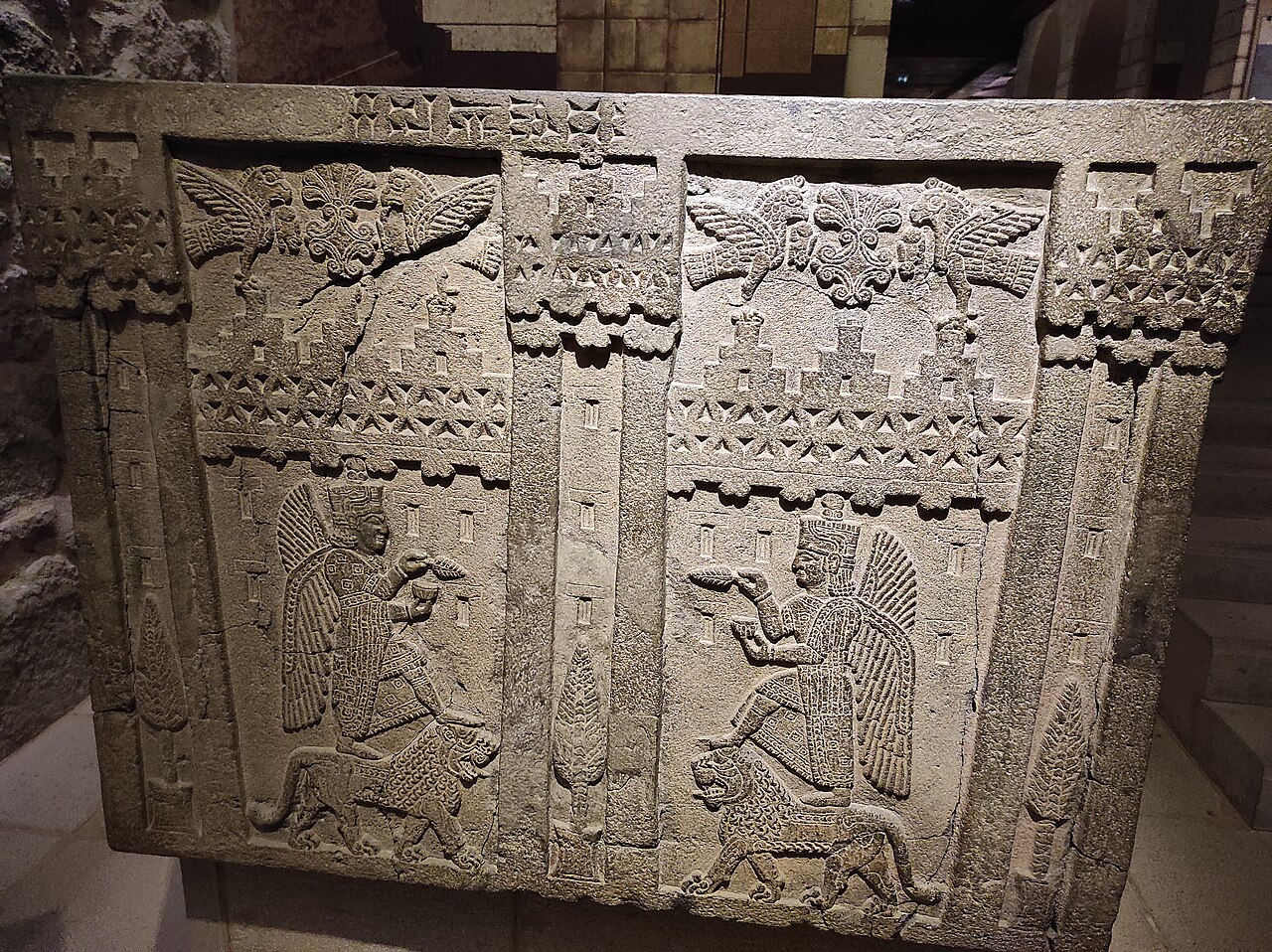
Beyond its political history, Urartu left a material and cultural imprint that continues to shape how scholars understand the ancient Near East. Archaeologists have uncovered extensive networks of large fortresses across the highlands, testifying to a state that invested heavily in defensive architecture and territorial control. Equally striking is the kingdom's sophisticated metalwork, which reveals a high level of craft specialization and possibly long-distance trade in raw materials. The cuneiform inscriptions left by Urartian kings, composed in a language belonging to the Hurro-Urartian family, provide the primary written record of the civilization and remain a vital source for reconstructing its political and religious life. The kingdom's legacy also extends into linguistic and cultural memory: the name Ararat, the identification of the biblical mountains of Ararat, and the late sixth-century use of Urartu as a synonym for Armenia in the Behistun Inscription all point to a deep continuity between the Urartian world and the Armenian identity that followed. Even the possible etymological link between the Urartian Arme tribe and the name Armenia itself suggests that the kingdom's echoes reverberate in the very name of a modern nation.
Gallery

Frequently Asked Questions
Who is Urartu?
Urartu was an Iron Age kingdom that ruled the Armenian highlands from the mid-9th century BC until its fall in the early-to-mid 6th century BC. Its capital, Tushpa, sat near present-day Van in Turkey, and its territory stretched across parts of modern Turkey, Iran, Iraq, and Armenia.
What made Urartu powerful?
During the 8th and 7th centuries BC, Urartu was the dominant state in the Near East, repeatedly challenging the Assyrian Empire for regional supremacy. The kingdom is also celebrated for its massive hilltop fortresses and exceptionally refined metalwork.
How does Urartu's story end?
The kingdom was conquered in the early-to-mid 6th century BC, either by the Iranian Medes or by Cyrus the Great of Persia. After that defeat, Urartu dissolved as an independent political entity and was absorbed into the emerging Achaemenid sphere.
Why is Urartu important in ancient history?
Urartu stands out as one of the few Near Eastern powers that rivaled Assyria on roughly equal terms over several generations. Its well-preserved fortifications and metalwork also give archaeologists a rare, detailed window into Iron Age statecraft and technology in the highlands.
What language did Urartu speak?
The Urartians used a language in the Hurro-Urartian family, which is unrelated to both the Semitic tongues of Assyria and the Indo-European languages that would later dominate the region.
More in Ancient Empires And Kingdoms 1-22
Spotted an error? Know more?
This is a living reference — every entry is fact-audited, and reader corrections feed straight into our audit queue. Suggest an edit · See this site's audit record