Third Dynasty of Ur
Neo-Sumerian dynasty ruling Mesopotamia in the 21st century BC.

Daderot · Public domain
The Third Dynasty of Ur, often shortened to Ur III by scholars, was a ruling house based in the Mesopotamian city of Ur during the 21st century BC, according to the middle chronology. For a brief span, it held the dominant position in Mesopotamia, and historians sometimes call its territory the Neo-Sumerian Empire. The numbering comes from the Sumerian King List, which identifies earlier dynasties at Ur—the First Dynasty dates to the 26th–25th centuries BC—but the supposed Second Dynasty of Ur appears never to have been recorded.
Ur-Namma (roughly 2112–2094 BC) founded this kingdom, reuniting southern Mesopotamia a few decades after the Akkadian Empire collapsed. His son and successor, Shulgi (about 2094–2047 BC), then secured the core of the realm—a rich agricultural and urban zone—where a highly developed economic administration took shape, built around temple estates under royal control. Under Shulgi, military campaigns pushed Ur’s influence outward, forming an empire. His successors kept it intact for another twenty-five years, but then it slowly fell apart under pressure from Amorite incursions from the north and internal forces that let several major cities and regions reclaim their independence. Around 2004 BC, an Elamite army destroyed the kingdom of Ur.
In Mesopotamian history, this imperial project can be seen as a continuation of the Akkadian Empire, which had preceded it by about two centuries and served as a model. Yet the Third Dynasty of Ur was Sumerian in identity, not Akkadian. Its kings, administrators, and scholars mainly used the Sumerian language and encouraged Sumerian literature, which is why this era is sometimes called the “Neo-Sumerian period” or even a “Sumerian Renaissance” (a label that also covers the dynasty of Gudea of Lagash, which ended just as Ur III began).
The Ur III period is also notable for the sheer number of written records that survive, most of them administrative. These documents provide a wealth of information about how the kingdom operated, as well as aspects of its society and economy. This abundance, together with analysis of the era’s administrative practices, may have created the impression of a “bureaucratic” state. At the very least, it is clear that official institutions—temples and palaces—took on an unprecedented importance, rarely matched later in Mesopotamian history, and gave rise to original administrative experiments.
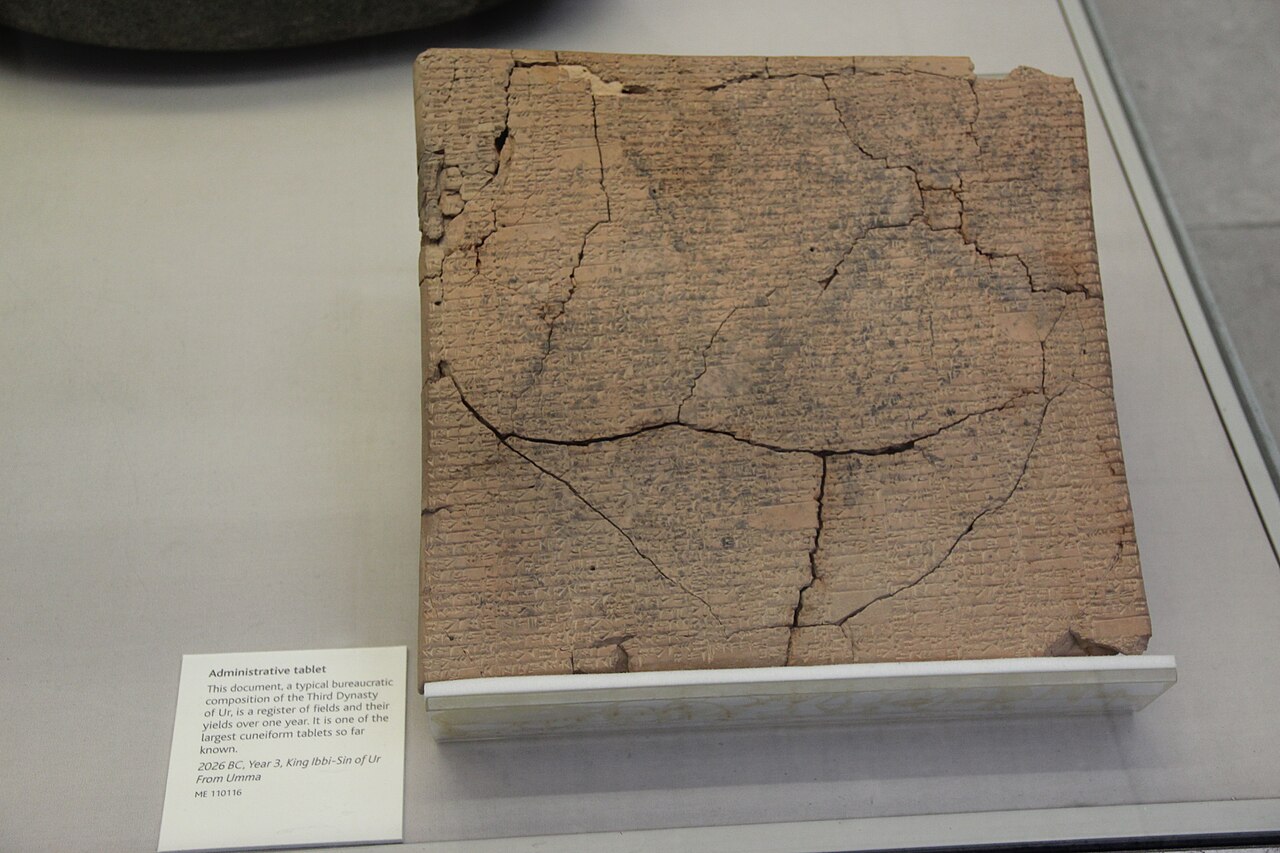
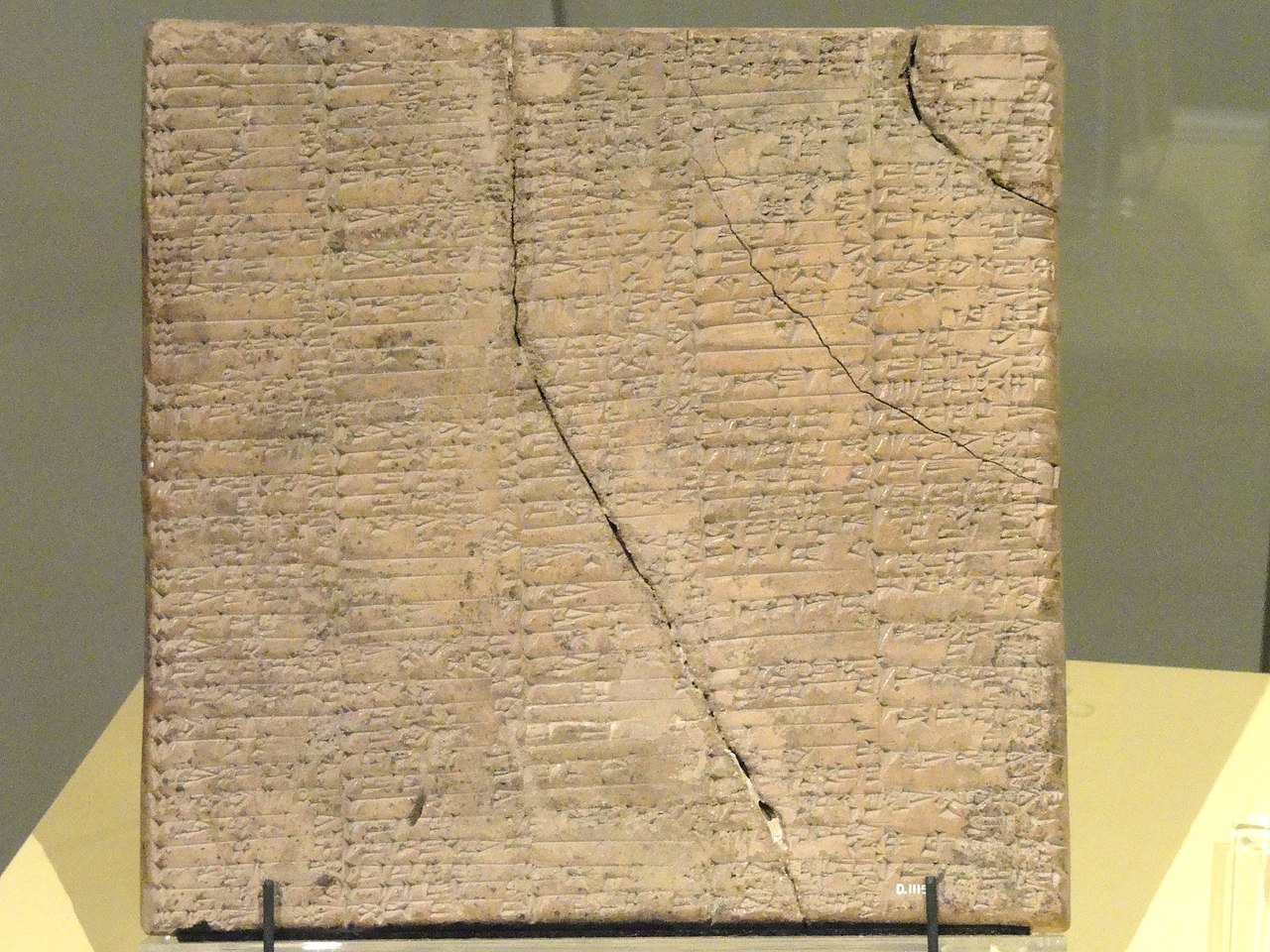
The main sources for the Third Dynasty of Ur are administrative tablets, numbering in the tens of thousands: an estimated 120,000 have been unearthed, not counting an unknown number still in the National Museum of Iraq. As of a 2016 inventory, only about 64,500 of these had been scientifically published with a copy, photograph, transliteration, or translation. They come mostly from a handful of sites. The oldest known group was found in 1894 at Tello, ancient Girsu, where excavators uncovered a deposit of roughly 30,000 tablets—clearly a governor’s archive—though they did not clearly identify the site, and some tablets were looted by clandestine diggers. Around the same time, regular and illegal excavations at Nippur yielded about 3,600 more tablets from the period. Then, in 1909 and 1911, clandestine diggers discovered other deposits: first at Tell Jokha, ancient Umma (about 30,000 tablets, from the local governor’s archive), and then at Drehem, ancient Puzrish-Dagan (about 15,000 tablets). Regular excavations at Ur itself later brought to light over 4,000 tablets from the period. In the 1990s and 2000s, two more important archives were looted during illegal digs at sites whose exact locations are uncertain but whose ancient names are known: Garshana near Umma (more than 1,500 tablets) and Irisaĝrig near Nippur (about a thousand texts).
The vast majority of these tablets are administrative records from the archives of governors or temples, dating from the last decade of Shulgi’s reign through the reigns of Amar-Sin, Shu-Sin, and the very start of Ibbi-Sin—a span of about forty years. They usually take the form of small tablets recording the movement of goods, such as bills or receipts shaped like square cushions. But there are also larger, more elaborate management documents, often rectangular, including inventories, summary balance sheets, personnel management or planning records, cadastral registers, and lists of workers. Non-administrative documents, found in smaller numbers, include trial records, contracts (leases, sales, loans), and letters.
The political history of the Third Dynasty of Ur is reconstructed mainly from the year names used by the kings, which are fully known from Shulgi’s reign onward. During this period, years were named after events deemed significant by the royal power—often military or religious. For example, the sixth year of Shu-Sin’s reign is called “Year Shu-Sin the king of Ur erected a magnificent stele for Enlil and Ninlil,” and the seventh is “Year Shu-Sin, the king of Ur, king of the four quarters, destroyed the land of Zabshali.” The chosen event had already occurred during the previous year: so the capture of Zabshali took place in Shu-Sin’s sixth year and, because of its importance, was used to name the following year. Since the royal authorities selected them, year names provide an official version of the kingdom’s history.
- Founder
- Ur-Namma
- Capital
- Ur
- Language
- Sumerian
- Period
- Neo-Sumerian
- Known for
- Extensive administrative archives and bureaucratic state
Quick Facts
- Other Names
- Ur III
- Parent Family
- First dynasty of Ur
- Country
- Sumer
- Founded
- c. 2112 BC
- Founder
- Ur-Nammu
- Final Ruler
- Ibbi-Sin
- Historic Seat
- Ur
- Titles
- bullets =on · 1 =King of Ur · 2 =King of Sumer and Akkad · 3 =King of the Four Corners · 4 =King of Sumer
- Other Families
- Dynasty of Isin
- Dissolution
- c. 2004 BC
Facts from the source article.
Lore & Background
The Third Dynasty of Ur was founded by Ur-Namma (c. His son and successor Shulgi (c. Under Shulgi, military campaigns expanded Ur's influence, creating an empire. Shulgi's successors maintained the empire for about a quarter of a century before it gradually disintegrated due to Amorite incursions from the north and internal forces restoring autonomy to cities and regions.
Reader's Guide
The Third Dynasty of Ur is significant as a continuation of the Akkadian Empire, which preceded it by about two centuries and served as a model. These tablets, mainly from archives of governors and temples, provide detailed information on the kingdom's functioning, society, and economy. The abundance of documents has given the impression of a bureaucratic state, with official institutions (temples and palaces) taking on unprecedented importance. The political history is reconstructed primarily through year names of kings, which record events deemed significant by royal power, and through royal inscriptions and hymns. The dynasty's legacy includes imposing ziggurats at Ur, Nippur, Uruk, and Eridu, though excavated levels are later, and cylinder seals that offer insight into imperial ideology.
Did You Know?
- The Third Dynasty of Ur is commonly abbreviated as 'Ur III' by historians.
- The dynasty's years were named after significant events, such as military victories or religious acts, chosen by the king.
Founding & Imperial Expansion
The Third Dynasty of Ur emerged in the early 21st century BC when Ur-Namma, who reigned approximately from 2112 to 2094 BC, accomplished the remarkable feat of reuniting southern Mesopotamia. This reunification came only a few decades after the collapse of the great Akkadian Empire, positioning Ur III as a kind of successor state in the broader Mesopotamian political landscape. His son Shulgi, ruling from roughly 2094 to 2047 BC, transformed this consolidated kingdom into a true empire through sustained military campaigns that extended Ur's influence well beyond its agricultural heartland. Under Shulgi's stewardship, the core territory—a prosperous region of intensive farming and dense urban settlement—was governed through an advanced economic system built around temple domains placed under royal control. Shulgi's successors managed to preserve this imperial structure for roughly a quarter of a century, maintaining the political unity their predecessors had forged before the dynasty's eventual unraveling.
The Bureaucratic Machine & Written Record
Few periods in ancient history have left behind such an overwhelming paper trail as the Third Dynasty of Ur. Scholars estimate that roughly 120,000 administrative tablets have been unearthed from this era, though only about 64,500 have received full scientific publication with copies, transliterations, or translations. These documents originate from a handful of key sites, including the governor's archive at ancient Girsu (around 30,000 tablets), the deposit at Umma (approximately 30,000), and the archive at Drehem (about 15,000). The vast majority are small square tablets recording the movement of goods—essentially receipts or bills—concentrated in the last decade of Shulgi's reign through the early years of Ibbi-Sin. Beyond these routine records, larger rectangular tablets contain inventories, balance sheets, personnel rosters, and cadastral registers. The sheer volume of these documents has led many historians to characterize Ur III as a bureaucratic state, where temples and palaces assumed an institutional prominence rarely matched in later Mesopotamian history.
Sumerian Identity & Cultural Renaissance
Although the Third Dynasty of Ur functioned as a political continuation of the Akkadian Empire that preceded it by roughly two centuries, its cultural identity was firmly Sumerian rather than Akkadian. The kings, their administrators, and the scholarly class predominantly worked in the Sumerian language and actively promoted literary production in that tongue. This linguistic and cultural orientation led many historians to label the era the Neo-Sumerian period or even a Sumerian Renaissance, a designation that also encompasses the earlier dynasty of Gudea of Lagash, which ended just as Ur III's reign began. Royal inscriptions from this period, while mostly brief commemorations of temple construction or rebuilding, occasionally offer more detailed historical narratives, particularly those from Ur-Namma's time. Hymns dedicated to the kings of Ur further illuminate the political and religious life of the dynasty, providing a window into how royal authority was expressed through sacred language and ritual.
Unraveling & the Elamite Blow
The imperial structure that Shulgi and his immediate successors had maintained for approximately twenty-five years began to fracture under a dual pressure. From the north, waves of Amorite populations pressed into Mesopotamian territory, while from within, several important cities and regions reasserted their autonomy, chafing against centralized royal control. These combined forces—external incursion and internal centrifugal politics—gradually eroded the unity of the realm. The final blow came around 2004 BC, when an Elamite army struck and destroyed the kingdom of Ur, ending the dynasty's rule. The political history of this period is reconstructed largely through royal year names, selected by the crown to commemorate significant military or religious events. For instance, Shu-Sin's seventh year was named for the destruction of the land of Zabshali, an event that actually occurred in his sixth year but was deemed important enough to name the following one. These year names, embedded in administrative dating formulas and preserved in later summary lists, offer an official royal perspective on the dynasty's arc.
Gallery
Frequently Asked Questions
What is the Third Dynasty of Ur?
It was a Sumerian-based dynasty that controlled much of Mesopotamia during the 21st century BC, with its seat of power in the city of Ur. Historians often call it the Neo-Sumerian Empire because it revived Sumerian political dominance after earlier Akkadian and Gutian periods.
What was the Third Dynasty of Ur famous for?
The dynasty left behind an extraordinary collection of administrative clay tablets and bureaucratic records. These archives reveal a highly organized state managing taxation, labor allocation, and long-distance trade across Mesopotamia.
Why does the Third Dynasty of Ur matter to historians?
Its vast bureaucratic archives provide one of the earliest and most detailed snapshots of how an ancient empire organized its economy and governance. The dynasty also produced some of the oldest known examples of complex legal and administrative writing in Sumerian.
More in Ancient Empires And Kingdoms 1-22
Spotted an error? Know more?
This is a living reference — every entry is fact-audited, and reader corrections feed straight into our audit queue. Suggest an edit · See this site's audit record