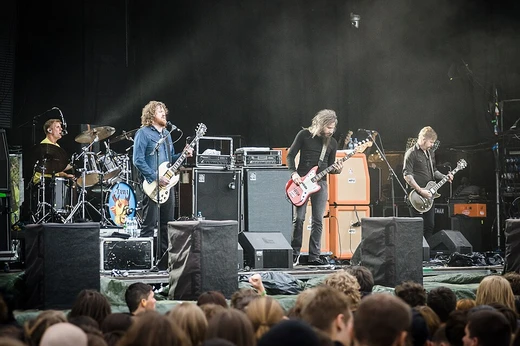
Dream Theater
American progressive metal band formed in 1985.
Shortly before the album was mixed, keyboardist Kevin Moore announced he would quit the band.[1] Dream Theater hired Derek Sherinian to fill in for the Waking Up the World Tour, and later took him on as Moore's full-time replacement.[2] On June 23, 1988, Dream Theater inked their initial recording agreement with Mechanic Records, and their first album was cut at Kajem Victory Studios in Gladwyne, Pennsylvania.[3] The band's debut, When Dream and Day Unite, came out in March 1989, generating much less excitement than the group had hoped for.[4]
Following the fourth concert of the promotional tour, vocalist Charlie Dominici was dismissed.[4] More than two hundred vocalists were tried out by the band, including John Arch, who had previously sung for Fates Warning but chose not to join.[5] Jordan Rudess took over as the group's third permanent keyboardist in 1999, succeeding Sherinian.[2]
Quick Facts
- Also known as
- Majesty (1985–1988)
- Origin
- Boston, Massachusetts, U.S.
- Genre
- Progressive metal
- Years active
- 1985–present
- Label
- InsideOut
- Roadrunner
- Warner Bros.
- Atlantic
- Elektra
- East West
- Atco
- Mechanic
- YtseJam
- Spinoffs
- Liquid Tension Experiment
- Explorers Club
- OSI
- Platypus
- Sons of Apollo
- Metal Allegiance
- Current members
- John Myung
- John Petrucci
- Mike Portnoy
- James LaBrie
- Jordan Rudess
- Past members
- Chris Collins
- Charlie Dominici
- Kevin Moore
- Derek Sherinian
- Mike Mangini
Facts from the source article.
What the cited sources add
The Metropolis 2000 world tour took over a year to complete and was by far their largest tour to that date.[6] Classic Rock magazine, in March 2003, listed that same album as the 15th best concept album ever made.[7] Loudwire's editorial team ranked Dream Theater as the 38th greatest metal band in history.[8] The group has been described as one of the "big three" in progressive metal, alongside Queensrÿche and Fates Warning.[8]
Six Degrees of Inner Turbulence entered the Billboard album chart at position 46 and topped the Billboard Internet chart.[9]
References
- Wikipedia, "Dream Theater" (CC BY-SA 4.0), which cites: EastWest Records Press Release. (original not read by us) en.wikipedia.org
- Wikipedia, "Dream Theater" (CC BY-SA 4.0), which cites: This was referenced in the documentary "The Score so Far", on the second disc of the Score DVD. (original not read by us) en.wikipedia.org
- Wikipedia, "Dream Theater" (CC BY-SA 4.0), which cites: Portnoy, Mike (2004). Nathan Edmonds help produce "When Dream and Day Unite Demos" 1987–1989 [CD Liner Notes]. New York: YtseJam Records. (original not read by us) en.wikipedia.org
- Wikipedia, "Dream Theater" (CC BY-SA 4.0), which cites: "Mike Portnoy.com The Official Website", Mikeportnoy.com (original not read by us) en.wikipedia.org
- Wikipedia, "Dream Theater" (CC BY-SA 4.0), which cites: "John Arch Interview by Jeff Wagner (1995)", Fateswarning.com (original not read by us) en.wikipedia.org
- Wikipedia, "Dream Theater" (CC BY-SA 4.0), which cites: "Gold & Platinum Searchable Database – August 09, 2014", RIAA (original not read by us) en.wikipedia.org
- Wikipedia, "Dream Theater" (CC BY-SA 4.0), which cites: "Guitar World's (Readers Choice) Greatest 100 Guitar Albums Of All Time", chud.com; "Classic Rock Magazine – Rock's 30 Greatest Concept Albums (March 2003)", rocklistmusic.co.uk (original not read by us) en.wikipedia.org
- Wikipedia, "Dream Theater" (CC BY-SA 4.0), which cites: "Dream Theater", iMusic; "John Petrucci", TC Electronic; "Dream Theater, Megadeth, Mastodon Among Grammy Awards Nominees", Blabbermouth.net, November 30, 2011; "Dream Theater Earn Second Grammy Nomination – Dream Theater – The Astonishing Out 1.29 | Official Site Official Blog", Dreamtheater.net, December 7, 2013; "SLEEP TOKEN, GHOST, SPIRITBOX, DREAM THEATER, DEFTONES & More Nominated For GRAMMYs", Metal Injection, 2025-11-07; "Dream Theater Artist GRAMMY.com", grammy.com; "The 13 essential progressive metal albums you need to know" en.wikipedia.org
- Wikipedia, "Dream Theater" (CC BY-SA 4.0), which cites: "Billboard Chart history for Dream Theater"; DreamTheater.net reported that Six Degrees of Inner Turbulence had reached No. 1 on the Billboard Internet Charts. (original not read by us) en.wikipedia.org
Each numbered sentence above was checked against the source it cites before publication. Sentences citing Wikipedia adapt text from the English Wikipedia article Dream Theater (contributors), used under CC BY-SA 4.0; this entry is available under the same licence. Other sources were used for facts only; no text or images are copied from them.
More in American Progressive Metal Musical Groups
Spotted an error? Know more?
Reader corrections go straight into our review queue. Suggest an edit · How this site is sourced