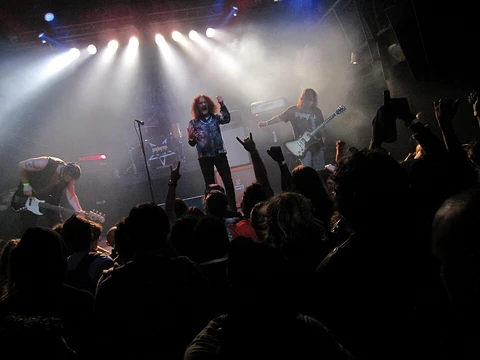
Agalloch
American extreme metal band known for atmospheric and folk-infused sound.

Agalloch was an American extreme metal band from Portland, Oregon, formed in 1995 by frontman John Haughm. The band's sound, rooted in atmospheric black metal, also incorporated elements of post-metal, folk metal, and doom metal. They gained prominence in the American underground metal scene with albums such as The Mantle (2002) and Ashes Against the Grain (2006), and later earned critical acclaim from larger publications with Marrow of the Spirit (2010). The band split in 2016 due to internal disputes over touring, but reunited in 2023 for limited shows.
- Formed
- 1995
- Years active
- 1995–2016, 2023–present
Lore & Background
Ashes Against the Grain (2006) featured a greater emphasis on electric guitars and metal elements, with Chris Greene playing drums on all tracks except 'Falling Snow' and 'Not Unlike the Waves'. After Greene left the band in 2006, Aesop Dekker joined in 2007. The band's contract with The End Records ended after the release of Ashes Against the Grain (2006), and they signed with Profound Lore Records for Marrow of the Spirit (2010), which earned critical acclaim from publications such as Pitchfork. The band released The Serpent & the Sphere in 2014. Internal disputes arose over touring commitments, leading to the band's split in 2016. Agalloch reunited in 2023 with the intent of playing limited shows.
Reader's Guide
Agalloch's significance lies in their distinctive fusion of atmospheric black metal with post-rock, folk, and neoclassical elements, which helped define a niche in American extreme metal. Albums like The Mantle and Ashes Against the Grain became touchstones for the genre, while Marrow of the Spirit brought them broader critical recognition. Their use of nature themes, acoustic interludes, and experimental approaches—such as the neofolk split with Nest and the ambient work on The White—demonstrated a willingness to evolve beyond metal conventions. The band's 2016 split over touring disagreements and subsequent 2023 reunion for limited shows highlight the tensions between artistic vision and commercial demands. Their legacy endures through a dedicated fanbase and influence on later atmospheric black metal and post-metal acts.
Did You Know?
- The band was named after the resinous wood of the agarwood tree (Aquilaria agallocha).
- Agalloch's first show was on March 6, 2004 in Portland, Oregon.
- The track 'Nebelmeer' was recorded with German artist Mathias Grassow for a compilation album.
- The band split in 2016 amid internal disputes over touring, with differing accounts of the reasons.
Origins in the Pacific Northwest
Agalloch traces its roots to 1995 in Portland, Oregon, when John Haughm and keyboardist Shane Breyer began composing together. The name itself draws from agarwood, the resinous timber of the Aquilaria agallocha tree. By early 1996, the duo had started writing material, and that summer guitarist Don Anderson stepped in to help shape the songs. They recorded in autumn of that year, producing the demo tape From Which of This Oak, a recording steeped in black metal that would seed material for later albums. Bassist Jason William Walton rounded out the trio shortly after. In 1998, the group cut a label-only demo, Promo 1998, which caught the ear of The End Records and led to a contract. Their 1999 debut, Pale Folklore, reworked earlier demo tracks but leaned further into neofolk textures and neoclassical interludes, softening the raw black metal edge. After the sessions wrapped, Breyer left the band, citing a waning interest in music, leaving the core trio to carry the project forward.
The Mantle and the Post-Rock Crossover
Between 2001 and early 2002, Agalloch recorded The Mantle, a record that wove in post-rock influences, particularly the sprawling work of Godspeed You! Black Emperor. Tracks like "In The Shadow of Our Pale Companion" and "You Were But A Ghost In My Arms" showcased a striking hybrid of black metal and post-rock that set the album apart. This release shifted the band's media trajectory, earning them interviews in mainstream magazines beyond the underground metal circuit. Their first live show came on March 6, 2003, in Portland, followed by additional West Coast dates and a May 2003 tour. The experimental streak continued with the Tomorrow Will Never Come 7-inch in 2003 and The Grey on Vendlus Records in 2004, both featuring remixed and reworked Mantle material. A nature-themed split 10-inch picture disc with Finnish band Nest in 2004 added a collaborative neofolk dimension. In 2005, double vinyl reissues of The Mantle and Pale Folklore were pressed in limited wooden boxes with new artwork, commemorating the band's single live appearance at Toronto's Day of the Equinox festival in October.
Ashes Against the Grain and the Wicker Man EP
Released on August 8, 2006, through The End Records, Ashes Against the Grain marked a deliberate shift in the band's sonic palette. Where The Mantle had leaned on acoustic guitars and post-rock swells, this third full-length pressed harder into electric guitars and heavier metal elements, giving it a distinctly different character. Drum duties, previously handled by Haughm, were largely taken over by Chris Greene, who had joined for live shows starting in 2003, freeing Haughm to focus on songwriting and guitar. Greene played on all tracks except "Falling Snow" and "Not Unlike the Waves." After a 2006 European tour, Greene departed and was replaced by Aesop Dekker of Ludicra. The album fulfilled the band's final obligation to The End Records, and in April 2008 they chose not to renew. That February, they released The White on Vendlus, a limited 2,000-copy EP collecting dark folk and ambient work from 2004 to 2007. Three tracks drew from the 1973 film The Wicker Man, using samples from the movie, while "Birch White" borrowed lyrics from A.S.J. Tessimond's "Birch Tree."
Marrow of the Spirit, the Split, and Reunion
The 2010 release of Marrow of the Spirit on Profound Lore Records proved a watershed moment for Agalloch. The album significantly broadened the band's audience, drawing critical acclaim from larger publications including Pitchfork, a level of attention that had eluded them during their years on The End Records. Around this period, the band also contributed a track, "Nebelmeer," with German artist Mathias Grassow to the compilation Der Wanderer über dem Nebelmeer, released by Pest Productions in March 2010. However, internal tensions eventually fractured the group. In 2016, Agalloch split over disputes rooted in Haughm being the only member who wanted to commit to full-time touring, a fundamental mismatch in how the band members envisioned their musical lives. The separation lasted several years before the band reunited in 2023, with the stated intent of playing limited shows rather than resuming a full touring schedule. This cautious return suggested a group that valued the music but had learned to respect the boundaries that had once driven them apart.
Frequently Asked Questions
Who is Agalloch and where are they from?
Agalloch is an American extreme metal band based in Portland, Oregon, recognized for weaving atmospheric black metal together with post-metal, folk, and doom textures. The group was founded in 1996 by frontman John Haughm.
What are Agalloch's most notable albums?
The Mantle (2002) and Ashes Against the Grain (2006) are widely regarded as their defining underground-era records, while Marrow of the Spirit (2010) marked the point at which they earned broader critical attention from mainstream music publications.
Why did Agalloch break up?
The band called it quits in 2016 after internal disagreements over how much time and energy the members would commit to touring. The split stemmed from accumulated friction rather than a single dramatic incident.
Did Agalloch reunite?
Yes; after roughly seven years of inactivity, the members regrouped in 2023 to play a limited series of live shows. Their post-reunion activity has so far taken the form of select performances rather than a full studio cycle.
What makes Agalloch different from other doom or black metal bands?
Instead of leaning on pure aggression or pure melody, Agalloch layers folk instrumentation and post-metal dynamics over an atmospheric black-metal foundation, producing a cinematic, nature-inspired sound. This hybrid approach set them apart within the American underground metal scene.
More in American doom metal musical groups 1-24
Spotted an error? Know more?
Reader corrections go straight into our review queue. Suggest an edit · How this site is sourced