
Amateur Radio on the International Space Station
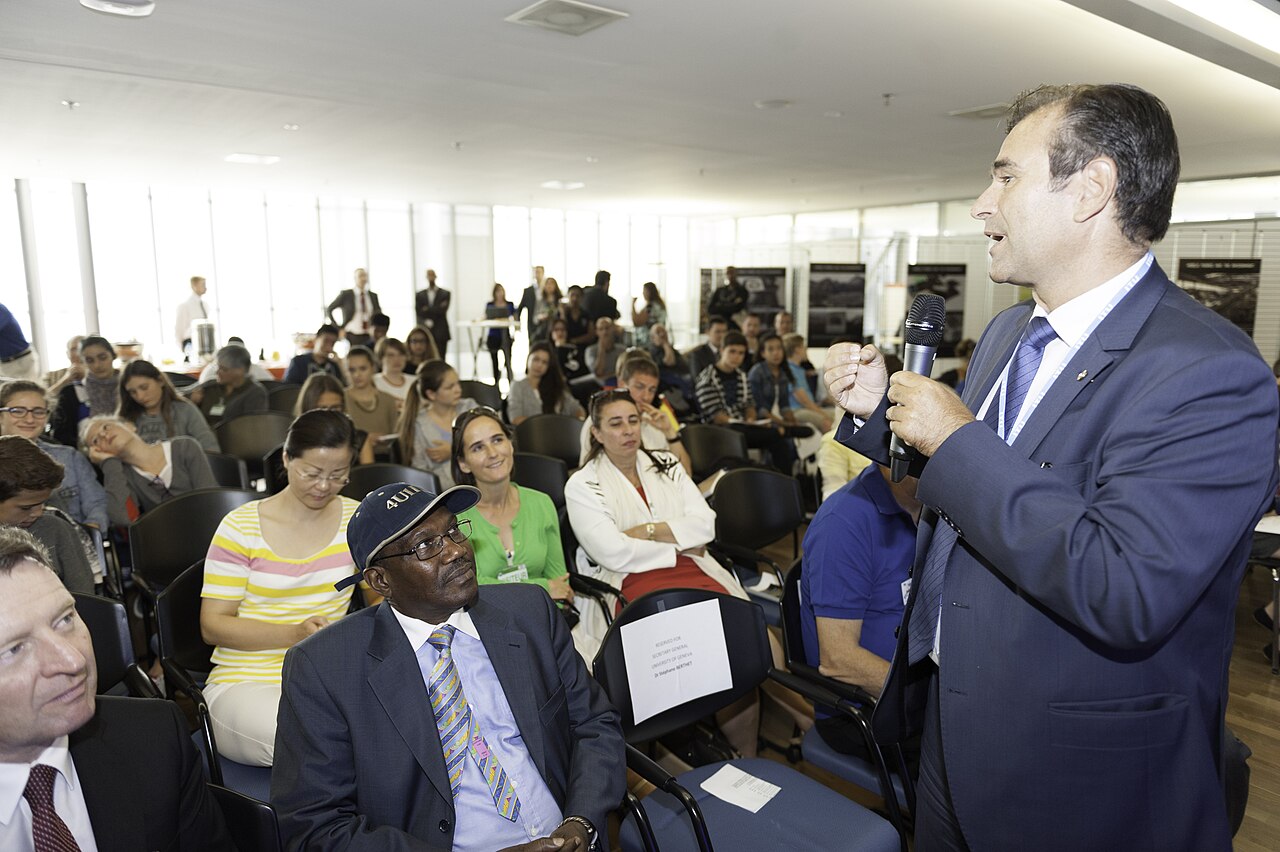
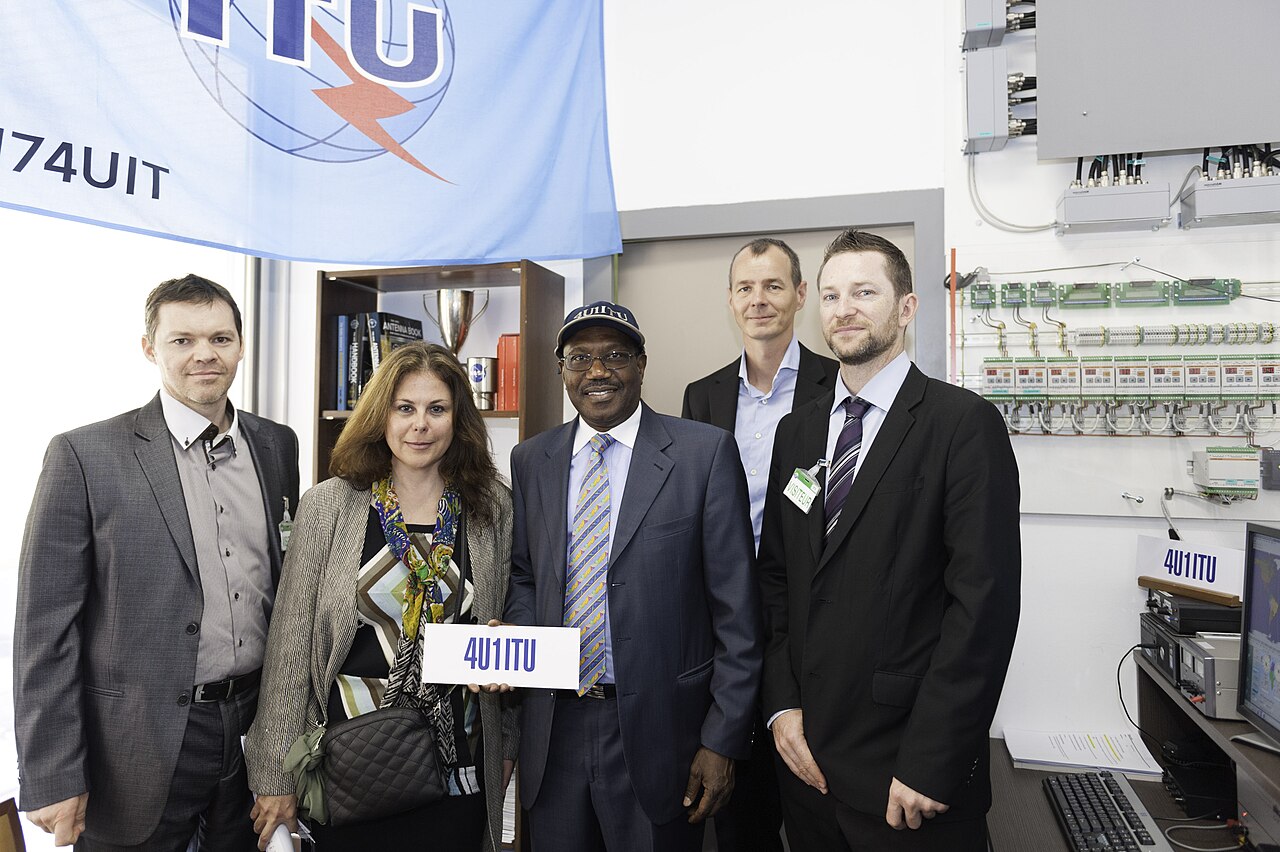
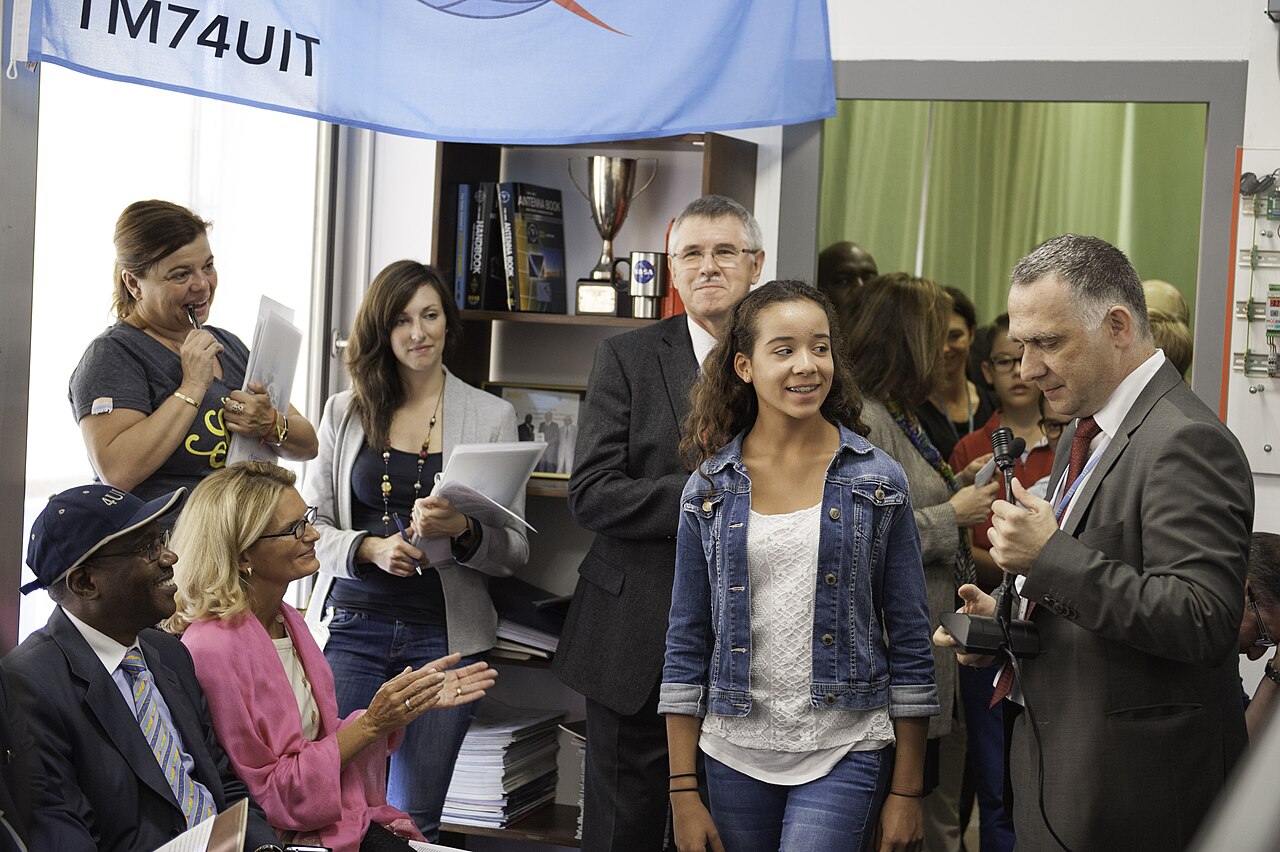
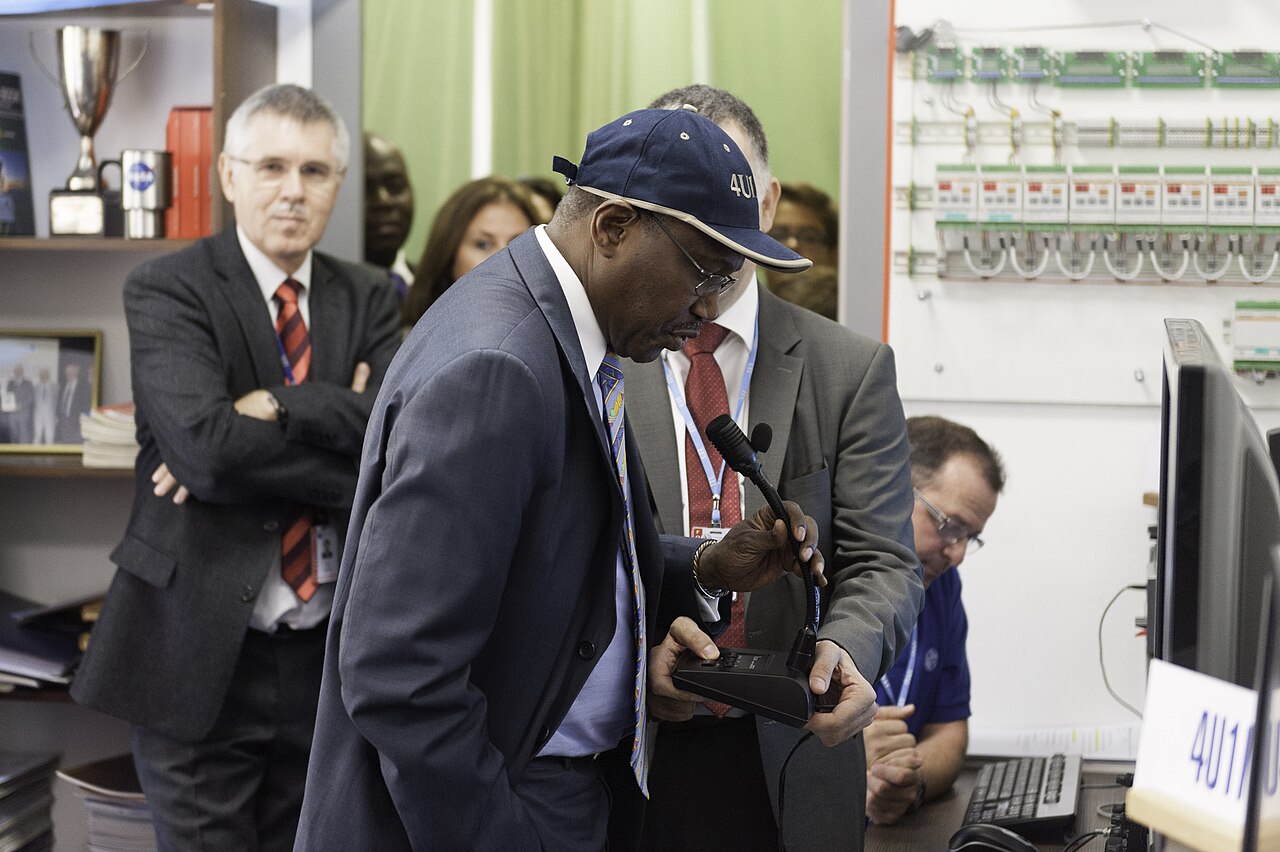
ARISS connects students and hams with ISS crew via amateur radio.

ITU Pictures from Geneva, Switzerland · CC BY 2.0
Amateur Radio on the International Space Station (ARISS) lets licensed ham radio operators talk directly with astronauts and cosmonauts on the ISS using amateur-satellite frequencies. Its main purpose is to encourage interest in science, technology, engineering, and math (STEM) and inspire people to pursue careers in those fields.
The program began in 1996. It was originally run by a global partnership of amateur radio groups and space agencies, including NASA, Roscosmos, the Canadian Space Agency, JAXA, and the European Space Agency. In May 2020, the U.S. arm became an independent nonprofit (501(c)(3)), though it continues to work closely with all the original organizations. ARISS grew out of an earlier project called the Shuttle Amateur Radio Experiment (SAREX).
Students and amateur operators worldwide can reach the ISS using handheld, mobile, or home radios, even with low-power equipment and small antennas. People can also send digital data—similar to email—to the station via laptop computers, using radio frequencies instead of phone or cable connections.
The first amateur radio contacts from the ISS happened on November 12, 2000, during Expedition 1. Between 06:30 and 10:10 UTC, Sergei Krikalev (callsign U5MIR) contacted the ARISS team in Russia. At 10:55 UTC, Krikalev and William Shepherd (callsign KF5GSL), operating as NA1SS, reached the amateur radio club at NASA’s Goddard Space Flight Center. A few minutes later, they spoke with the Johnson Space Center club, W5RRR. The mission log noted the VHF circuit’s communication quality was excellent, with better signal-to-noise and readability than other comm circuits.
In 2011, Kenwood Electronics ran an ad campaign highlighting that their TM-D700A transceiver was then in use on the ISS.
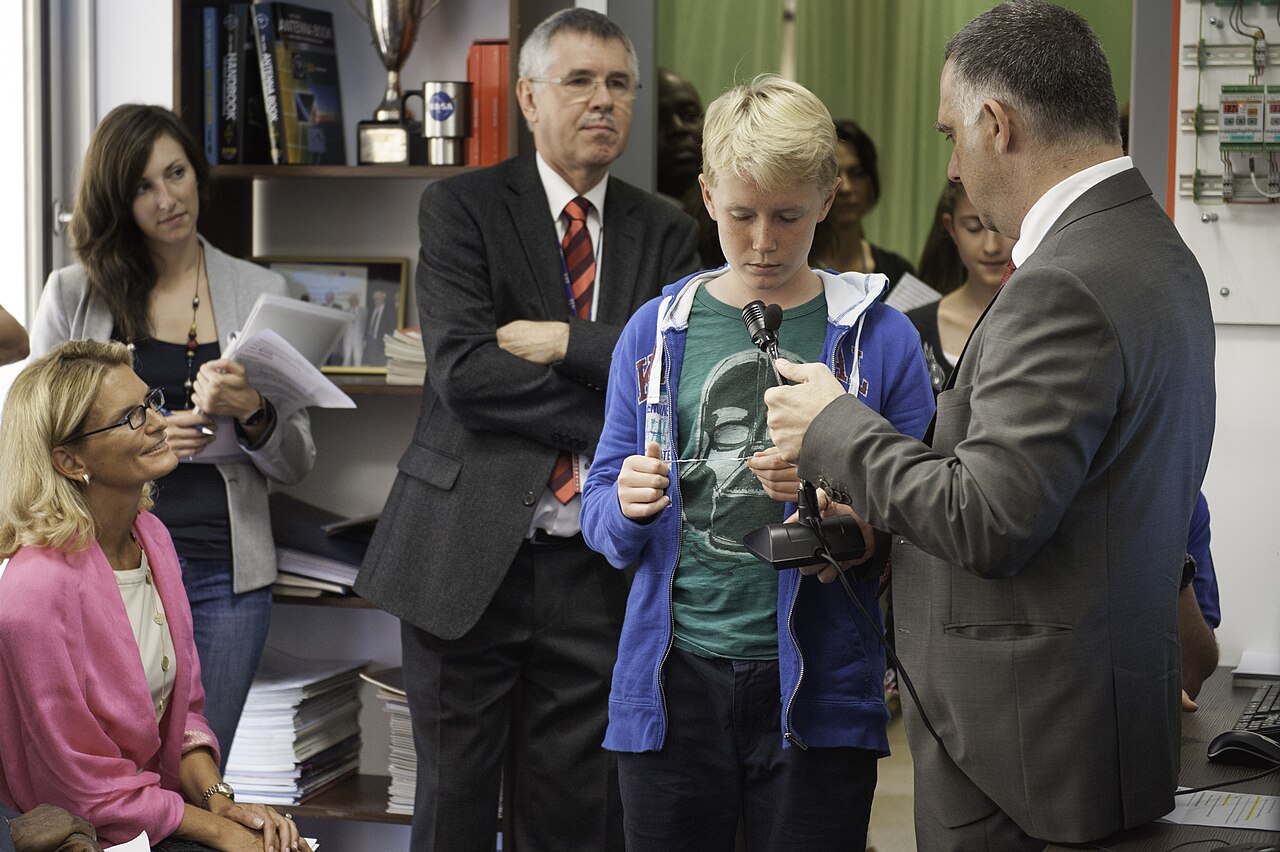
Many ISS crew members are licensed ham operators. After their standard workday (based on UTC), they sometimes use evening free time to talk with family and other hams. In summer 2022, crew member Kjell N. Lindgren spoke with a young operator in the UK, and they later exchanged photos and cards. Crews from Expeditions 69 and 70, as well as Axiom 1 and Axiom 2, have recently made school contacts via amateur radio.
The Interoperable Radio System (IORS) is the core of ARISS’s next-generation radio setup on the ISS. The hardware team is building four flight units and ten total units.
- Established
- 1996
- First contacts
- November 12, 2000
- First operators
- Sergei Krikalev (U5MIR) and William Shepherd (KF5GSL)
- First contact callsign
- NA1SS
- First contact location
- NASA Goddard Spaceflight Center
- First iors installation date
- September 2, 2020
- First iors installer
- Expedition 63 Commander Chris Cassidy
Lore & Background
ARISS was established in 1996, evolving from the Shuttle Amateur Radio Experiment (SAREX). It was once managed by an international consortium of amateur radio organizations and space agencies including NASA, Roscosmos, CSA, JAXA, and ESA. In May 2020, ARISS became independent, forming a 501(c)(3) for its US affiliate, while continuing to work closely with all originating groups.
On November 12, 2000, the first amateur radio contacts were made from the ISS during Expedition 1. Between 06:30 and 10:10 UTC, Sergei Krikalev contacted the ARISS team in Russia. At 10:55 UTC, Krikalev and William Shepherd, operating as NA1SS, contacted the amateur radio club at NASA Goddard Spaceflight Center, and a few minutes later spoke to the Johnson Space Center club, W5RRR. The mission log noted that the VHF circuit's signal-to-noise and readability were better than other comm circuits.
The Interoperable Radio System (IORS) is the foundation of the ARISS next-generation radio system. Four flight units and ten total units are being built. The first IORS flew to ISS on SpaceX CRS-20 and was installed in the Columbus module by Expedition 63 Commander Chris Cassidy on September 2, 2020. A second flight unit launched later in 2020 for the Russian Service module. Since 2022, ARISS has used IORS radios in both modules. The Columbus module radio typically functions as a crossband voice repeater, while the Service module radio handles packet operations like APRS and SSTV. The IORS consists of a modified JVCKenwood D710GA transceiver, an AMSAT-developed multi-voltage power supply, and interconnecting cables.
Reader's Guide
ARISS has enabled students and amateur radio operators worldwide to speak directly to astronauts and cosmonauts using handheld, mobile, or home stations with low power radios and small antennas. Digital data can also be sent to the ISS via laptop computers using radio frequencies. Many ISS crew members are amateur radio operators and use their evening free time to communicate with family and other hams. For example, crew member Kjell N. Lindgren spoke with a young operator in the UK during summer 2022, and they later exchanged photos and cards. Crews from ISS Expedition 69, Expedition 70, Axiom 1, and Axiom 2 have made recent school contacts via amateur radio.
The IORS provides higher power, an enhanced voice repeater, updated digital packet radio (APRS) capabilities, and slow-scan television (SSTV) for both US and Russian segments. The program's significance lies in its direct, hands-on engagement with space exploration, inspiring STEM interest and careers. The first contacts in 2000 demonstrated that ham radio could outperform other communication circuits in signal quality, underscoring its value as a reliable and accessible link between Earth and orbit.
Did You Know?
- The first amateur radio contacts from the ISS occurred on November 12, 2000, during Expedition 1.
- Sergei Krikalev and William Shepherd made the first contacts, with the mission log noting the ham radio's signal quality was better than other comm circuits.
- The IORS first flew to the ISS on SpaceX CRS-20 and was installed in the Columbus module on September 2, 2020.
- In 2011, Kenwood Electronics launched an advertising campaign highlighting that their TM-D700A transceiver was in use on the ISS.
The Global Scaffolding: ITU Prefix Allocation
Since 1927, the International Telecommunication Union has served as the worldwide authority responsible for distributing call sign prefixes across all radio and television services. For amateur radio specifically, the governing rules are codified in Article 19 of the ITU framework, with sections 19.68 and 19.69 laying out the precise requirements. The system functions as a universal identifier: every call sign opens with a prefix that acts essentially as a country code, immediately signaling to any listener which national jurisdiction the operator falls under. A critical constraint underpins the entire scheme — a given country may issue call signs only to its own nationals or to operators acting under its regulatory authority, and those call signs must begin with the characters the ITU has reserved for that particular nation or territory. This guarantees that no two jurisdictions can accidentally generate overlapping identifiers, and it gives the global amateur community a reliable way to trace any station back to its home regulatory body. The prefix thus serves a dual purpose: legal identification of the station or operator, and geographic localization within the worldwide spectrum of ham radio activity.
Anatomy of a Call Sign: Three Blocks, One Identity
Every amateur radio call sign is constructed from three distinct building blocks arranged in a fixed order. At the leftmost position sits the prefix, which may consist of one, two, or three characters drawn from either the alphabet or the digits. Following the prefix comes a single separating numeral, any digit from zero through nine, whose job is to visually and structurally divide the country-identifying portion from the individual-identifying portion. Finally, a suffix of one to four characters — typically letters, with the last character always being a letter — completes the identifier and distinguishes one operator from every other within the same jurisdiction. In some regulatory contexts, the prefix and the separating numeral are collectively referred to as the "prefix," a usage that can cause minor confusion when discussing the structure. The prefix itself may contain letters or numbers, while the suffix is almost exclusively alphabetic. This tripartite design ensures that the call sign simultaneously encodes national identity, provides a clean structural break, and delivers a unique personal identifier — all within a compact string that can be easily transmitted and recognized over the air.
The Prefix Allocation Puzzle: One, Two, or Three Characters?
The choice of how many characters a country uses for its prefix is far from arbitrary; it depends entirely on how the ITU has carved up the available letter blocks. When an entire block belongs to a single nation — as the KAA–KZZ range does for the United States, or the B-block for China — a single letter suffices as a prefix. But when a block is shared among multiple jurisdictions, the situation changes. The 'A' block, for instance, is split among the USA, Spain, Pakistan, India, and Australia, forcing each to use at least two characters to remain distinguishable. Three-character prefixes represent a rare and awkward scenario, most notably in the 3DA–3DZ range, where Fiji holds 3DN–3DZ and Eswatini holds 3DA–3DM. In practice, both countries have issued call signs using just the two-character '3D' prefix, creating a theoretical overlap. Special cases also exist: the Bahamas uses the C6A–C6Z block where the digit six is part of the prefix rather than a separator, and South Korea once issued a special event call sign D9K with no separating numeral at all.
Vanity Call Signs and the Shifting Cost of Personalization
Beyond the standard call sign assigned by a national regulator, many jurisdictions allow operators to apply for a personal "vanity" call sign — a custom identifier that still conforms to the country's allocated prefix range and local licensing rules. The practical details vary considerably from one nation to the next. In the United Kingdom, an applicant can simply choose a vanity call sign at the time of license application without paying any additional charge. In the United States, the Federal Communications Commission historically charged a fee for vanity call sign applications, though Congress is the body that mandates the FCC's authority to impose and collect such fees. In September 2015, the FCC eliminated the fee entirely. That policy did not last: effective April 19, 2022, a thirty-five-dollar application fee was reinstated for any new, renewal, rule waiver, or modification application that requests a new vanity call sign. The fluctuation in U.S. policy illustrates how even a small administrative detail like a call sign fee can shift with regulatory priorities, while the underlying ITU framework for prefix allocation remains constant.
Gallery
Frequently Asked Questions
What is Amateur Radio on the International Space Station (ARISS)?
ARISS is a program that allows licensed amateur radio operators to make direct voice contact with astronauts and cosmonauts aboard the ISS using amateur-satellite frequencies. Its central goal is to fuel interest in STEM and encourage people to pursue careers in those disciplines.
What is ARISS's role or mission?
The program serves as a bridge between ground-based ham radio enthusiasts and the ISS crew, making space exploration feel personal and accessible. It specifically targets students and the general public to inspire them toward science, technology, engineering, and math careers.
When did ARISS start and who made the first contact?
The program was established in 1996, and the very first radio contact occurred on November 12, 2000. Cosmonaut Sergei Krikalev and astronaut William Shepherd handled that inaugural call under the NA1SS callsign, with the ground station at NASA Goddard Spaceflight Center.
Who operates ARISS?
ARISS was originally a collaborative effort among amateur radio groups and major space agencies including NASA, Roscosmos, the Canadian Space Agency, JAXA, and ESA. In May 2020, the U.S. arm became its own independent nonprofit organization.
Why is ARISS important to the ham radio community?
It gives everyday licensed operators a rare, hands-on connection to active human spaceflight, which few other programs offer. For schools, clubs, and space agencies worldwide, ARISS events have become a highlight that makes STEM education tangible and exciting.
More in Amateur Radio Organizations 1-24
Spotted an error? Know more?
Reader corrections go straight into our review queue. Suggest an edit · How this site is sourced