
The CW Operators' Club
International club for amateur radio operators who enjoy Morse Code.

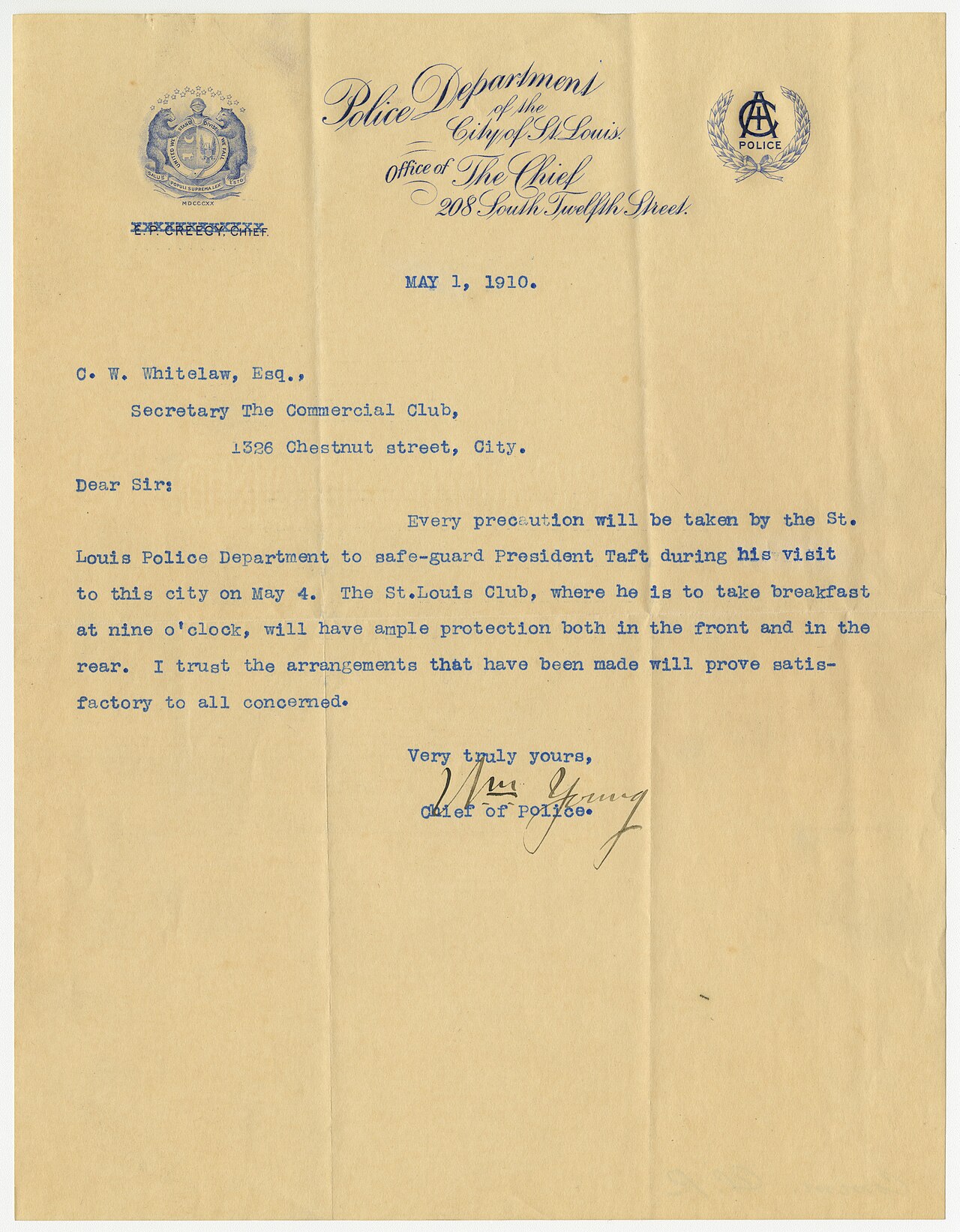
Young, William · No restrictions
The CW Operators’ Club, or CWops, is a worldwide group of amateur radio operators—both in membership and leadership—who share a passion for Morse Code communication. The club’s goal is to encourage the use of CW in all its forms, including contesting, DXing, traffic handling, and casual conversation. To join, a nominee must be able to send and receive International Morse Code at a minimum of 25 words per minute in English and pay dues. CWops is an activity-driven organization that runs numerous events, and its members are committed to fostering goodwill and education among amateur radio operators globally. Many members are well-known contesters, DXers, and high-speed (QRQ) Morse Code operators. The name "CW" comes from Continuous Wave, the transmission mode where Morse code is typically sent: a transmitter is keyed on and off, and the receiver interprets the presence or absence of a carrier as a tone.
Quick Facts
- Abbreviation
- CWops
- Formation
- January 2010
- Purpose
- Advocacy, Education
- Region Served
- Worldwide Membership
- Membership
- Over 3000
Facts from the source article.
Lore & Background
The name CWops derives from CW, an abbreviation for Continuous Wave, describing the mode in which Morse code is most often transmitted. In this mode, a transmitter is simply keyed on and off, and the presence or absence of carrier is decoded in the receiver as the presence or absence of a tone. The club is managed internationally, both in membership and leadership. Many members are notable contesters, DXers, and QRQ (high speed) Morse Code operators. A nominee must be capable of sending and receiving International Morse Code at no less than 25 words per minute using the English language and must submit dues.
Reader's Guide
The CW Operators' Club holds significance as an activity-based organization that actively sponsors events to promote the use of CW across various amateur radio disciplines, including contesting, DXing, traffic handling, and conversational operating. Its international membership and management reflect a global commitment to fostering Morse Code skills and camaraderie. The club's dedication to promoting goodwill and education among amateur radio operators worldwide underscores its role in sustaining and advancing the practice of CW communication. By setting a minimum proficiency standard of 25 words per minute for nominees, CWops maintains a community of skilled operators, many of whom are recognized as notable contesters, DXers, and high-speed Morse Code specialists. The club's legacy is tied to its ongoing efforts to keep Morse Code relevant and vibrant in the amateur radio hobby, supported by events and a shared passion for the mode.
Origins & Identity
An amateur radio operator is defined by their use of station equipment to conduct two-way personal communications with fellow operators on frequencies designated for the amateur service. Before taking to the airwaves, every operator must earn a licence from a governmental regulatory body, a process that requires passing examinations covering applicable regulations, electronics, radio theory, and practical radio operation. As part of that licensing, each operator receives a unique call sign that serves as their identity during every transmission. Roughly three million such operators are active across the globe today. The community's most enduring nickname, "ham," carries an unflattering origin. It began as a pejorative label, comparable to "ham actor," used by commercial and professional radio workers to dismiss hobbyists, and its roots stretch back to the era of wired telegraphy. By the 1920s, however, the amateur community reclaimed the word and embraced it as a badge of pride, and it has stuck ever since.
Global Demographics & Geography
Very few national governments track detailed demographic data about their licensed amateur populations beyond simply counting total holders. The bulk of the world's three million operators cluster in the United States, Japan, and the broader regions of East Asia, North America, and Europe. When measured as a share of total population, the top five nations are Slovenia, Japan, the United States, Canada, and Denmark. Access to licensing, however, is far from universal. Yemen and North Korea are the only two countries that outright ban their citizens from obtaining an amateur radio licence. In Eritrea the process is so obstructed that no licensed operators exist at all, and Turkmenistan and Myanmar host virtually none. In many other nations, heavy bureaucratic hurdles or prohibitive fees effectively lock most citizens out of the hobby. While most countries do allow foreign nationals to sit for the licensing exam, very few operators end up holding credentials in more than one country.
The Aging Community & Youth Outreach
A persistent challenge facing the amateur radio community is its demographic skew toward older members. Most countries impose no minimum age for licensing, yet the average operator in many nations hovers near sixty-eight, and in most European countries the figure is creeping toward seventy. This unfavourable age distribution has produced a slow but steady attrition of operators in industrialised nations. German statistics, widely regarded as the most reliable in the field, estimate a net annual decline of roughly one to one and a half percent. In countries that do not charge yearly licence fees the drop-off is less immediately visible, but the underlying trend persists. Recognising the problem, national radio societies have launched targeted youth programmes. The American Radio Relay League runs an Amateur Radio Education and Technology Program, while the World Wide Young Contesters organisation pushes competitive contesting among European young people. A particularly strong partnership links the amateur community with the Scouting movement: each October, the World Organization of the Scout Movement's Jamboree on the Air connects roughly half a million Scouts and Guides through amateur radio, making it Scouting's single largest annual activity.
Culture & Terminology
The amateur radio community has developed a rich lexicon of shorthand and tradition. A male operator is commonly called an OM, short for "old man," a term borrowed from Morse code telegraphy that applies regardless of actual age. A female operator is known as a YL, from "young lady," again irrespective of age, while a licensed married woman may be called an XYL. The term XYL also frequently refers to the wife of a licensed amateur, whether or not she holds her own licence. In the vast majority of countries the operator population is overwhelmingly male; in China women make up about twelve percent, and in the United States roughly fifteen percent. The international Young Ladies Radio League exists specifically to support female operators. Perhaps the most poignant term in the community's vocabulary is "Silent Key," abbreviated SK. It is a euphemism for an operator who has passed away. The phrase derives from the procedural signal SK, or VA, which in Morse code telegraphy marked the final transmission before a station shut down its transmitter. Because it was the last signal a fellow operator would ever hear, the code naturally evolved into a respectful way to honour a colleague who is no longer with us.
Gallery
Frequently Asked Questions
What is The CW Operators' Club?
CWops is a worldwide community of amateur radio operators who share a deep passion for Morse Code communication. The club exists to keep CW alive and thriving across every mode of ham radio activity, from contesting and DXing to casual QSOs.
How do you join The CW Operators' Club?
A candidate must be able to send and receive International Morse Code at a minimum of 25 words per minute in English. They also need a nomination from an existing member and must pay the required dues.
What kind of events does The CW Operators' Club run?
CWops is an activity-driven organization that hosts a broad lineup of events throughout the year. These cover contesting, traffic handling, DXing, and informal CW conversation, all designed to keep members sharp and engaged.
Is The CW Operators' Club limited to a single country?
No, CWops is fully international in both membership and leadership. Operators from around the world can participate as long as they meet the Morse code proficiency threshold and the nomination-and-dues process.
Why does The CW Operators' Club matter to the ham radio community?
CWops actively works to preserve Morse Code as a living, practical skill rather than a relic. Its members are committed to fostering goodwill, education, and continued CW use in every form of amateur radio operation.
More in Amateur Radio Organizations 1-24
Spotted an error? Know more?
Reader corrections go straight into our review queue. Suggest an edit · How this site is sourced