
Adventure Rock
A safe, closed virtual world for children, shut down in January 2010.

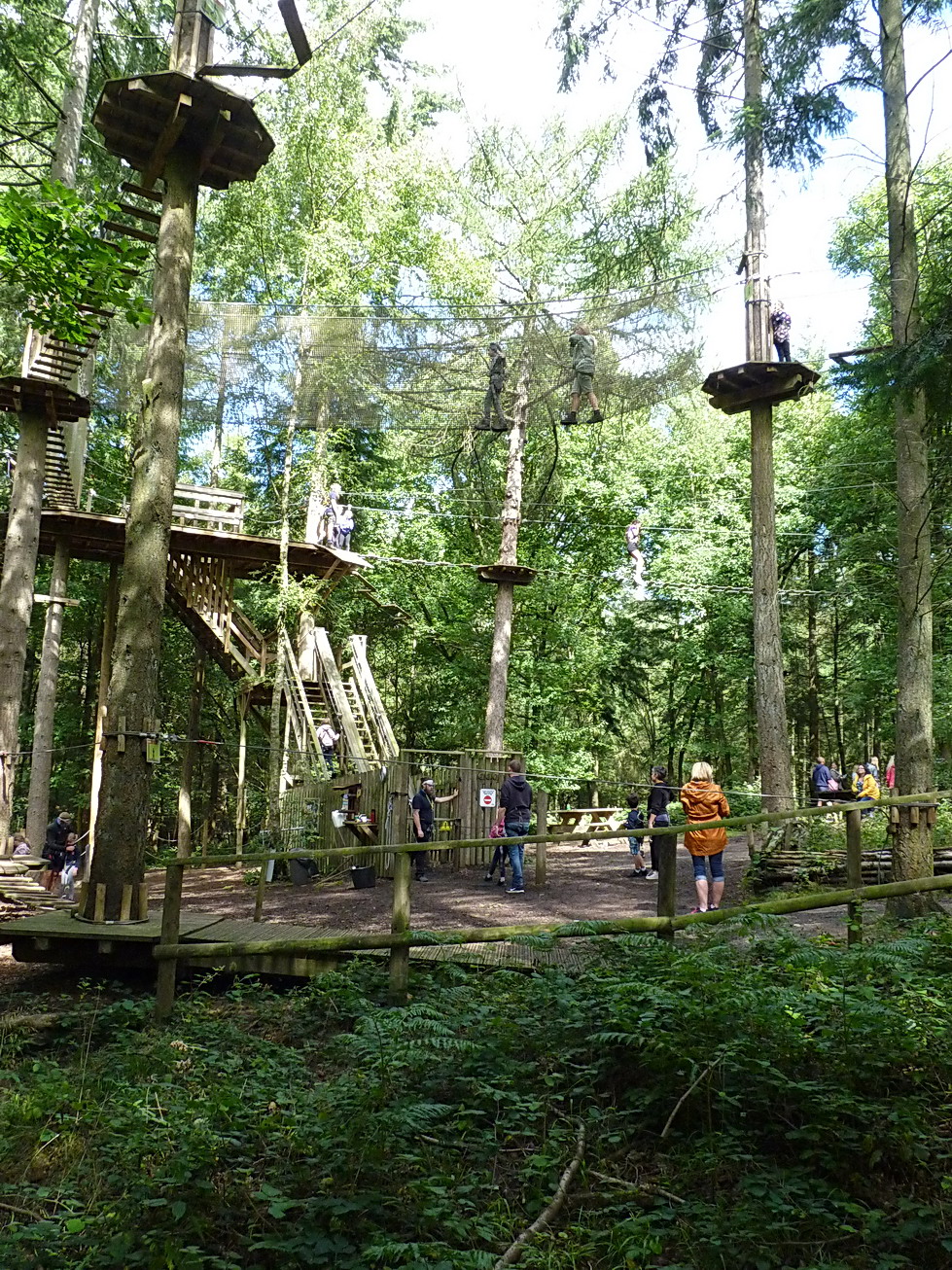
Image uploaded by me User:George.Hutchinson from a photograph taken by and suppl · CC BY-SA 3.0
Adventure Rock was a virtual online world for children created by the BBC for a UK audience, in association with Ketnet (owned by VRT, Flanders' public broadcaster). Ketnet later adapted a version for the Belgian market, but the BBC version was not a redevelopment of a Belgian product. Aimed at children aged 6–12, the world emphasized safety and responsibility, lacking chatrooms or financial aspects found in other online worlds such as Second Life. The game was shut down in January 2010 after the BBC announced its closure in late 2009.
Quick Facts
- Title
- Adventure Rock
- Developer
- BBC / Larian Studios, through Vlaamse Radio- en Televisieomroep
- Publisher
- BBC and Vlaamse Radio- en Televisieomroep
- Engine
- Meqon Game Dynamics
- Platforms
- Windows
- Released
- April 2008
- Genre
- Adventure, educational
- Modes
- Single-player
Facts from the source article.
Lore & Background
Adventure Rock consisted of a large virtual world explored using customized avatars, accompanied by a floating robot named Cody who guided and helped the player. The game began with a tutorial, after which the player was dropped onto Adventure Rock to explore freely. Tasks included collecting cog-shaped tokens and pages torn from a book, the purpose of which remained unknown at the time of closure. Players could also create art, music, and animations in various studios, submitting them to CBBC. Several areas, such as a roller coaster, were initially closed off; some were released over time, but many remained locked when the game was taken down.
The game was based on a story narrated on the Adventure Rock website, describing a strange rift on the CBBC website leading to an unknown world. Two CBBC hosts were sent to explore and reported back via a blog-style narrative, eventually requesting help from CBBC users to investigate further.
Adventure Rock was the subject of a year-long joint research project between CBBC and the University of Westminster, funded by BBC Future Media and Technology and the Arts and Humanities Research Council, beginning in July 2007. The project studied how children engage with virtual worlds, including workshops with 75 participants aged 7–11 in Scotland, Wales, Northern Ireland, and England, as well as observation of producers and hosts. Findings were presented at the Conference on Virtual Worlds for Children on 23 May 2008.
Reader's Guide
Adventure Rock represents an early attempt by a major public broadcaster to create a safe, child-focused virtual world, deliberately avoiding the social and financial features of platforms like Second Life. Its emphasis on safety and responsibility, with no chatrooms or in-game purchases, reflected a protective approach to children's online engagement. The game's closure in 2009 due to lack of popularity, updates, and repairs highlights the challenges of sustaining such a platform. The joint research project with the University of Westminster was notable as the first time the BBC ran a structured commissioning round for academic partnership, aiming to understand children's engagement with virtual worlds from both audience and producer perspectives. The research examined how children create imaginary spaces, how they wished Adventure Rock to develop, and parental perceptions. Despite its short lifespan, Adventure Rock provides a case study in the intersection of children's media, online safety, and academic research, illustrating both the potential and limitations of closed virtual environments for young users.
Did You Know?
- Adventure Rock was developed by the BBC for a UK audience from the start; Ketnet later adapted a version for the Belgian market.
- The game had no chatrooms or financial aspects, unlike other online worlds such as Second Life.
- Many areas of Adventure Rock, including a roller coaster, remained locked when the game was shut down in January 2010.
The Engine That Built an Empire
Few game engines have shaped an entire studio's identity as thoroughly as SCUMM did for LucasArts. Born in 1987 with Maniac Mansion, the engine powered nearly every subsequent graphic adventure title the company produced, with only two exceptions. Each new game pushed the technology further: Zak McKracken introduced a slightly upgraded version, Indiana Jones and the Last Crusade expanded its capabilities again, and Loom leveraged dithering to refresh the visual presentation. The engine's consistency gave players a familiar interface across titles, while the iterative improvements kept the experience feeling fresh. Beyond the technical layer, SCUMM became a vehicle for creative identity. The same composers returned across productions, in-joke references to other LucasArts titles and Lucasfilm properties wove through the games, and running gags like Chuck the Plant and Sam & Max cameos created a sense of shared universe. After 1997, the studio transitioned to 3D graphics with the GrimE engine, but the spirit of that early SCUMM era—humorous, irreverent, and player-friendly—remained the defining character of the catalog.
A Philosophy of Play
LucasArts adventure games were built on a simple but radical promise: the player would never truly fail. Beginning with Loom in 1990, the studio adopted a design philosophy in which the protagonist could not die or reach a complete dead-end, a principle that carried through virtually every subsequent title. The sole notable exception was Indiana Jones and the Fate of Atlantis. This commitment to player agency extended into the puzzles themselves. Indiana Jones and the Last Crusade introduced an 'Indy Quotient' system that let players solve obstacles through multiple approaches—fighting, sneaking, or persuading—rather than forcing a single correct answer. The tone was equally distinctive. With the exceptions of Loom and The Dig, the games leaned heavily into slapstick and irreverent humor, a style that set them apart from the more serious adventure titles of the era. Even Loom, the studio's most experimental entry, broke conventions by replacing the standard point-and-click interface with four-note musical spells, proving that the team was willing to reinvent interaction when the story demanded it.
The Monkey Island Phenomenon
The Secret of Monkey Island, released in 1990, remains the most culturally resonant title in the LucasArts adventure catalog. Designed by Ron Gilbert, Dave Grossman, and Tim Schafer, the game introduced Guybrush Threepwood, a bumbling amateur pirate who became one of the most beloved characters in gaming history. Set in the Caribbean during the Golden Age of Piracy, the title elevated the studio's already sharp humor to a new level of wit and charm. Its sequel, Monkey Island 2: LeChuck's Revenge, followed in 1991 and simplified the interface for broader accessibility while retaining the same creative team—though it would be Gilbert's final project with the company. The series' impact endured far beyond its original release. In 2009, LucasArts partnered with Telltale Games to bring the franchise back to life, producing special editions of the first two games and the episodic adventure Tales of Monkey Island. This collaboration signaled the studio's intent to revisit its legacy portfolio, proving that the world of Monkey Island still had an audience eager to return to its shores.
The End and the Aftermath
The LucasArts adventure era drew to a close in 2004, following a string of titles that never made it to release. The decision to cease development on graphic adventure games marked the end of a nearly two-decade run that had produced some of the most celebrated and critically acclaimed point-and-click experiences in gaming history. Yet the talent did not simply vanish. Many of the developers who had shaped those beloved games departed to form new studios, carrying the same design sensibilities into fresh ventures. Telltale Games, Double Fine Productions, and Autumn Moon Entertainment all benefited from this migration, continuing to produce adventure titles that echoed the humor, puzzle-driven storytelling, and player-friendly philosophy of their LucasArts predecessors. The 2009 Telltale collaboration on Monkey Island further demonstrated that the creative DNA of the original team still had commercial and artistic life. In many ways, the legacy of LucasArts adventures did not end in 2004; it simply scattered across the industry, seeding new studios and new generations of players who would grow up with the same irreverent, forgiving, and endlessly inventive spirit.
Gallery




Frequently Asked Questions
What is Adventure Rock?
Adventure Rock was a closed virtual online world designed specifically for children, built by the BBC for a UK audience in partnership with the Flemish public broadcaster VRT's Ketnet channel. It offered a structured, supervised digital space rather than an open-ended social platform.
Who developed and operated Adventure Rock?
The BBC created the world for its UK audience, working alongside Ketnet, which is owned by Flanders' public broadcaster VRT. Ketnet later produced a separate Belgian-market adaptation, though the BBC version was an original creation rather than a rework of a Belgian product.
What age group was Adventure Rock aimed at?
The world was designed for children between the ages of six and twelve, with content and interactions tailored to that developmental range.
How did Adventure Rock differ from other online worlds like Second Life?
It deliberately excluded chatrooms and any financial or currency systems, prioritizing a safe, responsibility-focused environment for younger users. This made it a much more controlled experience compared to open virtual worlds.
When and why was Adventure Rock shut down?
The BBC announced the closure of the service in late 2009, and the platform was officially taken offline in January 2010. No successor or revival was announced after that shutdown.
More in Adventure games 1-24
Spotted an error? Know more?
Reader corrections go straight into our review queue. Suggest an edit · How this site is sourced