Neuschwanstein Castle
A 19th-century historicist palace in the Bavarian Alps, built for King Ludwig II as a retreat and tribute to Richard Wagner.
Last updated

via Wikipedia: Neuschwanstein Castle · see source
Where it is
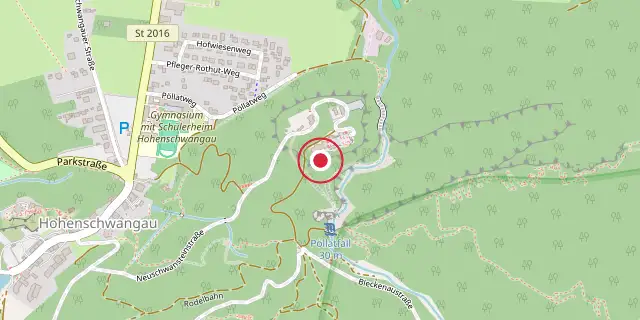
Coordinates: 47°33′25″N 10°44′56″E (47.5570, 10.7490) · Open in OpenStreetMap
Coordinates and connected clubs: the infobox of Wikipedia: Neuschwanstein Castle (CC BY-SA 4.0). Map: drawn by Codexery from OpenStreetMap tiles.
Neuschwanstein Castle was built as a private refuge for King Ludwig II, who designed it as a hideaway from the public.[1] Over 1.3 million people visit Neuschwanstein each year, and during summer the daily count can reach 6,000.[2] Guided tours are how the general public can access the castle.[2]
Key facts and history
The foundation stone for the palace was laid on 5 September 1869.[3] Between 1940 and 1945, Nazi officials used Neuschwanstein as headquarters for the "Einsatzstab Reichsleiter Rosenberg," the German art-looting organization.[1] While the king was alive, the building costs for Neuschwanstein were 6.2 million German gold marks, which was nearly double the original 3.2 million mark estimate.[4] Ludwig passed away in 1886, and the palace was made accessible to the public soon after his death.[2]
Prince-Regent Luitpold gave the order for the palace to be opened to paying visitors within six weeks of the king's death.[3]
What the cited sources add
A Deutsche Welle article notes that Neuschwanstein's location near the Austrian border, far from likely Allied targets, made it an ideal depot for Nazi plunder.[1] The same source states that when US troops arrived in 1945, they discovered a vast collection of index cards, lists and slides detailing about 21,000 stolen items.[1] Castle spokesperson Thomas Rainer stated that management wants to confront the castle's role in Nazi history.[1]
References
- "Neuschwanstein: A fairy tale darling's dark Nazi past", Deutsche Welle, 21 February 2014. facts only, no text reused. dw.com
- Wikipedia, "Neuschwanstein Castle" (CC BY-SA 4.0), which cites: ; ; (original not read by us) en.wikipedia.org
- Wikipedia, "Neuschwanstein Castle" (CC BY-SA 4.0) en.wikipedia.org
- Wikipedia, "Neuschwanstein Castle" (CC BY-SA 4.0), which cites: ; ; ; "Ludwig II. (Bayern)", Who's Who Online; ; (original not read by us) en.wikipedia.org
Each numbered sentence above was checked against the source it cites before publication. Sentences citing Wikipedia adapt text from the English Wikipedia article Neuschwanstein Castle (contributors), used under CC BY-SA 4.0; this entry is available under the same licence. Other sources were used for facts only; no text or images are copied from them.
More in World Wonders
Sources
Compiled from Wikipedia and the sources listed below. Text from Wikipedia is available under CC BY-SA 4.0; this entry is adapted from it.
- Wikipedia: Neuschwanstein Castle (CC BY-SA 4.0).
Spotted an error? Know more?
Reader corrections go straight into our review queue. Suggest an edit · How this site is sourced