
Olympic National Park
A wilderness park with rainforests, glaciers, and rugged coastline.
Last updated
Where it is
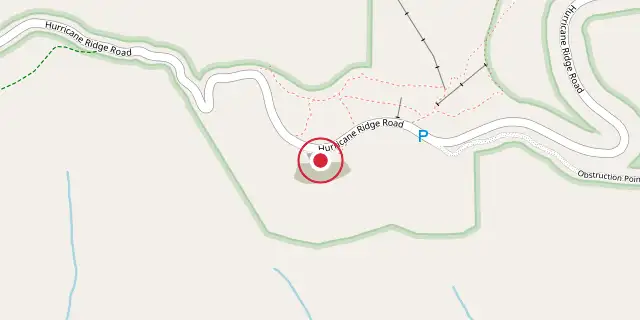
Coordinates: 47°58′08″N 123°29′56″W (47.9690, -123.4990) · Open in OpenStreetMap
Coordinates and connected clubs: the infobox of Wikipedia: Olympic National Park (CC BY-SA 4.0). Map: drawn by Codexery from OpenStreetMap tiles.
Olympic National Park is a national park of the United States located in Washington, on the Olympic Peninsula. It encompasses four regions: the Pacific coastline, west-side temperate rainforest, alpine areas, and forests of the drier east side, and contains three distinct ecosystems: subalpine forest and wildflower meadow, temperate forest, and the rugged Pacific coast. The park was designated a UNESCO World Heritage Site in 1981 and an International Biosphere Reserve in 1976.
Lore & Background
President Theodore Roosevelt originally designated the park as Mount Olympus National Monument on March 2, 1909. The monument was redesignated a national park by Congress and President Franklin D. Roosevelt on June 29, 1938. In 1988, Congress designated 95 percent of the park as the Olympic Wilderness, renamed Daniel J. Evans Wilderness in 2017 in honor of the former Washington state Governor and U.S. Senator Daniel J. Evans, who co-sponsored the 1988 bill that created the state's wilderness areas. The park's purpose includes preserving a large wilderness park containing the finest sample of primeval forest of Sitka spruce, western hemlock, Douglas fir, and western red cedar, providing winter range and permanent protection for native Roosevelt elk and other wildlife, and conserving mountainous country with glaciers and perpetual snow fields along with a portion of the Washington coast.
Reader's Guide
Olympic National Park is notable for its diverse ecosystems and geological features. The coastal portion is a rugged, sandy beach 60 miles long with unbroken wilderness stretches, driftwood deposits, and native communities at the mouths of the Hoh and Quileute Rivers. The park's glaciated mountains, centered on the Olympic Mountains, include Mount Olympus at 7,965 feet and Mount Deception at 7,788 feet, with glaciers declining from 266 in 1982 to 184 by 2009 due to climate change. The western side hosts temperate rainforests like the Hoh and Quinault, receiving over 12 feet of annual precipitation, dominated by coniferous trees such as Sitka spruce, western hemlock, coast Douglas-fir, and western redcedar.
The park's geology includes turbidites with white calcite veins and tectonic mélanges known as 'smell rocks' for their petroleum odor. Because the park sits on an isolated peninsula with a high mountain range, it developed many endemic species such as the Olympic marmot, Piper's bellflower, and Flett's violet. The southwestern coastline served as a refuge for plants during the Last Glacial Maximum.
Did You Know?
- The Kalaloch Big Cedar Tree on the western edge of the park is believed to be the oldest tree in Washington at over 1,000 years old.
- The park's coastal strip includes the 9-mile Ozette Loop, which features a boardwalk-enhanced path through near primal coastal cedar swamp.
More in World Heritage Sites in the United States
Sources
Compiled from Wikipedia and the sources listed below. Text from Wikipedia is available under CC BY-SA 4.0; this entry is adapted from it.
- Wikipedia: Olympic National Park (CC BY-SA 4.0).
- Word definitions: the Codexery glossary, each quoted from its Wikipedia article.
Spotted an error? Know more?
Reader corrections go straight into our review queue. Suggest an edit · How this site is sourced