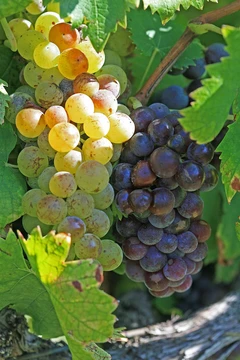
Fiano (grape)
Ancient Roman grape revived in southern Italy and beyond.
Fiano is a white Italian wine grape variety primarily grown in the Campania region of southern Italy and on Sicily. It is particularly noted around Avellino, where the DOCG wine Fiano di Avellino is produced, and has a long history believed to connect to the ancient Roman wine Apianum. The grape is known for its strong flavors and intense aroma notes, as well as its viticultural tendency toward low yields.
Quick Facts
- Species
- Vitis vinifera
- Also called
- See list of synonyms
- Origin
- Italy
- Regions
- Campania
- Vivc number
- 4124
Facts from the source article.
History
Ampelographers and wine historians consider Fiano a classical vine of southern Italy, likely originating in ancient Roman viticulture and possibly cultivated by ancient Greeks before them. Some historians speculate that Fiano may have been the grape behind the Roman wine Apianum, produced in the hills above Avellino. The Roman name vitis apiana derives from the Latin for bees, which are still strongly attracted to the sugary pulp of Fiano grapes in Avellino vineyards. The small, thick-skinned berries produce little juice, and the vine's low yields made it unprofitable, leading to significant declines during the 19th and 20th centuries as growers replaced it with higher-yielding varieties like Trebbiano and Sangiovese. In recent years, interest has revived as southern Italian wine regions receive investment in modern winemaking and seek to revitalize indigenous varieties.
Wine regions
The Fiano grape is best known for its role in Campania’s Fiano di Avellino DOCG. By the late 1900s, the variety was close to disappearing, but renewed interest—led by producers like Mastroberardino—sparked a revival of vineyards around Avellino. Many of the most significant Fiano plantings are located within hazelnut orchards in the area, and wine experts like Jancis Robinson have noted that wines from these grapes can carry a subtle hazelnut note. The Avellino region earned DOCG status for its Fiano-based wine in 2003. Under the Fiano di Avellino DOCG rules, at least 85% of the wine must be Fiano, with Greco, Coda di Volpe, and Trebbiano allowed for the rest. Yields are capped at 10 tonnes per hectare, and the wine must reach a minimum alcohol level of 11.5%. Producers may also label the wine as Apianum alongside the DOCG name, linking it to an ancient Roman wine. Outside Italy, Fiano is grown in California, with Cruess and Starfield Vineyards producing it from the Russian River Valley and El Dorado AVAs, respectively. Several other DOC wines include Fiano as a permitted grape: Aversa DOC (up to 15%), Campi Flegrei DOC (up to 30%), Castel San Lorenzo DOC (up to 20%), Cilento DOC (60–65%), Costa d’Amalfi DOC (up to 40%), Galluccio DOC (up to 30%), and Guardiolo DOC (up to 30%).
Wine styles
Fiano can produce ageworthy wine with potential to develop in the bottle for several years. In its youth, it is intensely flavored and aromatic with honey notes that over time develop more spicy and nutty notes. Modern winemaking techniques emphasizing limited oxidation and preserved freshness have improved overall quality, though some traditional producers still produce wines that can be heavy and prone to premature oxidation. Well-made examples from favorable vintages should have fair weight on the palate with floral aroma and notes of honey and spice, with potential to improve with bottle age. Fiano di Avellino is often characterized as pale straw colored with strong aromas of spice and floral notes, and on the palate, honey and nutty hazelnut notes.
More in White Wine Grape Varieties
Spotted an error? Know more?
Reader corrections go straight into our review queue. Suggest an edit · How this site is sourced