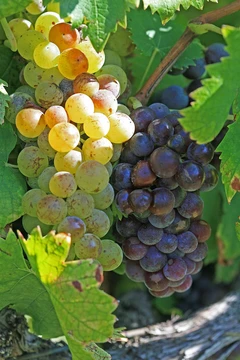
Baco blanc
A hybrid grape once dominant in Armagnac brandy production.
Baco blanc, also known as Baco 22A, is a French-American hybrid grape variety created in 1898 by François Baco. It was developed by crossing Folle blanche with the Noah grape to retain Folle blanche's flavors while resisting American grape diseases and phylloxera. The variety became historically significant as the primary grape for Armagnac brandy production in Gascony.
Quick Facts
- Species
- Interspecific crossing (French-American hybrid)
- Also called
- see list of synonyms
- Notable wines
- Armagnac
Facts from the source article.
History and parentage
Before Baco blanc was developed, Folle blanche was the main grape for eau de vie brandies in Cognac and Armagnac, but it suffered from susceptibility to grey rot in Cognac and black rot in Armagnac, as well as difficulties with American rootstock. François Baco aimed to create a grape with Folle blanche's neutral flavors and distillation characteristics without those vulnerabilities. While Cognac growers adopted Ugni blanc, Armagnac growers enthusiastically planted Baco's new hybrid. For most of the 20th century, Baco blanc was the primary grape of Armagnac, peaking in the 1970s when it accounted for over 85% of plantings, covering more than 10,700 hectares. However, Ugni blanc gradually overtook it, and by the end of the 20th century it had become the most widely planted grape in Armagnac. A 1992 INAO decree ordered all Baco blanc vines uprooted by 2010, but advocates for the variety's historical role persuaded French authorities to continue permitting its use in Armagnac. As of 2005, the BNIA reported that Baco blanc was still used in nearly half of all Armagnac production.
Wine regions
Baco blanc is found primarily in France, where it was one of the workhorse hybrids planted after the phylloxera epidemic. Most plantings were in western France, in areas where its parent Folle blanche grows, from Gascony in South West France to the Loire Valley, particularly in Muscadet and the Anjou-Saumur regions. A boom period for hybrids in the Loire's cool maritime climate occurred in the early to mid-20th century; as late as 1979, Baco blanc and other hybrids accounted for over 10% of all French grape plantings. Since the mid-20th century, French producers have been pulling up hybrid grapes in favor of vinifera-only plantings permitted for AOC wines, and even in Armagnac, Baco blanc vines are being replaced with Ugni blanc. The variety also had a brief period of popularity in New Zealand's emerging wine industry during the 20th century, but by the century's end producers there turned to vinifera grapes such as Müller-Thurgau, Chardonnay, and Sauvignon blanc; the remaining Baco blanc in New Zealand is used mainly for distillations and spirits.
Viticulture and wine styles
Baco blanc does not share Folle blanche's susceptibility to grey and black rots, but it can be affected by powdery mildew, especially because the vines bud early and ripen late, exposing them to rain and moisture in spring and at harvest. Its growing cycle is not ideal for wine production, but the grapes produce high acid, neutral flavors with low sugars, which suits distillation. According to Master of Wine Jancis Robinson, brandies from Baco blanc are often less fine and complex than those from Folle blanche or Ugni blanc, but they age quickly, creating a market for brandies intended for near-term consumption.
More in White Wine Grape Varieties
Spotted an error? Know more?
Reader corrections go straight into our review queue. Suggest an edit · How this site is sourced