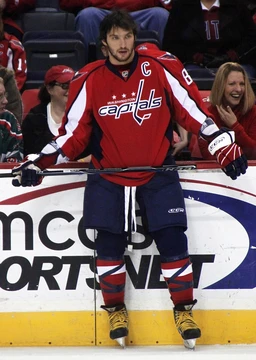
Joé Juneau
Canadian forward who set the rookie left‑wing assist record.
Joé Juneau was born on January 5, 1968, in Pont-Rouge, Quebec, and went on to play in the NHL for the Boston Bruins, Washington Capitals, Buffalo Sabres, Ottawa Senators, Phoenix Coyotes, and Montreal Canadiens. His mother said he was on skates at age one, and his father built a backyard rink behind their home in the small village near Quebec City. As a youth, Juneau played in the 1979, 1980, and 1981 Quebec International Pee-Wee Hockey Tournaments with a team from Pont-Rouge. He later starred at Rensselaer Polytechnic Institute, scoring 71 goals over four regular seasons, earning two All-American selections, and graduating in three years with a 4.0 GPA in aeronautical engineering. He was inducted into the school’s Athletic Hall of Fame in 2005.
The Bruins drafted Juneau in the fourth round of the 1988 NHL entry draft, but a contract dispute arose when he insisted on being paid his full salary if sent to the minors—a demand Boston refused. Instead of signing, he spent a year with the Canadian Olympic team, leading Canada to a silver medal at the 1992 Albertville Games and finishing as the tournament’s top scorer with 15 points (six goals, nine assists). He eventually signed with Boston on the team’s terms, joining the NHL roster immediately after the Olympics and never playing a minor-league game. In his first 14 regular-season games, he recorded five goals and 14 assists, then added four goals and eight assists in the playoffs as the Bruins lost in the third round to Pittsburgh.
His best season came as a rookie in 1992–93, when he played left wing on a line with Adam Oates and Cam Neely. Juneau posted 32 goals and 102 points, setting an NHL record for assists by a left wing with 70—a mark that stood until 2022, when Jonathan Huberdeau surpassed it. He became just the fourth rookie to reach 100 points in a season and was named to the NHL All-Rookie Team. On March 21, 1994, the Bruins traded him to the Washington Capitals for Al Iafrate. Capitals GM David Poile said the move was about adding offense, while the Bruins wanted to pair Iafrate’s slapshot with Ray Bourque on defense; Iafrate played only 12 games for Boston plus the playoffs before injuries sidelined him for two years.
Quick Facts
- Height
- 6 ft 0 in
- Weight
- 195 lb
- Played for
- Boston Bruins; Washington Capitals; Buffalo Sabres; Ottawa Senators; Phoenix Coyotes; Montreal Canadiens
- Position
- Centre
- Shoots
- Left
- Born
- 5 January 1968
- Birthplace
- Pont-Rouge, Quebec, Canada
- Draft
- 81st overall
Facts from the source article.
Lore & Background
Juneau was born in Pont-Rouge, Quebec, and according to his mother was on skates at age one. His father built a small sheet of ice behind their home. As a youth he played in the 1979, 1980 and 1981 Quebec International Pee-Wee Hockey Tournaments. He was a star college player at Rensselaer Polytechnic Institute, scoring 71 goals in four regular seasons, earning a 4.0 grade point average and a degree in aeronautical engineering in three years, and was a two-time All-American selection. He was inducted into the Athletic Hall of Fame in 2005.
Drafted by the Bruins in the fourth round of the 1988 NHL entry draft, Juneau disputed his contract over his insistence on being paid full salary if sent to the minors. He spent a year with the Canadian Olympic team, leading Canada to a silver medal at the 1992 Albertville Games as the tournament's leading scorer with 15 points. He eventually signed with Boston on the team's terms and never spent a day in the minors. In his rookie season of 1992–93, playing on a line with Adam Oates and Cam Neely, he had 32 goals and 102 points, setting the NHL record for assists by a left wing with 70. He was named to the NHL All-Rookie team.
On March 21, 1994, the Bruins traded Juneau to the Capitals for Al Iafrate. In Game 4 of the 1996 Eastern Conference quarterfinals against Pittsburgh, he became the first player awarded a penalty shot in overtime in a Stanley Cup playoff game, though his shot missed. He was a key part of the Capitals' 1998 playoff run, scoring 17 points in 21 games, including the overtime goal in Game 6 of the Eastern Conference Finals against Buffalo to send Washington to its first Stanley Cup Final. He later played for Buffalo, Ottawa, Phoenix and Montreal, with his offensive numbers declining due to chronic injuries. He retired on May 1, 2004.
Reader's Guide
Juneau's career is marked by a remarkable rookie season that set a positional record for assists, a feat that stood for nearly three decades. His ability to produce at a point-per-game pace as a left winger in his first full NHL season placed him among an elite group of rookies to reach 100 points. Beyond his offensive output, Juneau demonstrated resilience in contract disputes and later became a key contributor to the Capitals' first Stanley Cup Final appearance, scoring a memorable overtime goal to clinch the Eastern Conference title. His career also included a silver medal at the 1992 Olympics, where he led the tournament in scoring. After retiring, Juneau moved to Kuujjuaq, Quebec, and established the Northern Youth Hockey Development Program for Inuit youth, reflecting a commitment to hockey development in northern communities. His legacy includes both on-ice achievements and off-ice community work.
Did You Know?
- He was the first player ever awarded a penalty shot in overtime in a Stanley Cup playoff game, during the second overtime of Game 4 in 1996.
- Juneau's 70 assists as a left winger in his rookie season stood as an NHL record until 2022.
- He scored the overtime goal in Game 6 of the 1998 Eastern Conference Finals to send the Capitals to their first Stanley Cup Final.
More in Washington Capitals Players 1-24
Spotted an error? Know more?
Reader corrections go straight into our review queue. Suggest an edit · How this site is sourced