
Amphibious warfare
Complex military maneuver requiring coordinated naval, ground, and air forces.
Last updated

Cpl. Nicholas Nohalty · Public domain
Amphibious warfare is an offensive military operation where naval forces deliver ground and air power onto a hostile or potentially hostile shore at a specific landing beach. In earlier times, troops were brought ashore using ship's boats. After the Gallipoli Campaign, purpose-built watercraft—including landing craft, fast patrol boats, rigid inflatable boats (zodiacs), and mini-submersibles—were increasingly designed to land troops, equipment, and vehicles, as well as to insert commandos. The word "amphibious" was used in a military context earlier than the 1930s, and the term "amphibious warfare" was already in use by the early 20th century, though it gained prominence in the United Kingdom and the United States during that decade alongside vehicles such as the Vickers-Carden-Loyd Light Amphibious Tank and the Landing Vehicle Tracked.
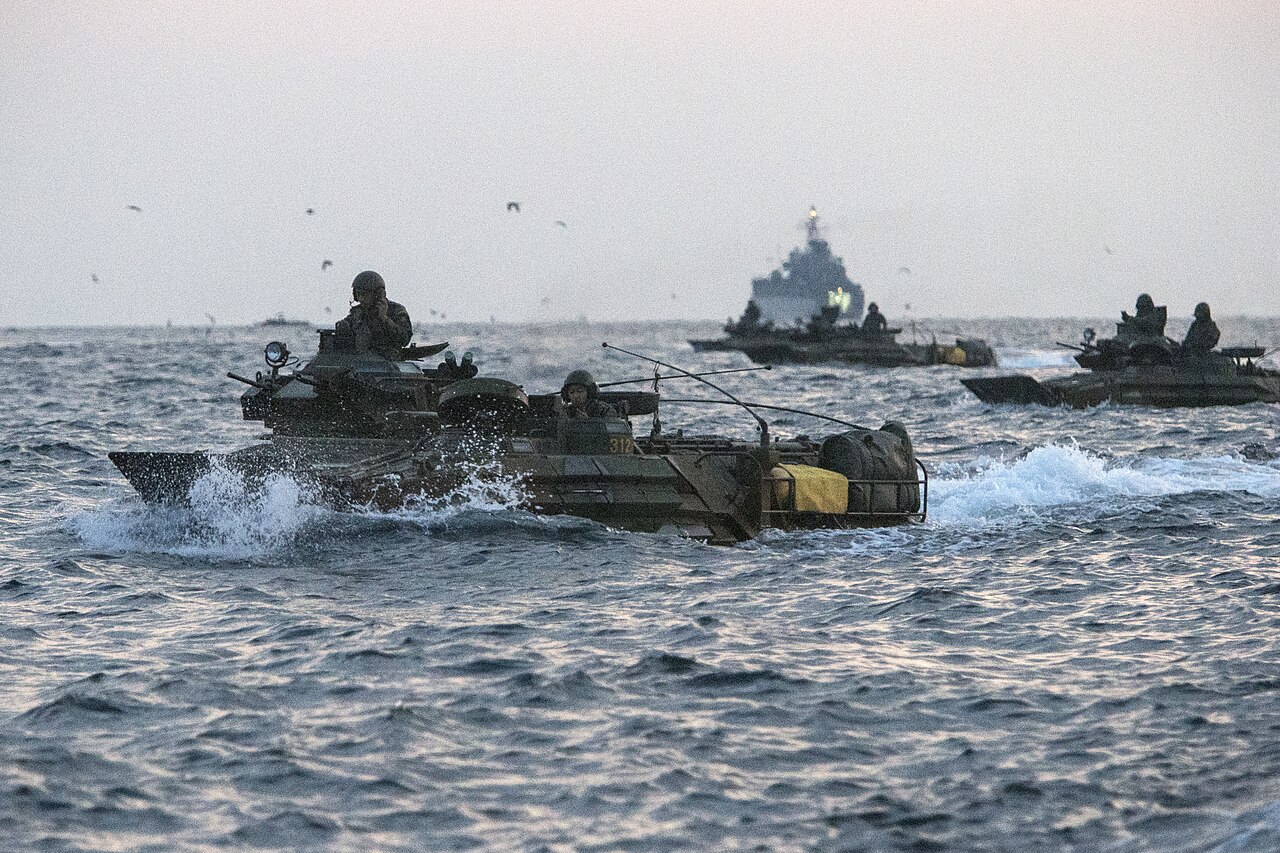
Amphibious operations are categorized by their type, purpose, scale, and method of execution. In the British Empire, these were called combined operations: actions where naval, military, or air forces cooperate under separate commanders toward a common strategic goal. All armed forces that train and equip troops specifically for landings from naval vessels follow this definition. Since the 20th century, an amphibious landing on a beachhead has been considered the most complex military maneuver, requiring careful coordination of air power, naval gunfire, naval transport, logistics, specialized equipment, land warfare, tactics, and extensive training for all personnel.
The process of an amphibious operation includes strategic planning and preparation, transit to the theater, rehearsal and disembarkation, troop landings, consolidating the beachhead, and conducting inland ground and air operations. Historically, success often depended on military logistics, naval gunfire, and close air support, as well as the variety and quantity of specialized vehicles and equipment designed for this task. Operations can be classified as tactical or operational raids (e.g., the Dieppe Raid), operational landings supporting a larger land strategy (e.g., the Kerch–Eltigen Operation), or strategic openings of a new theater (e.g., Operation Avalanche). Most amphibious operations are offensive, except for amphibious withdrawals, and are limited by the plan and terrain.
Quick Facts
- Field
- Military operations
- Known for
- Complex coordination of naval
- ground
- and air forces for beach landings
- Early origins
- Ancient times, including Sea Peoples and the Persian landing at Marathon (490 BC)
Facts from the source article.
Lore & Background
Amphibious warfare dates back to ancient times, with the Sea Peoples menacing Egypt and Hellenic city states conducting assaults. The Persian landing at Marathon in 490 BC was a notable early operation, but larger amphibious undertakings—such as the Persian invasion of Greece in 480 BC, the Roman invasion of Britain in 43 AD, and the Norman invasion of England in 1066—surpassed it in scale before the Gallipoli Campaign. In 1537, Charles V, Holy Roman Emperor and King of Spain, formed companies later known as the Spanish Marines, but these were not originally created as permanent amphibious-assault units; that characterization is anachronistic and oversimplified, though they evolved into a model for later marine forces.
From Ancient Shores to Modern Terminology
Amphibious warfare stretches back to antiquity, where the Sea Peoples threatened Egyptian coasts from the reign of Akhenaten onward, their incursions immortalized in reliefs at Medinet Habu and Karnak. Hellenic city-states routinely launched amphibious assaults against one another's shores, a theme that echoed through their dramatic literature and visual art. The Persian landing at Marathon on 9 September 490 BC stood as the largest such operation for over two millennia, until the Gallipoli Campaign finally surpassed it.
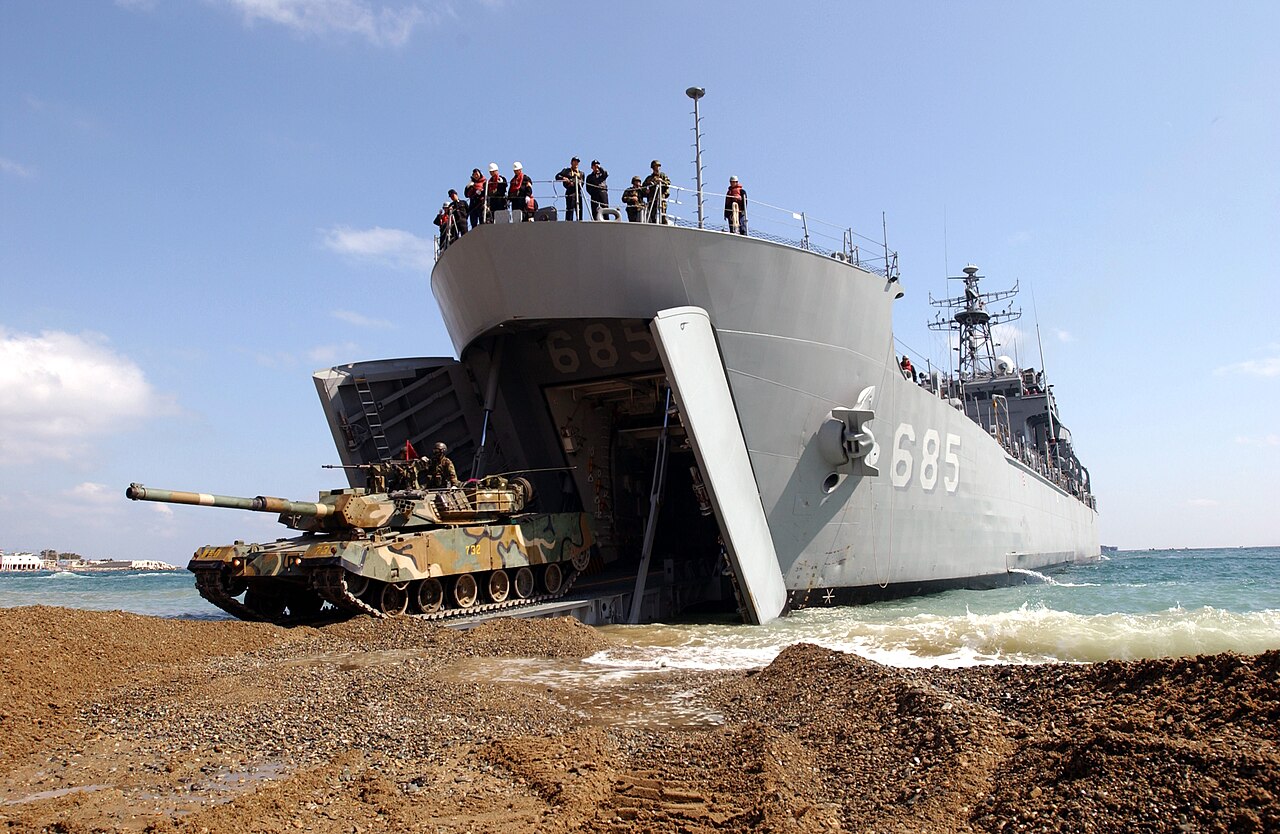
For centuries, the primary means of delivering troops to hostile shores remained nothing more than ship's boats. It was not until the 1930s, in both the United Kingdom and the United States, that the very word "amphibious" entered military vocabulary, prompted by the introduction of purpose-built vehicles like the Vickers-Carden-Loyd Light Amphibious Tank and the Landing Vehicle Tracked. Since Gallipoli, specialized watercraft have steadily evolved to carry troops, matériel, and vehicles ashore, while fast patrol boats, rigid inflatable craft, and even mini-submersibles have been pressed into service for inserting commando units.
The Spanish Marines and the Siege of Malta
The concept of dedicated amphibious-assault troops traces to 1537, when Charles V, Holy Roman Emperor and King of Spain, ordered the creation of units specifically trained to fight on and from ships for the Royal Armada. These first professional marine units, known as the Compañías Viejas del Mar de Nápoles, were not disbanded after a single campaign but maintained permanently at the Crown's disposal. Their earliest engagements unfolded across the Mediterranean, targeting Turkish and pirate strongholds that threatened commerce and navigation at Algiers, Malta, and Gelves. The defining test came in 1565 during the Great Siege of Malta, when Ottoman forces invaded the island and drove its defenders into fortified cities.
Recognizing that losing this strategic choke point would endanger Western European kingdoms, a relief force was assembled with urgency. It took four months to train, arm, and transport a 5,500-man amphibious force to lift the siege. Other European powers subsequently adopted the model, raising their own early marine forces inspired by the Spanish precedent.
The Anatomy of a Landing Operation
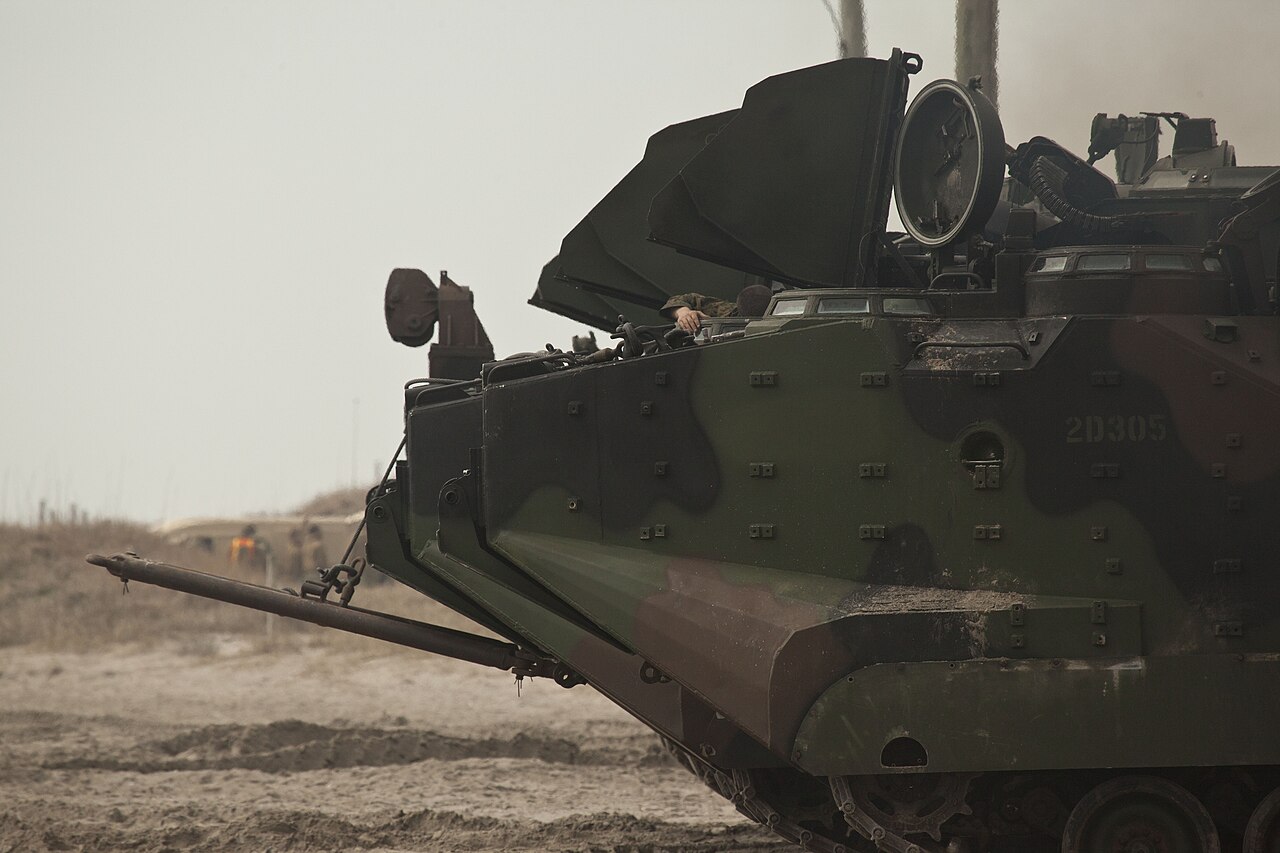
An amphibious landing on a beachhead has long been regarded as the most complex maneuver in all of military operations. The British Empire formalized the concept as "combined operations," defined as any action in which naval, military, or air forces cooperate under their respective commanders toward a shared strategic objective. Every armed force that trains troops for naval-to-shore landings subscribes to this framework.
The operation unfolds through distinct phases: strategic planning and preparation, operational transit to the theatre, pre-landing rehearsal and disembarkation, the troop landings themselves, beachhead consolidation, and finally inland ground and air operations. Success hinges on intricate coordination across air power, naval gunfire, transport, logistics, specialized equipment, and land tactics, all demanding extensive training for every personnel involved. Historically, military logistics, naval gunfire support, and close air support have been the vital pillars of success, while the variety and quantity of purpose-built vehicles and equipment tailored to the landing force's specific needs have proven equally decisive.
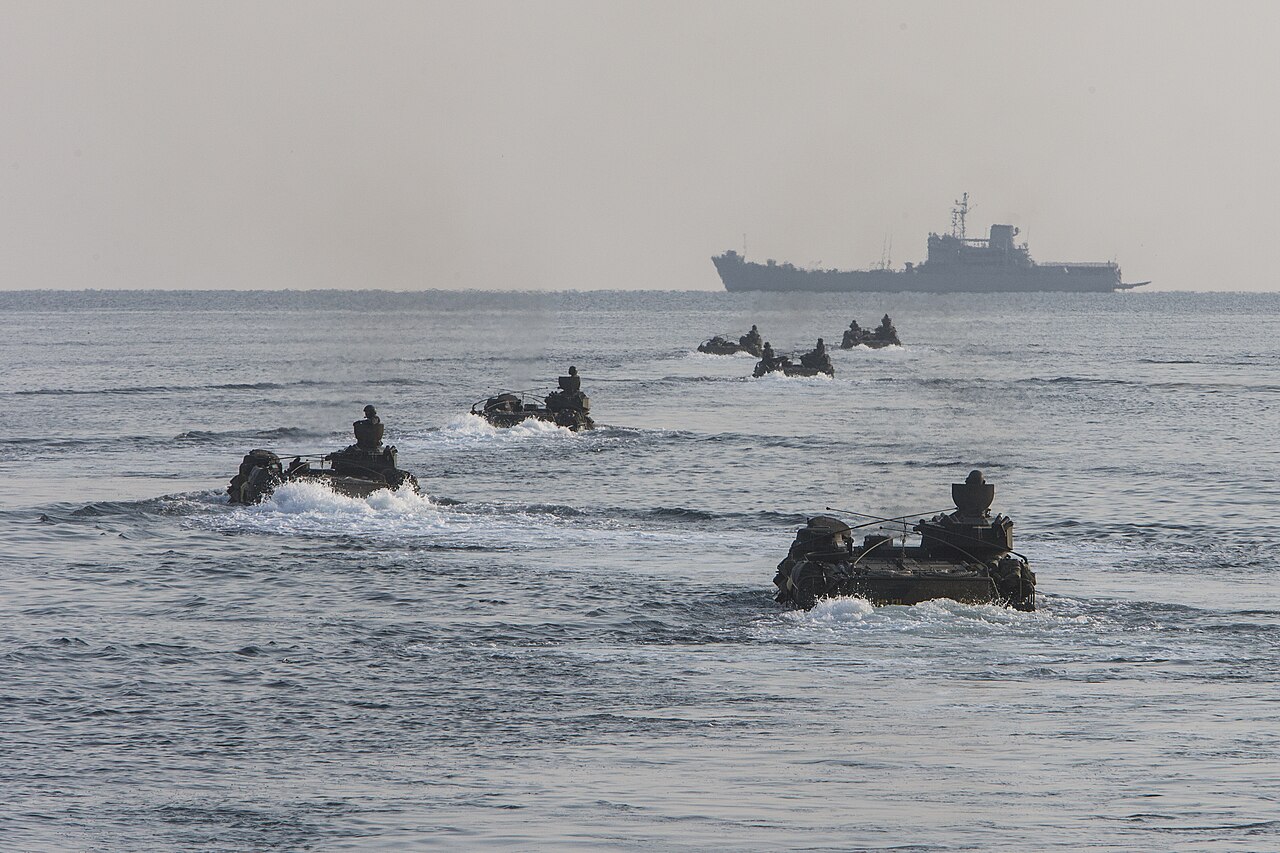
A Spectrum of Scale — From Tactical Raids to Strategic Invasions
Amphibious operations are classified by purpose, scale, and means of execution. At the tactical end, raids such as the Dieppe Raid or landings on islands under 5,000 square kilometers aim to neutralize defenders and secure a new base, typically involving fewer than a division of troops and a naval task force, with planning measured in days or weeks. Operational landings, exemplified by the Kerch-Eltigen Operation or Operation Chromite, exploit the shore as a vulnerability to force enemy redeployment, premature reserve commitment, and support a broader allied offensive; these require weeks to months of preparation, multiple task forces or a full naval fleet, and corps-size forces.
At the strategic apex, operations like the Battle of Leyte or Operation Neptune commit major forces to invade national territory, demanding multiple naval and air fleets, extensive intelligence gathering, and planning spanning over a year. Most operations are offensive in nature, though amphibious withdrawals exist as an exception. When unopposed, landings can bypass beaches entirely, using existing shore infrastructure and wharf-side equipment to offload troops and cargo directly into urban environments.
Reader's Guide
Amphibious warfare is acknowledged as the most complex of all military maneuvers, requiring intricate coordination of air power, naval gunfire, naval transport, logistical planning, specialized equipment, land warfare, tactics, and extensive training. Operations consist of phases including strategic planning, transit, rehearsal, disembarkation, landings, beachhead consolidation, and inland operations. They can be classified as tactical raids (e.g., Dieppe Raid), operational landings (e.g., Kerch–Eltigen Operation), or strategic openings (e.g., Operation Avalanche).
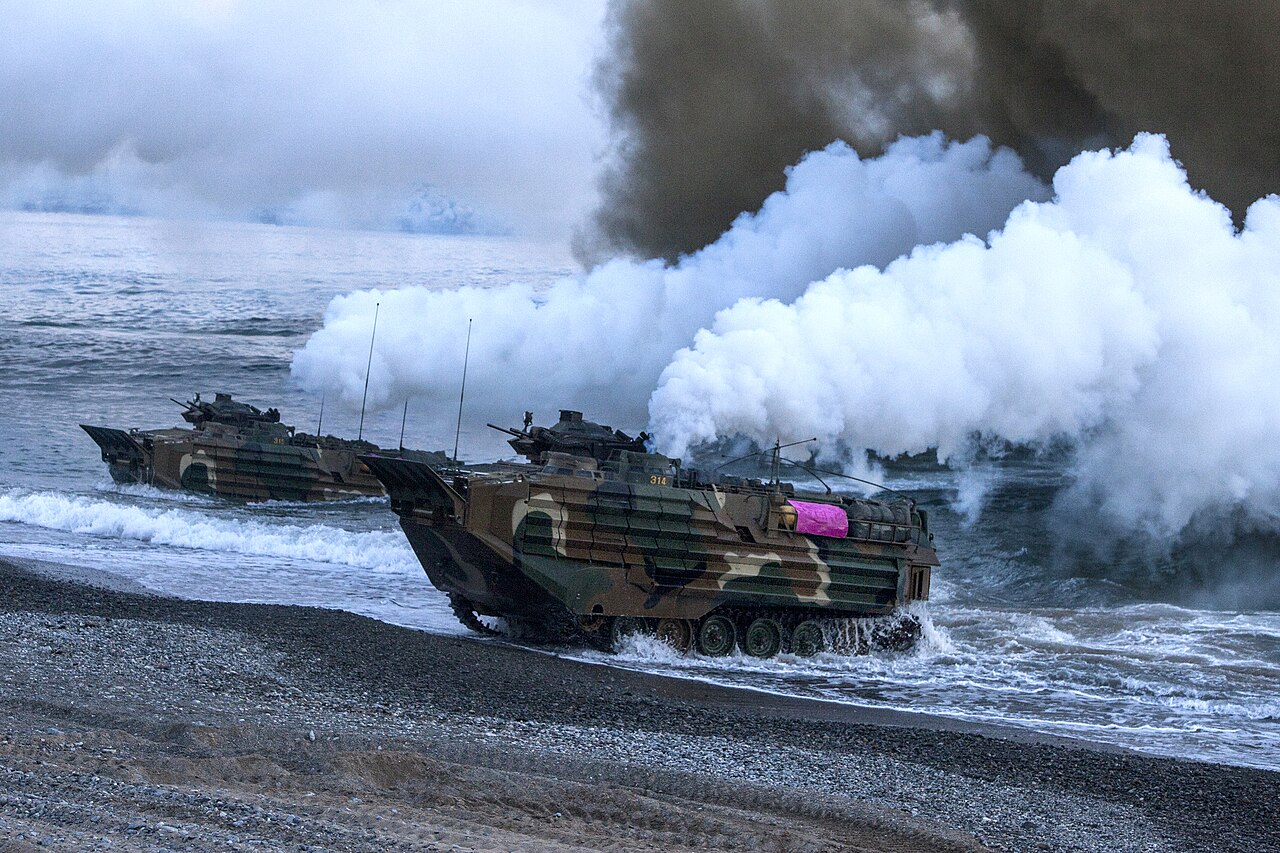
Success historically depended on logistics, naval gunfire, close air support, and specialized vehicles. The Spanish Marines, established in 1537, were among the first professional amphibious troops, and later European powers developed similar forces for colonial expansion. Amphibious assaults can achieve paralyzing surprise when properly coordinated, but hubris and lack of preparation can lead to disaster.
More in Warfare & Military History
Sources
Compiled from Wikipedia and the sources listed below. Text from Wikipedia is available under CC BY-SA 4.0; this entry is adapted from it.
- Wikipedia: Amphibious warfare (CC BY-SA 4.0).
Spotted an error? Know more?
Reader corrections go straight into our review queue. Suggest an edit · How this site is sourced