
Anti-aircraft warfare
Measures to nullify or reduce hostile air action.
Last updated

AceDouble · Public domain
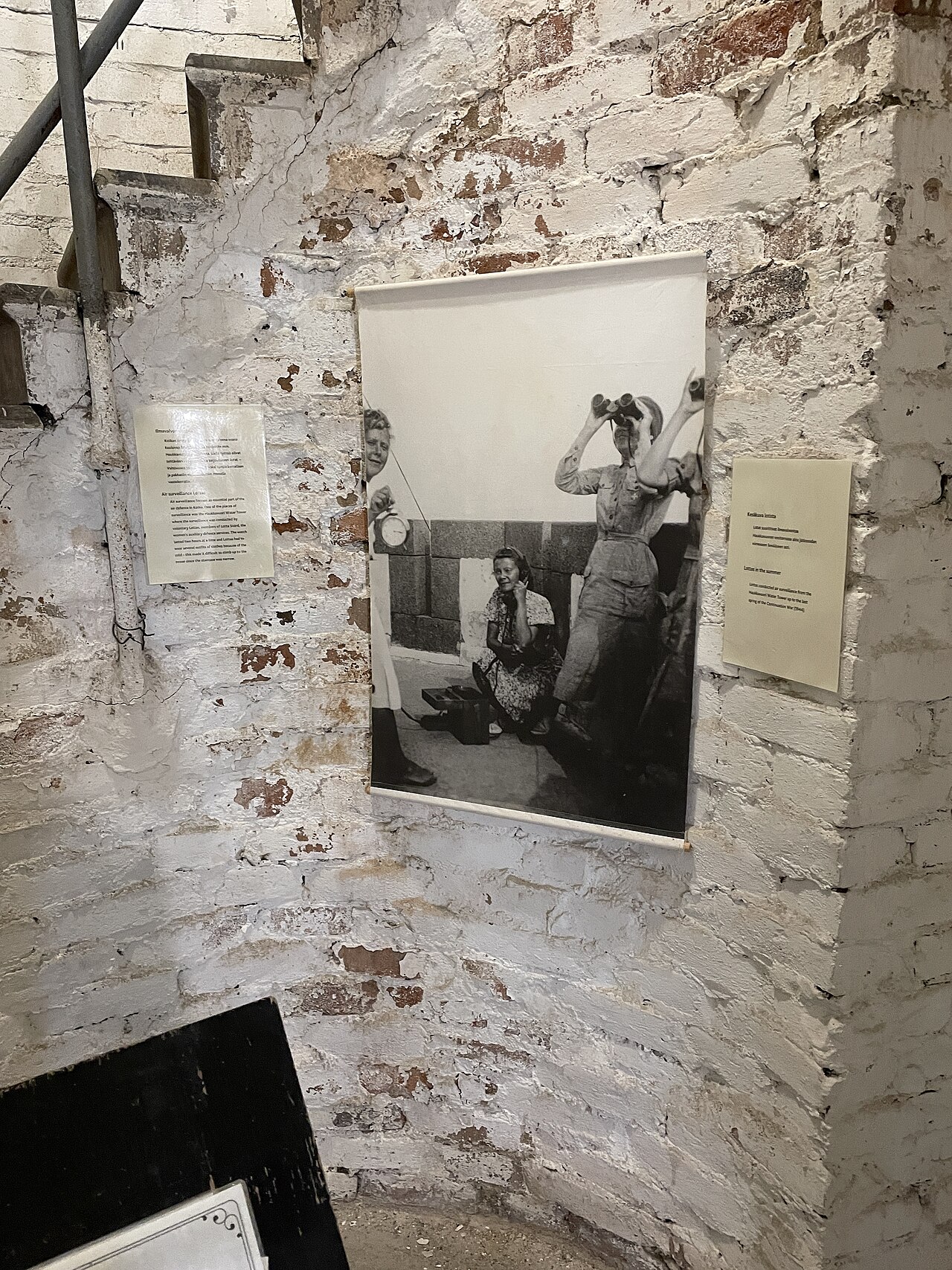
Anti-aircraft warfare (AAW), also known as air defence, encompasses all measures designed to nullify or reduce the effectiveness of hostile air action. It includes surface-based, subsurface, and air-based weapon systems, along with sensor systems, command and control arrangements, and passive measures. For most countries, the main effort has tended to be homeland defence, and missile defence is an extension of air defence.
Quick Facts
- Field
- Military technology and tactics
- Known for
- Countering aerial warfare through guns
- missiles
- and integrated command systems
- Key terms
- AA
- AAA
- flak
- ack-ack
- archie
- SAM
- SHORAD
- MANPADS
- GBAD
Facts from the source article.
Lore & Background
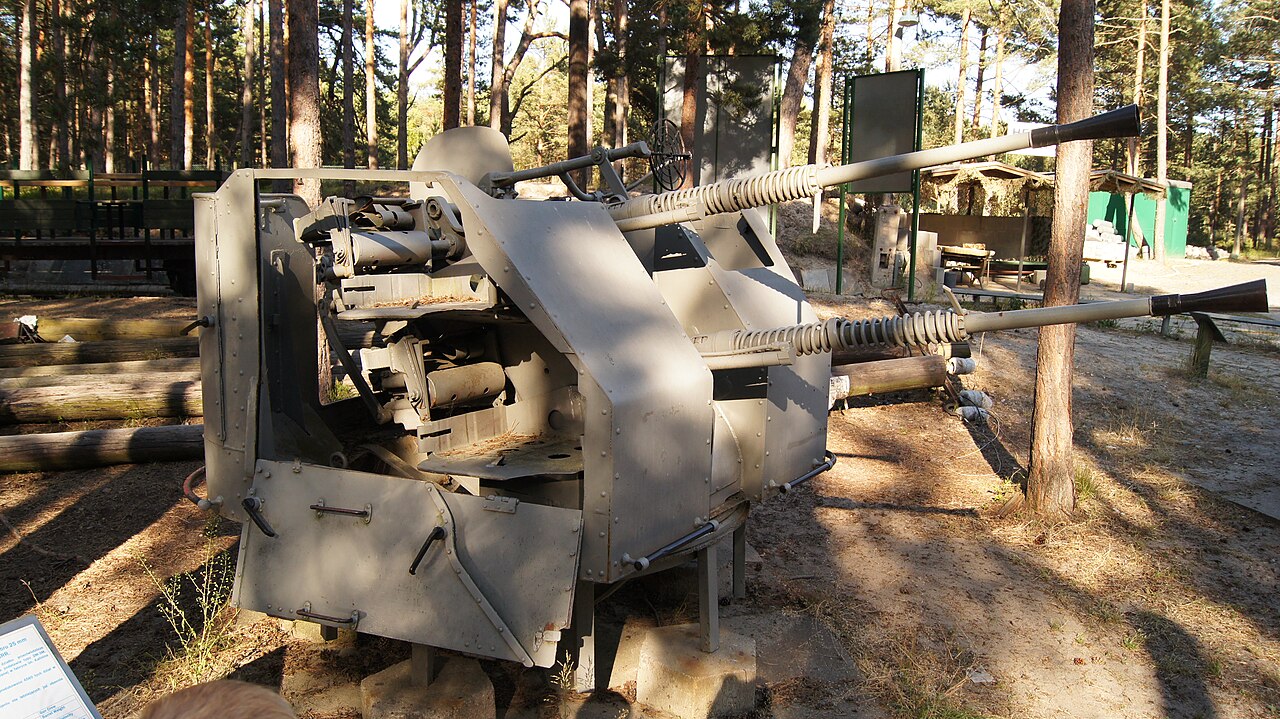
The term 'air defence' was probably first used by the UK when Air Defence of Great Britain (ADGB) was created as a Royal Air Force command in 1925. Arrangements in the UK were also called anti-aircraft, abbreviated as AA, a term that remained in general use into the 1950s. After the First World War it was sometimes prefixed by 'light' or 'heavy' (LAA or HAA) to classify a type of gun or unit. Nicknames for anti-aircraft guns include AA, AAA or triple-A, flak (from German Flugzeugabwehrkanone), ack-ack, and archie (a World War I British term).

Until the 1950s, guns firing ballistic munitions ranging from 7.62 mm to 152.4 mm were the standard weapons; guided missiles then became dominant, except at the very shortest ranges. Most modern anti-aircraft weapons systems are optimised for short-, medium-, or long-range air defence, and 'layered air defence' refers to multiple tiers of systems that an airborne threat must penetrate. In some countries, such as Britain and Germany during the Second World War, and modern NATO and the United States, ground-based air defence and air defence aircraft have been under integrated command and control. In the Soviet Union, however, air defence was organised as a separate branch of the armed forces (PVO Strany), distinct from the air force's fighter arm, rather than being fully integrated under a single command.
NATO's general term for this field is 'air defence', which encompasses a broader set of measures. The quoted definition—'measures taken to defend a maritime force against attacks by airborne weapons launched from aircraft, ships, submarines and land-based sites'—actually refers specifically to 'anti-air warfare' (AAW) in a naval context. Other terms include 'ground based air defence' (GBAD), 'short range air defence' (SHORAD), and man-portable air-defence system (MANPADS). Anti-aircraft missiles are variously called surface-to-air missiles (SAMs) and surface-to-air guided weapons (SAGWs).
From Fleet Duel to Distinct Discipline
Anti-surface warfare, often abbreviated ASuW, encompasses every weapon, sensor, and operational method designed to strike or degrade an adversary's surface vessels. For most of naval history, this was simply what naval combat meant—ships fighting ships. The submarine and naval aviation did not yet exist as categories, so every engagement was inherently an anti-surface affair.
Only after the Second World War did military thinkers begin treating ASuW as a separate, named discipline with its own doctrine and literature. That postwar body of writing is unavoidably shaped by the decades of tension between the United States and the Soviet Union, because the two superpowers built their naval strategies in direct response to one another. The result is a field whose modern identity was forged less by a single technological breakthrough than by the prolonged strategic contest that defined the latter half of the twentieth century.
Reader's Guide
Anti-aircraft warfare has been one of the fastest-evolving areas of military technology throughout the 20th century, responding to the evolution of aircraft and exploiting technology such as radar, guided missiles, and computing. Initially, sensors were optical and acoustic devices developed during World War I, but were quickly superseded by radar, which in turn was supplemented by optoelectronics in the 1980s. Command and control remained primitive until the late 1930s, when Britain created the integrated Dowding system for ADGB that linked ground-based air defence of the British Army's Anti-Aircraft Command.
The critical issue in air defence is to hit a target moving in three-dimensional space, requiring projectiles either to be guided or aimed at the predicted position. Rules of engagement are critical to prevent engaging friendly or neutral aircraft, assisted by identification friend or foe (IFF) devices introduced during the Second World War. NATO calls these rules 'weapons control status' (WCS), with levels including weapons free, weapons tight, and weapons hold. Ground-based air defence is deployed in several ways: self-defence by ground forces, accompanying defence, point defence around a key target, and area air defence, which can extend along a nation's border.
More in Warfare & Military History
Sources
Compiled from Wikipedia and the sources listed below. Text from Wikipedia is available under CC BY-SA 4.0; this entry is adapted from it.
- Wikipedia: Anti-aircraft warfare (CC BY-SA 4.0).
Spotted an error? Know more?
Reader corrections go straight into our review queue. Suggest an edit · How this site is sourced