
Ambush
A surprise attack from concealment against an approaching enemy.
Last updated

Jean-François-Alphonse Lecomte · Public domain
An ambush is a surprise assault launched from a hidden position against an approaching target. The concealed location or the hidden fighters themselves can also be called an ambush, and the designated area where the attack occurs is known as the kill zone or trap. Beyond warfare, the term describes the stealth-and-deception hunting strategy of certain carnivores (ambush predators), aggressive journalistic tactics (ambush journalism), and marketing campaigns that catch competitors off guard (ambush marketing).
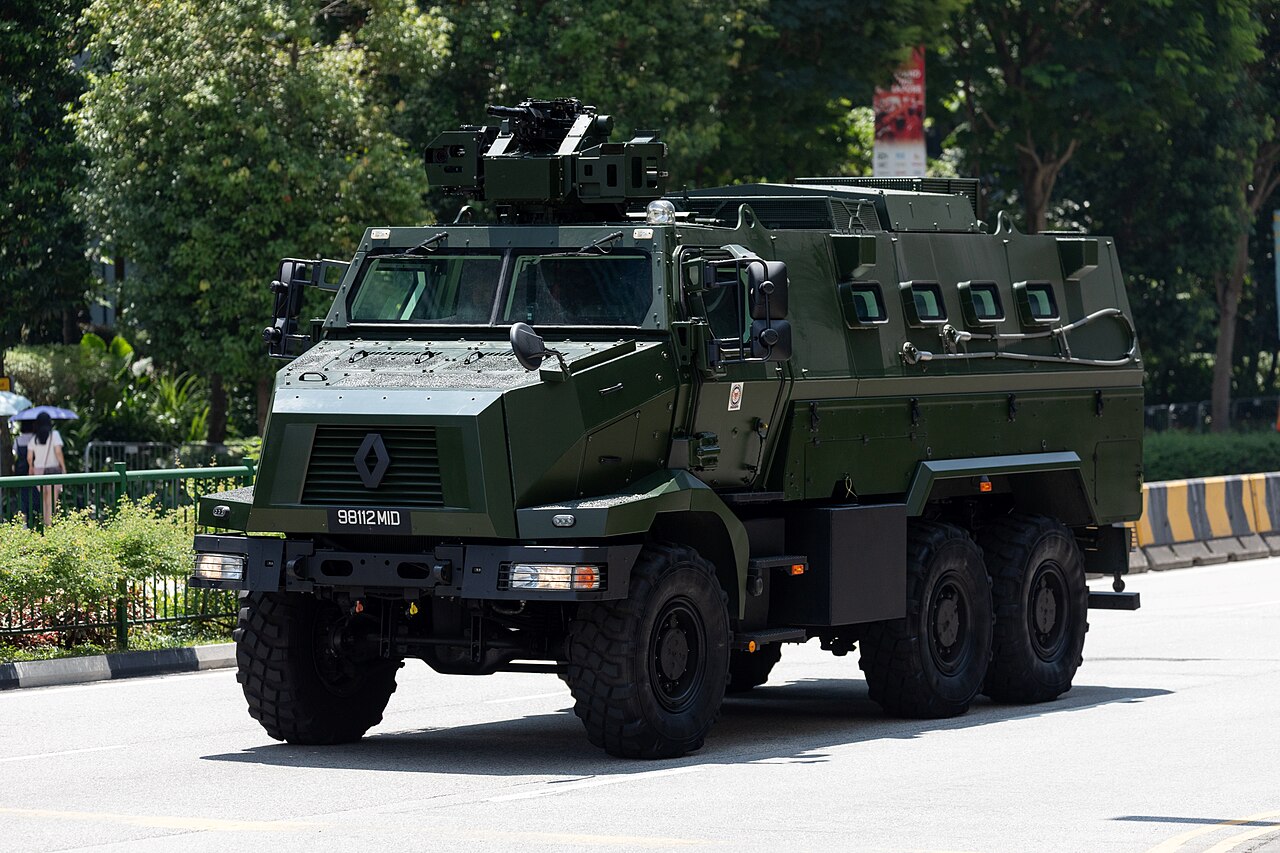
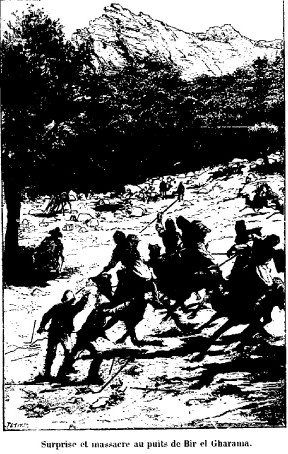
As a basic tactic for soldiers, law enforcement, or criminals, ambushes have been employed throughout history. Before the 20th century, military ambushes could involve thousands of troops aiming to annihilate an enemy at a choke point like a mountain pass, where the terrain forces targets into vulnerable formations and gives the attackers concealment and high-ground advantage. Conversely, small irregular bands or insurgent groups have used ambushes to harass, sabotage, or assassinate larger regular forces as part of a broader attrition strategy. In recent centuries, ambushes may rely solely or partly on improvised explosive devices (IEDs), allowing attackers to strike convoys or patrols while reducing their exposure to return fire.
History
The use of ambush tactics by early humans dates back roughly two million years, with anthropologists suggesting these techniques were used to hunt large game. An ancient example is the Battle of the Trebia River, where Hannibal concealed a strong force of cavalry and infantry near the battlefield.

According to Polybius, Hannibal noticed a flat, treeless area between the camps that was well suited for an ambush because a watercourse with steep, thorny banks ran through it. When the Roman infantry became entangled in combat, the hidden force attacked them from the rear, leading to a Roman slaughter. Still, about 10,000 Romans escaped in a disorganized rout, demonstrating that even in chaos, some survivors can flee a kill zone.
The Lusitanians, especially under chieftain Viriathus, frequently used ambushes. Their tactic, called concursare, involved repeated charges and retreats to lure enemies into difficult terrain where allied forces waited.
Quick Facts
- Notable examples
- Battle of the Trebia River
- Battle of the Teutoburg Forest
- Viriathus's campaigns
- Viet Cong ambushes
Facts from the source article.
Lore & Background
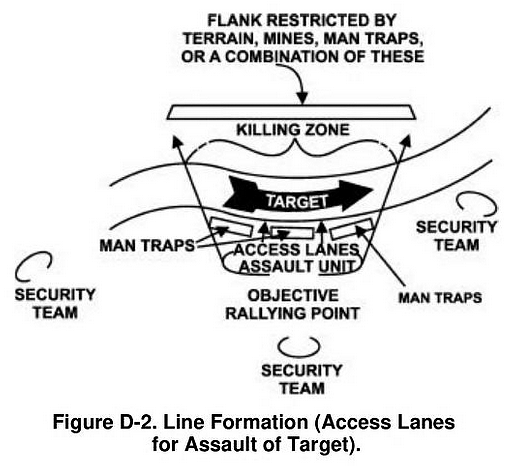
In modern warfare, an ambush can be employed by ground troops up to platoon size against enemy targets. Ambushes are complex multiphase operations and are usually planned in some detail. A suitable killing zone is identified, and ambushes can be described geometrically as linear, L-shaped, or V-shaped. The Viet Cong employed ambush techniques frequently during the Vietnam War, with terrain criteria including concealment from ground or air.
Reader's Guide
The ambush is a fundamental tactic that has shaped military history from ancient times to the present. Its effectiveness relies on surprise, concealment, and terrain advantage, as demonstrated in battles such as the Trebia River and Teutoburg Forest. The tactic has been used by both regular armies and irregular forces, including insurgent groups, and has evolved to include improvised explosive devices.
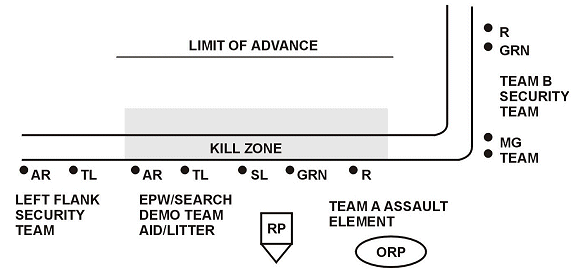
Beyond warfare, the concept of ambush has been applied in animal behavior (ambush predators), sociology (ambush journalism), and economics (ambush marketing). The ability of an ambushed force to maintain discipline and break out of a kill zone is a hallmark of good troops and training. The legacy of the ambush is its enduring role as a force multiplier, allowing smaller or weaker forces to inflict significant damage on larger opponents.
Did You Know?
- The term 'ambush' is also used in animal behavior to describe the predation strategy of some carnivores using stealth and deception.
- Arminius's ambush at the Teutoburg Forest was a devastating blow, but the Rhine frontier was solidified only after later Roman campaigns, not as an immediate consequence of the battle alone.
More in Warfare & Military History
Sources
Compiled from Wikipedia and the sources listed below. Text from Wikipedia is available under CC BY-SA 4.0; this entry is adapted from it.
- Wikipedia: Ambush (CC BY-SA 4.0).
Spotted an error? Know more?
Reader corrections go straight into our review queue. Suggest an edit · How this site is sourced