
Visual novel
Japanese narrative-focused games with static art and text boxes.

Santer This SVG file shows a very simple image. Drawing uncomplicated graphics w · Public domain
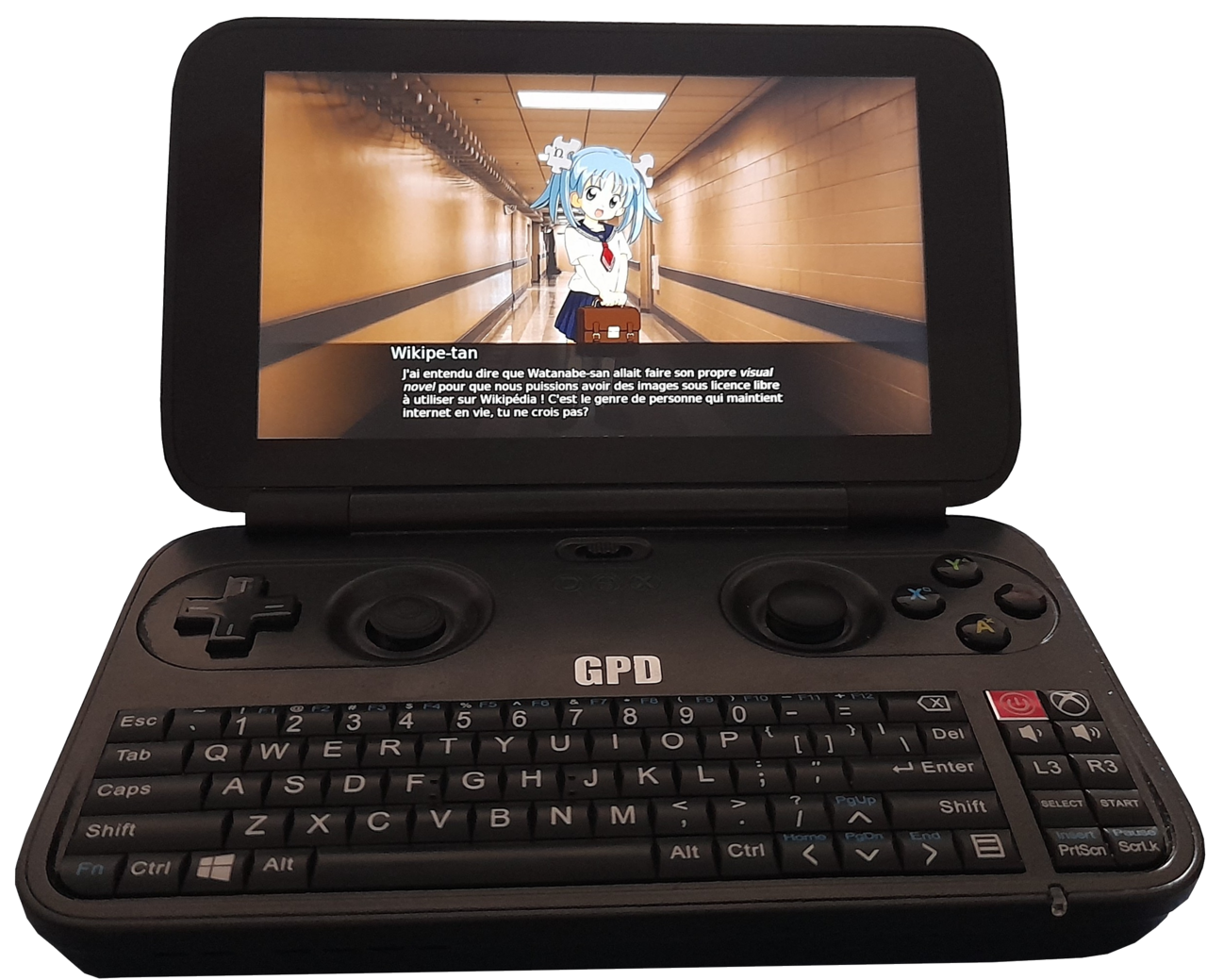
Visual novels are a story-driven video game genre that originated in Japan. Players advance the narrative by clicking, tapping, or pressing a button. While some definitions highlight branching storylines based on player choices, the genre typically uses static character and background art, supported by soundtracks and sound effects. Text boxes present both the story and interactions, often using menu-based choices to represent a character’s dialogue or actions.
The term "visual novel" emerged in the latter half of the 1990s. In Japan, they are commonly called *noberugēmu* (short for "novel game"). Early releases like *Otogirisō* (1992), *Yu-no* (1996), and *Kanon* (1999) set the visual and gameplay standards for later titles. Because they focus on narrative, visual novels explore a wide range of genres, with Japanese-made examples often emphasizing romance. They are cheaper and faster to produce than many other game genres, which has made them the dominant type of PC game made and sold in Japan.
The genre gained traction in the West after the delayed release of *Phoenix Wright: Ace Attorney* (2001) in 2005, around the same time anime was growing in popularity. Free and open-source tools like Ren'Py later enabled developers outside Japan to create games that borrow visual and gameplay elements from visual novels. The genre remains a major part of Japan’s game market and otaku culture, with hundreds of new titles each year. In the West, however, some debate whether visual novels qualify as games at all, given their limited interactivity.
- Origin
- Japan
- First game marketed as "Novelware"
- DOME (1988)
- First game described as "visual novel"
- Shizuku (1996)
- Common Japanese term
- noberugēmu (novel game)
- Key early titles
- Otogirisō (1992), Yu-no (1996), Kanon (1999)
- Notable Western breakthrough
- Phoenix Wright: Ace Attorney (2001, released in West 2005)
- Common development tool
- Ren'Py (free and open-source)
Lore & Background
The visual novel genre originated in Japan, with early precursors marketed as "Novelware" such as DOME (1988) by System-Sacom. The Japanese company Chunsoft used the registered trademark "Sound Novel" for early 1990s games like Otogirisō (1992) and Banshee's Last Cry (1994). The first commercial video game to be described as a visual novel was Shizuku (1996) by Leaf, which listed it as part of a "Visual Novel Series." The term was also used during the development and release of Tactics's Moon (1997). Video game journalist Koji Fukuyama believed that companies such as Leaf, Tactics, and Key may have spread the common usage of the term. Releases in the 1990s such as Otogirisō, Yu-no (1996), and Kanon (1999) established the gameplay and visual elements common in later visual novels.
Visual novels draw gameplay elements from 1980s Japanese and Western made adventure games. The genre grew more attention in the West with the belated release of Phoenix Wright: Ace Attorney (2001) in 2005, coinciding with the rising popularity of anime in the West in the 2000s. This led to players discovering visual novels from their anime adaptations, and Western developers began developing visual novels more prominently in the 2010s. Through free and open-source software such as Ren'Py, developers outside Japan created games like the American Butterfly Soup (2017) and Chinese The Invisible Guardian (2019). Other Japanese games adapted to newer technology such as virtual reality headsets or artificial intelligence in the second quarter of the 21st century.
Academic research by Camingue, Cartendottir, and Melcer (2021) found that most definitions of visual novels as a genre contained only a small number of elements, with no clearly defined consensus on set features. They proposed a core definition: digitally-based narrative-focused games requiring players to impact story progression or world, presented through text boxes with menu-choices, progressing via clicking, tapping, or pressing a button, and featuring static images, background art, soundtracks, and sound effects. The two most common textbox formats are ADV (Adventure), occupying part of the screen, and NVL (Novel), filling almost the whole screen.
Reader's Guide
Visual novels are significant as a major segment of Japan's video game market, representing the majority of PC videogames produced and sold in Japan due to their lower cost and shorter development time compared to other genres. Their narrative focus and use of static images, text boxes, and menu-choices distinguish them from other game genres. The genre's influence extended to the West through titles like Phoenix Wright: Ace Attorney and the rising popularity of anime in the 2000s, leading to increased Western development in the 2010s. The availability of free and open-source tools like Ren'Py enabled developers outside Japan to create visual novels, broadening the genre's global reach. Academic Mia Consalvo (2015) described visual novels as one of the most "Japanese" genres of videogames due to their use of Japanese tropes, themes, and settings, and as the least exported styles of games coming from Japan. Mark Kretzschmar and Sara Raffel (2023) wrote that they expect the visual novel to remain at least a fringe level of popularity due to changing tastes of Western game audiences, who now find the "Japanese-ness" of visual novels a selling point rather than a cultural obstacle. The genre has historically maintained a strong presence in Japan's otaku culture with hundreds of titles produced yearly. In the Western world, debate persists over whether visual novels are games at all due to limited interactivity, which publishers have said led to slower adoption on mainstream digital distributors such as Steam.
Did You Know?
- The first commercial video game described as a visual novel was Shizuku (1996) by Leaf.
- The term "visual novel" originated by the later-half of the 1990s.
- Academic research in 2021 found that 18% of visual novels studied had no branching narratives.
- The two most common textbox formats are ADV (Adventure) and NVL (Novel).
Origins & Etymology
The visual novel genre traces its roots to Japan, where it evolved from the adventure game traditions of the 1980s in both Japanese and Western markets. The very name of the genre carries an interesting history. In the late 1980s, System-Sacom released DOME in 1988, marketing it as 'Novelware' for the Japanese home computer scene. By 1991, several other titles carried that same label, though historian Yuhsuke Koyama noted they had minimal influence on what would eventually become the visual novel. Chunsoft registered the trademark 'Sound Novel' for titles like Otogirisō in 1992 and Banshee's Last Cry in 1994. The specific phrase 'visual novel' first appeared commercially with Leaf's Shizuku in 1996, part of their 'Visual Novel Series,' and was subsequently used during the development of Tactics's Moon in 1997. Journalist Koji Fukuyama suggested that companies including Leaf, Tactics, and Key were likely responsible for popularizing the term. In Japan, the genre is more commonly shortened to noberugēmu, meaning 'novel game,' a label that has been applied retroactively across the West to a vast collection of titles.
Defining Characteristics & Gameplay
Defining exactly what constitutes a visual novel has proven surprisingly difficult for scholars. A 2021 study by Janelynn Camingue, Elin Cartendottir, and Edward F. Melcer surveyed both academic and commercial literature and found that existing definitions varied wildly, with no clear consensus on which features were essential. To resolve this, the researchers played through a corpus of 54 visual novels and identified elements appearing in at least 95% of those titles. Their resulting definition describes visual novels as digitally based, narrative-focused games in which the player must be able to impact the story's progression or world. In practice, the core loop revolves around a simple action—clicking, tapping, or pressing a button—to advance the narrative. Stories and character interactions are typically delivered through text boxes, while the visual layer relies on static character images, background art, soundtracks, and sound effects. Menu-based choices allow players to direct their character's actions or select dialogue representing speech and inner thought. Some titles also branch the narrative based on these decisions, though not all do. The genre's aesthetic and structural DNA was largely cemented by landmark 1990s releases such as Otogirisō, Yu-no, and Kanon.
Market Dominance & Cultural Presence in Japan
Within Japan, visual novels occupy a uniquely dominant position in the video game landscape. Because they require significantly lower production budgets and shorter development cycles than most other genres, they have come to represent the majority of PC games both produced and sold in the country. This economic accessibility has made the format the natural home for a vast number of titles, with hundreds released every year, and it has also meant that most Japanese erotic games were developed as visual novels simply because the low-cost structure made it feasible. The genre maintains a deep and enduring connection to otaku culture, and Japanese-made titles frequently emphasize romance as a central narrative thread, though the stories explored span a wide range of genres. The 1990s proved foundational: Otogirisō in 1992, Yu-no in 1996, and Kanon in 1999 collectively established the visual and gameplay conventions that subsequent titles would inherit. This combination of economic practicality, cultural resonance, and a steady pipeline of new releases has ensured that visual novels remain a cornerstone of Japan's gaming identity, even as the broader industry shifts toward other formats.
Western Reception & Global Expansion
Visual novels arrived in Western consciousness in a belated fashion, with the 2005 release of Phoenix Wright: Ace Attorney—originally a 2001 title—serving as a notable gateway. This timing aligned with the surging popularity of anime in the 2000s, and many Western players first encountered the genre through anime adaptations before seeking out the source games. By the 2010s, Western developers began producing visual novels with greater prominence. Free, open-source engines like Ren'Py further democratized the format, enabling creators outside Japan to build titles borrowing the genre's visual and mechanical language, such as the American Butterfly Soup in 2017 and the Chinese The Invisible Guardian in 2019. Japanese studios have experimented with virtual reality headsets and artificial intelligence in the early 2020s. Yet the genre still faces skepticism in the West, with debate over whether limited interactivity qualifies these titles as 'games'—a perception that publishers say has slowed adoption on mainstream platforms like Steam. Academic Mia Consalvo called visual novels among the least exported Japanese game styles, while 2023 authors Kretzschmar and Raffel noted that Western audiences increasingly view the genre's Japanese identity as a selling point rather than a cultural obstacle.
Gallery





Frequently Asked Questions
What is a visual novel?
A visual novel is a narrative-focused video game genre that originated in Japan, where players progress through a story by clicking, tapping, or pressing buttons. The format typically relies on static character and background artwork, accompanied by music and sound effects, with text boxes delivering dialogue and menu-based choices for player interaction.
When did the term 'visual novel' first appear?
The phrase 'visual novel' came into common use during the latter half of the 1990s in Japan. The broader genre of story-driven games with static art traces back even earlier, with DOME (1988) being the first title marketed under the 'Novelware' banner.
What is the Japanese term for visual novels?
In Japan, these games are most commonly referred to as *noberugēmu*, a shortened form of 'novel game.'
What was the first game officially described as a 'visual novel'?
Shizuku, released in 1996, is recognized as the first game to be described using the 'visual novel' label.
What are some key early visual novel titles?
Otogirisō (1992), Yu-no (1996), and Kanon (1999) are widely regarded as foundational titles that helped define the genre. On the Western side, Phoenix Wright: Ace Attorney (2001, localized in 2005) is often cited as a major breakthrough that brought narrative-driven games to a broader international audience.
More in Visual novels 1-24
Spotted an error? Know more?
This is a living reference — every entry is fact-audited, and reader corrections feed straight into our audit queue. Suggest an edit · See this site's audit record