Hiroshige
Japanese ukiyo-e artist, last great master of the tradition.

Utagawa Hiroshige · Public domain
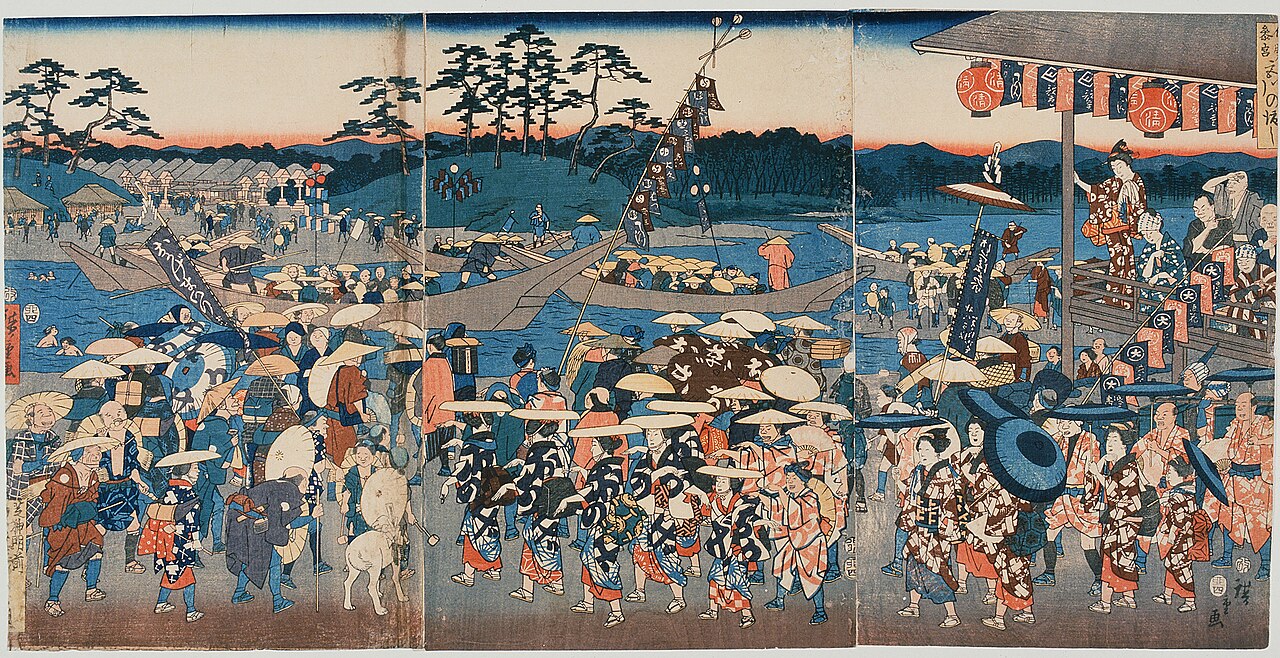
Utagawa Hiroshige (1797–12 October 1858) was a Japanese ukiyo-e artist, widely regarded as the last great master of the tradition. Born Andō Tokutarō in the Yayosu Quay area of Edo (modern Tokyo), he came from a samurai background; his father was a fire warden for the district, a duty Hiroshige inherited at age twelve after both parents died in 1809. This post left him considerable free time, which he devoted to painting. He studied Kanō-style painting under Okajima Rinsai and later sought instruction from Toyokuni of the Utagawa school, but was redirected to Toyohiro, under whom he began signing works with the name Hiroshige by 1812. His early output included book illustrations and prints of beauties and kabuki actors in the Utagawa style.
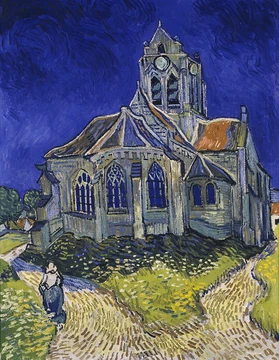
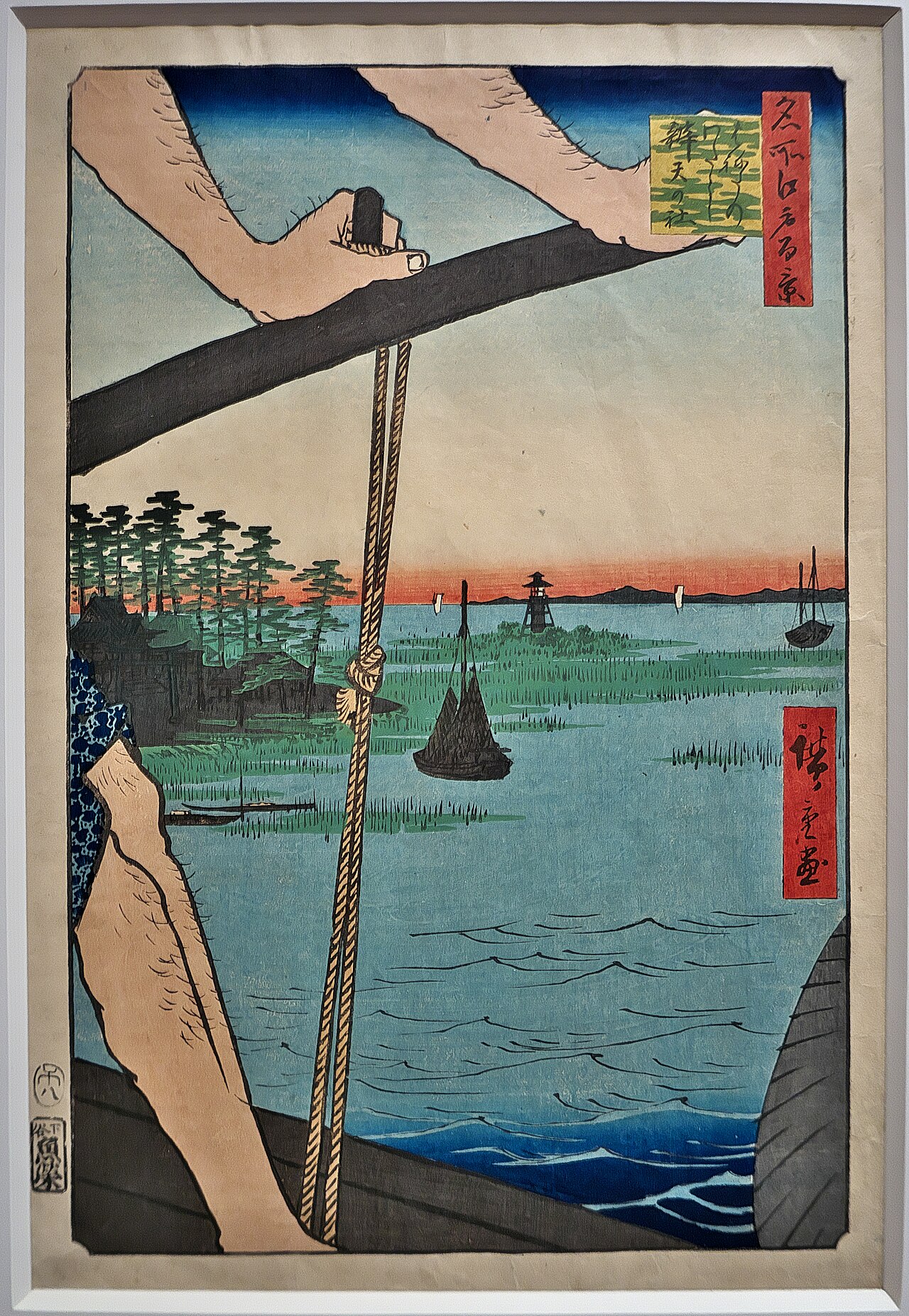
Hiroshige is best known for his landscape series, notably the horizontal *The Fifty-three Stations of the Tōkaidō* and the vertical *One Hundred Famous Views of Edo*. These subjects were atypical for ukiyo-e, which usually focused on women, actors, and urban pleasure districts. The success of Hokusai’s *Thirty-six Views of Mount Fuji* strongly influenced Hiroshige’s shift to landscapes, though his approach was more poetic and atmospheric, relying on subtle color and labor-intensive techniques such as multiple impressions in the same area and extensive *bokashi* (color gradation). His first wife helped finance sketching trips; after her death in 1838, he remarried Oyasu. Hiroshige’s death marked a rapid decline in ukiyo-e, hastened by westernization after the Meiji Restoration. His work later influenced European painters like Manet, Monet, and van Gogh, who copied his prints as part of the Japonism trend.
- field
- Ukiyo-e artist
- nationality
- Japanese
- known_for
- Landscape series The Fifty-three Stations of the Tōkaidō and One Hundred Famous Views of Edo
Verified Timeline
Quick Facts
- Birth Date
- 1797
- Birth Place
- Edo, Japan
- Birth Name
- Andō Tokutarō
- Death Date
- 1858-10-12
- Field
- Painting / Printing
- Training
- Toyohiro
- Movement
- Utagawa school
- Works
- The Fifty-three Stations of the Tōkaidō / The Sixty-nine Stations of the Kiso Kaidō / Famous Views of the Sixty-odd Provinces / One Hundred Famous Views of Edo
Facts from the source article.
Lore & Background
He began painting around age fourteen, studying Kanō-style painting under Okajima Rinsai, and later sought tutelage from Toyohiro of the Utagawa school after Toyokuni had no room. His early work included book illustrations and prints of beauties and kabuki actors. Hiroshige is best known for his horizontal-format landscape series *The Fifty-three Stations of the Tōkaidō* and his vertical-format series *One Hundred Famous Views of Edo*. His choice of landscape subjects was atypical for ukiyo-e, which usually focused on beautiful women, popular actors, and urban pleasure districts. The series *Thirty-six Views of Mount Fuji* by Hokusai strongly influenced this shift, though Hiroshige’s approach was more poetic and ambient, contrasting with Hokusai’s bolder, more formal prints. A defining characteristic of his work was the subtle use of color, achieved through multiple impressions in the same area and extensive use of *bokashi* (color gradation), both labor-intensive techniques. His prints often feature scenes from the Tōkaidō route between Edo and Kyoto, which he sketched during an official procession in 1832. He also produced bird and flower prints, as well as series such as *Eight Views of Ōmi*, *Famous Places of Kyoto*, and *The Sixty-nine Stations of the Kisokaidō* (a joint work with Keisai Eisen). His death in 1858 marked the beginning of a rapid decline in the ukiyo-e genre, hastened by westernization after the Meiji Restoration. His compositions later influenced Western painters like Manet, Monet, and van Gogh as part of the Japonism trend.
Reader's Guide
Hiroshige's significance lies in his transformation of ukiyo-e landscape prints, moving the genre away from its traditional focus on pleasure districts. His series *The Fifty-three Stations of the Tōkaidō* and *One Hundred Famous Views of Edo* became iconic, the latter using large foreground objects derived from Western art to add depth. His subtle use of color, including multiple impressions and bokashi (color gradation), was labor-intensive and distinctive. Hiroshige's work strongly influenced Western European painting in the late 19th century as part of Japonism; artists such as Manet, Monet, and Vincent van Gogh collected and studied his compositions, with van Gogh painting copies of some prints. Despite his productivity—over 8,000 works—Hiroshige was not wealthy, earning about twice the wages of a day laborer.
Did You Know?
- Hiroshige's first wife sold clothing and ornamental combs to finance his sketching trips.
Apprenticeship and Early Identity
Born Suzuki Chinpei in 1826, the young artist came from a modest background—his father was a fireman, a detail that mirrors the origins of his future master, Hiroshige I. At an unknown age, he entered the workshop of the elder Hiroshige under the studio name Shigenobu, beginning a relationship that would define his entire artistic trajectory. His earliest surviving work dates to 1849, a set of illustrations for a volume titled Twenty-four Paragons of Japan and China, marking his first public appearance in the print world. Throughout the 1850s, he produced a substantial body of commissioned prints rendered in the established style of his master. To signal his allegiance and training, he frequently signed his pieces with the phrase "student of Ichiryūsai," a reference to one of Hiroshige I's own alternate art names. By around 1853, he had grown confident enough to drop the "student" qualifier and sign simply as Ichiryūsai, a bold step that nonetheless kept his identity tethered to the elder artist's brand.
Inheriting the Hiroshige Name
When Hiroshige I passed away in 1858, his most accomplished pupil stepped into a role that blended family obligation with artistic succession. The young artist married the late master's daughter, Otatsu, and in doing so formally assumed the Hiroshige name, along with the additional studio designations Ichiryūsai and Ryūsai. This inheritance made him the second holder of one of the most celebrated names in ukiyo-e history. Yet the very closeness of his style, subject matter, and signature to those of his predecessor created a persistent problem for art historians. Scholars have repeatedly mistaken his prints for those of the elder Hiroshige, and early Western researchers did not even acknowledge him as a distinct artist at all. The overlap was so complete—spanning composition, line quality, and the names he used—that separating the two bodies of work became a significant challenge in the field. His identity as a separate creative voice was, for a long time, effectively subsumed within the shadow of the name he had inherited.
The Yokohama Years and New Directions
In 1865, a significant personal rupture reshaped the artist's professional life. After dissolving his marriage to Otatsu, he left the capital city of Edo and resettled in the port town of Yokohama. With this geographic and personal shift came a new artistic identity: he adopted the name Kisai Risshō, also pronounced Ryūshō, marking a deliberate break from the Hiroshige legacy he had carried for seven years. During this final decade of his life, he engaged in a number of collaborative print series, most notably working alongside Kunisada, an artist who had previously partnered with Hiroshige I himself. As his career drew to a close, his focus shifted away from traditional woodblock prints toward decorative objects made for the export market. He turned his hand to adorning tea chests, kites, and lanterns—practical items destined for foreign buyers. This pivot reflected the changing economic landscape of mid-nineteenth-century Japan, where the demand for decorative export goods was reshaping the work of established print artists.
Legacy and the Hiroshige Lineage
Hiroshige I was known to take on very few students throughout his career, and among those limited apprentices, his second-named successor proved the most accomplished. Yet his lasting legacy is complicated by the very success of his imitation. Because his prints so closely echoed those of his master in every visible respect—style, subject, and the names he signed—art historians for generations struggled to tell the two apart. The confusion was so entrenched that early Western scholars simply did not recognize him as a separate creative entity. The Hiroshige name itself became a contested inheritance. Another pupil of the first Hiroshige, an artist named Shigemasa, also married Otatsu after the events involving Hiroshige II and subsequently began using the Hiroshige name as well; this figure is now identified in the scholarly record as Hiroshige III. The artist himself died on 17 September 1869, at the age of forty-four, leaving behind a body of work that remains, in many collections, inseparable from the master he so faithfully emulated.
Gallery
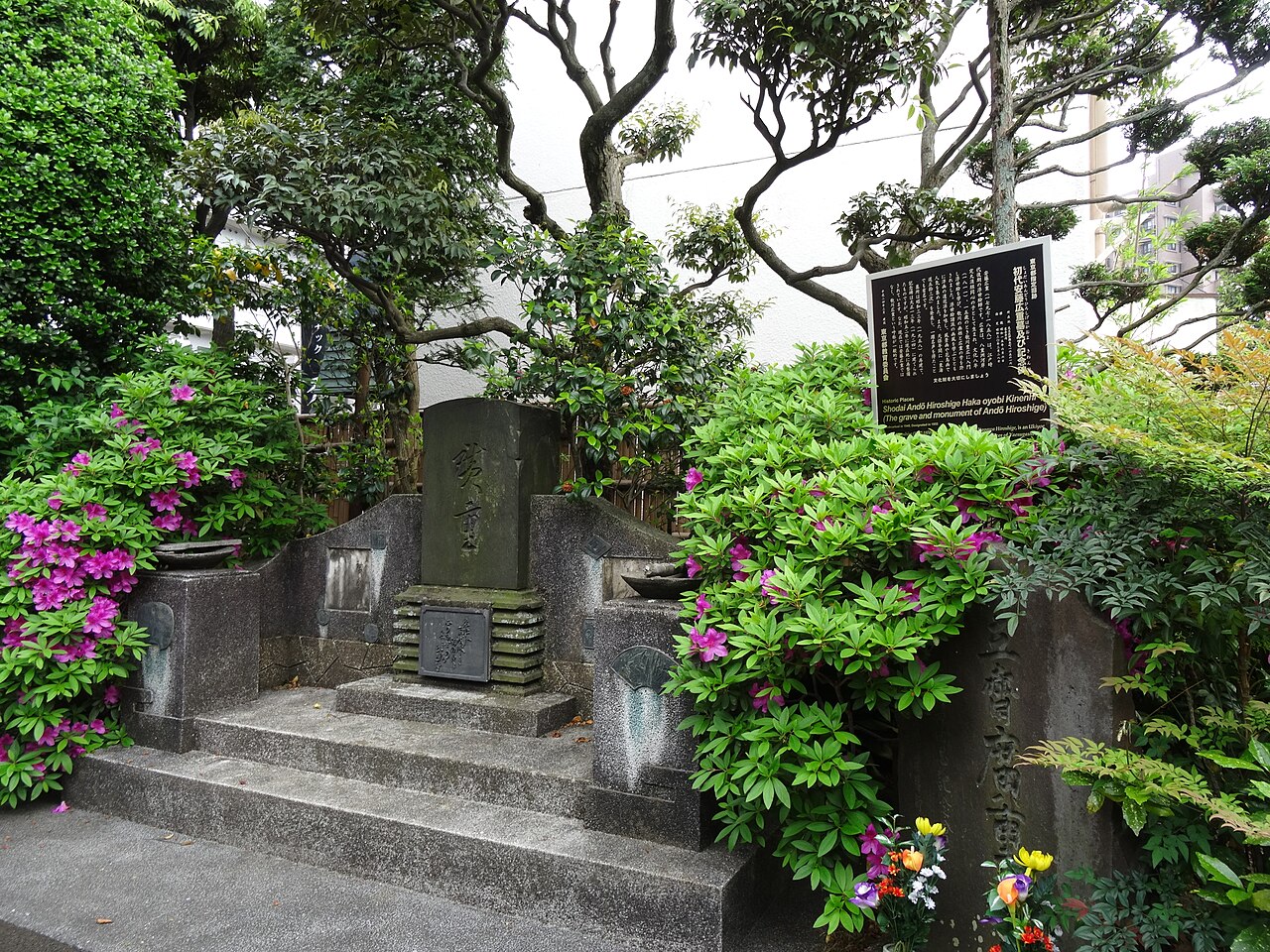
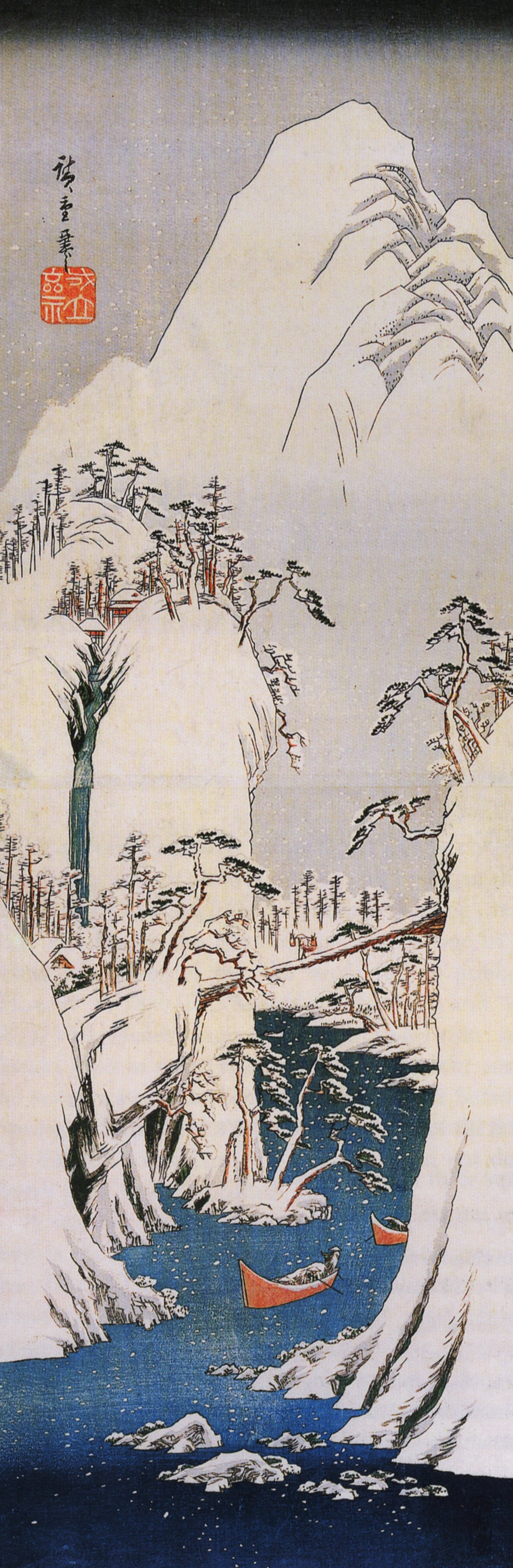
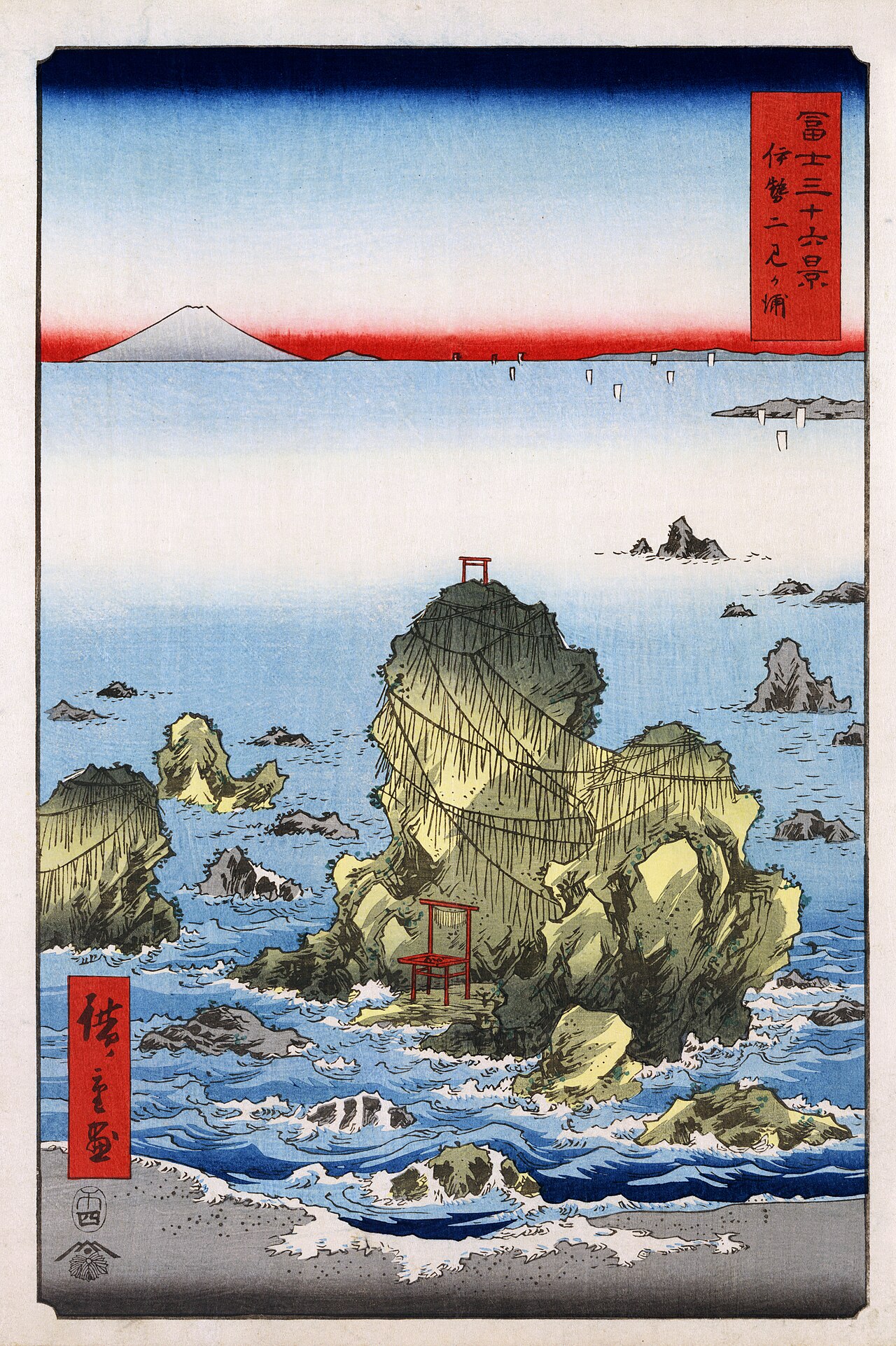
Frequently Asked Questions
What are Hiroshige's most famous works?
He is best known for two major landscape series: the horizontal-format Fifty-three Stations of the Tōkaidō and the vertical-format One Hundred Famous Views of Edo. Both collections shifted ukiyo-e focus away from the usual subjects of actors, courtesans, and pleasure quarters toward natural scenery.
How did Hiroshige's style differ from other ukiyo-e artists?
While most ukiyo-e painters centered on beautiful women, kabuki actors, and urban nightlife, Hiroshige turned his attention to landscapes and seasonal views. This pivot made his work feel more contemplative and connected to the natural world rather than the entertainment districts of Edo.
Why is Hiroshige important in art history?
He is credited as the last great master of ukiyo-e, and his landscape series helped establish the Japanese countryside as a legitimate subject for popular printmaking. His influence later reached Europe, where his work inspired Impressionist and Post-Impressionist painters.
More in Visual Artists 1-24
Spotted an error? Know more?
This is a living reference — every entry is fact-audited, and reader corrections feed straight into our audit queue. Suggest an edit · See this site's audit record