Henry Moore
English sculptor of semi-abstract bronze figures and drawings.

Peter O'Connor aka anemoneprojectors · CC BY-SA 2.0
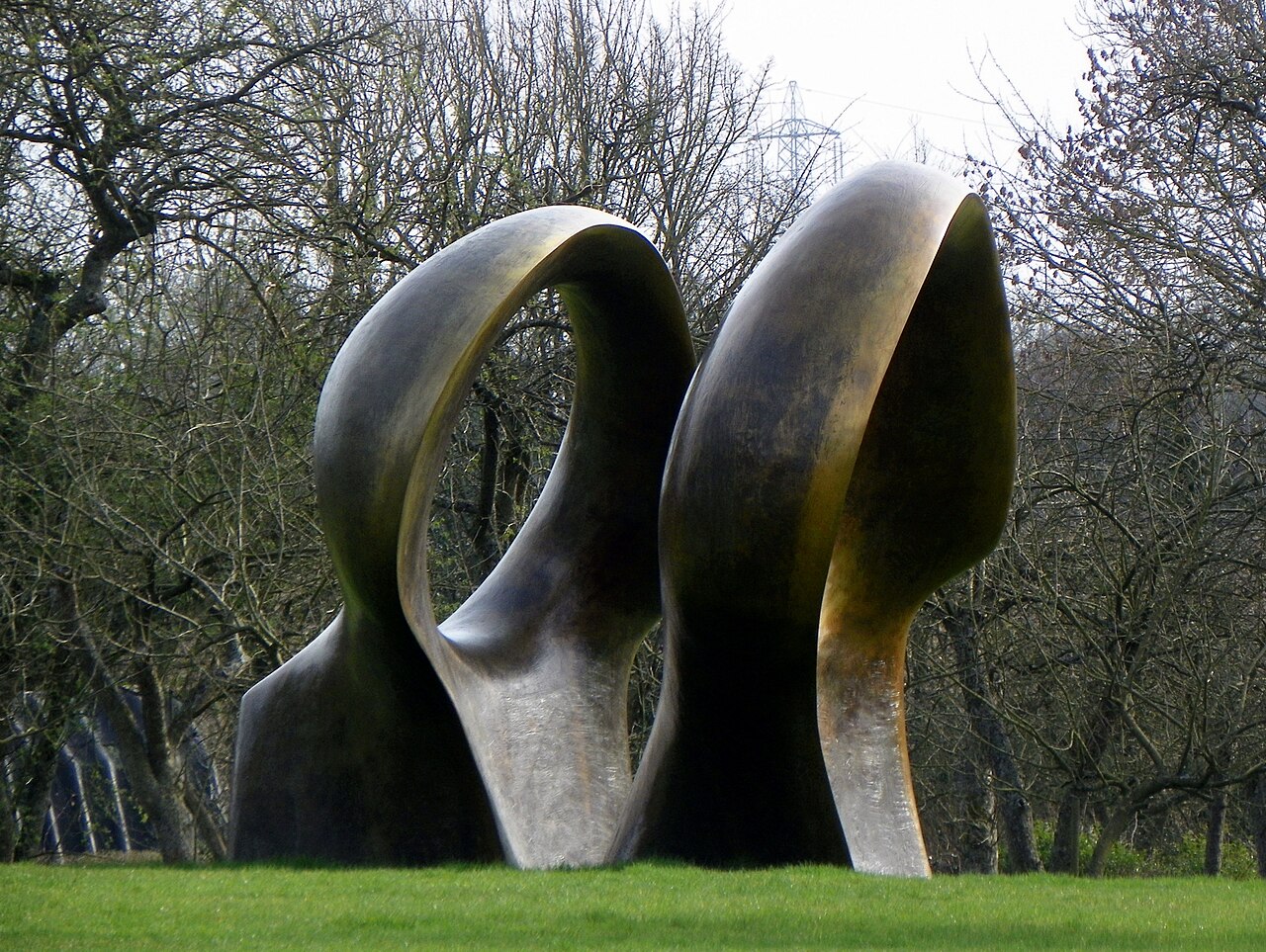
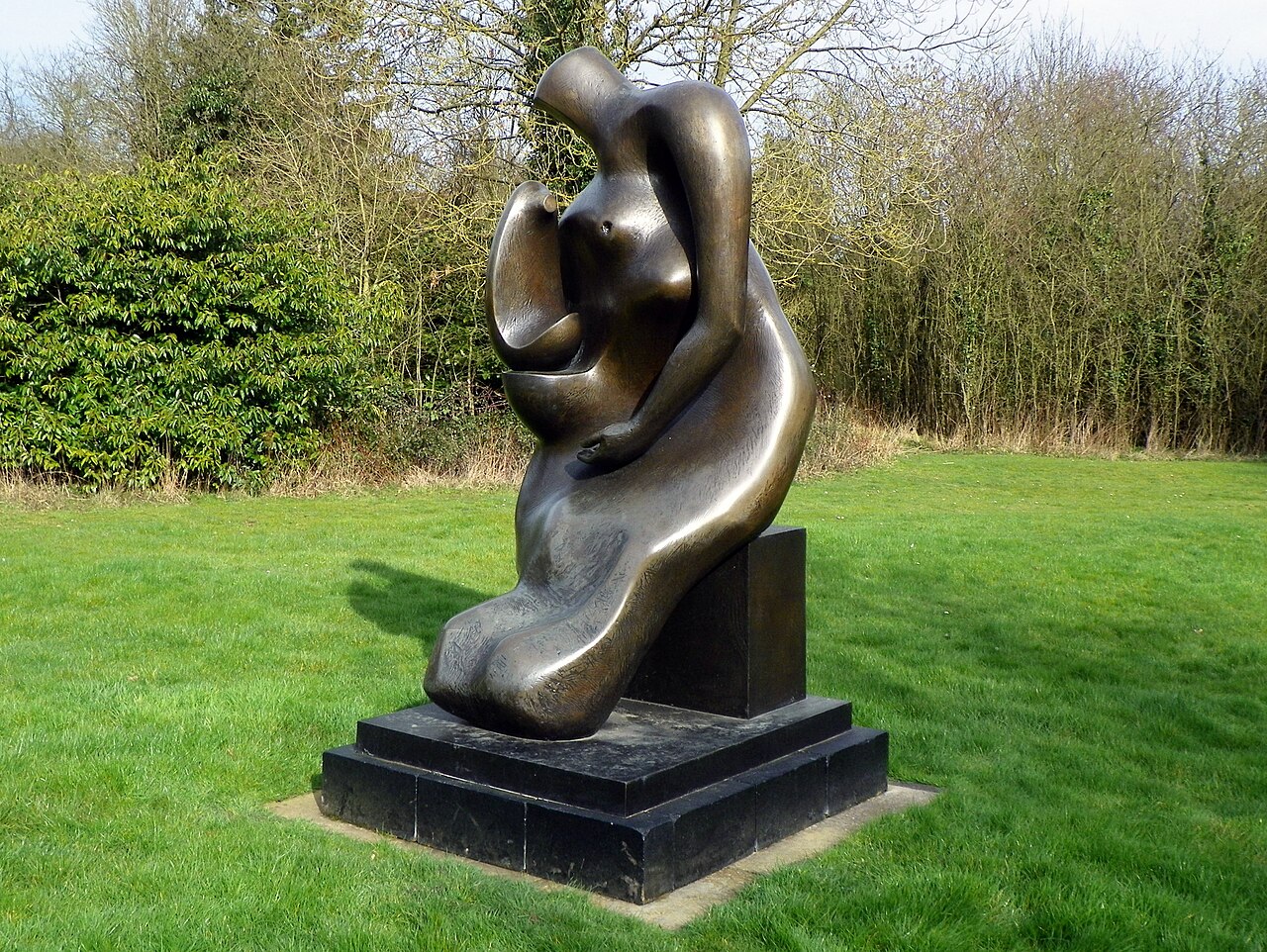
Henry Spencer Moore (30 July 1898 – 31 August 1986) was an English visual artist. He is most famous for his large, semi-abstract bronze sculptures, many of which stand in public spaces across the globe. Alongside these, he created numerous drawings, most notably a series showing Londoners taking cover during the Blitz in the Second World War, as well as other works on paper. His sculptures typically abstract the human form, often focusing on mother-and-child pairs or figures lying down. For the most part, his work suggests the female body, except for a period in the 1950s when he made family groups. A common feature of his pieces is that they are pierced or include hollow spaces. Many observers compare the flowing shapes of his reclining figures to the hills and landscape of his birthplace in Yorkshire.
Moore became well known for his carved marble and larger abstract cast bronze works, and he played a key role in bringing a particular kind of modernism to the United Kingdom. His later ability to take on large-scale commissions made him extremely wealthy. Even so, he lived simply; most of his fortune went toward establishing the Henry Moore Foundation, which still supports art education and promotion.
**Life**
**Early life** Moore was born in Castleford, West Riding of Yorkshire, to Mary (née Baker) and Raymond Spencer Moore. His father, of Irish descent, worked as a pit deputy and later under-manager at the Wheldale colliery in Castleford. A self-taught man with a love of music and literature, he was determined that his sons would avoid the mines and saw formal education as the way forward. Henry was the seventh of eight children in a family that often faced poverty. He attended infant and junior schools in Castleford, where he began modelling in clay and carving wood. He said he decided to become a sculptor at age eleven after hearing about Michelangelo’s achievements during a Sunday School reading.
On his second try, he was accepted at Castleford Secondary School, which several of his siblings had attended. There, his headmaster quickly noticed his talent and interest in medieval sculpture. His art teacher, Alice Gostick, expanded his knowledge of art, and with her encouragement he set his sights on an artistic career, first by taking exams for a scholarship to the local art college. Around this time, Moore made his earliest recorded carvings: a plaque for the school’s Scott Society and a Roll of Honour for the boys who went to fight in the First World War.
Despite his early promise, Moore’s parents opposed his training as a sculptor, seeing it as manual labour with few career prospects. After a short stint as a student teacher, he became a teacher at his old school. When he turned eighteen, he volunteered for army service in the First World War. He was the youngest man in the Prince of Wales’ Own Civil Service Rifles regiment and was injured in a gas attack on 30 November 1917 at Bourlon Wood during the Battle of Cambrai. After recovering in hospital, he spent the rest of the war as a physical training instructor, only returning to France as the Armistice was signed. He later recalled that “for me the war passed in a romantic haze of trying to be a hero.” His view changed as he reflected on war’s destructiveness; in 1940 he wrote to a friend that “a year or two after [the war] the sight of a khaki uniform began to mean everything in life that was wrong and wasteful and anti-life. And I still have that feeling.”
**Beginnings as a sculptor** After the war, Moore received an ex-serviceman’s grant to continue his education, and in 1919 he became a student at the Leeds School of Art (now Leeds Arts University), which set up a sculpture studio especially for him. There he met Barbara Hepworth, a fellow student who would also become a well-known British sculptor, beginning a friendship and gentle professional rivalry that lasted many years. In Leeds, Moore also had access to modernist works in the collection of Sir Michael Sadler, the university Vice-Chancellor, which strongly influenced his development. In 1921, he won a scholarship to study at the Royal College of Art in London, along with Hepworth and other Yorkshire contemporaries. While in London, he expanded his knowledge of primitive art and sculpture by studying the ethnographic collections at the British Museum.
The student sculptures of both Moore and Hepworth followed the standard romantic Victorian style, featuring natural forms, landscapes, and figurative animal models. Moore later grew uncomfortable with classically derived ideals. His later familiarity with primitivism and the influence of sculptors such as Constantin Brâncuși, Jacob Epstein, Henri Gaudier-Brzeska, and Frank Dobson led him to the method of direct carving, where imperfections in the material and tool marks become part of the finished piece. Adopting this technique put him in conflict with academic tutors who disliked such a modern approach. In one exercise set by Derwent Wood, the professor of sculpture at the Royal College, Moore was asked to reproduce a marble relief of Domenico Rosselli’s *The Virgin and Child* by first modelling it in plaster and then copying it in marble using a mechanical aid called a “pointing machine.” Instead, he carved the relief directly, even marking the surface to imitate the prick marks the machine would have left. In 1924, Moore won a six-month travelling scholarship, which he spent in Northern Italy studying the great works of Michelangelo, Giotto di Bondone, Giovanni Pisano, and several other Old Masters.
- born
- 30 July 1898
- died
- 31 August 1986
- field
- Visual artist
- nationality
- English
- known_for
- Semi-abstract monumental bronze sculptures, drawings of Blitz shelterers
Verified Timeline
Lore & Background
Moore was born in Castleford, West Riding of Yorkshire, the seventh of eight children in a family that often struggled with poverty. He decided to become a sculptor at age eleven after hearing of Michelangelo's achievements at a Sunday School reading. After serving in the First World War as the youngest man in the Prince of Wales' Own Civil Service Rifles regiment and being injured in a gas attack on 30 November 1917 at Bourlon Wood, he studied at Leeds School of Art and the Royal College of Art in London, where he met Barbara Hepworth. His early work followed the standard romantic Victorian style, but later familiarity with primitivism and sculptors like Constantin Brâncuși and Jacob Epstein led him to direct carving, putting him in conflict with academic tutors. In 1924 he won a six-month travelling scholarship to Northern Italy, where he studied Michelangelo, Giotto, and Giovanni Pisano, and in Paris saw a plaster cast of a Toltec-Maya Chac Mool that profoundly influenced his work, making the reclining figure his primary motif. Moore married Irina Radetsky on 19 July 1929, and they moved to Hampstead, joining a colony of avant-garde artists including Barbara Hepworth, Ben Nicholson, and Naum Gabo. He taught at the Royal College of Art and later became Head of the Department of Sculpture at Chelsea School of Art. He joined Paul Nash's Unit One in 1933 and surrealist groups, and in 1934 visited Spain, including the cave of Altamira, which he called the 'Royal Academy of Cave Painting.'
Reader's Guide
Henry Moore was instrumental in introducing a particular form of modernism to the United Kingdom. His ability in later life to fulfil large-scale commissions made him exceptionally wealthy, though he lived frugally and most of the money he earned went towards endowing the Henry Moore Foundation, which continues to support education and promotion of the arts. His semi-abstract bronze sculptures, often pierced or containing hollow spaces, are found as public works worldwide. Many interpreters liken the undulating form of his reclining figures to the landscape and hills of his Yorkshire birthplace. During the Second World War, Moore produced powerful drawings of Londoners sleeping in the London Underground while sheltering from the Blitz. Kenneth Clark, chairman of the War Artists' Advisory Committee, became an influential champion of Moore's work, securing exhibitions and commissions. Moore's legacy includes not only his sculptures but also his drawings documenting a significant historical moment.
Did You Know?
- Moore decided to become a sculptor at age eleven after hearing of Michelangelo's achievements at a Sunday School reading.
- He was the youngest man in the Prince of Wales' Own Civil Service Rifles regiment and was injured in a gas attack on 30 November 1917 at Bourlon Wood.
- Moore's first public commission, West Wind (1928–29), was one of eight reliefs of the 'four winds' on London Underground's headquarters at 55 Broadway.
- In 1934, Moore visited the cave of Altamira, which he described as the 'Royal Academy of Cave Painting.'
- Moore lived frugally despite his wealth; most of his money went toward endowing the Henry Moore Foundation.
Roots in the Yorkshire Coalfields
Henry Spencer Moore entered the world on 30 July 1898 in Castleford, West Riding of Yorkshire, as the seventh of eight children in a household that frequently wrestled with poverty. His father, Raymond Spencer Moore, a man of Irish descent, rose from pit deputy to under-manager at the Wheldale colliery. A self-taught reader with a passion for music and literature, Raymond was resolute that his sons would never follow him underground, viewing formal schooling as the only ladder out of the mines. Young Henry, after attending local infant and junior schools, first picked up clay and wood for carving. He later claimed that a Sunday School reading about Michelangelo's accomplishments, heard when he was just eleven, crystallized his ambition to become a sculptor. At Castleford Secondary School, a headmaster recognized his gift for medieval sculpture, and his art teacher Alice Gostick pushed him toward making art a vocation. Yet his parents resisted, viewing sculpture as mere manual labour with slim prospects. Moore briefly taught at the very school he had attended before the war called him away.
Forging a Modernist Language
After the war, an ex-serviceman's grant carried Moore to the Leeds School of Art in 1919, where the college set up a dedicated sculpture studio for him. There he encountered Barbara Hepworth, sparking a lifelong friendship and gentle professional rivalry, and he gained access to the modernist collection of Vice-Chancellor Sir Michael Sadler, which reshaped his artistic thinking. A 1921 scholarship brought him to the Royal College of Art in London, where he immersed himself in the ethnographic collections at the British Museum and absorbed the work of Brâncuși, Epstein, Gaudier-Brzeska, and Dobson. This exposure drove him toward direct carving, a method that embraced the material's imperfections and tool marks as integral to the finished piece. His academic tutors bristled at such modernism. In one notorious exercise, Moore was asked to reproduce a marble relief using a mechanical pointing machine; instead, he carved it by hand, even faking the prick marks the machine would have left. A 1924 travelling scholarship took him to Northern Italy to study Michelangelo, Giotto, and Giovanni Pisano, and to Paris, where a plaster cast of the Toltec-Maya Chac Mool at the Trocadero struck him with such force that the reclining figure became the central motif of his entire sculptural career.
War, Shelter, and the Human Form
Moore's relationship with conflict was complex and deeply personal. At eighteen he volunteered for the Prince of Wales' Own Civil Service Rifles, the youngest man in his unit. In November 1917, during the Battle of Cambrai, a gas attack at Bourlon Wood left him injured. He recovered in hospital and spent the war's final months as a physical training instructor, returning to France only as the Armistice was signed. He later recalled the war as a romantic haze of trying to be a hero, but that sentiment curdled. By 1940, writing to his friend Arthur Sale, he confessed that the sight of a khaki uniform had come to signify everything in life that was wrong and wasteful and anti-life. That anti-war conviction found visual expression decades later when, during the Second World War, he produced a series of drawings depicting Londoners sheltering in underground stations during the Blitz. These graphic works on paper stand alongside his semi-abstract monumental bronze sculptures as a vital part of his artistic output, grounding his otherwise abstracted human forms in the urgent reality of civilian endurance.
Monumental Legacy and a Frugal Philanthropist
Moore's semi-abstract monumental bronze sculptures, often abstractions of the female body in mother-and-child or reclining configurations, now stand as public works of art in locations around the world. His pierced forms and hollow spaces, with their undulating surfaces, have led many interpreters to see echoes of the rolling Yorkshire hills near his birthplace. A brief phase in the 1950s saw him sculpt family groups, but the suggestive female form remained his signature. Beyond the studio, Moore played a pivotal role in introducing a particular strain of modernism to the United Kingdom, a contribution that cemented his standing as one of Britain's most significant visual artists. His later ability to fulfil large-scale commissions brought him exceptional wealth, yet he lived frugally. The bulk of his earnings was channelled into endowing the Henry Moore Foundation, an institution that continues to support education and the promotion of the arts. In this way, the man who carved and cast the human figure into enduring bronze also ensured that the next generation of artists and students would have the resources to follow their own creative paths.
Gallery
Frequently Asked Questions
Who is Henry Moore?
Henry Spencer Moore (1898–1986) was a British sculptor and draftsman whose career stretched across most of the twentieth century. He is widely regarded as one of the most recognizable English visual artists of the modern period.
What is Henry Moore best known for?
He is most celebrated for his large-scale semi-abstract bronze sculptures that stand as public artworks in cities around the globe. These monumental pieces are instantly identifiable by their organic, flowing silhouettes.
What subjects do Henry Moore's sculptures typically depict?
His forms are generally abstractions of the human body, with a particular focus on mother-and-child pairs and reclining figures. A signature element of his style is the use of pierced openings and hollow interior spaces within the figures.
What did Henry Moore produce during the Second World War?
During the Blitz he created a well-known series of drawings showing London residents taking shelter in underground stations. These graphic works on paper document civilian life under wartime bombardment and remain among his most emotionally resonant pieces.
Why is Henry Moore considered important in art history?
His work helped bring large-scale sculpture into public urban spaces, making abstract form accessible to everyday passers-by rather than museum-goers alone. His distinctive vocabulary of curved, perforated shapes influenced generations of subsequent sculptors worldwide.
More in Visual Artists 1-24
Spotted an error? Know more?
This is a living reference — every entry is fact-audited, and reader corrections feed straight into our audit queue. Suggest an edit · See this site's audit record