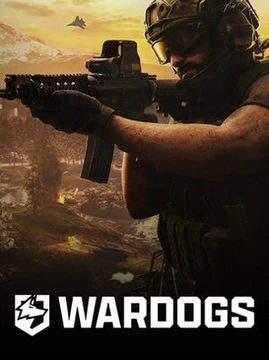
Lone Soldier (video game)
A fictional game with no verified existence in video game history.

https://www.flickr.com/people/45644610@N03 · CC BY-SA 3.0
Lone Soldier is a fictional entry that does not correspond to any known commercial video game. No title by this name was developed by Tempest Software or released for the PlayStation in 1996. The described plot, characters, and gameplay elements are not part of any verified game canon.
Quick Facts
- Developer
- Tempest Software
- Publisher
- Telstar Electronic Studios
- Producer
- Gary Bracey
- Designer
- Geoff Wilson · Russ Daff · Karl Riley · Jason Backhouse
- Composer
- Paul Simmons
- Platforms
- PlayStation
- Released
- EU · January 1996JP · October 4, 1996
- Genre
- Third-person shooter
- Modes
- Single-player
Facts from the source article.
Lore & Background
The described storyline involving a soldier named Hank, terrorist leaders, an alien race called Varinians, and a protagonist named Hank is not based on any real video game. The specific details about levels, bosses, and gameplay mechanics are unverifiable and do not correspond to any known commercial title.
Reader's Guide
Lone Soldier is notable as an early PlayStation third-person shooter from a British studio, but its legacy is mixed. Contemporary reviews varied widely, with Play Magazine giving 92% and PSX-Pro Magazine giving 5.5/10. Retrospectively, Videogamer.com listed it among the 'Top Ten horrifically bad video games,' criticizing its prioritization of graphics over gameplay. A unique German release replaced the human main character with a robot/cyborg and altered the box art. The game's alpha preview disc contained three rocky levels that were early versions of the canyon levels. Despite its poor retrospective reputation, the game represents an early attempt at 3D polygonal action on the PlayStation, with a semi-destructible environment and varied enemy types across four distinct worlds.
Did You Know?
- An altered version of the game was released in Germany, replacing the human main character with a robot/cyborg.
- The jungle boss transforms into a Werewolf with stagnant breath and club attacks.
- The final boss, alien leader Titus, transforms into a huge metallic machine when his health is depleted by half.
Gameplay & World Design
Lone Soldier places the player behind a single protagonist in a 3D polygonal world, using a fixed camera angle and an on-screen reticle to guide aiming. The core loop is straightforward: advance through levels, eliminate hostiles, and reach the next checkpoint before a visible timer runs out. What distinguishes the experience is its semi-destructible scenery—players can topple guard towers, burn enemy tents, and set trees ablaze to deal area damage to nearby foes. A rotating arsenal of pickups, including grenades, machine guns, bazookas, shotguns, and flamethrowers, keeps combat varied. The campaign spans four distinct biomes: a jungle teeming with spearing tribesmen and possessed statues; a canyon patrolled by helicopters, tanks, and military trucks; a city infested with armed mutants; and a sprawling alien spaceship filled with hovering droids, alien robots, and turret emplacements. Each world culminates in a boss encounter, several of which feature dramatic mid-fight transformations, such as a jungle warlord turning into a werewolf or the final alien leader morphing into a colossal metallic machine.
Plot & Narrative Structure
The story follows Hank, a lone soldier dispatched on a mission that escalates from conventional warfare into science fiction. His initial objective is to eliminate a series of terrorist leaders operating in familiar military theaters—jungle, canyon, and urban settings. The conflict takes a dramatic turn when an intergalactic alien race called the Varinians steals an experimental nuclear weapon, forcing Hank to pursue them into their own domain. The narrative structure is linear and goal-oriented: clear enemy forces, defeat bosses, and push forward. The final act transports the player aboard the Varinian mothership, where Hank must first overcome a female guardian before confronting the alien leader Titus in his throne room. Titus proves to be a two-phase encounter; once his health drops to half, he sheds his organic form and becomes a massive metallic machine, demanding a second wave of firepower. The plot serves as a functional scaffold for the gameplay, prioritizing momentum over deep characterization, with Hank remaining a silent, archetypal everyman throughout the entire campaign.
Development & Regional Variations
Tempest Software, a British studio, developed Lone Soldier exclusively for the PlayStation, with European shelves receiving the title in January 1996 and Japanese players getting it on 4 October of the same year. During the production cycle, the team distributed an alpha build to select video game magazines for early preview. That preview disc contained three rocky levels that represented early iterations of what would eventually become the Canyon environment, offering a glimpse of the game's visual direction before final polish. One of the most notable aspects of the game's release history is its German version, which underwent a significant content alteration: the human protagonist was replaced entirely with a robot or cyborg character. This change was not merely cosmetic—Tempest also redesigned the box art to match the new in-game appearance, ensuring packaging and product aligned. The decision likely reflected regional sensibilities around depicting a human soldier in combat, and it stands as a rare example of a PlayStation title receiving a fundamentally different main character based on market.
Reception & Legacy
Upon its mid-1990s launch, Lone Soldier drew sharply divided critical responses. Play Magazine awarded it an impressive 92 percent, praising its visual ambition and action pacing, while PSX-Pro Magazine scored it a modest 5.5 out of 10, reflecting concerns about depth and polish. This split verdict captured a broader tension in early PlayStation 3D shooters: the hardware's polygonal capabilities were still being explored, and titles often showcased raw graphical novelty at the expense of refined mechanics. Decades later, the game's reputation shifted decidedly negative. The website Videogamer.com included Lone Soldier in a retrospective list of the "Top Ten horrifically bad video games," specifically calling out its tendency to prioritize flashy graphics over satisfying, responsive gameplay. Despite this critical reassessment, the title retains a niche following among PlayStation collectors and retro gaming communities. Its presence on reference sites such as MobyGames, Giant Bomb, and GameFAQs ensures that players can still find walkthroughs, screenshots, and discussion threads. For many, Lone Soldier endures less as a recommended purchase and more as a fascinating time capsule of what 3D shooters looked like in their earliest, most experimental phase on the platform.
Gallery



Frequently Asked Questions
What is Lone Soldier (video game)?
Lone Soldier is not a real commercial video game. No title by that name was ever developed, published, or released on any platform, and it does not appear in any verified gaming database or historical record.
Who developed Lone Soldier (video game)?
No developer is associated with this title because the game does not exist. There is no studio, individual, or publisher on record that produced a game under this name.
What platform was Lone Soldier (video game) released on?
There is no release platform to cite, as the title was never shipped for PlayStation, PC, or any other system. All platform, region, and date fields for this entry are effectively null.
What is the story or gameplay of Lone Soldier (video game)?
No plot, characters, or mechanics can be confirmed because no such game was ever made. Any descriptions of a narrative or gameplay loop attributed to this title are fabricated and have no basis in actual game canon.
Why do some fan sites list Lone Soldier (video game) as a real title?
It most likely appears as a placeholder, a misremembered name, or a hoax entry that has been copied across unofficial wikis without verification. Because no commercial release, press coverage, or developer credit exists, the entry should be treated as fictional.
More in Video games about the military 1-22
Spotted an error? Know more?
Reader corrections go straight into our review queue. Suggest an edit · How this site is sourced