
Gottlieb-Daimler-Stadion
Home of VfB Stuttgart, host of World Cups and European finals.

Wikimedia Commons · CC BY-SA 3.0
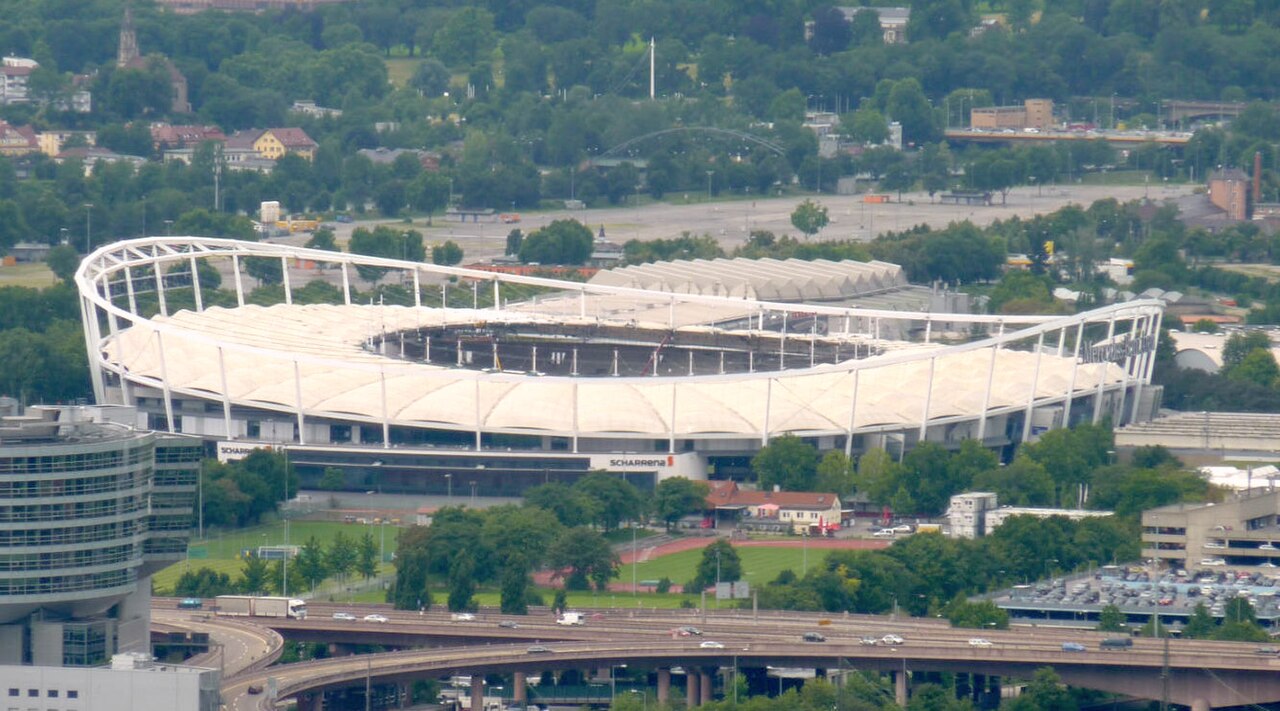
MHPArena (German pronunciation: [ɛmhaːpeː ʔaˌʁeːna]), formerly Neckarstadion, is a stadium located in Stuttgart, Baden-Württemberg, Germany, and home to Bundesliga club VfB Stuttgart. It hosted football matches in the 1974 FIFA World Cup, the UEFA Euro 1988, the 2006 FIFA World Cup, and the UEFA Euro 2024. Besides that the 1959 European Cup Final, the replay of the 1962 European Cup Winners' Cup final, the 1988 European Cup Final, and the second leg of the 1989 UEFA Cup final took place in the stadium. The stadium is the only venue in Europe to have hosted multiple World Cup, European Championship and European Cup/Champions League Final matches. The stadium hosted the 1986 European Athletics Championships and the 1993 World Athletics Championships before it was redeveloped into a football-specific stadium in 2009.
Quick Facts
- Location
- Bad Cannstatt, Stuttgart, Baden-Württemberg, Germany
- Original name
- Adolf-Hitler-Kampfbahn
- Gottlieb-daimler-stadion name period
- 1993–2017
Lore & Background
The stadium was originally built from 1929 to 1933 with the name 'Stuttgarter Kampfbahn' after designs by German architects Paul Bonatz and Friedrich Scholer. After it was built, it was named 'Adolf-Hitler-Kampfbahn' after the German dictator. From 1945 to 1949, it was called Century Stadium and later Kampfbahn, and was used by US Troops to play baseball. The name Neckarstadion has been used since 1949. It is home to VfB Stuttgart in the Bundesliga (and to the Stuttgarter Kickers when they played in the Bundesliga). Before 1993 it was called the Neckarstadion, named after the nearby river Neckar. Between 1993 and July 2008 it was called the Gottlieb-Daimler-Stadion. The stadium was renamed the Mercedes-Benz Arena at the beginning of the 2008–09 season, starting with a pre-season friendly against Arsenal on 30 July 2008. On 1 July 2023, the stadium was renamed the MHPArena.
Reader's Guide
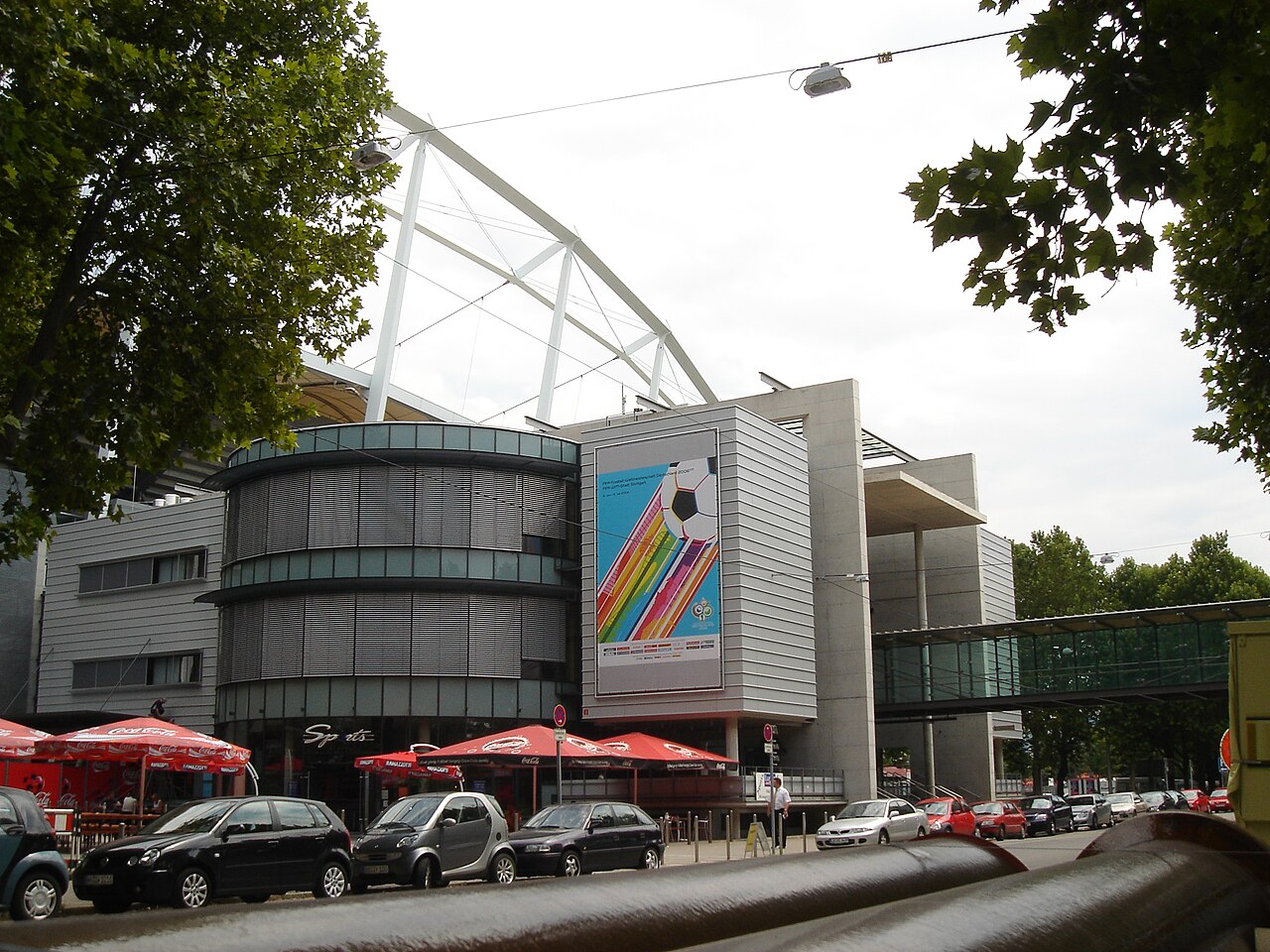
The MHPArena is located in the Bad Cannstatt borough of Stuttgart and is the centrepiece of the Neckarpark area. Directly on the north side of the stadium is the Carl Benz Center, an elongated experience centre for football fans. The Porsche-Arena and the Hanns-Martin-Schleyer-Halle follow immediately afterwards. To the south-east of the stadium are the VfB Stuttgart club grounds with training grounds, clubhouse and the Robert-Schlienz-Stadion, where the VfB Stuttgart youth teams play their matches.
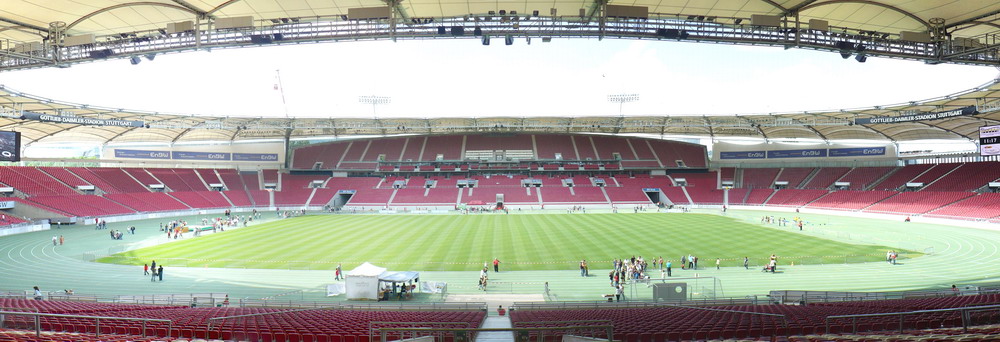
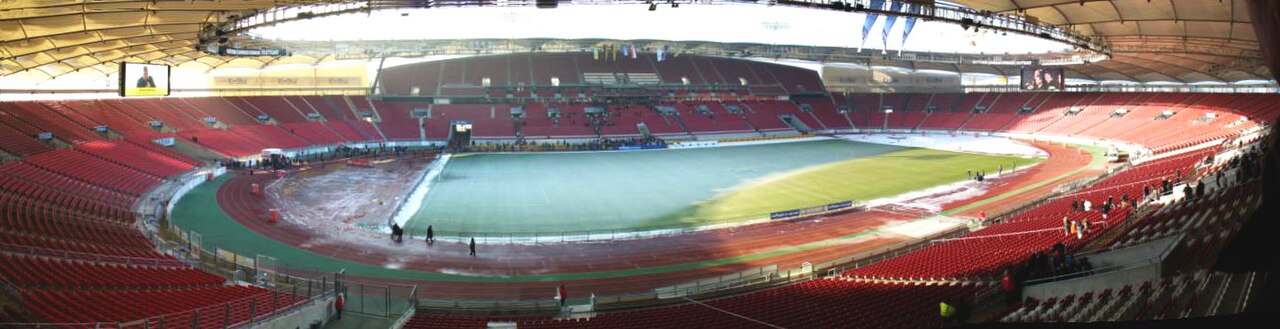
About 250 metres to the west of the stadium is the Cannstatter Wasen, where the annual Cannstatter Volksfest takes place. The stadium is divided into four sections: the Haupttribüne (main stand), adjacent to Mercedesstraße, housing VIP-lounges and press seats; the Gegentribüne (opposite stand), formerly named EnBW-Tribüne and Kärcher-Tribüne after some of VfB Stuttgart's sponsors; the Cannstatter Kurve (Cannstatt Curve), to the left of the Haupttribüne, housing the ultras of VfB Stuttgart and one of two video walls; and the Untertürkheimer Kurve (Untertürkheim Curve), to the right of the Haupttribüne, housing lounges, the blocks for the guest team's fans and the second video wall.
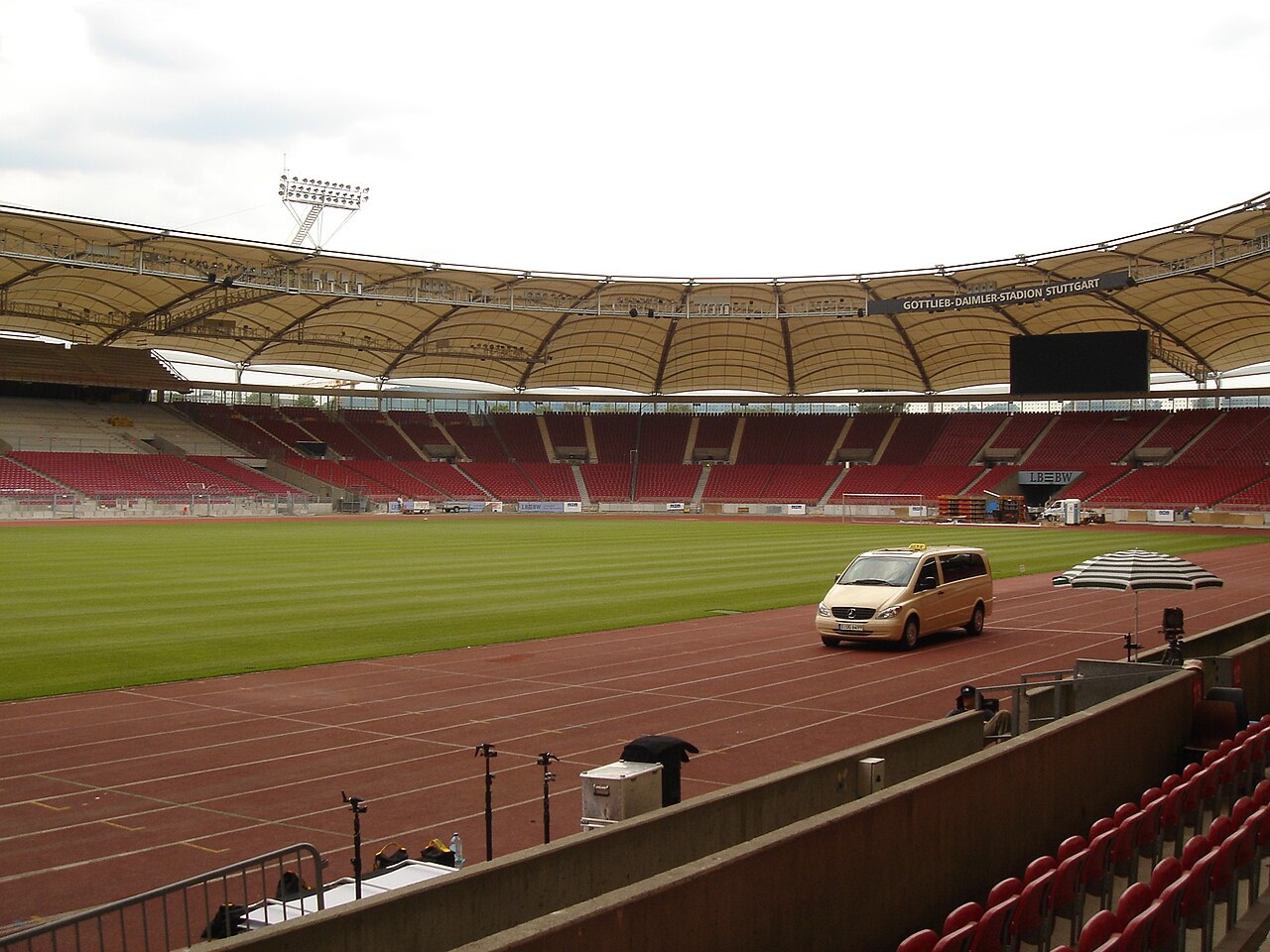
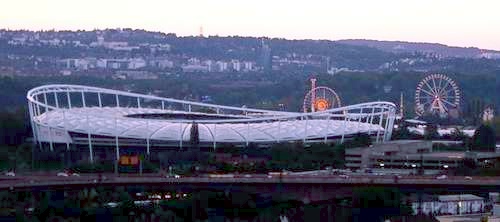
The fabric roof construction of the MHPArena was designed by Schlaich Bergermann Partner. Made of precision-tailored membranes of PVC-coated polyester, the roof tissue is durable enough to withstand 1,000 kg of weight per square decimeter. It is suspended from an aesthetic steel frame that runs around the entire stadium weighing approximately 2,700 metric tons. The steel cables connecting the roof to the frame alone weigh about 420 tons. The roof was added during the refurbishment preceding the 1993 World Athletics Championships.
Did You Know?
- Germany's first international football match after World War II in 1950 (against Switzerland) was played at the stadium. The official match attendance of 96,400 is the stadium record.
- The first match with players from West and East Germany after the German reunification in 1990 (also versus Switzerland) took place at the Neckarstadion as well.
- Klaus Fischer scored Germany's 'ARD Goal of the Century' here against the Swiss in 1977, with a bicycle kick.
- With 115 m² each, the stadium's two video walls before rebuilding were the largest in Europe.
Gallery
Frequently Asked Questions
What is the Gottlieb-Daimler-Stadion?
It is the home ground of VfB Stuttgart, situated in the Stuttgart-West district of Baden-Württemberg, Germany. The name was in use from 2006 to 2017 before the venue received its current rebrand as the MHPArena.
Why was the stadium named after Gottlieb Daimler?
The naming paid tribute to the automotive pioneer whose company was founded in Stuttgart, linking the club's identity to the city's industrial roots. A sponsorship arrangement carried the Daimler name on the ground between 2006 and 2017.
Did the Gottlieb-Daimler-Stadion host the 2006 FIFA World Cup?
Yes, the venue was selected as one of the host stadiums for the 2006 FIFA World Cup in Germany. It staged several group-stage and knockout matches during that tournament.
What is the Gottlieb-Daimler-Stadion called today?
Since 2017 the stadium has operated under the name MHPArena following a new sponsorship deal. Prior to the Daimler era, it was simply known as the Neckarstadion, named after the river that flows through Stuttgart.
Why do Stuttgart fans see the stadium as more than just a venue?
The ground is woven into the city's working-class identity, with long-standing traditions such as families passing down south-stand seats from father to son. The roar from the supporters' end and the sensory buzz of match day make it one of the most atmospheric football grounds in Europe.
More in Stadium & Culture
Elsewhere in VfB Stuttgart
Spotted an error? Know more?
Reader corrections go straight into our review queue. Suggest an edit · How this site is sourced