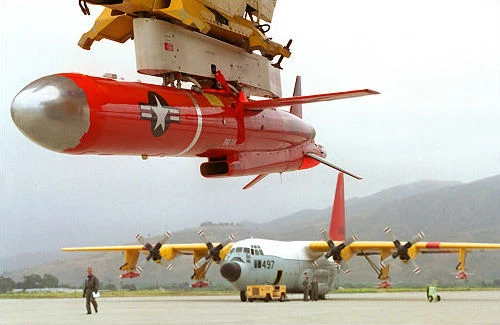
BAE Systems SkyEye
Early US battlefield reconnaissance UAV with continuous refinements since 1981.

The SkyEye is a reconnaissance UAV whose origins trace back to the early 1970s in the United States. Developmental Sciences Inc—later renamed Developmental Sciences Corporation, a Lear Astronics division that eventually became part of BAE Systems—built the first SkyEye prototype in 1973. The company was among the earliest American firms to explore battlefield drones. An improved version, the R4E, first flew in 1981 and has since undergone continuous refinement through a series of subvariants.
Several nations, including Egypt and Morocco, operate the R4E for battlefield surveillance. It has also seen commercial use, such as pesticide spraying. The US Army’s South Command acquired a small number of stock R4Es for border patrols in Latin America. The US Army once considered a variant called the McDonnell Douglas Sky Owl for its short-range UAV competition, but that design was generally outperformed by the RQ-5 Hunter.
The SkyEye features a common pusher-propeller, twin-tailboom layout, but its slightly swept wings and antennas atop the tailplanes are distinctive. Power comes from a UAV Engines Limited (UEL) rotary engine producing 39 kW (52 hp). It can carry two underwing stores in addition to its main payload. Landing is accomplished via a retractable centerline skid, or the aircraft can be recovered by parachute.
The Royal Thai Armed Forces designate the R4E-30 variant as the B.W.1.
Quick Facts
- Aircraft Type
- Reconnaissance UAV
- National Origin
- United States, United Kingdom
- Manufacturer
- Developmental Sciences Inc, BAE Systems, McDonnell Douglas
- First Flight
- 1973
Facts from the source article.
Lore & Background
Developmental Sciences Inc began investigating battlefield UAVs in the early 1970s, flying the first SkyEye prototype in 1973. The improved R4E variant first flew in 1981 and has been continuously refined through a sequence of subvariants. The SkyEye uses a common pusher-propeller twin-tailboom configuration but is distinguished by slightly swept wings and antennas mounted on top of the tailplanes. It is powered by a UAV Engines Limited (UEL) 39 kW (52 hp) rotary engine and can carry two underwing stores along with its other payload. The aircraft lands on a retractable centerline skid or can be recovered by parachute.
The R4E SkyEye entered service with several countries, including Egypt and Morocco, for battlefield surveillance. It has also been used commercially for pesticide spraying. A few stock R4Es were purchased by the US Army's South Command in Latin America and used for border patrols. The United States Army considered a variant called the McDonnell Douglas Sky Owl for its short-range UAV competition, but it proved generally inferior to the RQ-5 Hunter. The R4E-30 variant is designated B.W.1 by the Royal Thai Armed Forces.
Reader's Guide
The BAE Systems SkyEye represents an early and sustained effort in US battlefield UAV development, originating with Developmental Sciences Inc in the early 1970s. Its significance lies in its longevity: the R4E variant, first flown in 1981, has been continuously refined through multiple subvariants, demonstrating the adaptability of its basic design. The SkyEye's adoption by multiple countries—Egypt, Morocco, and the Royal Thai Armed Forces—as well as its use by the US Army's South Command for border patrols, indicates its utility in diverse surveillance roles. Its commercial application for pesticide spraying further broadens its legacy beyond military use. The aircraft's involvement in the US Army's short-range UAV competition, albeit as the inferior McDonnell Douglas Sky Owl compared to the RQ-5 Hunter, highlights its place in the competitive landscape of UAV procurement. The SkyEye's distinctive configuration—pusher-propeller twin-tailboom with swept wings and tailplane antennas—and its recovery options (skid or parachute) reflect practical design choices for battlefield operations. Overall, the SkyEye's continuous refinement and varied operational history underscore its role as a foundational platform in the evolution of reconnaissance UAVs.
Did You Know?
- The first SkyEye prototype flew in 1973, making it one of the earliest US battlefield UAVs.
- The R4E variant has been continuously refined since its first flight in 1981 through a sequence of subvariants.
- The SkyEye has been used commercially for pesticide spraying in addition to military surveillance.
More in Unmanned Aerial Vehicles by Country 1-24
Spotted an error? Know more?
Reader corrections go straight into our review queue. Suggest an edit · How this site is sourced