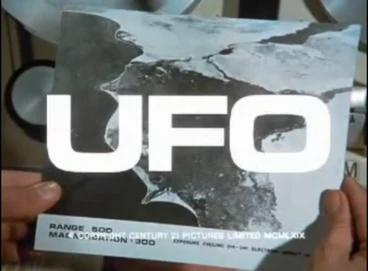
In Search of... (TV series)
This series presents information based in part on theory and conjecture. The producer's purpose is to suggest some possible explanations, but not necessarily the only ones.

75Portlewes · CC BY 4.0
In Search of... is an American television series that aired weekly from 1977 to 1982, focusing on mysterious phenomena such as UFOs, Bigfoot, and historical enigmas. Created by Alan Landsburg after the success of earlier documentaries narrated by Rod Serling, the series became a cultural touchstone for paranormal investigation and was revived multiple times.
Quick Facts
- Runtime
- 23 minutes
- Creator
- Alan Landsburg
- Presenter
- Leonard Nimoy / Mitch Pileggi / Zachary Quinto
- Country
- United States
- Language
- English
- Network
- Syndicated / Sci-Fi Channel / History
- First Aired
- 1976-09-20
- Last Aired
- 2019-11-29
- Num Episodes
- Specials: 3 / Original Series: 144 / First Revival: 8 / Second Revival: 18
Facts from the source article.
Lore & Background
The series was born from three one-hour documentaries produced by Alan Landsburg: In Search of Ancient Astronauts (1973), In Search of Ancient Mysteries (1974), and The Outer Space Connection (1975), all narrated by Rod Serling. Serling was the initial choice to host the spinoff show but died in 1975, before the series was developed; he was never formally attached as host. Each episode explored topics in categories such as Extraterrestrials, Magic & Witchcraft, Missing Persons, Myths & Monsters, Lost Civilizations, and Strange Phenomena. The opening credits included a disclaimer that the series presented information based partly on theory and conjecture.
Reader's Guide
In Search of... left a lasting legacy as a pioneering program that brought paranormal and controversial topics into mainstream television. Its format—combining interviews, reenactments, and host segments—influenced later documentary series. The show inspired spinoff books by Landsburg with forewords by Nimoy, and a soundtrack album released in 1977. It was revived in 2002 with Mitch Pileggi and again in 2018 with Zachary Quinto on the History Channel. The series also served as inspiration for The Blair Witch Project, whose directors watched it as children. Reruns aired on A&E and the History Channel in the 1990s, with modified opening titles and music. A complete DVD collection of the original 144 episodes was released in 2012.
Did You Know?
- Leonard Nimoy did not write the episode about Vincent van Gogh.
- The series was shown in Australia in the 1980s under the title Great Mysteries of the World.
- A soundtrack album for the series was released on AVI Records in 1977.
From Serling's Vision to Nimoy's Chair
The series In Search of... did not emerge from a blank page. Creator Alan Landsburg first proved the appetite for speculative documentary television through three one-hour specials between 1973 and 1975—In Search of Ancient Astronauts, In Search of Ancient Mysteries, and The Outer Space Connection—each narrated by the late Rod Serling. The first special drew on Erich von Däniken's 1968 book Chariots of the Gods? and the 1970 film of the same name directed by Harald Reinl. Serling was the natural first choice to anchor the weekly spinoff that followed, but he passed away before production could begin. Leonard Nimoy stepped into the role, and the show ran for six seasons from 1976 to 1982. The loss of Serling cast a long shadow over the project's identity, yet Nimoy brought his own gravitas to the host's chair, lending the series a distinctive intellectual warmth that defined its tone for a generation of viewers.
Investigative Format and the Van Gogh Discovery
Each installment of the original series was organized around one of six thematic categories announced in the opening titles: Extraterrestrials, Magic & Witchcraft, Missing Persons, Myths & Monsters, Lost Civilizations, and Special Phenomena (renamed Strange Phenomena beginning with the third season). Episodes tackled everything from UFO sightings, Bigfoot, and the Loch Ness Monster to the Jack the Ripper murders, the fate of Amelia Earhart, the Mary Celeste, and the lost Roanoke Colony. A verbal disclaimer at the start of every episode reminded audiences that the material rested partly on theory and conjecture. The production blended studio and on-location host segments, interviews, and dramatic reenactments, all underscored by voiceover narration from Nimoy and a score composed by Laurin M. Rinder and W. Michael Lewis. One episode stands out for its personal research: Nimoy, who had previously portrayed Van Gogh's brother Theo in a one-man stage show, wrote and hosted a segment on the artist's turbulent life. While digging through hospital archives where Van Gogh had been treated, Nimoy uncovered records suggesting the painter suffered from epilepsy rather than the mental illness commonly attributed to him.
A Long Afterlife: Reruns, Revivals, and Home Video
The series enjoyed a remarkably long afterlife well beyond its original 1976-to-1982 broadcast window. Reruns found a second life on A&E in the early 1990s, where the opening titles were modernized, a re-recorded theme was paired with a new alternate one, and virtually all of Nimoy's on-camera appearances were replaced with reused footage so audiences could still hear his narration without seeing him. The show later moved to the History Channel in the late 1990s before the licensing agreement with MCA Television/Universal Domestic Television lapsed in the early 2000s. Two further revivals followed: a single season hosted by Mitch Pileggi on the Sci-Fi Channel in 2002, and a two-season run hosted by Zachary Quinto on the History Channel beginning in 2018. Quinto's casting carried a deliberate echo, as he too played Spock in the rebooted Star Trek films, mirroring Nimoy's own association with that character. In 2012, Visual Entertainment released a 21-DVD Complete Collection containing all 144 Nimoy-hosted episodes, two Rod Serling specials, and the eight Pileggi episodes, making the full archive available to home viewers for the first time.
Cultural Footprint and Homages
The visual and narrative template established by the original series left a mark that extended well past its own airtime. Landsburg authored at least six spinoff books covering the show's major categories—Lost Civilizations, Extraterrestrials, Magic and Witchcraft, Strange Phenomena, Missing Persons, and Myths and Monsters—each with a foreword by Nimoy, plus a collected volume drawing the best segments from those titles. In 1978, Landsburg assembled footage from two episodes into a standalone Bigfoot documentary called Manbeast! Myth or Monster, though Nimoy, despite writing the book's foreword, did not narrate it. A soundtrack album was also released on AVI Records that same year. The show's influence reached Australian audiences in the 1980s under the title Great Mysteries of the World, with local presenter Scott Lambert adding introductions and conclusions to each episode. In popular culture, the format was parodied in Men in Black II through a fictional show-within-a-show called Mysteries in History, hosted by Peter Graves—coincidentally a former Mission: Impossible co-star of Nimoy's—and in two nearly identical alternate-universe series, Truth from Legend and Fact from Myth.
Gallery

Frequently Asked Questions
Who created In Search of... and what inspired the show?
Alan Landsburg developed the series, building on the momentum generated by earlier Rod Serling-narrated documentaries. The program launched as a weekly show in 1977 and ran through 1982, exploring unexplained phenomena such as UFO sightings, cryptids, and unsolved historical mysteries.
Is In Search of... based on proven facts or speculation?
The show openly frames much of its material around theories and conjecture rather than confirmed science. Producers present possible explanations for the phenomena they investigate but stop short of declaring any single answer definitive.
What topics did In Search of... typically cover in a given episode?
Episodes ranged from extraterrestrial encounters and Bigfoot sightings to ancient puzzles and other paranormal claims. The format treated each subject as a mystery, weighing multiple hypotheses before leaving the audience to draw its own conclusion.
Why is In Search of... considered important in television history?
It became a defining cultural reference point for paranormal and mystery programming during the late 1970s and early 1980s. Its format and popularity paved the way for numerous revivals and imitators in the decades that followed.
Did In Search of... get revived after the original run ended in 1982?
Yes, the franchise was brought back on multiple occasions after its initial series concluded. Each new iteration updated the production style while keeping the core premise of investigating the unexplained.
More in UFO-related television 1-24
Spotted an error? Know more?
Reader corrections go straight into our review queue. Suggest an edit · How this site is sourced