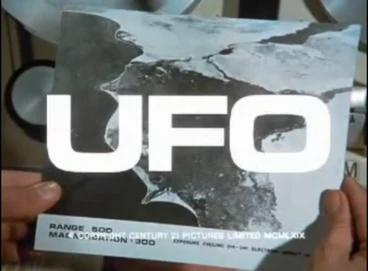
In Search of Aliens
A series promoting ancient astronaut pseudoscience on H2.

CBP Photography · Public domain
In Search of Aliens is an American TV series that debuted on July 25, 2014, on the H2 network. It was produced by Prometheus Entertainment and stars Giorgio A. Tsoukalos, a key figure from *Ancient Aliens* who advocates for the pseudoscientific idea that extraterrestrials visited Earth long ago and shaped human civilization. The program has faced backlash from reviewers and groups like the Southern Poverty Law Center, which has labeled it as advancing "racist pseudo-scholarship."
The series consists of ten episodes: "The Hunt for Atlantis," "Nazi Time Travelers," "The Mystery of Loch Ness," "The Roswell Rock," "Searching for Bigfoot," "The Mystery of the Cyclops," "The Mystery of Puma Punku," "The Founding of America," "The Mystery of Nazca," and "The Alien Code."
Critic Jason Colavito argued that the show’s content "added up to nothing," lacked a clear thesis or purpose, and noted that Tsoukalos himself admits he doesn’t believe what his interviewees say. Colavito described *In Search of Aliens* as a knockoff of *America Unearthed* that lacks even the questionable expertise of Scott F. Wolter, who at least produces more engaging television by sticking to his convictions. Colavito also called ancient astronaut theories "one of the more elaborate theories in pseudo-history with a racist component." Writing for the Southern Poverty Law Center’s Hatewatch blog, Alexander Zaitchik claimed that fringe history shows like this are embraced by the far right because they help "raise the profile of racist pseudo-scholarship," citing the example of German author Jan Udo Holey, whose antisemitic books are banned across Europe.
Related topics include pseudoscience, pseudoarchaeology, *Ancient Aliens*, *Unsealed Alien Files*, and *In Search of...* (TV series).
Quick Facts
- Genre
- Pseudoscience · Ufology · Conspiracy theory
- Country
- United States
- Language
- English
- Num Seasons
- 1
- Num Episodes
- 10
- Executive Producer
- Kevin Burns
- Presenter
- Giorgio A. Tsoukalos
- Camera
- Multiple
- Runtime
- 42 minutes
- Company
- Prometheus Entertainment
- Network
- H2
- First Aired
- 2014-07-25
Facts from the source article.
Lore & Background
The series consists of ten episodes, each exploring a different mystery or historical topic from the perspective of ancient astronaut theory. Episodes include 'The Hunt for Atlantis', 'Nazi Time Travelers', 'The Mystery of Loch Ness', 'The Roswell Rock', 'Searching for Bigfoot', 'The Mystery of the Cyclops', 'The Mystery of Puma Punku', 'The Founding of America', 'The Mystery of Nazca', and 'The Alien Code'.
Reader's Guide
In Search of Aliens is significant as a television program that continued the promotion of ancient astronaut theories, a form of pseudoscience, on a mainstream cable channel. According to reviewer Jason Colavito, the information presented in the show 'added up to nothing', there was 'no overriding thesis or purpose', and Tsoukalos admits 'he doesn’t buy into what his interviewees said'. Colavito wrote that 'In Search of Aliens is an ersatz America Unearthed that lacks even the dubious expertise of Scott F. Wolter'. The show has been criticized by the Southern Poverty Law Center for promoting 'racist pseudo-scholarship'. According to Alexander Zaitchik writing for the Southern Poverty Law Center's Hatewatch blog, shows that promote fringe history like In Search of Aliens are embraced by the far right because they help in 'raising the profile of racist pseudo-scholarship', such as German writer Jan Udo Holey, whose antisemitic books have been banned across Europe.
Did You Know?
- The show premiered on July 25, 2014, on the H2 channel.
- The Southern Poverty Law Center described the show as promoting 'racist pseudo-scholarship'.
The Rancher's Discovery and the Chain of Events
In the early summer of 1947, a long train of top-secret military balloons was launched from Alamogordo Army Air Field in New Mexico. Within seventeen miles of the ranch managed by W. W. "Mac" Brazel near Corona, the balloon array lost contact and crashed across the property. Brazel, who had no telephone or radio on his land, came across tinfoil, rubber strips, tape, and slender wooden beams strewn over several acres. At the time, he had no awareness of the national flying-saucer frenzy that Kenneth Arnold's June sighting had ignited. It was only when Brazel drove into Corona on July 5 that his uncle Hollis Wilson suggested the wreckage might be a "flying disk." The next day, Brazel brought the matter to Sheriff George Wilcox in Roswell, who contacted Roswell Army Air Field. The base, home to the 509th Bomb Group—the only unit then capable of delivering nuclear weapons—dispatched Major Jesse Marcel and Captain Sheridan Cavitt to accompany Brazel back to the ranch and collect the material.
The Press Release and Its Rapid Retraction
On July 8, 1947, Roswell Army Air Field public information officer Walter Haut released a statement declaring that the 509th Bomb Group's intelligence office had gained possession of a "flying disc" through the cooperation of a local rancher. Flight engineer Robert Porter, who helped load the material for transport to Fort Worth, Texas, recalled it was wrapped in paper, lightweight, and small enough to fit in a car trunk. When station director George Walsh broadcast the news on local radio KSWS and passed it to the Associated Press, his phone lines were flooded with calls from around the world. Yet the excitement lasted barely a day. At a press conference, General Roger Ramey, Colonel Thomas DuBose, and weather officer Irving Newton identified the debris as fragments of a conventional weather balloon, noting similar radar targets operated at roughly eighty weather stations nationwide. Brazel himself described the wreckage to the Roswell Daily Record as rubber strips, tinfoil, paper, tape, and sticks, while Marcel called it "parts of the weather device."
The Conspiracy's Birth and Proliferation
For over three decades, the Roswell incident remained a footnote. Then in 1978, retired Air Force officer Jesse Marcel stepped forward to argue that the Army's weather-balloon story was a deliberate fabrication, and he suggested the wreckage might have been of extraterrestrial origin. His claim gained enormous traction through the 1980 publication of The Roswell Incident, a book that wove Marcel's testimony into a compelling narrative of military deception. What began as a single speculation about one piece of wreckage ballooned into an ever-expanding web of increasingly elaborate and mutually contradictory theories. Over the following years, the conspiracy narrative grew to encompass government concealment of alien beings, grey-skinned extraterrestrials, multiple crashed flying saucers, the recovery of alien corpses, secret autopsies, and the reverse engineering of non-human technology. None of these additional claims possess any factual basis, yet the story's complexity and internal contradictions only deepened its grip on popular imagination.
Official Explanations and Cultural Aftermath
The true origin of the 1947 debris was eventually confirmed: it belonged to Project Mogul, a top-secret program operating complex, uncrewed balloon trains from Alamogordo to detect Soviet nuclear tests. To obscure the program's purpose and the source of the wreckage, the Army had reported the material as a routine weather balloon. In the 1990s, the Air Force published multiple reports that definitively tied the incident to Project Mogul and ruled out any extraterrestrial explanation. Nevertheless, a persistent community of UFO enthusiasts continues to insist the debris came from an alien craft and to accuse the U.S. government of a decades-long cover-up, despite the general absence of supporting evidence. Culturally, the Roswell story has transcended its origins to become a foundational trope across science fiction literature, film, and television. The town of Roswell itself has embraced the narrative, actively marketing itself as a destination for UFO-themed tourism and keeping the legend alive for new generations of visitors.
Gallery




Frequently Asked Questions
Who hosts In Search of Aliens?
Giorgio A. Tsoukalos fronts the show, bringing over the same ancient-aliens perspective he developed on Ancient Aliens. He serves as the on-screen guide throughout all ten episodes.
What is In Search of Aliens about?
The series explores topics like Atlantis, Nazi time travel, and the Loch Ness creature through the lens of ancient astronaut theory. It argues that extraterrestrial visitors influenced human history and culture.
When and where did In Search of Aliens premiere?
The show first aired on July 25, 2014, on the H2 cable channel. It ran for a single season consisting of ten episodes.
Who produced In Search of Aliens?
Prometheus Entertainment handled production of the series. They are the same company behind Tsoukalos's earlier Ancient Aliens franchise.
What criticism has In Search of Aliens received?
The program drew significant pushback from reviewers and advocacy organizations. The Southern Poverty Law Center specifically called out the show for promoting what it described as racist pseudo-scholarship.
More in UFO-related television 1-24
Spotted an error? Know more?
Reader corrections go straight into our review queue. Suggest an edit · How this site is sourced