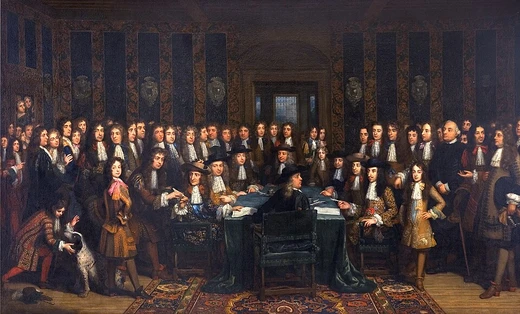
Treaty of El Pardo (1778)
1778 treaty settling Spanish–Portuguese borders in South America and Africa.
The Treaty of El Pardo, signed on 11 March 1778, ended conflict between Spain and Portugal in the Río de la Plata region. It confirmed Spanish ownership of Colonia del Sacramento and gave Spain strategically important African territories that later became Equatorial Guinea. In exchange, Spain withdrew from lands to the north, most of which lie in the modern Brazilian state of Rio Grande do Sul.
Quick Facts
- Context
- Spain and Portugal finalise boundaries in the Río de la Plata region, Spain gains territories in Equatorial Africa
- Date signed
- 11 March 1778
- Location signed
- Royal Palace of El Pardo near Madrid
- Parties
- Portugal
- 1750 Portugal; Spain
- 1701 Spain
Facts from the source article.
Background
Border disputes between Spain and Portugal over the Río de la Plata region had persisted for nearly 300 years due to differing interpretations of the Treaty of Tordesillas. Portuguese encroachments allowed merchants to evade Spanish commercial restrictions, culminating in the 1680 establishment of Colonia del Sacramento, a smuggling hub across from Buenos Aires. The 1750 Treaty of Madrid attempted to settle the matter but was annulled by Charles III of Spain in 1761. During the Seven Years' War, Spain captured Colonia del Sacramento and lands in what is now Rio Grande do Sul, but was forced to return the former under the 1763 Treaty of Paris, while retaining Rio Grande on the grounds that those lands were Spanish. Portugal reoccupied Rio Grande in an undeclared war, leading to the 1776–1777 Spanish–Portuguese War. A Spanish expeditionary force of 116 ships and 19,000 troops captured Santa Catarina in February 1777 and then Colonia del Sacramento in July. Fighting ended when Joseph I of Portugal died and his daughter, Spanish-born Maria I, sought peace. The October 1777 First Treaty of San Ildefonso established a Boundary Commission, whose findings were later confirmed by the Treaty of El Pardo.
Provisions
The Treaty of El Pardo made the Boundary Commission's results official. Portugal gave up Colonia del Sacramento to Spain, and Spain pulled back from areas to the north. Trade rules addressed tobacco and the Atlantic slave trade. Spain regained West African slave trade bases it had lost in 1479, taking the Portuguese islands of Annobón and Bioko (Fernão Pó) along with the mainland between the Niger and Ogoue Rivers. These territories fell under the Spanish Viceroyalty of the Rio de la Plata, run from Buenos Aires.
Aftermath
Spain’s plan for the border agreement to help the economy ran into trouble when war with Britain broke out from 1779 to 1783, cutting off trade with mainland Spain and forcing high tariffs and taxes to cover costs. During the Napoleonic Wars, the Spanish central government lost its grip on its overseas territories. Portugal took back the Misiones Orientales in 1801, yet colonists managed to fight off British attacks on the River Plate in 1806 and 1807. The Spanish American wars of independence, lasting from 1809 to 1829, ended Spanish rule in the Americas, with the Viceroyalty of Río de la Plata breaking up during the Argentine War of Independence between 1810 and 1818. The African lands Spain gained under the treaty became the colony of Spanish Guinea. Portugal had paid little attention to Annobón and Bioko, focusing instead on São Tomé, and as the transatlantic slave trade was gradually abolished in the early 1800s, these islands lost most of their worth to Spain. In 1968, Spanish Guinea became the independent nation of Equatorial Guinea.
More in Treaties of the Spanish Empire
Spotted an error? Know more?
Reader corrections go straight into our review queue. Suggest an edit · How this site is sourced