Kyoto Botanical Garden
Last updated

via Wikipedia: Kyoto Botanical Garden · see source
Where it is
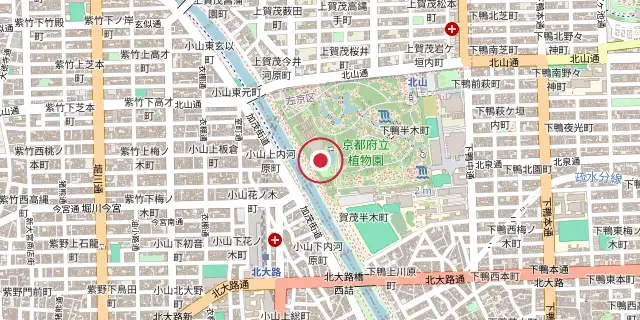
Coordinates: 35°02′53″N 135°45′40″E (35.0480, 135.7610) · Open in OpenStreetMap
Connected teams and clubs
Coordinates and connected clubs: the infobox of Wikipedia: Kyoto Botanical Garden (CC BY-SA 4.0). Map: drawn by Codexery from OpenStreetMap tiles.
Tucked beside the Kamo River in Kyoto’s Sakyō ward, the Kyoto Botanical Garden—also called the Kyoto Prefectural Botanical Garden—opened in 1924. This large garden features a conservatory. It is open every day, with a general admission fee and an extra charge to enter the conservatory. After World War II, occupying forces took it over in 1946, using it as a garrison.
Plants
The garden contains about 120,000 plants representing some 12,000 species as of 2007. Major areas include a Bamboo Garden, Bonsai Exhibit, Camellia Garden, Cherry Trees, European Style Garden, Flower Bed, Hydrangea Garden, Japanese Iris Garden, Japanese Native Plants, Lotus Pond, Nakaragi-no-mori Pond (trees native to the Yamashiro Basin), Peony Garden, Perennial and Useful Plants Garden, Sunken Garden, and the Uma Grove. The conservatory complex, opened in 1992, houses about 25,000 specimens representing 4,500 species in rooms shaped to resemble Kinkaku-ji Temple and Kyoto's northern mountains, built of glass with iron frames. Its areas include an Ananas Room, Aquatic and Carnivorous Plants, Bromeliads Room, Desert and Savanna Plants Room, Forest Succulent Plants Room, Jungle Zone, Orchids Room, Potted Plants Room, Tropical Alpine Plants Room, and Tropical Produce Room.
Location and access
The garden is located in northern Kyoto and is accessible by public transport. Parking is available for cars and bicycles. The main gate is reached via Gate 3 of Kitaōji Station on the Karasuma line, or by bus at the stop named Botanical garden (in Japanese 植物園) on lines 1, 204, 205, 206, N8 of Kyoto City Bus, and lines 32, 34, 35, 45, 46 by Kyoto Bus.
The Kitayama gate is reached via Gate 3 of Kitayama station on the Karasuma line. The Kamogawa gate is reached by bus at the stop Kitayama-bashi higashi-zume (in Japanese 北山橋東詰) on line N8 of Kyoto City Bus. The Hokusen gate is connected to Inamori Memorial Hall of Kyoto Prefectural University.
Did You Know?
- The garden was first established in 1924 and was seized by Occupation forces in 1946 after World War II ended.
- The conservatory complex covers 4,694 m2 and houses about 25,000 specimens representing 4,500 species.
More in Tourist Attractions in Kyoto
Sources
Compiled from Wikipedia and the sources listed below. Text from Wikipedia is available under CC BY-SA 4.0; this entry is adapted from it.
- Wikipedia: Kyoto Botanical Garden (CC BY-SA 4.0).
Spotted an error? Know more?
Reader corrections go straight into our review queue. Suggest an edit · How this site is sourced