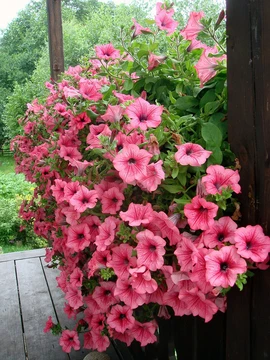
Hydrangea
A genus of flowering plants known for pH-sensitive flower color.
Last updated
Over 70 flowering plant species belong to the genus Hydrangea, whose natural range includes Asia and the Americas.[1] Shrub forms typically stand 1 to 3 meters high, though some species grow as small trees or as climbing lianas that can extend up to 30 meters.[2] The genus name comes from Greek words for "water vessel," a reference to the form of its seed capsules.[3]
Scientific classification
- CladeTracheophytes
- CladeAngiosperms
- CladeEudicots
- CladeAsterids
- OrderCornales
- FamilyHydrangeaceae
- GenusHydrangea
Named by Gronov. ex L.
Sources: Wikipedia taxobox: Hydrangea (CC BY-SA 4.0)
Quick Facts
- Type species
- Hydrangea arborescens L.
Facts from the source article.
Biology and range
The genus was first described from Virginia in North America.[4] In some species, notably H. macrophylla, flowers can be blue, red, or purple.[5] Fossil species include Hydrangea alaskana from Paleogene strata in Alaska.[6] Eastern Asia—especially China, Korea, and Japan—contains the highest number of Hydrangea species.[4]
Hydrangeas may be deciduous or evergreen, but all widely grown temperate-zone varieties lose their leaves each year.[2] White is the typical flower color for the majority of Hydrangea species.[5] Many hydrangea flowers change color based on soil pH: acidic conditions yield blue blooms, while alkaline soils produce pink ones.[7]
What the specialist sources record
The Roll Magazine account notes there are more than seventy species of hydrangea, and H. macrophylla is by far the most common with over six hundred named cultivars.[8] The RHS describes H. macrophylla as a large, rounded, deciduous shrub with coarse, oval, dark green leaves to 20 cm long.[9] According to the same article, every part of the plant contains cyanogenic glycosides, and despite the risk of sickness or death, Hydrangea paniculata is reportedly smoked as an intoxicant.[8] The celebrated Asian florist Tan Jun Yong was quoted saying, "The delicate blush of the petals reminds me of a beating heart, while the size could only match the heart of the sender!"[8]
The 1974 Rodale herb book reports that the Cherokee people used hydrangeas as a mild diuretic and cathartic, valuing it for treating bladder stones.[10][11]
References
- Wikipedia, "Hydrangea" (CC BY-SA 4.0), which cites: ; ; Sunset Western Garden Book, 1995: 606–607 (original not read by us) en.wikipedia.org
- Wikipedia, "Hydrangea" (CC BY-SA 4.0), which cites: "The United States National Arboretum: Hydrangea FAQ" (original not read by us) en.wikipedia.org
- Wikipedia, "Hydrangea" (CC BY-SA 4.0), which cites: Liddell, "ὕδωρ", A Greek-English Lexicon, 1940; Liddell, "ἄγγος", A Greek-English Lexicon, 1940; Liddell, "αγγεῖον", A Greek-English Lexicon, 1940; Gledhill, "The Names of Plants", Cambridge University Press, 2008, p. 50, 206 (we also read that source) en.wikipedia.org
- Wikipedia, "Hydrangea" (CC BY-SA 4.0), which cites: "Hydrangea macrophylla (H)", RHS, 2025-02-04; Linné, "Caroli Linnaei ... Species plantarum :exhibentes plantas rite cognitas, ad genera relatas, cum differentiis specificis, nominibus trivialibus, synonymis selectis, locis natalibus, secundum systema sexuale digesta (we also read that source) en.wikipedia.org
- Wikipedia, "Hydrangea" (CC BY-SA 4.0), which cites: "Publications - UGA Cooperative Extension", Caes.uga.edu; "USDA: Hydrangea Questions and Answers"; . (original not read by us) en.wikipedia.org
- Wikipedia, "Hydrangea" (CC BY-SA 4.0), which cites: Hollick, "A New Fossil Species of Hydrangea", Bulletin of the Torrey Botanical Club, 1925, p. 21–22 (original not read by us) en.wikipedia.org
- Wikipedia, "Hydrangea" (CC BY-SA 4.0), which cites: "Curious Chemistry Guides Hydrangea Colors", American Scientist, 2017-02-06 (original not read by us) en.wikipedia.org
- "Hydrangeas, Hydrangeas, Hydrangeas - Roll Gardening & Green :: Roll Magazine: Creative Living in the Hudson Valley", Rollmagazine.com. facts only, no text reused. rollmagazine.com
- "Hydrangea macrophylla (H)", RHS, 2025-02-04. facts only, no text reused. rhs.org.uk
- Wikipedia, "Hydrangea" (CC BY-SA 4.0), which cites: Hylton, "The Rodale herb book: how to use, grow, and buy nature's miracle plants", Rodale Press Book Division, 1974, p. 474 (we also read that source) en.wikipedia.org
- Open Library record, ISBN 0878570764 ("The Rodale herb book: how to use, grow, and buy nature's miracle plants"). CC0 (metadata); book content not read. openlibrary.org
Each numbered sentence above was checked against the source it cites before publication. Sentences citing Wikipedia adapt text from the English Wikipedia article Hydrangea (contributors), used under CC BY-SA 4.0; this entry is available under the same licence. Other sources were used for facts only; no text or images are copied from them.
More in Ornamental & Garden Plants
Sources
Compiled from Wikipedia and the sources listed below. Text from Wikipedia is available under CC BY-SA 4.0; this entry is adapted from it.
- Wikipedia: Hydrangea (CC BY-SA 4.0).
- Word definitions: the , each quoted from its Wikipedia article.
Spotted an error? Know more?
Reader corrections go straight into our review queue. Suggest an edit · How this site is sourced