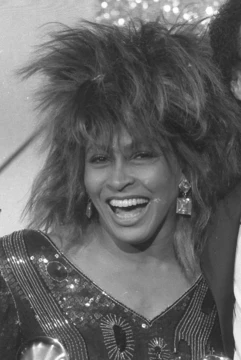
The Kings of Rhythm
The rhythm section that turned a club band into a rock-and-roll earthquake.

http://www.706unionavenue.nl/83574046 · via Wikipedia: Kings of Rhythm · Fair use
The Kings of Rhythm was the rhythm-and-blues ensemble that Ike Turner led in the early-to-mid 1960s, serving as the musical and organizational foundation for what would become one of rock and roll's most electrifying partnerships. Before Tina (then Anna Mae Bullock) stepped onto the stage as a featured vocalist, the Kings of Rhythm was Ike's house band—a tight, horn-driven R&B outfit that played the clubs of the St. Louis and Memphis circuits and helped define the gritty, high-voltage sound of the era.
When Tina's raw power and stage magnetism were added to the group's lineup, the name and identity of the ensemble shifted. The Kings of Rhythm effectively became the engine room behind the Ike & Tina Turner brand, with the Ikettes providing the famous backing vocals and the rhythm section driving the relentless, dance-floor-shaking energy that made the duo a global phenomenon. The group's story is inseparable from Tina's: it is where her career was forged, where the dynamics of their partnership were established, and where the seeds of its eventual dissolution were planted.
Quick Facts
- Origin
- Clarksdale, Mississippi, U.S.
- Genre
- Jump blues
- rhythm and blues
- rock and roll
- funk
- soul
- Years active
- late 1940s–1976, 1986-1987, 2001-present
- Label
- Sun
- Modern
- Sue
- Sonja
- Sony
- Teena
- United Artists
- Spinoff of
- The Tophatters
Facts from the source article.
Lore & Background
The Kings of Rhythm grew out of the post-war R&B scene where Ike Turner, a pianist, bandleader, and shrewd manager, assembled a band capable of delivering the kind of raw, physical performance that audiences in the South and Midwest craved. The group's sound was built on a driving boogie rhythm, punchy horns, and Ike's percussive, almost percussive piano work. It was a working band first—playing long sets at clubs, juke joints, and small theaters—before it ever touched a recording studio or a television camera.
The addition of Tina changed the group's center of gravity almost overnight. Her voice, her dance moves, and her sheer physical presence on stage turned what had been a solid R&B act into something audiences described as a spectacle. The Ikettes, the rotating group of female backing singers, became an integral part of the show's choreography and vocal texture, their call-and-response patterns a signature element. Yet the power structure remained firmly in Ike's hands: he wrote or co-wrote the material, managed the business, controlled the recording contracts, and directed the stage show. Tina was the star the audience saw, but Ike was the architect behind the curtain.
As the 1970s progressed and the duo's fame exploded, the 'Kings of Rhythm' name receded into the background, subsumed by the overwhelming brand of 'Ike & Tina Turner.' The band members continued to serve the same musical function—driving the tempo, providing the horn stabs and rhythmic foundation—but the identity of the group had shifted from a local R&B outfit to the backing engine of a global rock act. When Tina and Ike separated in 1976, the ensemble's raison d'être as a unified unit effectively ended, and the name 'Kings of Rhythm' became a footnote in the larger story.
Reader's Guide
The Kings of Rhythm began as Ike Turner's working R&B band in the early 1960s, a horn-and-keys outfit playing the club circuit in the St. Louis and Memphis areas. Its core function was straightforward: deliver a tight, high-energy boogie-and-blues set that kept dancers on the floor for hours. The lineup centered on Ike at piano and as bandleader, a rhythm section of bass and drums, a horn section, and—after Tina's arrival around 1962—her voice as the lead and the Ikettes as the backing-vocal engine.
Musically, the group provided the rhythmic and harmonic foundation for nearly every song in the Ike & Tina catalog. The boogie drive, the call-and-response vocal patterns, the horn stabs that punctuated each chorus—all of it was the Kings of Rhythm's DNA. Tina's role within the structure was that of the featured vocalist and front-person, but the creative and business authority sat with Ike, who wrote, arranged, managed, and controlled the recording contracts. This power imbalance was the defining tension of the partnership.
As the duo's profile grew in the late 1960s and through the 1970s, the 'Kings of Rhythm' identity was gradually absorbed into the larger Ike & Tina Turner brand. The band members kept playing the same musical roles, but the name and the local R&B identity faded. After Tina and Ike's separation in 1976, the ensemble lost its unifying purpose, and the Kings of Rhythm became a historical reference rather than an active entity.
Did You Know?
- The group's sound was rooted in the boogie-and-blues tradition of the 1950s and 1960s R&B clubs, even as the duo's later rock-and-roll hits broadened their audience.
- Ike Turner's role extended well beyond musicianship—he was the bandleader, manager, and primary songwriter, a fact that shaped the group's internal dynamics throughout its existence.
More in Band Members & Collaborators
Elsewhere in Tina Turner
Spotted an error? Know more?
Reader corrections go straight into our review queue. Suggest an edit · How this site is sourced