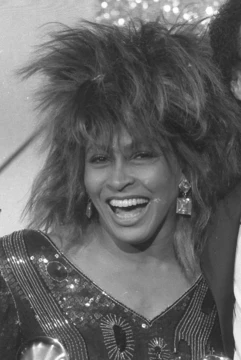
Eric Clapton
Two legends, one stage, and a guitar solo that made the audience forget to breathe.

via Wikipedia: Eric Clapton · see source
Eric Clapton is a legendary British guitarist whose name is synonymous with the electric blues-rock tradition. His presence in Tina's orbit is best understood as a brief but electric intersection: a master of clean, singing tones and searing overdriven leads meeting an artist whose live energy is built on raw physicality, vocal power, and showmanship. The contrast between Clapton's introspective, feel-driven phrasing and Tina's explosive, full-throated delivery created a tension that made the collaboration feel like a conversation between two very different kinds of rock-and-roll soul.
Quick Facts
- Birth name
- Eric Patrick Clapton
- Born
- 30 March 1945
- Birthplace
- Ripley, Surrey, England
- Occupation
- Musician
- singer
- songwriter
- Years active
- 1962–present
- Spouse
- Pattie Boyd (1979–1989); Melia McEnery (2002)
- Children
- 5
Facts from the source article.
Lore & Background
In the broader mythology of rock performance, Eric Clapton occupies a space almost entirely his own. Trained in the church-gospel and Mississippi-blues tradition, he filtered that vocabulary through a British sensibility—clean, articulate, emotionally precise. His work with Cream pushed the electric guitar into the realm of sustained, howling feedback; his later solo work pulled it back into intimate, aching phrasing. Fans of Tina Turner, who built her empire on the idea that a woman could command a stage with the same ferocity as any male rock star, found in Clapton a kindred spirit in the blues idiom even if his stage persona was far more reserved. The collaboration sits in the late-1980s-to-early-1990s window, a period when Tina was in the full blaze of her solo reinvention—huge sets, a powerful backing band, and a reputation for physical, almost acrobatic performance. Clapton, by contrast, was known for a quieter, more contemplative stage presence. When the two shared a microphone and a guitar amp for even a few minutes, the friction was the point: her volume and verve against his controlled, singing bends. Audiences described the interplay as a call-and-response that neither artist needed to announce—it simply happened, the way two blues musicians in a smoky room find the same chord at the same moment. It was a handshake across decades and continents, sealed in feedback and a final, ringing open string.
Reader's Guide
Eric Clapton's role in Tina Turner's career was that of a rare guest collaborator rather than a permanent band member. The two artists moved in overlapping circles of the blues-rock world—his roots in the British blues scene and Cream, hers in the Memphis and St. Louis R&B tradition filtered through Ike Turner's showmanship. Their stage encounter came during Tina's solo era, when her touring band was already a formidable unit and she did not need a guitar hero to carry the instrumental weight.
What Clapton brought was tonal contrast. Where Tina's live sound was built on driving rhythms, layered vocals, and a percussive physicality, his guitar work was more lyrical, more space-conscious. In a shared set, his clean, singing bends gave her vocals room to breathe, and his overdriven leads matched her energy when the arrangement demanded it. The collaboration was brief by any measure—likely a single performance or a very limited number of appearances—but it carried the weight of two artists who understood the blues grammar at a deep, almost subconscious level.
The defining tension was one of personality as much as music. Clapton was famously private, often described as shy or withdrawn offstage; Tina was the opposite, a performer who fed on the crowd's energy and gave it back tenfold. On stage, that contrast became the engine of the performance: her volume pulling him forward, his restraint giving her something to push against. Fans who caught the moment remember it less as a duet and more as a conversation where neither person needed to raise their voice to be heard.
More in Band Members & Collaborators
Elsewhere in Tina Turner
Spotted an error? Know more?
Reader corrections go straight into our review queue. Suggest an edit · How this site is sourced