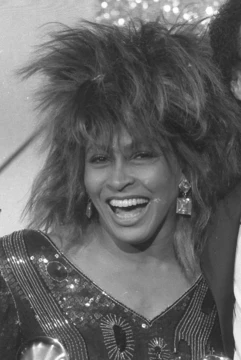
Better Be Good To Me
One chorus, a million voices, zero apologies—rock as personal liberation.
Better Be Good To Me is the thunderous, leather-clad rock anthem that became the sonic fingerprint of Tina Turner's legendary 1980s comeback. Cut from the album Private Dancer, it pairs a driving, almost operatic rock arrangement with a chorus so defiant and declarative that it turned into a global rallying cry sung by millions of fans in stadiums and living rooms alike. Written with Jim Steinman and John Parry and produced by Steinman, the track sits at the intersection of power-pop spectacle and pure rock 'n' roll swagger. It is the song that made the world remember that the woman who had endured years of domestic torment was now, unapologetically, the most electrifying live performer on the planet. For fans, it is less a song than a declaration of sovereignty.
Quick Facts
- Artist
- Tina Turner
- Album
- Private Dancer
- B-side
- When I Was Young
- Released
- September 3, 1984
- Recorded
- 1984
- Genre
- Rock
- Length
- 5:10 (LP version)
- 3:43 (single version)
- 7:47 (extended version)
- Label
- Capitol
Facts from the source article.
Lore & Background
The Private Dancer era was, in the collective memory of fans, the moment the world caught its breath. After years of touring in smaller venues and rebuilding her identity after leaving Ike Turner, Tina had assembled a band of virtuosos and a creative team that understood her voice could carry a stadium. Jim Steinman, already famous for his wall-of-sound productions with Meat Loaf and Bon Jovi, brought a theatrical, almost cinematic architecture to the track. The result was a song that builds like a slow-motion explosion: a restrained verse that coils and coils, then detonates into a chorus designed to be screamed by thousands in unison. The narrative of the song is deliberately simple and universal. It is a demand, not a plea. The singer is not asking to be loved; she is stating the terms under which she will continue to be present. For listeners who knew Tina's story—the public abuse, the legal battles, the years of silence before the comeback—the lyrics landed with the force of a personal manifesto. The song did not explain her past; it rendered the past irrelevant by projecting a future in which she was untouchable. Culturally, Better Be Good To Me became shorthand for a particular brand of female empowerment in rock. It was not a protest song in the traditional sense; it was a power song. The leather jacket, the wide stance, the deliberate lean into the microphone—these became visual grammar that fans replicated in hair metal bands, in karaoke bars, in the way a woman would stand at a kitchen counter belting the chorus at full volume. The song gave permission to be loud, to be demanding, to be gloriously unapologetic.
Reader's Guide
Origin and era: Better Be Good To Me emerged from the Private Dancer sessions, the record that redefined Tina Turner for a generation that had only known her as a 1960s–70s act. Jim Steinman's production gave the track a cinematic, almost progressive-rock architecture—layered guitars, a pounding drum machine, and a vocal take that feels simultaneously controlled and feral. It was the era's defining power track, sitting alongside Private Dancer and What You Get Is What You Need as the trilogy that announced her return. The live version fans remember most is the mid-1980s arena run, where the song became the emotional climax of the set. The choreography was deceptively simple: a slow strut to center stage, a wide-armed pose during the chorus, and the signature head-toss on the final sustained note. The crowd reaction was less applause than a physical wave—hands up, bodies swaying, the chorus shouted back in a wall of sound that rivalled the PA. The music video, shot with the same leather-and-chrome aesthetic, locked the visual identity into pop culture. The recording itself—Steinman's dense, reverberant mix—immortalized the take where Tina's voice sits just above the instrumentation, commanding rather than blending. Together, the song, the performance, and the image became inseparable, a three-part artifact that fans still cite as the single moment rock 'n' roll said: she is the main event.
Did You Know?
- The song's writers credit includes John Parry alongside Tina Turner and Jim Steinman, a collaboration that gave the track its distinctive blend of rock aggression and melodic hook.
- Better Be Good To Me was part of the Private Dancer album cycle, the record that marked Tina's definitive solo resurgence after years of rebuilding her career independently.
- The track's chorus structure was designed for audience participation, a deliberate choice that turned every live performance into a call-and-response event between Tina and the crowd.
- Jim Steinman, the producer and co-writer, was already known for his dramatic, wall-of-sound arrangements from his work with other rock acts, and he brought that theatrical sensibility directly into this recording.
More in Songs & Singles
Elsewhere in Tina Turner
Spotted an error? Know more?
Reader corrections go straight into our review queue. Suggest an edit · How this site is sourced