What's Love Got to Do with It
A scarlet-dress anthem that turned heartbreak into the loudest declaration of self-worth in pop history.
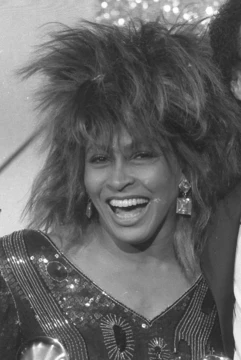
What's Love Got to Do with It is the breakout single that announced Tina Turner's triumphant solo return to the world stage in 1984. Cut for her landmark album Private Dancer and produced by Giorgio Moroder, the track became the defining anthem of her post-Ike Turner era — a fierce, rain-soaked declaration from a woman who refused to let heartbreak silence her voice. More than a chart hit, the song became a cultural shorthand for independent, unapologetic womanhood. Its iconic music video, with Turner in a scarlet gown dancing through downpour and strobing light, cemented an image that fans still reference decades later as the visual epitome of 1980s pop-rock power.
Quick Facts
- Artist
- Tina Turner
- Released
- June 15, 1993
- Recorded
- 1984, 1993
- Studio
- Record Plant
- Genre
- Rock
- R&B
- pop
- soul
- Length
- 57:32 (international version); 51:52 (US version)
- Label
- Parlophone
Facts from the source article.
Lore & Background
By 1984, Tina Turner had spent over a decade in the shadow of Ike Turner's band, a period marked by extraordinary musical output but also by a personal life many fans later described as harrowing. The decision to go solo was not merely a career pivot; it was an act of survival. What's Love Got to Do with It arrived at the precise moment the industry was trying to decide whether a woman in her forties could still own a #1 pop single. The answer, delivered in a single, rain-drenched video, was an emphatic yes. The song's lyrical premise is deceptively simple: a woman asks why love should matter when the person she loves is unreachable or unfaithful. But Turner's delivery transforms that question into a challenge. The production, driven by Moroder's driving synth bass and a guitar riff that became instantly recognizable, gives the vocal a swagger that no amount of studio polish could fake. Fans often note that the bridge, where the tempo shifts and the vocal soars, carries a weight that feels almost autobiographical without ever naming names. Culturally, the track became a touchstone for anyone who has ever had to walk away from a relationship that no longer served them. It was sampled, covered, and referenced in everything from late-night talk shows to wedding playlists (ironically, as a 'no' song). The red dress from the video entered the fashion lexicon alongside the leather jacket and the platform boot, and the song's title became a go-to punchline in any conversation about romantic disappointment.
Reader's Guide
The song was written by Peter Brown and John DeCicco and produced by Giorgio Moroder as part of the Private Dancer sessions in 1984. It was conceived as a driving, danceable pop-rock track, but it was Turner's vocal performance that elevated it from a good single to an event. The era context matters: this was the first #1 of her solo career, arriving after years of industry skepticism about whether a woman past her thirties could top the charts. The live version fans remember most is the one from the 1984–85 Private Dancer tour, where Turner performed it in a flowing red gown with a full backing band, the chorus punctuated by a sharp stomp-and-clap that the audience adopted as a call-and-response. The crowd reaction in those early shows was electric; audiences who had come for a rock set suddenly found themselves singing a pop chorus in unison. The recording that immortalized the stage moment is, of course, the official music video. Turner dances through a rain-soaked urban set, the red dress catching every flash of strobe light, her choreography a blend of sharp isolations and full-body swaying that looked effortless but required hours of rehearsal. The final shot — her turning to the camera with a half-smile, rain dripping off her jaw — became one of the most replayed images in MTV's early years. The song became a cultural touchstone because it gave a generation of listeners a permission slip: you can love someone and still choose yourself. That duality — tenderness and defiance in the same breath — is what kept it in rotation on radio, in karaoke bars, and in the soundtracks of countless films and TV shows for decades after its release.
Track listing
What's Love Got to Do with It track listing
| No. | Title | Writer(s) | Length |
|---|---|---|---|
| 1 | I Don't Wanna Fight | Steve DuBerry, Lulu, Billy Lawrie | 6:09 |
| 2 | Rock Me Baby | B. B. King, Joe Josea | 3:59 |
| 3 | Disco Inferno | Leroy Green, Ron Kersey | 4:05 |
| 4 | Why Must We Wait Until Tonight | Adams, Lange | 5:55 |
| 5 | Stay Awhile | Britten, Graham Lyle | 4:52 |
| 6 | Nutbush City Limits | T. Turner | 3:19 |
| 7 | (Darlin') You Know I Love You | King, Jules Taub | 4:29 |
| 8 | Proud Mary | John Fogerty | 5:27 |
| 9 | A Fool in Love | Ike Turner | 2:56 |
| 10 | It's Gonna Work Out Fine | Sylvia McKinney, Rose McCoy | 2:50 |
| 11 | Shake a Tail Feather | Verlie Rice, Otis Hayes, Andre Williams | 2:32 |
| 12 | I Might Have Been Queen | Hine, Jeannette Obstoj, Jamie West-Oram | 4:20 |
| 13 | What's Love Got to Do with It | Britten, Lyle | 3:46 |
| 14 | Tina's Wish | T. Turner, I. Turner | 3:08 |
| Total length | 57:32 | ||
30th anniversary edition bonus disc
| No. | Title | Writer(s) | Length |
|---|---|---|---|
| 1 | I Don't Wanna Fight (single edit) | DuBerry, Lulu, Lawrie | 4:25 |
| 2 | Disco Inferno (7" edit) | Green, Kersey | 3:50 |
| 3 | Why Must We Wait Until Tonight (7" single edit) | Adams, Lange | 4:27 |
| 4 | Proud Mary (edit) | Fogerty | 4:08 |
| 5 | I Don't Wanna Fight (urban mix) | DuBerry, Lulu, Lawrie | 5:16 |
| 6 | Disco Inferno (12" version) | Green, Kersey | 5:34 |
| 7 | Why Must We Wait Until Tonight (Tony Dofat remix) | Adams, Lange | 5:20 |
| 8 | I Don't Wanna Fight (holiday inn longue mix) | DuBerry, Lulu, Lawrie | 5:43 |
| 9 | I Don't Wanna Fight (clubhouse mix) | DuBerry, Lulu, Lawrie | 5:27 |
| 10 | Why Must We Wait Until Tonight (Tony Dofat 7" edit) | Adams, Lange | 4:13 |
| 11 | I Don't Wanna Fight (Jerry Moran dance mix) | DuBerry, Lulu, Lawrie | 4:39 |
| 12 | Why Must We Wait Until Tonight (instrumental) | Adams, Lange | 5:21 |
| 13 | I Don't Wanna Fight (urban radio instrumental) | DuBerry, Lulu, Lawrie | 4:04 |
| 14 | Disco Inferno (12" dub) | Green, Kersey | 6:58 |
| 15 | Why Must We Wait Until Tonight (acapella) | Adams, Lange | 4:27 |
| 16 | Proud Mary (acapella) | Fogerty | 4:44 |
Track listing from the source article.
Did You Know?
- The driving synth-bass groove was crafted by Giorgio Moroder, whose electronic production style gave the track a distinctly 1980s sheen while the guitar riff kept it rooted in rock.
- The iconic red-dress music video was shot in a single rainy night session, and the downpour was partly real weather combined with studio rigs, giving the footage an unpredictable, cinematic quality.
- The song's title became a widely used cultural shorthand, appearing in everything from late-night comedy bits to book titles, cementing the phrase in everyday language beyond the music itself.
- Tina Turner reportedly insisted on performing the chorus with a specific stomp-and-clap rhythm, and the live audiences quickly adopted it as a participatory element, turning a solo vocal into a communal moment.
More in Albums & EPs
Elsewhere in Tina Turner
Spotted an error? Know more?
Reader corrections go straight into our review queue. Suggest an edit · How this site is sourced