Luxor massacre
Terrorist attack at an Egyptian archaeological site killed 62.
Last updated
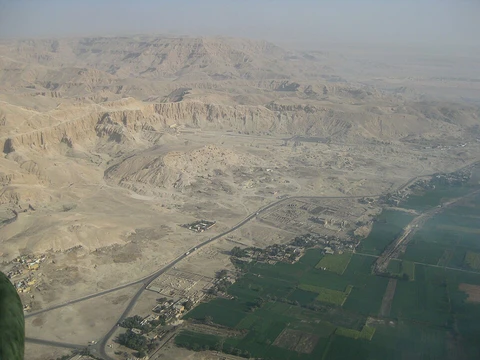
On the morning of November 17, 1997, six gunmen disguised as security forces attacked the Mortuary Temple of Hatshepsut at Dayr al-Bahri, an archaeological site near Luxor, Egypt. Armed with knives, automatic weapons, and machetes, they killed two guards and then systematically murdered 58 foreign tourists and four Egyptians over 45 minutes. Many bodies, particularly those of women, were mutilated.
A leaflet found on the body of an elderly Japanese man read "no to tourists in Egypt" and was signed by al-Jama'a al-Islamiyya, also known as the Gama'a al-Islamiyya. Among the dead were a five-year-old British child, her mother and grandmother, and four Japanese honeymoon couples. Twenty-six people survived.
The attackers hijacked a bus but encountered a police and military checkpoint. One was wounded in the ensuing shootout; the rest fled to nearby hills, where their bodies were later found in a cave, apparently from a group suicide. Leaflets found at the scene called for the release of Omar Abdel-Rahman from a U.S. prison, claimed the attack was a gesture to exiled leader Mustafa Hamza, or declared revenge for imprisoned and executed comrades.
Responsibility
The attack was believed to have been orchestrated by exiled leaders of al-Jama'a al-Islamiyya to undermine the group's own July 1997 nonviolence initiative, damage Egypt's economy, and provoke government repression that would boost anti-government support. Instead, it caused internal splits and led to a ceasefire. In June 2013, the group denied involvement.
Reaction
The massacre occurred an hour before a state visit by Queen Beatrix of the Netherlands and Prince-Consort Claus. President Hosni Mubarak replaced Interior Minister Hassan Al Alfi with General Habib el-Adly. The Swiss Federal Police later concluded that Osama bin Laden financed the operation. The attack devastated Egypt's tourism industry, especially in Luxor, with visitor numbers remaining low for years, a situation worsened by the September 11 attacks and later bombings in Sharm El Sheikh and Dahab.
The massacre turned Egyptian public opinion overwhelmingly against the militants, leading to a sharp decline in terrorist attacks. Organizers quickly distanced themselves: al-Jama'a al-Islamiyya leader Refa'i Ahmed Taha claimed the attackers only intended a hostage-taking, others falsely blamed different groups, Sheikh Omar Abdel-Rahman accused Israel, and Ayman Zawahiri claimed the Egyptian police were responsible.
Responsibility
Exiled leaders of al-Jama'a al-Islamiyya were believed to have orchestrated the attack. Their goals included sabotaging the group's July 1997 Nonviolence Initiative, crippling Egypt's economy, and triggering government crackdowns to rally support for insurgents. Instead, the massacre caused rifts among the militants and led to a ceasefire. In June 2013, the organization denied any role in the killings.
Reaction
The attack occurred just one hour before Queen Beatrix of the Netherlands and Prince-Consort Claus were scheduled to begin a state visit. In the aftermath, Egyptian President Hosni Mubarak dismissed Interior Minister General Hassan Al Alfi and appointed General Habib el-Adly in his place. The Swiss Federal Police later concluded that Osama bin Laden had provided the funding for the operation. Egypt's tourism sector, especially in Luxor, suffered a severe downturn as visitor numbers plummeted.
The industry remained sluggish for years, with further blows coming from the September 11, 2001 attacks in the United States, the 2005 Sharm El Sheikh bombings, and the 2006 Dahab bombings. The massacre caused a sharp reversal in the fortunes of militant groups within Egypt, as public opinion turned strongly against them. Terrorist attacks became far less frequent after the widespread backlash. Those who organized and backed the assault quickly recognized it as a major strategic error and responded by denying any role.
The day after the killings, al-Jama'a al-Islamiyya leader Refa'i Ahmed Taha insisted the attackers had only meant to take the tourists hostage, despite the slaughter being immediate and methodical. Other figures denied any involvement at all, wrongly blaming various groups. Sheikh Omar Abdel-Rahman accused Israel of carrying out the massacre, while Ayman Zawahiri claimed the Egyptian police were responsible.
More in Theban Necropolis
Sources
Compiled from Wikipedia and the sources listed below. Text from Wikipedia is available under CC BY-SA 4.0; this entry is adapted from it.
- Wikipedia: Luxor massacre (CC BY-SA 4.0).
Spotted an error? Know more?
Reader corrections go straight into our review queue. Suggest an edit · How this site is sourced