Who Are You
Two power chords, one burning question, and a riff that never lets go.

http://rateyourmusic.com/release/single/the_who/who_are_you___had_enough/ · via Wikipedia: Who Are You (song) · Fair use
"Who Are You" is the title track and lead single from The Who's 1977 studio album of the same name. Written by Pete Townshend, the song is built around one of the most instantly recognizable guitar riffs in rock history—a grinding, two-chord power riff that drives the entire arrangement forward like a piston engine. Roger Daltrey's lead vocal carries a raw, searching quality that turns the track into an anthem of identity and self-questioning.
Within The Who's catalog, the song occupies a pivotal spot: it marks a period when the band seized greater creative control over their own production, and it became a live staple that audiences could identify within the first two beats. Its cultural reach extends far beyond the concert hall, appearing in film, television, and countless covers that testify to the riff's near-universal grip on the popular imagination.
Quick Facts
- Artist
- the Who
- A-side
- "Had Enough"
- Released
- 14 July 1978 (UK); 5 August 1978 (US)
- Recorded
- 4 October 1977
- Genre
- Hard rock; heavy metal
- Length
- 6:20 (album version)
- 5:01 (single edit)
- 3:24 (US single edit)
- Label
- Polydor 2121 361 (UK); MCA (US)
- Writer
- Pete Townshend
Facts from the source article.
Lore & Background
Townshend's lyrics circle this question with a mix of defiance and vulnerability, and Daltrey's delivery leans into that tension, his voice straining between a shout and a plea. It is a very human question dressed in the armor of a hard-rock arrangement, and that contrast is what gives the track its emotional punch. Musically, the song is a masterclass in economy. The riff does not rely on complexity; it relies on rhythm, attack, and repetition. Keith Moon's drumming locks into the guitar with a chugging, almost mechanical persistence, while John Entwistle's bass line provides a grinding undercurrent that makes the whole structure feel like a well-oiled machine. The result is a song that sounds effortless in performance yet is meticulously constructed in the studio. In the broader context of The Who's story, the track sits at a crossroads. The band had moved past the ambitious rock-opera era of the early 1970s and was reasserting itself as a live, riff-driven act. "Who Are You" crystallized that identity for a new generation of fans and became, for many, the song they first associated with the band's name.
Reader's Guide
Who Are You appeared on the 1977 self-titled album Who Are You. The song's musical hook is built on a deceptively simple power-chord riff—alternating between E5 and D5—that Pete Townshend hammers with a staccato, almost percussive attack. The rhythm is driving, almost tribal, locking in with Keith Moon's thunderous drum pattern, which features a relentless, chugging beat that feels like a war drum. Roger Daltrey's vocal delivery is searching and urgent, his voice cracking with genuine bewilderment as he circles the central question of the chorus. The bass line, courtesy of John Entwistle, provides a grinding, almost mechanical foundation that makes the whole arrangement feel like a machine in motion.
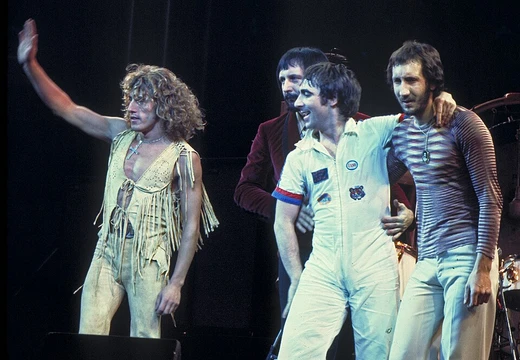
Live, the song became a centerpiece of The Who's setlists, particularly during the 1979 "The Kids Are Alright" tour, where Townshend's windmill guitar technique and Daltrey's stage presence turned each performance into a spectacle. The riff's simplicity made it instantly recognizable to audiences, often triggering immediate singalongs.
Culturally, the track has left a deep footprint: it has been covered by artists across genres, sampled in hip-hop and electronic productions, and referenced in countless "greatest riff" lists. Its identity-questioning theme resonates far beyond the rock world, making it a touchstone for anyone who's ever stared into a mirror and wondered who's staring back.
Did You Know?
- The riff is so iconic that it is frequently cited in "greatest guitar riffs of all time" roundups, often appearing in the top tier alongside riffs from bands spanning decades and genres.
- The 1977 album represented a period in which The Who took substantially greater control of their own studio production, shaping the raw, aggressive sound that defines the record.
- The song's theme of identity and self-questioning echoes a broader lyrical thread running through The Who's catalog, from the alienation of their early singles to the philosophical questions of their rock operas.
More in Songs & Singles
Elsewhere in The Who
Spotted an error? Know more?
Reader corrections go straight into our review queue. Suggest an edit · How this site is sourced