The Same Deep Water as You
Two souls adrift in the same cold, dark water—neither drowning, neither saved.
"The Same Deep Water as You" is the opening track on The Cure's 1989 album Disintegration, written by frontman Robert Smith and produced by Flood. It serves as the album's atmospheric gateway, establishing the record's signature blend of slow-burning melancholy, resonant guitar textures, and a sense of vast emotional space that defines the band's later work.
As the first thing a listener encounters on Disintegration, the song sets a tone of intimate, aching connection—two people sharing a depth of feeling that isolates them from the rest of the world. It has since become one of the most frequently cited examples of The Cure's ability to turn quiet restraint into overwhelming emotional weight, and it remains a cornerstone of their live setlists and fan devotion.
Quick Facts
- Artist
- the Cure
- Album
- Disintegration
- Released
- 2 May 1989
- Recorded
- November 1988 – February 1989
- Studio
- Hookend Recording Studios (Checkendon, Oxfordshire)
- Genre
- Gothic rock
- Dream pop
- Atmospheric
- Length
- 9:19
- Label
- Fiction
Facts from the source article.
Lore & Background
In the world of Disintegration, The Cure inhabit a landscape of emotional winter: cities of grey glass, long corridors of sound, and characters who speak in half-sentences. "The Same Deep Water as You" functions as a threshold piece within that world. The imagery of shared depth—being submerged together in the same cold—becomes a recurring motif in the album's narrative, suggesting that true intimacy is not warmth but mutual exposure to the same pressure, the same silence, the same slow pull of the current.
Robert Smith has spoken in various interviews about the period of writing Disintegration as one of profound personal isolation, and the song's central conceit—finding another person who is, like you, fully submerged—reads as both a plea and a quiet confirmation. The guitar work, slow and almost liturgical, mirrors the feeling of moving through deep water: each note a small resistance, each phrase a breath held just long enough to ache.
Fans often describe first hearing the track as a kind of recognition, as though the song had been waiting in the dark for them to wade in. That sense of being found by a piece of music, of sharing a private frequency with a stranger across a crowd, is precisely the emotional territory the lyrics inhabit. It is no accident that the song opens the album: it asks the listener to commit to the depth before the rest of the record unfolds around them.
Reader's Guide
Year: 1989. Parent album: Disintegration (Fiction/Decca). The track opens the record and is the first thing the listener encounters, functioning as an atmospheric overture rather than a conventional pop introduction.
Lyrical theme: The central image is of two people sharing the same depth of feeling—a mutual submersion in emotional coldness that simultaneously isolates them from others and binds them to each other. The tone is one of quiet, aching recognition rather than dramatic confession.
Musical structure: The song builds slowly from a sparse, resonant guitar figure over a minimal rhythmic pulse. Layers of texture—tremolo, delay, the band's characteristic layered guitars—accumulate gradually, creating a sense of rising pressure. The vocal delivery is restrained, almost spoken in the opening phrases, gaining weight only as the arrangement thickens. The overall arc is one of slow, inevitable swelling rather than a sharp climax.
Cultural impact: Widely regarded as one of the most atmospheric and emotionally resonant tracks in The Cure's catalogue, it is frequently cited in critical retrospectives of 1980s alternative rock and in discussions of post-punk's legacy. It anchors the Disintegration listening experience and is a near-universal inclusion in fan-curated "essential Cure" lists.
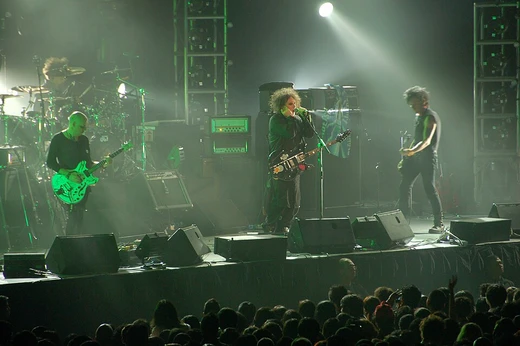
Live-performance history: A staple of The Cure's concerts from the late 1980s onward, the song is typically performed with extended, meditative passages that allow the guitar texture to breathe. It often appears in the first half of a set, setting the tonal register for the evening.
Remixes and covers: The track has appeared in various compilation and sampler contexts, and its guitar motif has been referenced by numerous post-punk and shoegaze artists. Specific licensed remix versions have circulated in DJ and ambient contexts, though the original studio recording remains the definitive reference for most listeners.
Did You Know?
- Robert Smith's vocal approach on the track is notably restrained compared to his more theatrical delivery on other Cure songs, almost whispering the opening lines before the arrangement swells around him.
- The production, shaped by Flood, emphasizes the space between notes as much as the notes themselves, giving the track a sense of vast, cold emptiness that mirrors its lyrical imagery of deep water.
- The title's phrase—"the same deep water as you"—has become a widely quoted line among fans, often used as a shorthand for the particular kind of quiet, mutual understanding that The Cure's music evokes.
More in Songs & Singles
Elsewhere in The Cure
Spotted an error? Know more?
Reader corrections go straight into our review queue. Suggest an edit · How this site is sourced