The Head on the Door
A dark dream turned into a neon-soaked dance that defined an era of gothic pop.
The Head on the Door is a strange, beautiful hinge in The Cure’s history—the moment their gothic shadows started dancing. Released in 1985, it finds Robert Smith and company stepping out of the cathedral gloom and into a neon-lit discotheque of the mind, where minor-key despair tangos with major-key euphoria. Dark themes still lurk, but now they’re wrapped in infectious rhythms and pop hooks that feel less like a surrender to commercialism and more like a playful dare. For fans, it’s the album where the band finally learned to smile without losing their teeth.
Quick Facts
- Artist
- the Cure
- Released
- 30 August 1985
- Recorded
- 1985
- Studio
- Angel Recording, London
- Genre
- Alternative rock
- post-punk
- art pop
- new wave
- Length
- 37:46
- Label
- Fiction
- Producer
- Robert Smith; David M. Allen
Facts from the source article.
Lore & Background
The atmosphere surrounding this release is one of controlled chaos, where synthesizers bleed into distorted guitars to create a soundscape that feels both claustrophobic and liberating. It captures the essence of a city at night, not as a place of fear, but as a playground for the restless soul. The music speaks to the duality of human emotion, proving that joy can be found in the cracks of despair, making it a timeless artifact of emotional complexity.
Reader's Guide
Released in October 1985, this album marked a bold shift towards dance rhythms while retaining the band's gothic aesthetic. Produced by Robert Smith and Steve Lyon, the recording process involved extensive experimentation with synthesizers and drum machines to achieve a polished yet organic sound. The tracklist features iconic songs like 'Just Like Heaven' and 'Close to Me,' which became radio staples and defined the mid-80s alternative scene. The album also includes the upbeat 'The Walk' and the atmospheric 'Hot Hot Hot!!!', showcasing the band's versatility in blending pop hooks with darker lyrical themes. Critically, it was received as a mature evolution of their style, charting higher than previous efforts and introducing them to a wider mainstream audience. Commercially, it performed strongly in the UK and US, cementing The Cure's status as international stars capable of crossing genre boundaries without losing their identity.
Track listing
Side one
| No. | Title | Length |
|---|---|---|
| 1 | In Between Days | 2:57 |
| 2 | Kyoto Song | 4:16 |
| 3 | The Blood | 3:43 |
| 4 | Six Different Ways | 3:18 |
| 5 | Push | 4:31 |
Side two
| No. | Title | Length |
|---|---|---|
| 1 | The Baby Screams | 3:44 |
| 2 | Close to Me | 3:23 |
| 3 | A Night Like This | 4:16 |
| 4 | Screw | 2:38 |
| 5 | Sinking | 4:57 |
2006 deluxe edition bonus disc
| No. | Title | Length |
|---|---|---|
| 1 | In Between Days (RS Instrumental Home Demo 12/84) | 1:25 |
| 2 | Inwood (RS Instrumental Home Demo 12/84) | 2:18 |
| 3 | Push (RS Instrumental Home Demo 12/84) | 2:31 |
| 4 | Innsbruck (RS Instrumental Home Demo 12/84) | 2:37 |
| 5 | Stop Dead (Fitz/F2 Studios Demo 2/85) | 3:21 |
| 6 | Mansolidgone (Fitz/F2 Studios Demo 2/85) | 4:06 |
| 7 | Screw (Fitz/F2 Studios Demo 2/85) | 3:09 |
| 8 | Lime Time (Fitz/F2 Studios Demo 2/85) | 2:56 |
| 9 | Kyoto Song (Fitz/F2 Studios Demo 2/85) | 4:28 |
| 10 | A Few Hours After This ... (Fitz/F2 Studios Demo 2/85) | 4:36 |
| 11 | Six Different Ways (Fitz/F2 Studios Demo 2/85) | 3:00 |
| 12 | A Man Inside My Mouth (Fitz/F2 Studios Demo 2/85) | 3:00 |
| 13 | A Night Like This (Fitz/F2 Studios Demo 2/85) | 4:08 |
| 14 | The Exploding Boy (Fitz/F2 Studios Demo 2/85) | 3:06 |
| 15 | Close to Me (Fitz/F2 Studios Demo 2/85) | 4:03 |
| 16 | The Baby Screams (live bootleg Bercy Paris 12/85 – bootleg audience recording) | 3:46 |
| 17 | The Blood (live bootleg Bercy Paris 12/85 – bootleg audience recording) | 3:34 |
| 18 | Sinking (live bootleg Bercy Paris 12/85 – bootleg audience recording) | 5:06 |
Track listing from the source article.
Did You Know?
- The album cover features a surreal photograph by Robert Smith himself, depicting a head seemingly floating or detached, symbolizing the album's themes of disconnection and movement.
- 'In Between Days' was the lead single, showcasing the band's shift toward a more pop-oriented sound while retaining their melancholic edge.
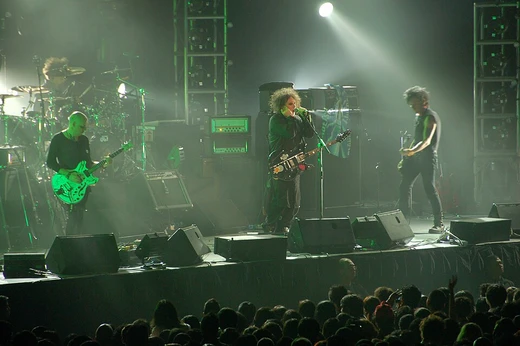
- The band toured extensively to support this release, often incorporating elaborate lighting and stage effects that mirrored the album's vibrant sonic palette.
More in Albums & EPs
Elsewhere in The Cure
Spotted an error? Know more?
Reader corrections go straight into our review queue. Suggest an edit · How this site is sourced