The Only One
A whispered confession that swells into the loudest quiet in rock music.

The cover art can be obtained from the record label. · via Wikipedia: The Only One (The Cure song) · Fair use
"The Only One" is a slow-burning, emotionally devastating track from The Cure's landmark 1989 album Disintegration. Written and performed by Robert Smith, it sits at the heart of an album that channeled years of personal anguish into a sound that was at once cinematic and claustrophobic. Where much of Disintegration builds toward driving, anthemic crescendos, this song strips the band back to a near-whisper before swelling into aching, layered intensity, making it one of the most vulnerable moments in the group's entire catalogue.
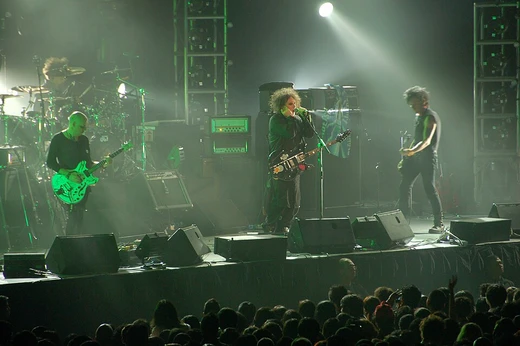
Fans often point to it as the emotional keystone of the record: a song that feels less like a performance and more like a confession delivered in a locked room. Its placement among the album's more propulsive tracks gives it the weight of a held breath finally released, and it remains a staple of live sets where the audience goes completely still.
Quick Facts
- Artist
- The Cure
- Album
- 4:13 Dream
- A-side
- "The Only One" (Mix 13)
- B-side
- NY Trip
- Released
- 13 May 2008
- Genre
- Alternative rock
- Length
- 3:57
- Label
- Geffen
Facts from the source article.
Lore & Background
By 1989, The Cure had already cemented their reputation as masters of melodic darkness, but Disintegration represented a deliberate escalation. The band, working with producer Flood in a series of sessions that stretched over months, aimed for an album that felt like a single, unbroken emotional arc. "The Only One" emerged from that process as the track where the arc dips into its deepest point: a song about the particular loneliness of being the sole person who truly sees another, or of being the last one standing in a relationship that has quietly ended. The lyrics, delivered in Smith's characteristically breathless, half-sung vocal, circle around themes of isolation, the fragility of connection, and the terror of being irreplaceable in a way that means you are also alone.
Musically, the track is a study in restraint. The verses are sparse—guitar, a low pulse of drums, and Smith's voice hovering just above the instrumental bed. As the song progresses, layers of reverb-drenched guitar and a more insistent rhythmic foundation accumulate, but the production never becomes loud or aggressive. The climax is felt more than heard: a wash of tone and vocal strain that leaves the listener exposed. In the broader narrative of Disintegration, it functions as the emotional midpoint, the moment the album's grief stops being abstract and becomes personal.
The song's legacy within the fan community is that of a shared emotional reference point. It is the track people cite when describing what The Cure sound like at their most unguarded, and it frequently appears in informal "most heartbreaking Cure songs" lists alongside "A Forest" and "Lullaby." Its power lies in its refusal to resolve: the song ends not with a triumphant chord but with a fading, unresolved hum, as if the feeling it describes simply continues beyond the final note.
Reader's Guide
Year: 1989. Parent album: Disintegration, the band's ninth studio record, produced by Flood alongside the group themselves.
Lyrical theme: The song orbits the idea of singular, aching isolation—being the only one who understands, or the only one left, in a bond that has quietly frayed. Smith's words avoid concrete narrative, favouring emotional states over scenes, which gives the lyrics a universal, almost dreamlike quality.
Musical structure: The track follows a slow build. Verses are minimal, anchored by a steady, low guitar pulse and Smith's close-miked vocal. The chorus introduces layered, reverb-soaked guitar lines and a more defined drum pattern, but the dynamic range stays narrow; the "loud" section is still relatively quiet by rock standards. The song closes with a gradual fade rather than a definitive hit, reinforcing its unresolved emotional state.
Cultural impact: Within The Cure's discography, "The Only One" is consistently identified by fans as the album's emotional nadir. It is frequently referenced in discussions of Smith's songwriting as an example of his ability to convey profound vulnerability without melodrama. It has become a touchstone for the post-punk ballad tradition.
Live performance: The track is a regular fixture in The Cure's concert setlists from the late 1980s onward. Live versions tend to be slightly longer than the studio cut, with the instrumental passages stretched to let the reverb and feedback breathe. It is almost always positioned in the middle of the set, functioning as the emotional pivot between the more driving material.
Remixes and covers: The song has not been issued as a standalone single, so it lacks the catalog of official remixes that some of The Cure's A-sides enjoy. It has, however, been covered by various tribute and cover artists over the years, and it appears on a number of fan-compiled live recordings from the Disintegration tour era.
Did You Know?
- The track's unresolved ending—fading out rather than resolving to a final chord—was a deliberate compositional choice, meant to mirror the song's theme of a feeling that simply does not end.
- In live performances, the song often receives one of the longest silences before the audience applauds, a small ritual that fans have noted as a sign the room has been genuinely moved rather than simply entertained.
More in Songs & Singles
Elsewhere in The Cure
Spotted an error? Know more?
Reader corrections go straight into our review queue. Suggest an edit · How this site is sourced