
Pikku Kakkonen
Finnish children's TV show airing since 1977 on Yle TV2.

Aleksi Kinnunen · CC BY-SA 3.0
Pikku Kakkonen, which translates from Finnish as "the little number two," is a children's television program that airs on Yle TV2. It debuted on January 11, 1977, and follows a magazine-style format. Each episode traditionally concludes with a bedtime story segment and an animated segment featuring the Finnish adaptation of Sandmännchen (Nukkumatti). The bedtime story was introduced later in the show's run and has been read by various narrators, not solely Lasse Pöysti (1927–2019). The show currently broadcasts twice on weekdays (morning and evening) and once on weekend mornings.
The program is recorded in Tampere. Its signature tunes—the mail theme and the main title melody—have been released as mobile phone ringtones. On October 25, 1983, Pikku Kakkonen introduced a new logo featuring a crescent moon, a flower, a teddy bear, a doll, a ghost, a fish, and a bird, which combine to form the number 2 (representing TV2). The stop-motion opening and closing sequences were designed and animated by Camilla Mickwitz (1937–1989). This logo has become a trademark symbol for the show, though it has undergone minor modifications since its introduction.
Pikku Kakkonen includes a mix of live-action and animated series, both Finnish and imported. Imported shows, primarily animated, are dubbed and localized into Finnish, while domestic series are mostly live-action. The program targets preschool and elementary school-aged children. Since 2005, a counterpart for older children called Galaxi has also aired on Yle TV2, featuring live-action and animated series from Finland and abroad, all in Finnish. Pikku Kakkonen won the Golden Venla (Kultainen Venla) award for best children's TV show in 2011 and 2012.
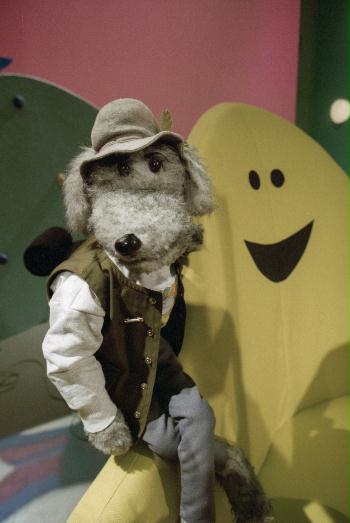
A wide range of characters and series have appeared on the show, including Sandmännchen (Nukkumatti), Käytöskukka, Kössi Kenguru, Pat ja Mat, Pelle Hermanni (from 1978), Karvakuonot (Ransu, Eno-Elmeri, and Riku, from 1978), Nalle Luppakorva (from 1979), Barbapapa, Lohikäärme Justus, Taikuri Savinen, Timo Taikuri (from 1979), Rölli (from 1986), Foxy Fables, Ti-ti Nalle (from 1989), Moomin, Taikuri Luttinen (from 1995), The Busy World of Richard Scarry, Grimms' Fairy Tales (1997–1999), Urpo ja Turpo (from 1998), Elf Toljander, Maisy (Maisa-hiiri), Pingu, Ricky Rapper (Risto Räppääjä), Noddy (Lelumaan Niksu), Postman Pat (Postimies Pate), Caillou (Kaapo), Jakers!
Quick Facts
- Genre
- Children
- Country
- Finland
- Language
- Finnish
- Location
- Tampere, Finland
- Runtime
- 60 minutes
- Company
- Yle
- Channel
- Yle TV2
- First Aired
- 1977-01-11
- Last Aired
- present
Facts from the source article.
Lore & Background
Pikku Kakkonen debuted on 11 January 1977. The bedtime story segment was introduced later in the show's run and has been read by various narrators, not only Lasse Pöysti (1927–2019). The Sandmännchen segment was also added later and is a Finnish adaptation, not the original East German production. The show is recorded in Tampere, and its signature melodies have been made into mobile phone ringtones. On 25 October 1983, a new logo was introduced, featuring a crescent moon, flower, teddy bear, doll, ghost, fish, and bird that join to form the number 2. This logo, created by Camilla Mickwitz (1937–1989) who designed and animated the stop-motion opening and ending sequences, has become a trademark symbol, though it has undergone minor modifications since its introduction.
Reader's Guide
Pikku Kakkonen has been a cornerstone of Finnish children's television since 1977, airing twice daily on weekdays and once on weekends. It features a mix of live-action and animated series, both domestic and imported, all dubbed or localized into Finnish. The show's enduring logo and format have made it a cultural touchstone, and its influence extends to spin-off shows, theatre films, and books. Since 2005, it has a counterpart for older children called Galaxi. The show's significance is underscored by its Golden Venla awards in 2011 and 2012, recognizing it as the best children's TV show of the year.
Did You Know?
- Pikku Kakkonen's first episode aired on 11 January 1977.
- The show's logo, introduced on 25 October 1983, was designed and animated by Camilla Mickwitz.
- Pikku Kakkonen won the Golden Venla award in 2011 and 2012.
- The show airs twice a day on weekdays and once a day on weekends.
Birth of a Tradition
Pikku Kakkonen, a name that translates to "the little number two" in Finnish, launched on Yle TV2 with its very first episode on 11 January 1977. From the outset, the programme established a structure that would define its identity for decades to come. Each broadcast was framed as a magazine-style block of children's content, and the closing ritual became almost sacred: a gentle bedtime story narrated by the beloved actor Lasse Pöysti (1927–2019), followed by a charming East German Sandman animation that sent young viewers off to sleep. That particular combination of live narration and handcrafted animation set the template for the hundreds of episodes that would follow over the next half-century. The show has remained in continuous production ever since, evolving its roster of characters and series while preserving the core idea of a warm, structured daily appointment for Finland's youngest audiences. Pöysti's voice, though no longer heard, remains woven into the cultural memory of every generation that grew up with the programme.
The Face of TV2
The visual and sonic identity of Pikku Kakkonen is anchored by a logo that has remained untouched since its introduction on 25 October 1983. The design features seven playful elements—a crescent moon, a flower, a teddy bear, a doll, a ghost, a fish, and a bird—arranged so that they collectively form the numeral 2, a direct nod to the channel's identity as Yle TV2. The stop-motion opening and closing sequences that bring these characters to life were the creative work of Camilla Mickwitz (1937–1989), who both designed and animated the sequences by hand. Her contribution gave the programme a tactile, handcrafted quality that distinguished it from other children's broadcasts. Production takes place in Tampere, and the show's two signature melodies—the mail tune and the main title theme—have crossed over into everyday Finnish life by being released as mobile phone ringtones. Together, the unchanging logo, Mickwitz's animation, and those instantly recognizable tunes create a sensory package that Finnish children have associated with their daily television since the late 1970s.
A World of Characters
Pikku Kakkonen targets preschool and elementary school-aged children, and its schedule reflects a deliberate balance between homegrown and international content. Domestic productions tend to be live-action, while imported series are predominantly animated and fully dubbed into Finnish so young viewers experience them as native programming. The roster of recurring characters spans decades: from early staples like Sandmännchen (Nukkumatti), Pelle Hermanni, and Nalle Luppakorva, through the 1990s and 2000s with Moomin, Pingu, and Maisy, to more recent additions such as Paw Patrol, Peppa Pig, and Kit and Kate. Many of these properties have been spun off into standalone television series, theatrical films, or published books, extending their reach well beyond the original broadcast. In 2005, Yle TV2 launched Galaxi as a sister block aimed at older children, offering a similar mix of Finnish and overseas live-action and animated programming, all in the Finnish language. Ti-Ti Nalle music videos, once a staple of the block, now air on C More Juniori between programmes rather than within Pikku Kakkonen itself.
Enduring Recognition
Few children's programmes in Finland can claim the longevity and critical recognition that Pikku Kakkonen has accumulated since its 1977 debut. The show's commitment to quality was formally acknowledged when it received the Golden Venla (Kultainen Venla) award in both 2011 and 2012, being named the best children's television show of the year on two consecutive occasions. That back-to-back recognition underscored how the programme had maintained its relevance across generations of viewers. Today, the show continues to air on Yle TV2 with a schedule that reflects its role as a daily companion: twice a day on weekdays, with both a morning and an evening edition, and once a day on weekends, in the morning. The fact that the series has remained in continuous production for nearly five decades—surviving the passing of foundational figures like Lasse Pöysti in 2019 and Camilla Mickwitz in 1989—speaks to the deep cultural institution it has become. Its characters, melodies, and format have become so embedded in Finnish childhood that the programme functions less like a television show and more like a shared national ritual.
Gallery
Frequently Asked Questions
What is Pikku Kakkonen?
Pikku Kakkonen is a Finnish children's television program that has been on air since 1977, broadcast on Yle TV2. The title translates to 'the little number two,' and the show uses a magazine-style format aimed at preschool and elementary school-aged viewers.
When did Pikku Kakkonen first air?
The show premiered on January 11, 1977, on Finland's Yle TV2 channel. It has continued running for nearly five decades, making it one of the longest-running children's programs in Finnish television.
What does a typical Pikku Kakkonen episode include?
Each episode follows a magazine-style structure and traditionally closes with a bedtime story reading followed by an animated segment. The animation features Nukkumatti, the Finnish adaptation of the German character Sandmännchen.
Who reads the bedtime stories on Pikku Kakkonen?
The bedtime story segment has been read by multiple different narrators over the show's long run rather than being tied to one single voice. Lasse Pöysti (1927–2019) is a well-known reader of the segment, but he has not been the sole narrator.
Has Pikku Kakkonen won any awards?
Yes—the program was named best children's television show of the year at the Golden Venla (Kultainen Venla) ceremony in both 2011 and 2012. It currently broadcasts twice on weekdays (morning and evening) and once on weekend mornings.
More in Television series with live action and animation 1-24
Spotted an error? Know more?
Reader corrections go straight into our review queue. Suggest an edit · How this site is sourced