
31 Minutos
Chilean puppet news satire and musical phenomenon.

Diego Grez · Public domain
31 minutos is a Chilean children's comedy television series and virtual band created by the production company Aplaplac, founded by Álvaro Díaz, Pedro Peirano, and Juan Manuel Egaña. It premiered on March 15, 2003, on Televisión Nacional de Chile (TVN) and is presented as a satirical news program hosted by the puppet character Tulio Triviño. The show is noted for its clever, absurdist humor, original soundtrack, and ability to address complex topics in a child-friendly manner, contributing to the revival of Chile’s puppetry tradition.
Quick Facts
- Runtime
- 28–33 minutes
- Genre
- Children's television series / Sitcom / News satire / Musical / Surreal comedy / Black comedy / Puppetry
- Creator
- Álvaro Díaz / Pedro Peirano
- Executive Producer
- Juan Manuel Egaña (2003–12) / Alejandra Neumann (2013)
- Company
- Aplaplac
- Starring
- Álvaro Díaz / Pedro Peirano / Rodrigo Salinas / Daniel Castro / Patricio Díaz / Alejandra Dueñas / Francisco Schultz / Fernando Solis / Héctor Velozo / Felipe Godoy
- Country
- Chile
- Language
- Spanish
- First Aired
- 2003-03-15
- Last Aired
- 2005-10-02
- Num Seasons
- 4
- Num Episodes
- 68 (plus 2 specials)
Facts from the source article.
Lore & Background
The origins of 31 minutos date back to 1990, when Álvaro Díaz and Pedro Peirano met while studying journalism at the Universidad de Chile. After working together on unsuccessful programs for Rock & Pop, the channel ceased broadcasting in 1999, leaving them unemployed. They then founded Aplaplac with Juan Manuel Egaña. The production company developed two initial programs before winning a CNTV competition in 2002 for a children's show originally titled El gabinete del Doctor Mojado, which evolved into 31 minutos. The name parodies the controversial Chilean version of the news program '60 Minutos' that served as propaganda for the Pinochet dictatorship. The show's visual identity was shaped by artists Rodrigo Salinas, Daniel Castro, and Matias Iglesis, while Pablo Ilabaca of Chancho en Piedra produced the music.
Reader's Guide
31 minutos is significant as a landmark of Latin American children's programming, blending satire, puppetry, and original music to appeal to both children and adults. Its three-season run from 2003 to 2005, along with a 2008 feature film, established a lasting cultural footprint. The show's commercial success included multiple platinum-selling albums and best-selling local DVDs in Chile. After a nine-year hiatus, a fourth season aired in 2014. The series was broadcast across Latin America on Nickelodeon and later Cartoon Network, and in 2025 it became the third puppet show to perform on NPR's Tiny Desk, described as an 'institution of Latin American children's programming.' Its legacy includes use in public campaigns, such as UNICEF's post-earthquake morale-boosting ads.
Did You Know?
- The name '31 minutos' originated from contest rules requiring projects to last half an hour.
- The show's logo parodies that of the Chilean news program '60 Minutos', not CNN.
- The album '31 canciones de amor y una canción de Guaripolo' references Pablo Neruda's 'Veinte poemas de amor y una canción desesperada'.
Origins and the Birth of Aplaplac
The creative roots of 31 minutos trace back to 1990, when Álvaro Díaz and Pedro Peirano first met as journalism students at the Universidad de Chile. Though neither initially sought the other out, shared academic work revealed a common comedic sensibility that became a lasting friendship. Their early professional partnership faltered when the Rock & Pop channel, which aired their shows Plan Z and El Factor Humano, ceased broadcasting in December 1999, leaving both unemployed. That setback prompted the founding of Aplaplac with Juan Manuel Egaña. After early projects like Mira tú earned recognition, the trio entered a CNTV children's television funding competition in 2002 with a pitch called El gabinete del Doctor Mojado, in which a fish hosted a show from a fishbowl. Winning secured funds for 21 TVN episodes, and the concept evolved into a puppet news program. The title parodied 60 minutos, TVN's controversial Pinochet-era newscast, while the logo borrowed visual cues from CNN. The art collective La nueva gráfica chilena, recruited through Peirano's newspaper connections, supplied scriptwriters, an art director, and eventually Alejandra Dueñas as the character Patana, fulfilling a TVN requirement for a stable female presence.
Format, Music, and Creative Philosophy
The show was conceived as a satirical news program hosted by the puppet character Tulio Triviño, blending comedic reports and sketches with educational themes. The creators' guiding principle was simple: produce the kind of television they would have loved watching as children. They recognized that young viewers no longer consumed only child-directed programming, so the format deliberately satirized the news genre while remaining accessible to minors. Over its first season, the show evolved from a straightforward news parody into a broader character comedy. A distinctive musical dimension was woven throughout: the central theme song originated from an instrumental track that Pablo Ilabaca, guitarist of the Chilean funk rock group Chancho en Piedra, brought to the team on a compact disc. Ilabaca went on to serve as the show's music producer, and the soundtrack included both his instrumental pieces and original songs invented by the team. The Ranking Top segment, hosted by the character Policarpo Avendaño played by Daniel Castro, further embedded music into the program's structure. This musical identity eventually extended beyond the screen, as 31 minutos performed live concerts throughout Chile and Mexico, effectively becoming a virtual band.
Broadcast Run and International Distribution
31 minutos premiered on March 15, 2003, on Televisión Nacional de Chile, opening with a 6-point screen rating that grew to an average of 14 points as the series gained momentum. The initial run comprised three seasons between 2003 and 2005, supplemented by a special appearance in the 2003 Chilean telethon and a Christmas special that same year. A feature film adaptation, 31 minutos, la película, hit theaters on March 27, 2008. After the third season concluded, the show entered a nine-year hiatus with no new episodes produced. Aplaplac announced a fourth season in 2012, which premiered on TVN on October 4, 2014, and ran through its final original episode on December 27 of that year. The series' international footprint expanded steadily: from 2004 to 2007 it aired across Latin America on Nickelodeon, and from 2015 it found a home on Cartoon Network. In Mexico, Canal Once and Once Niñas y Niños also carried the program. Most recently, the latest season became available on Netflix for Latin American audiences, ensuring the show's continued accessibility to new generations of viewers.
Legacy and Cultural Impact
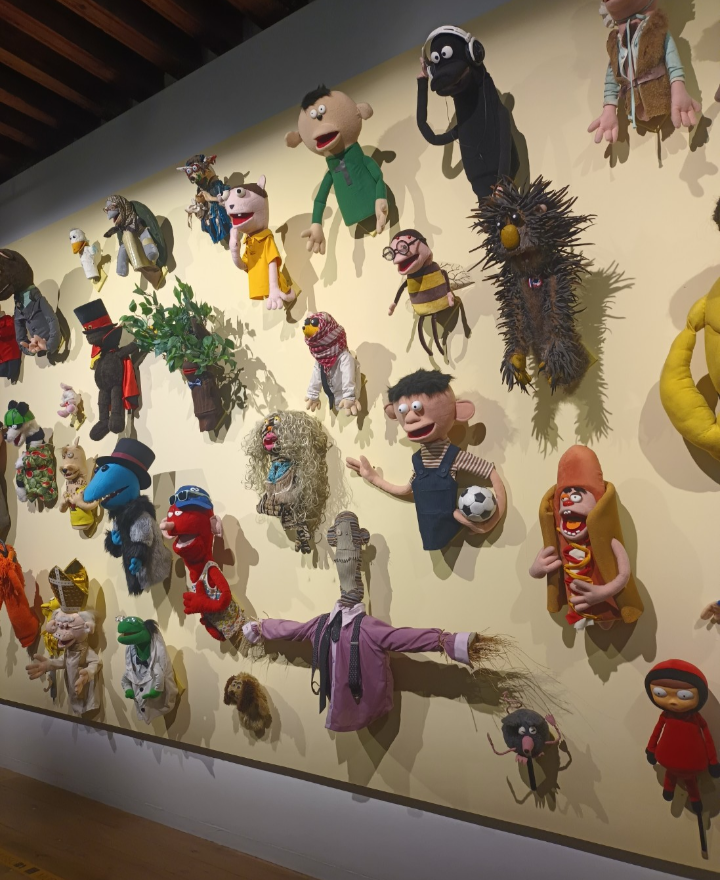
The series earned widespread critical and audience praise for its clever, absurdist humor, its original soundtrack, and its ability to tackle complex subjects in a way that felt natural to young viewers. Beyond entertainment, 31 minutos is credited with contributing to the revival of Chile's puppetry tradition, demonstrating that marionettes and hand puppets could carry a sophisticated comedic voice on national television. The show's cultural standing was further cemented in 2025 when it became the third puppet-based program to perform on NPR's Tiny Desk, an event during which it was described as an "institution of Latin American children's programming." That recognition underscored how a show born from a university friendship and a failed TV channel had grown into a defining fixture of regional youth media. The fact that 31 minutos functioned not merely as a broadcast series but as a touring musical act, performing live in both Chile and Mexico, highlighted its unique position at the intersection of television, music, and live performance. Its multi-generational appeal, evidenced by its long broadcast history across Nickelodeon, Cartoon Network, Canal Once, and Netflix, suggests a cultural footprint that extends well beyond its original Chilean audience.
Gallery




Frequently Asked Questions
What is 31 Minutos?
It is a Chilean children's comedy series that mixes live action with puppetry, structured as a satirical news broadcast anchored by the puppet host Tulio Triviño. The show also operates as a virtual band, weaving original music and absurdist sketches into every episode.
Who created 31 Minutos?
The series was developed by the production company Aplaplac, founded by Álvaro Díaz, Pedro Peirano, and Juan Manuel Egaña. They built the entire concept around Tulio Triviño as the show's central anchor and mascot.
What is the format of 31 Minutos?
Each episode is staged as a fake news program hosted by Tulio Triviño, blending comedic sketches, satirical commentary, and original musical performances. The humor is deliberately absurd, yet the show manages to explore complex topics in a way that feels natural to a young audience.
When and where did 31 Minutos first air?
The series premiered on March 24, 2003, on Televisión Nacional de Chile (TVN). It quickly became a recognizable fixture of Chilean children's television for its distinctive mix of puppetry, music, and comedy.
Why is 31 Minutos considered important in Chilean media?
The show is widely credited with helping revive Chile's puppetry tradition by transplanting it into a modern satirical format. Its original soundtrack and clever writing also made it a cultural touchstone that shaped how a generation of Chilean kids experienced television and music.
More in Television series with live action and animation 1-24
Spotted an error? Know more?
Reader corrections go straight into our review queue. Suggest an edit · How this site is sourced