
LazyTown
A children's series promoting active living through song and adventure.

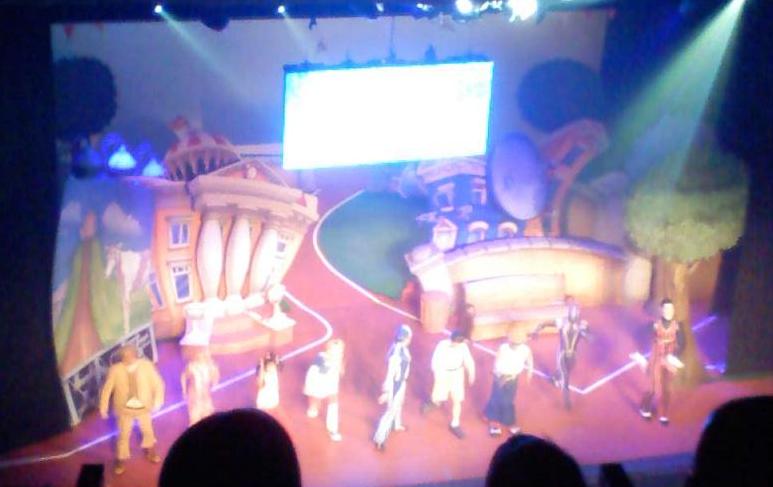
Anderson Mancini from Sao Paulo, Brazil · CC BY 2.0
LazyTown (Icelandic: Latibær) is a children's television series from Iceland and the United States, created by aerobics champion Magnús Scheving, who also plays the lead role of Sportacus. The show was made to promote healthy habits and active living. It grew out of Scheving's stage play *Áfram Latibær!*, which was itself based on a book he wrote in 1994. Though first produced in English, the series has been translated into many languages and broadcast worldwide.
Quick Facts
- Native Name
- is · Latibær
- Creator
- Magnús Scheving
- Based On
- Áfram Latibær! · Magnús Scheving
- Director
- Magnús Scheving · Raymond P. Le Gué · Kirk Thatcher · Steve Feldman · Jonathan Judge · Sigvaldi J. Karason · Óskar Jónasson
- Starring
- Magnús Scheving · Julianna Rose Mauriello · Stefán Karl Stefánsson · Chloe Lang
- Open Theme
- "Welcome to LazyTown" · Jón Jósep Snæbjörnsson
- End Theme
- "Bing Bang" (instrumental)
- Composer
- Máni Svavarsson
- Country
- Iceland
- Language
- English
- Num Series
- 4
- Num Episodes
- 78
Facts from the source article.
Lore & Background
LazyTown began as a storybook published in 1994 titled Áfram Latibær! ("Go Go LazyTown!"). A second book, Latibær á Ólympíuleikunum (LazyTown at the Olympics), was published in 1996. Later in 1995, a stage adaptation of the first book was shown in Iceland. It featured Sportacus as an energetic elf and Stephanie as an out-of-shape dancer. The puppet characters seen in the television series also appeared in human form, but Robbie Rotten did not yet exist. A third book, Latibær í Vandræðum (LazyTown in Trouble), was published in 1997, introducing Robbie Rotten to the franchise. A second stage show based on the third book titled Glanni Glæpur í Latabæ (Robbie Rotten in LazyTown) debuted in 1998, introducing Stefán Karl Stefánsson as Robbie Rotten and featuring more finalized versions of the other characters.
Reader's Guide
LazyTown was commissioned by Nickelodeon in early 2003, following the production of two stage plays and a test pilot. Originally performed in American English, it was later dubbed into thirty different languages and broadcast in over 180 countries. The series combines live action, puppetry and computer animation, making it one of the most expensive children's shows, with the cost per episode being over five times that of the average children's show. The first two seasons, consisting of fifty-two episodes, were produced from 2004 to 2007. In 2011, Turner Broadcasting System Europe acquired LazyTown Entertainment and commissioned the third and fourth seasons, consisting of twenty-six episodes, which premiered in 2013. The series focuses on a town called LazyTown, where residents are inactive until hero Sportacus and newcomer Stephanie help them become more active, opposed by the villainous Robbie Rotten. Its predominantly Eurodance soundtrack and original songs contributed to its global appeal, and various spin-offs were created, including stage productions and LazyTown Extra, a short-form series for younger children.
Did You Know?
- The series was based on a stage play Áfram Latibær!, which was adapted from a book Scheving wrote in 1994.
- LazyTown was one of the most expensive children's shows, costing over five times the average per episode.
- Robbie Rotten was portrayed by the late Stefán Karl Stefánsson, who first played the role in a 1998 stage show.
- The show was originally produced in English and later dubbed into thirty different languages.
Origins & Production
LazyTown traces its roots to a 1995 book written by Icelandic aerobics champion Magnús Scheving, which he subsequently adapted into a stage play titled Áfram Latibær!. Following two live stage productions and a test pilot, Nickelodeon officially commissioned the television series in early 2003. The show was originally performed in American English and blended live action, puppetry, and computer animation into a single production format. This hybrid approach made it one of the most expensive children's programs ever produced, with each episode costing more than five times the average children's show. The first two seasons, comprising fifty-two episodes, were produced between 2004 and 2007. In 2011, Turner Broadcasting System Europe acquired LazyTown Entertainment and commissioned the third and fourth seasons, adding twenty-six more episodes that premiered in 2013. The complete run totals seventy-eight episodes across four seasons, all rooted in Scheving's original Icelandic-language creative work.
Narrative & Thematic Structure
The series is set in a town where residents are largely inactive and unmotivated. The narrative engine is straightforward: hero Sportacus and newcomer Stephanie work to convince the townsfolk to adopt healthier, more active habits, while villain Robbie Rotten schemes to keep everyone sluggish. What makes the writing distinctive is how each child character embodies a specific negative trait—Ziggy's unbalanced diet lacking fruits and vegetables, Pixel's reclusive tech obsession, Stingy's possessiveness and self-centeredness, and Trixie's disregard for rules and other people—and gradually moves toward improvement over the course of the series. Robbie Rotten's schemes carry a built-in irony: his elaborate plots to enforce laziness require so much physical effort that he becomes one of the town's most active citizens. The soundtrack is predominantly Eurodance, with at least one original song per episode and a closing performance of 'Bing Bang' sung by Stephanie. Many tracks are reworked versions of songs from the original Icelandic stage plays.
Global Reach & Broadcast History
Although produced in English, LazyTown achieved remarkable international distribution, being dubbed into thirty different languages and broadcast in over 180 countries worldwide. In the United States and United Kingdom, it originally aired on Nickelodeon's Nick Jr. block, while Iceland's RÚV carried it domestically. After Turner Broadcasting System Europe acquired the production company in 2011, the later seasons premiered on Turner's Cartoonito channel and Viacom's Channel 5. The show also found a home on the NBCU-owned PBS Kids Sprout channel in the United States after that network acquired the rights. Beyond the main series, the franchise expanded through stage productions and LazyTown Extra, a short-form series tailored to younger children. The Icelandic title, Latibær, and its native pronunciation reflect the show's roots in Scheving's original Icelandic-language work, even though the television version was performed in American English from the start.
Character Design & World-Building
The cast blends live-action performers with puppet characters, creating a layered and visually distinct world. Sportacus, whose Icelandic name translates to 'the athletic elf,' lives in a futuristic airship above town and is powered by fruits and vegetables he calls 'sports candy'; junk food drains his energy, and a crystal on his chest glows to signal when help is needed. In the third season he gains a new integrated backpack containing food and sports equipment, and his crystal flashes red when his energy runs low. Stephanie, an eight-year-old aspiring dancer, moves in with Mayor Meanswell and serves as the audience's entry point into the town. The four puppet children—Ziggy, Pixel, Stingy, and Trixie—each represent a specific behavioral flaw, from poor diet to technology addiction to selfishness to rule-breaking. Robbie Rotten, whose Icelandic name means 'reckless crime,' is the recurring antagonist who despises Sportacus and repeatedly attempts to eliminate him from the town.
Gallery
Frequently Asked Questions
Who created LazyTown and what was the original inspiration?
Aerobics champion Magnús Scheving developed the series, drawing from a children's book he wrote in 1994 and a subsequent stage production called Áfram Latibær! The show was first produced in English but has since been translated for audiences around the world.
What is Sportacus's role in LazyTown?
Sportacus serves as the town's energetic leader and role model, consistently encouraging the younger residents to stay physically active and make healthy choices. The character is portrayed by creator Magnús Scheving himself, blending his real-world athletic background into the role.
When did LazyTown end and how long did it run?
The series premiered in 2004 and continued through 2014, spanning multiple seasons of adventures set in the fictional town. Its final season aired in 2014, bringing the show's decade-long run to a close.
Why is LazyTown considered important in children's television?
The show was deliberately designed to combat childhood inactivity by weaving exercise, nutrition, and positive habits into every episode. Its mix of song, storytelling, and adventure made healthy living feel like a natural part of fun rather than a chore.
What makes LazyTown's production style unique?
The series blends live-action performance with puppet characters and computer-generated animation, creating a hybrid visual world that sets it apart from purely animated or purely live-action kids' shows. It is a co-production between Iceland and the United States, reflecting its Icelandic roots while reaching a global audience.
More in Television series with live action and animation 1-24
Spotted an error? Know more?
Reader corrections go straight into our review queue. Suggest an edit · How this site is sourced