
BattleBots
American robot combat series originating from Robot Wars.

Tessa Bury · CC BY 4.0
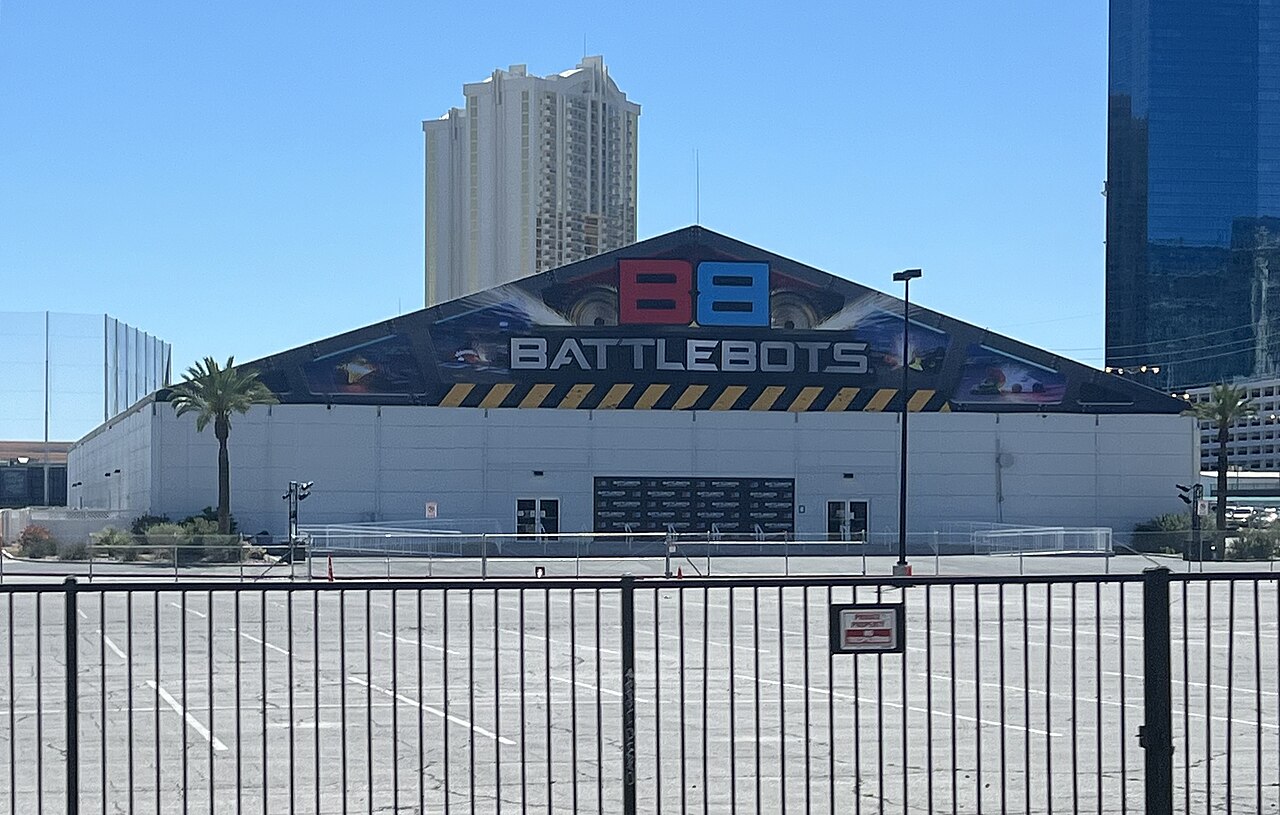
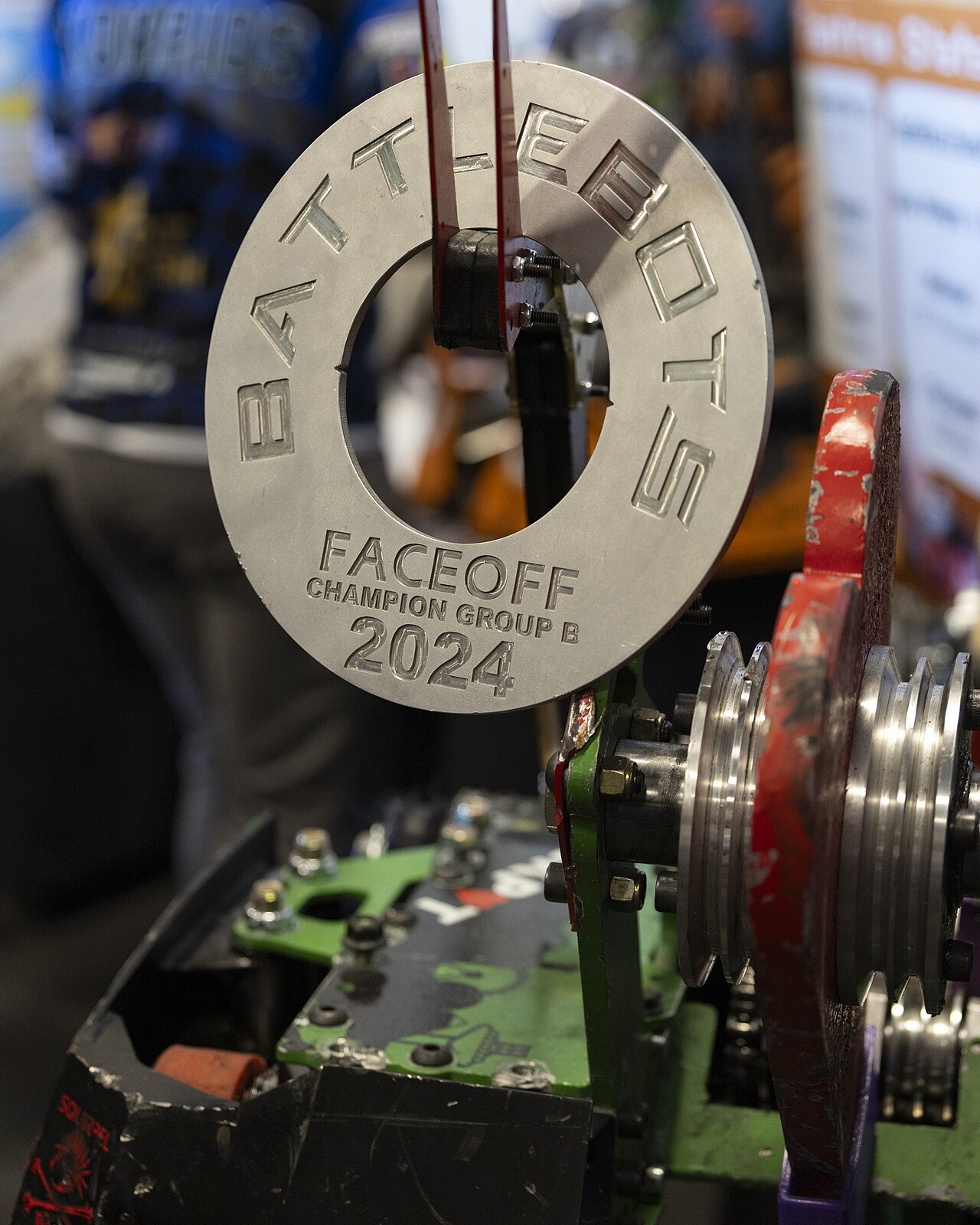
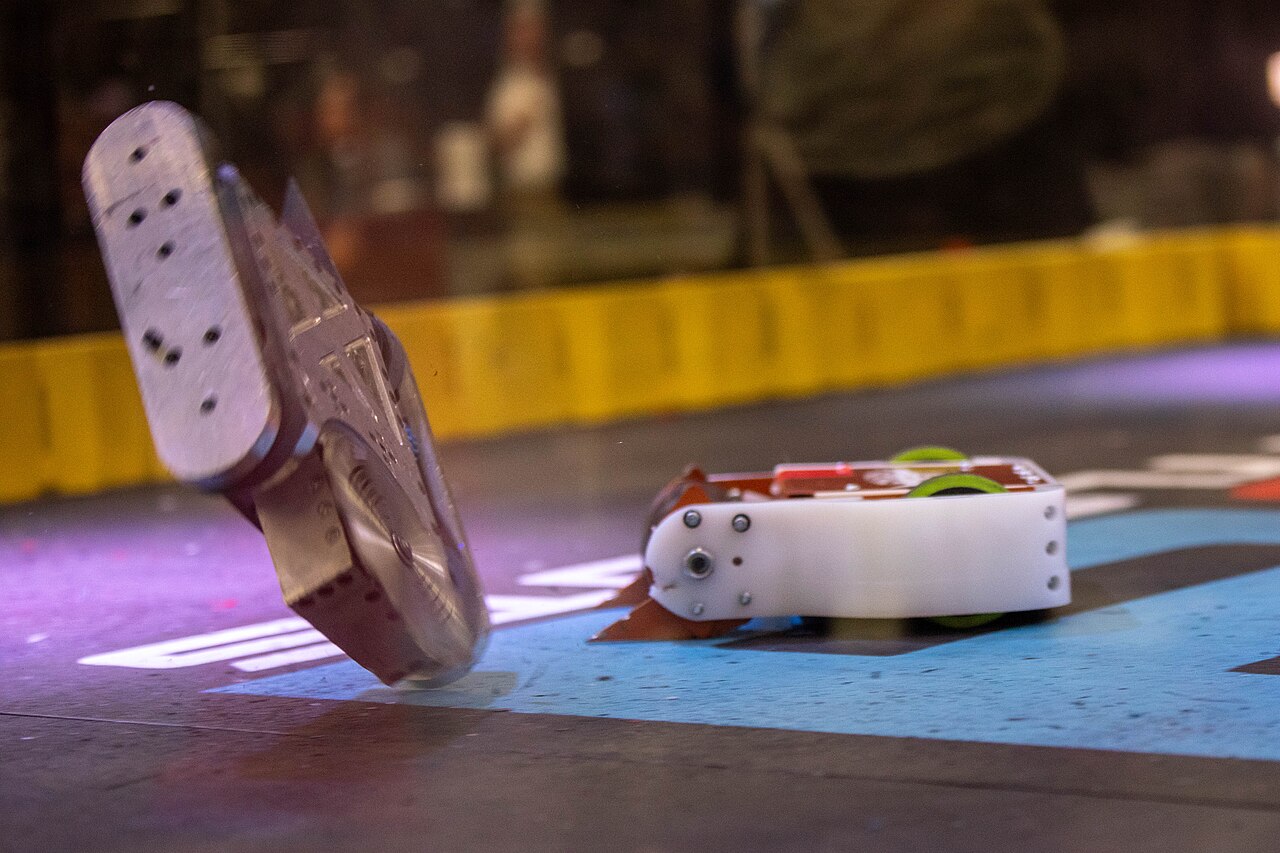
BattleBots is an American robot combat television series and company that originated as an offshoot of Marc Thorpe's Robot Wars competitions. The series features competitors designing and operating remote-controlled armed and armored machines in an arena combat elimination tournament.
Quick Facts
- Genre
- Robot competition
- Creator
- Greg Munson / Trey Roski
- Director
- Dan McDowell / Ryan Polito
- Presenter
- Tim Green / Sean Salisbury / Bil Dwyer / Molly McGrath / Samantha Ponder / Chris Rose / Kenny Florian
- Narrator
- Chris Rose / Kenny Florian
- Composer
- Vanacore Music
- Country
- United States
- Language
- English
- Num Seasons
- 12
- Num Episodes
- 191
- List Episodes
- List of BattleBots episodes
- Executive Producer
- Mack Anderson / Bradley Anderson / Debbie Liebling / Lloyd Braun / Chris Cowan / Trey Roski / Greg Munson / Aaron Catling
Facts from the source article.
Lore & Background
A second event in Las Vegas was used to pitch the competition to television networks. Lenny Stucker, a television producer, helped adapt the format for television, adding elements reminiscent of boxing and a single-elimination format.
Reader's Guide
Two spin-offs debuted on Discovery+: BattleBots: Bounty Hunters on January 4, 2021, and BattleBots: Champions on August 5, 2022. The series is significant for popularizing robot combat on television across multiple networks and decades.
From Legal Conflict to Long Beach: The Founding Story
BattleBots did not emerge from a clean slate but from a tangle of broken partnerships and contested names. Marc Thorpe had built the original American Robot Wars tournaments with financial backing from Sm:)e Communications, a New York record label. Stranded without a sanctioned platform, the San Francisco robot-building community coalesced around Greg Munson and Trey Roski, who incorporated BattleBots, Inc. as an unofficial successor to those early events. Boxing-broadcast producer Lenny Stucker attended, saw the concept as culturally timely, and restructured the format with red-and-blue corners and a single-elimination bracket. After rejections from CBS, NBC, HBO, and Showtime, a pay-per-view showcase in Las Vegas functioned as a pilot that finally persuaded a network to take a chance.
Comedy Central's Double-Edged Five Seasons (2000–2002)
Comedy Central's Senior VP Debbie Liebling pitched the show to her young-adult audience as 'sports for the nerdy person' at a time when internet culture had not yet been celebrated. The network mandated comedic sketches around the bouts, a creative compromise co-creator Greg Munson described as a double-edged sword: a bigger budget and a national outlet, but also the casting of 'hot babes' like Carmen Electra in the co-host role rather than knowledgeable personalities he had proposed. Despite those tensions, the show's cultural reach expanded—contestants landed on The Tonight Show with Jay Leno, BattleBots briefly outperformed South Park in ratings during Season 3, and licensing deals appeared. Yet Munson grew concerned that robot designs were becoming 'homogenized' as competitors perfected the sport. Comedy Central pulled the plug after Season 5.
A Thirteen-Year Hiatus and the Multi-Network Revival
This migration across three distinct networks—Comedy Central's comedy-tinged sports parody, ABC's straightforward broadcast revival, and Discovery's sustained science-and-spectacle home—demonstrated that robot combat retained broad audience appeal across more than two decades. The progression also mirrored television's own evolution, as the show's engineering spectacle and competitive drama found increasingly natural homes in the science-and-entertainment space.
Spin-Offs, Streaming, and the Pro League Horizon
Two spin-offs debuted on the streaming service Discovery+: BattleBots: Bounty Hunters premiered on January 4, 2021, introducing a bounty-based competitive structure, while BattleBots: Champions followed on August 5, 2022, raising the stakes with a different roster approach. This shift to YouTube as a primary broadcast platform, paired with the planned global rollout, marks a deliberate departure from the American cable-and-broadcast model that defined the show's earlier eras. The extended 20-episode Pro League structure suggests a more serialized, league-style format rather than the tournament brackets of previous seasons. Together, these spin-offs and the Pro League represent BattleBots' evolution from a single-network competition into a multi-format, multi-platform brand with explicit international ambitions.
Gallery


Frequently Asked Questions
What is BattleBots?
BattleBots is an American television series in which teams build remote-controlled, armored fighting robots and pit them against each other in an arena elimination tournament. It currently airs on the Discovery Channel and remains ongoing.
Where did BattleBots originate?
The show grew out of Marc Thorpe's Robot Wars competitions, essentially serving as an American spin-off of that format. It adapted the remote-controlled combat robot concept into its own distinct tournament structure.
How does a BattleBots tournament work?
Competitors design and pilot armed, armored machines that face off in head-to-head arena matches. The competition follows an elimination bracket, and the last robot standing is declared the champion.
Who competes in BattleBots?
The participants are teams of engineers, fabricators, and hobbyists who build their own custom combat robots from scratch. Each team is responsible for constructing, testing, and remotely operating their machine during live matches.
Is BattleBots still being produced?
Yes, the series is ongoing on the Discovery Channel with new seasons continuing to be filmed and broadcast. It has maintained its format of seasonal elimination tournaments featuring new and returning robot teams.
More in Television series about robots 1-24
Spotted an error? Know more?
Reader corrections go straight into our review queue. Suggest an edit · How this site is sourced