
SSC Tuatara
American hypercar successor to the Ultimate Aero.

via Wikipedia: SSC Tuatara · see source
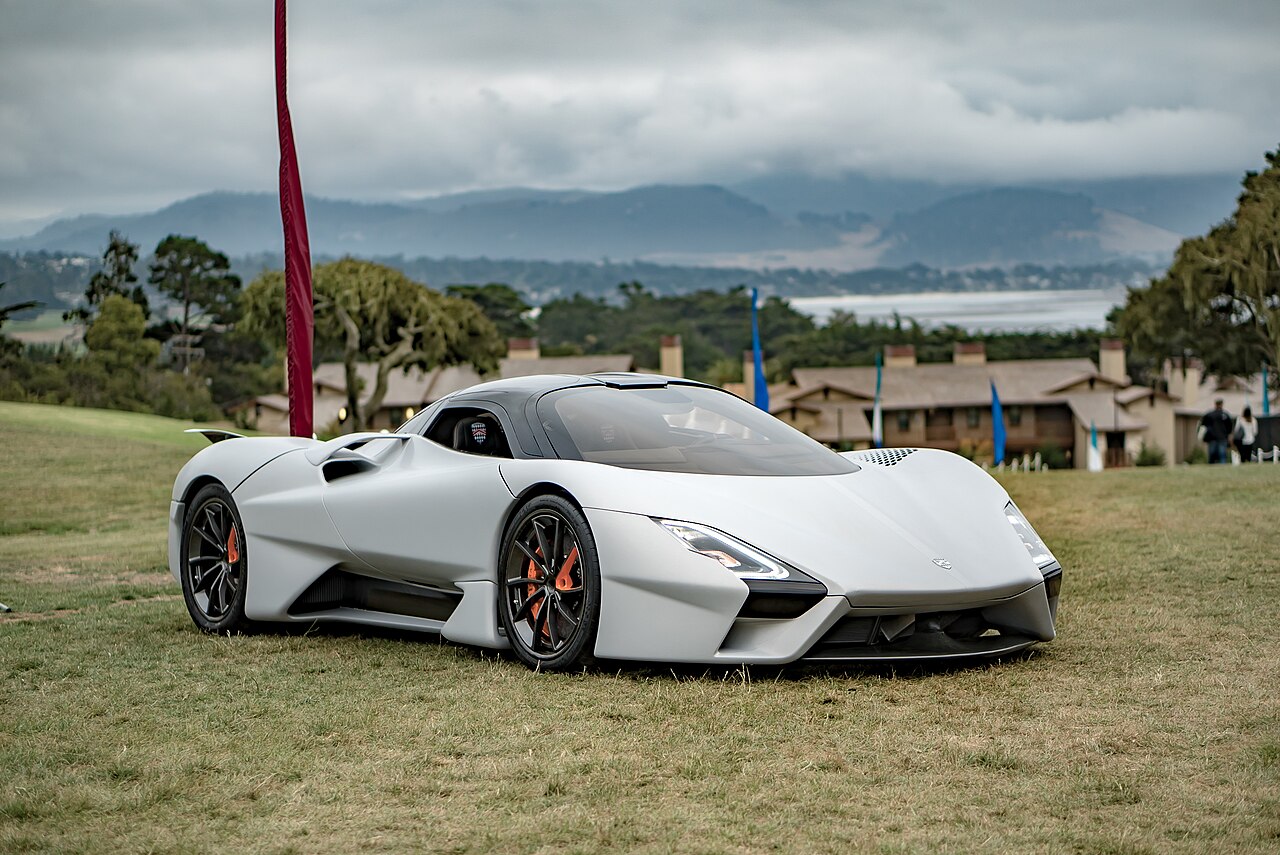
The SSC Tuatara is a sports car built by American firm SSC North America, formerly Shelby SuperCars Inc. It replaces the Ultimate Aero and was shaped through a partnership between designer Jason Castriota and SSC. The engine started as a 6.9-liter twin-turbo V8, but was later downsized to 5.9 liters to push the redline to 8,800 rpm. SSC says it makes either 1,350 horsepower or 1,750 horsepower on E85 fuel, and can exceed 300 mph. Its name comes from a New Zealand reptile noted for having the fastest molecular evolution of any creature.
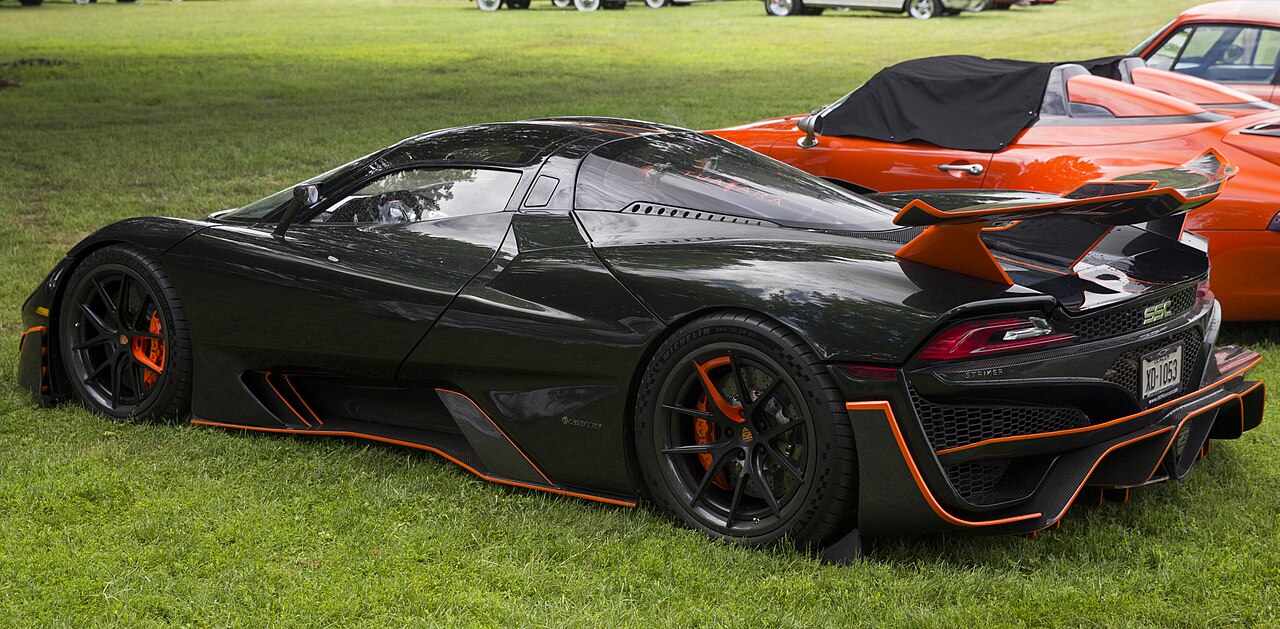
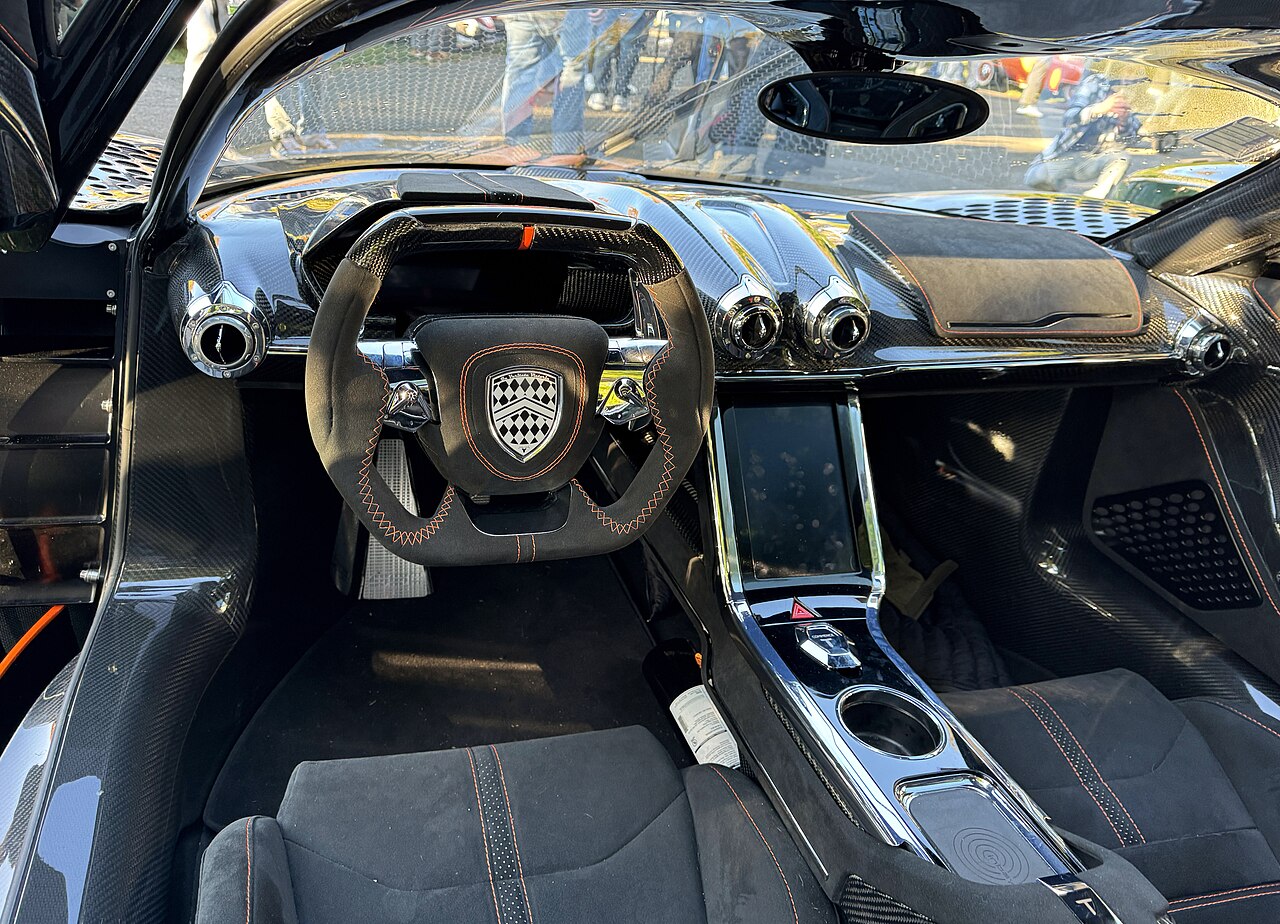
Design work on the successor to the Ultimate Aero began in 2011. A concept version appeared that year at the Pebble Beach Concours d'Elegance, and the production model was shown seven years later in August 2018. Castriota, formerly of Pininfarina, designed the car with inspiration from aerospace. Inside, there are leather and Alcantara surfaces, a touchscreen on the center console, and a configurable instrument panel with a 300-mph speedometer. Instead of side mirrors, cameras are used. SSC says the cabin fits a 6-foot-5-inch person wearing a helmet.
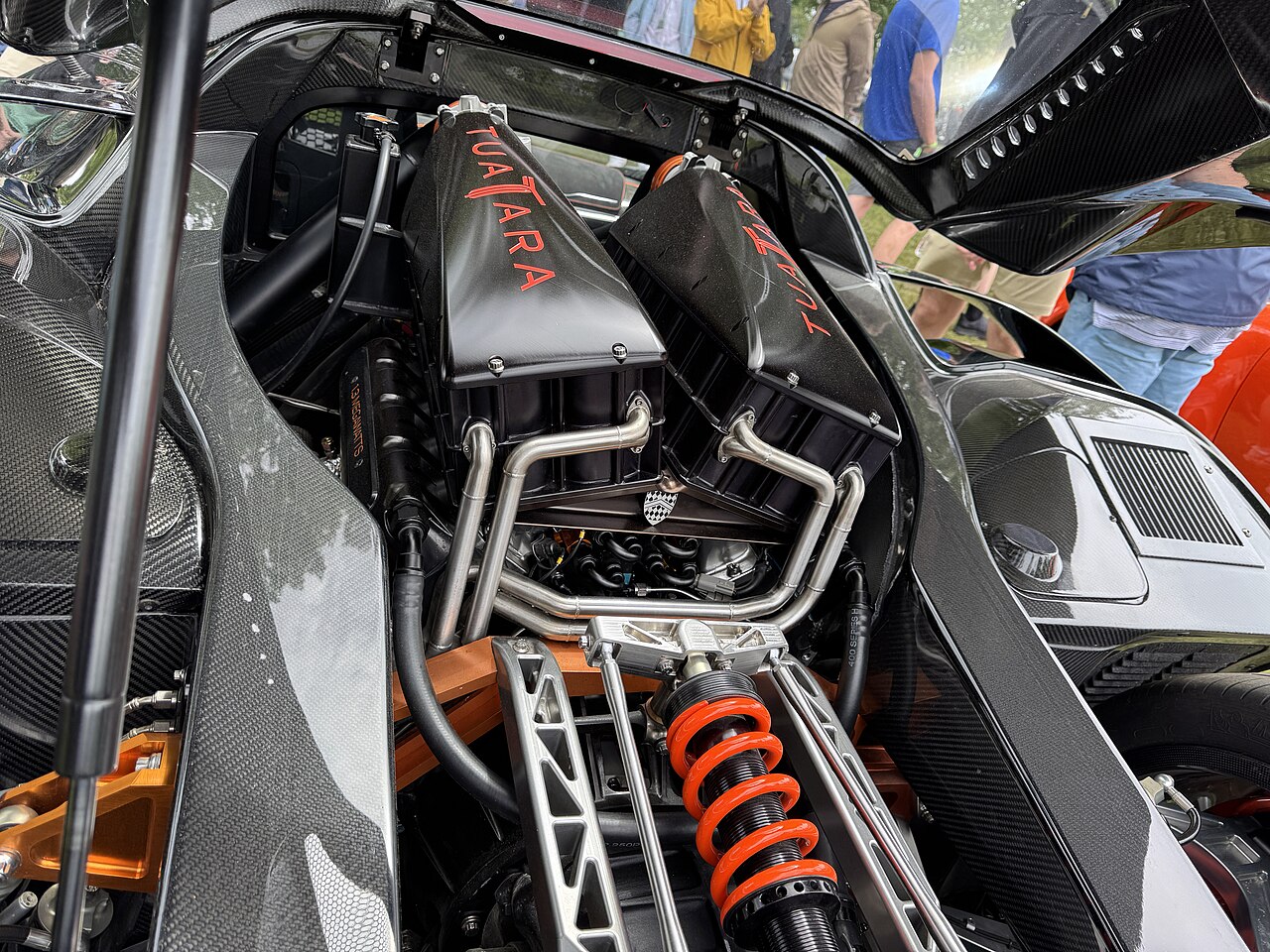
The body is carbon fiber with aluminum crumple zones and active aerodynamics. SSC claims a drag coefficient of 0.279, the lowest in its class. The engine was built with Nelson Racing Engines, while Linder Power Systems handled sub-assembly fabrication, and Automac produced the seven-speed automated manual transmission—later revealed to be made by CIMA. The engine is based on a General Motors small-block V8 architecture but uses proprietary parts, including a block cast by Nelson. Driving modes include Sport, Track, and Lift. In Sport, ride height is 4 inches front and 4.5 inches rear. Track lowers it to 2.75 inches front and 3.75 inches rear. Lift mode protects the underbody over bumps and driveways.
Production takes place at a facility in Richland, Washington, limited to 100 cars.
On October 10, 2020, SSC claimed a disputed top-speed record with the Tuatara, reporting a one-way speed of 331.15 mph and a two-way average of 316.11 mph on a closed stretch of Nevada State Route 160 near Pahrump. This was said to beat the Koenigsegg Agera RS’s 2017 record by 46.6 mph. British driver Oliver Webb was at the wheel. In a YouTube video on October 30, 2020, SSC founder Jerod Shelby said doubts had ruined the run and a re-run was needed. On July 21, 2021, SSC stated the initial attempt did not exceed 300 mph.
On January 17, 2021, the Tuatara hit 279.7 mph northbound and 286.1 mph southbound, averaging 282.9 mph over 2.3 miles at Space Florida’s Launch and Landing Facility. Owner Larry Caplin drove, and the run was verified by Racelogic, Life Racing, Garmin, and IMRA. In April 2021, the car was damaged when its trailer flipped in high winds in Utah while traveling back to Florida for another record attempt. On May 14, 2022, Caplin’s Tuatara reached a one-way speed of 295 mph over 2.3 miles at the same facility, verified by two Racelogic VBOX GNSS units, a Life Racing GPS, and a Racelogic technician.
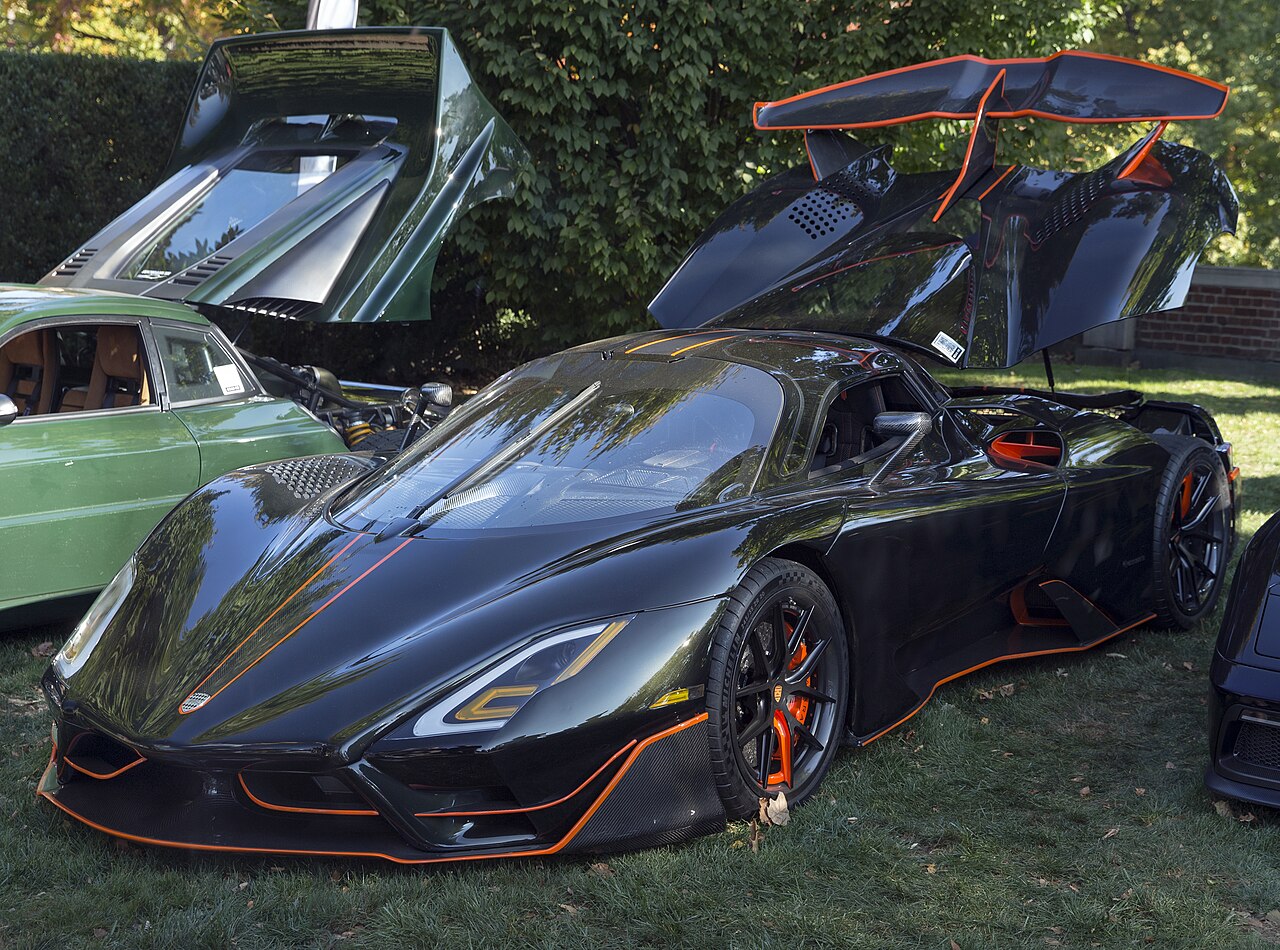
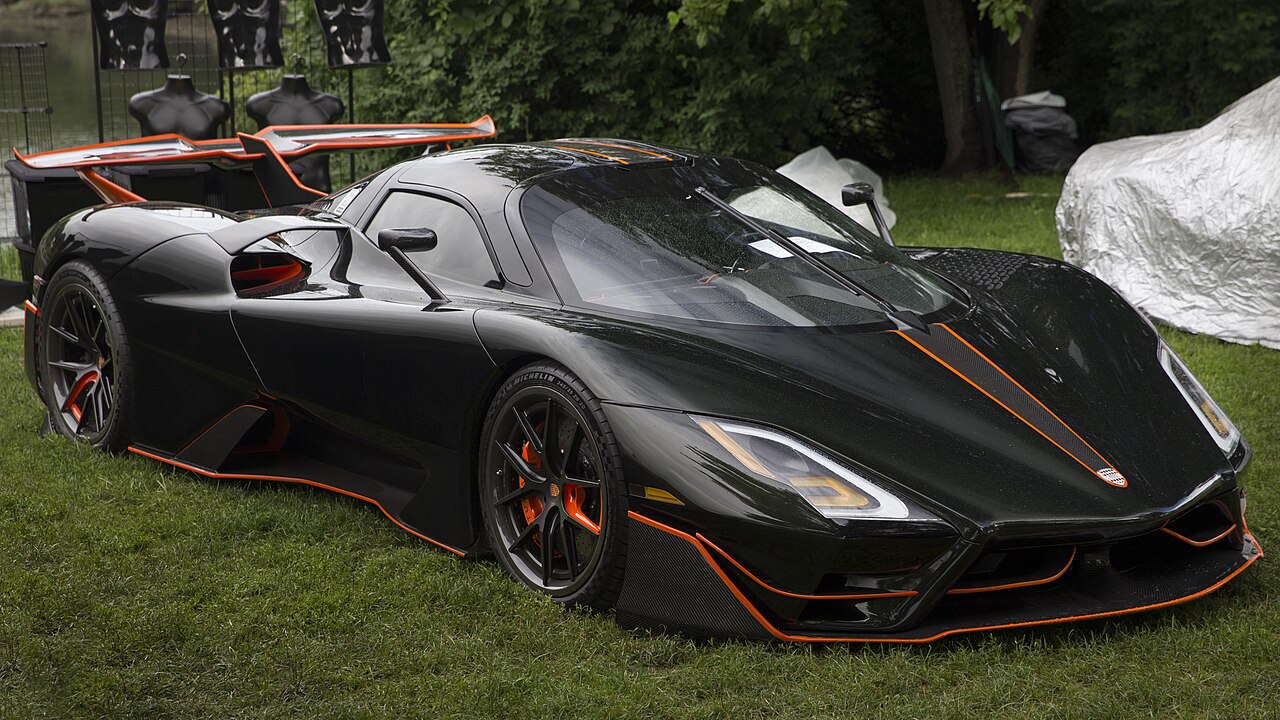
In May 2020, SSC revealed two track-focused variants. The Tuatara Striker adds aerodynamic parts for more downforce. The Tuatara Aggressor shares the Striker’s body but offers non-road-legal options like racing seats and a 2,200-horsepower engine upgrade.
CEO Jerod Shelby has hinted at a “Little Brother” supercar in early development, aimed at a lower price point to reach a wider market.
- Manufacturer
- SSC North America
- Engine
- 5.9 L twin-turbocharged V8 (initially 6.9 L)
- Power output
- 1,350 hp (1,000 kW) or 1,750 hp (1,300 kW) on E85
- Production limit
- 100 cars
- Drag coefficient
- Cd=0.279
Verified Timeline
Lore & Background
SSC began working on the successor to the Ultimate Aero in 2011. The Tuatara was previewed in concept form at the 2011 Pebble Beach Concours d'Elegance, and the production version was shown to the public in August 2018. Designed by ex-Pininfarina designer Jason Castriota, the car takes inspiration from the aerospace industry. The interior features leather and Alcantara upholstery, a touch screen on the center console, a configurable instrument panel with a 300 mph speedometer, and a camera system instead of traditional side-view mirrors. The exterior uses carbon-fiber body construction with aluminum crumple zones and active aerodynamics. SSC claims the interior can seat a 6-foot-5-inch tall person wearing a helmet.
Reader's Guide
The SSC Tuatara represents an American attempt to claim the production car top speed record, though its record attempts have been marked by controversy. On October 10, 2020, SSC claimed a disputed record with a two-way average of 316.11 mph, but later acknowledged the initial attempt did not exceed 300 mph. Subsequent runs in 2021 and 2022 achieved verified speeds of 282.9 mph and a one-way 295 mph, respectively. The car's engine, built in partnership with Nelson Racing Engines, is based on General Motors small-block V8 architecture but uses proprietary parts. With a drag coefficient of 0.279, the Tuatara is designed for extreme speed, and production is limited to 100 units at a facility in Richland, Washington. The car also has track-focused variants: the Striker and Aggressor, the latter offering a 2,200 hp engine upgrade.
Did You Know?
- The Tuatara is named after a reptile found only in New Zealand, known for having the fastest molecular evolution of any living animal.
- The engine capacity was reduced from 6.9 L to 5.9 L to allow a higher redline of 8,800 rpm.
- On October 10, 2020, SSC claimed a disputed one-way top speed of 331.15 mph, but later acknowledged the run did not exceed 300 mph.
- The Tuatara's interior can seat a 6-foot-5-inch tall person wearing a helmet, according to SSC.
- In April 2021, the Tuatara was damaged after its trailer flipped over due to high winds in Utah.
Design & Development
The Tuatara was born from a seven-year journey that began in 2011, when SSC North America started developing the successor to its Ultimate Aero. The concept first appeared at the 2011 Pebble Beach Concours d'Elegance, but the production car would not be unveiled to the public until August 2018. The design was led by Jason Castriota, a former Pininfarina stylist, who drew heavy inspiration from the aerospace world, giving the car a sleek, purposeful silhouette. The name itself is a nod to the New Zealand tuatara, a reptile renowned for possessing the fastest molecular evolutionary rate of any living animal. The exterior combines a carbon-fiber body with aluminum crumple zones and active aerodynamic elements. Inside, the cabin pairs leather and Alcantara surfaces with a center-console touchscreen that governs vehicle functions. A configurable digital cluster behind the wheel features a 300 mph speedometer, and a camera system replaces conventional side mirrors. SSC also claims the cockpit is spacious enough to accommodate a six-foot-five-inch driver wearing a full racing helmet.
Powertrain & Engineering
Under the Tuatara's carbon-fiber skin sits a twin-turbocharged V8 that was originally a 6.9-liter unit before SSC trimmed displacement to 5.9 liters, a move that allowed the engine to rev to a higher 8,800 rpm redline. The power figure is rated at 1,350 hp, or 1,750 hp when running E85 fuel, with a claimed top speed exceeding 300 mph. The engine is built in partnership with Nelson Racing Engines, which also casts the proprietary block; while the architecture traces back to a General Motors small-block V8, every component is SSC-specific. Linder Power Systems handles sub-assembly fabrication, and the seven-speed automated manual transmission is manufactured by CIMA. SSC claims the car achieves a class-leading drag coefficient of just 0.279. Three driving modes—Sport, Track, and Lift—adjust ride height to suit the situation: Sport sits at 4 inches front and 4.5 inches rear, Track drops to 2.75 and 3.75 inches respectively, and Lift raises the underbody to clear speed bumps and driveways without damage.
Record Runs & Controversy
The Tuatara's speed credentials became the center of a heated debate in late 2020. On October 10, SSC sent British driver Oliver Webb to a seven-mile stretch of closed Nevada State Route 160 near Pahrump, where the car reportedly hit 331.15 mph in one direction and posted a two-way average of 316.11 mph—figures SSC said surpassed the Koenigsegg Agera RS's 2017 mark by 46.6 mph. However, the result remained pending independent confirmation, and founder Jerod Shelby later admitted the run had been compromised by emerging doubts, vowing a re-attempt. In a July 2021 statement, SSC acknowledged the initial attempt had not actually exceeded 300 mph. A more verifiable run came on January 17, 2021, at Space Florida's Launch and Landing Facility, where owner Larry Caplin, a dentist and entrepreneur, posted a two-way average of 282.9 mph, verified by multiple satellite systems including Racelogic, Life Racing, Garmin, and IMRA. Tragedy struck in April 2021 when high winds flipped the car's trailer in Utah, damaging the Tuatara. After repairs, Caplin returned in May 2022 and recorded a one-way 295 mph, again confirmed by Racelogic and Life Racing instrumentation.
Production & Track Variants
SSC North America builds the Tuatara at a purpose-built facility in Richland, Washington, and has capped total production at just 100 units, ensuring each car remains an exclusive artifact. In May 2020, the company announced two track-oriented variants that push the Tuatara beyond its road-going remit. The Tuatara Striker adds extra aerodynamic components to generate additional downforce, sharpening cornering grip for circuit use. The Tuatara Aggressor shares the Striker's bodywork but goes further, offering customers non-road-legal options such as dedicated racing seats and a dramatic 2,200 hp engine upgrade—nearly doubling the standard output. Looking ahead, CEO Jerod Shelby has teased a project he calls the "Little Brother," a lower-priced Tuatara-related supercar still in early development. The goal is to bring the Tuatara experience to a broader audience without diluting the flagship's exclusivity.
Common Misconceptions (Editorial)
Some believe the SSC Tuatara’s engine has always been a 5.9-liter unit, but it was originally a 6.9-liter V8 before being downsized. Another common misconception is that the car officially achieved a verified top speed over 330 mph; in fact, SSC acknowledged that the October 2020 run did not exceed 300 mph. Additionally, while the car’s name sounds like it might refer to a dinosaur or a generic reptile, it is specifically named after the tuatara, a reptile native only to New Zealand noted for its rapid molecular evolution.
Why It Matters (Editorial)
The SSC Tuatara represents an extreme, American-driven pursuit of the hypercar benchmark — a 300-mph production machine built in limited numbers. Its iterative engineering, from a redesigned engine to active aerodynamics, shows how small teams can challenge legacy supercar makers, even when speed records remain controversial. The car endures as a symbol of ambition and debate in the quest for automotive speed limits.
Gallery
Frequently Asked Questions
What is the SSC Tuatara?
It's an American hypercar built by SSC North America, serving as the direct successor to their earlier Ultimate Aero model. The car was co-designed by Jason Castriota alongside the SSC engineering team.
What engine powers the SSC Tuatara?
Under the hood sits a 5.9-liter twin-turbocharged V8 (with an initial 6.9-liter variant) that produces 1,350 horsepower on regular fuel and up to 1,750 hp when running E85 ethanol.
How many SSC Tuatara cars were made?
Production is capped at just 100 units, making it an extremely limited run.
Why is it called the Tuatara?
The name references a rare reptile native to New Zealand that holds the record for the fastest rate of molecular evolution among living animals.
What's the connection between the SSC Tuatara and the Ultimate Aero?
The Tuatara was developed as the spiritual and mechanical successor to the Ultimate Aero, carrying forward SSC's mission of building extreme American performance cars.
More in Supercars 1-20
Spotted an error? Know more?
This is a living reference — every entry is fact-audited, and reader corrections feed straight into our audit queue. Suggest an edit · See this site's audit record