
McLaren P1
Spiritual successor to the McLaren F1 with hybrid technology.

Calreyn88 · CC BY-SA 4.0
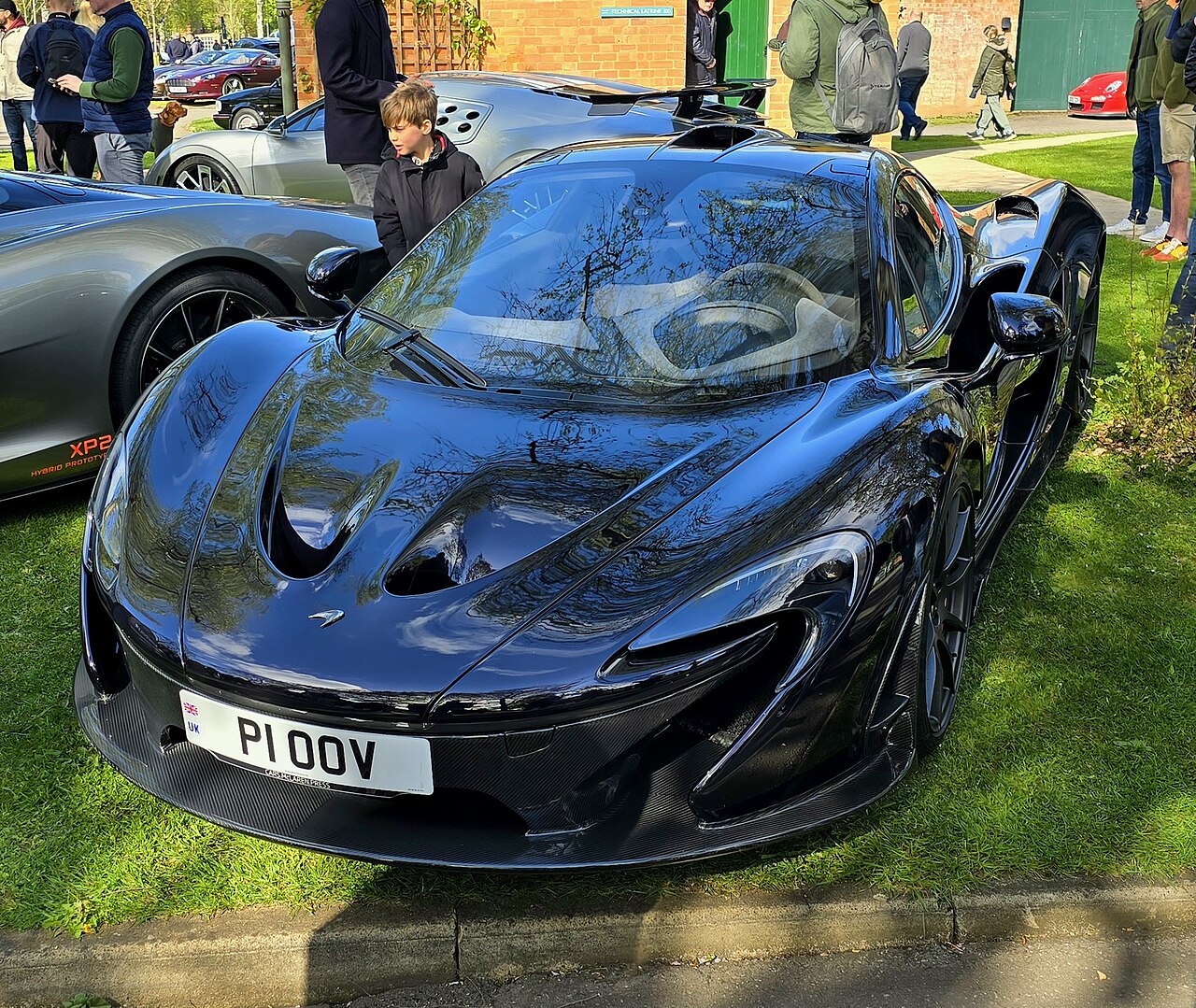
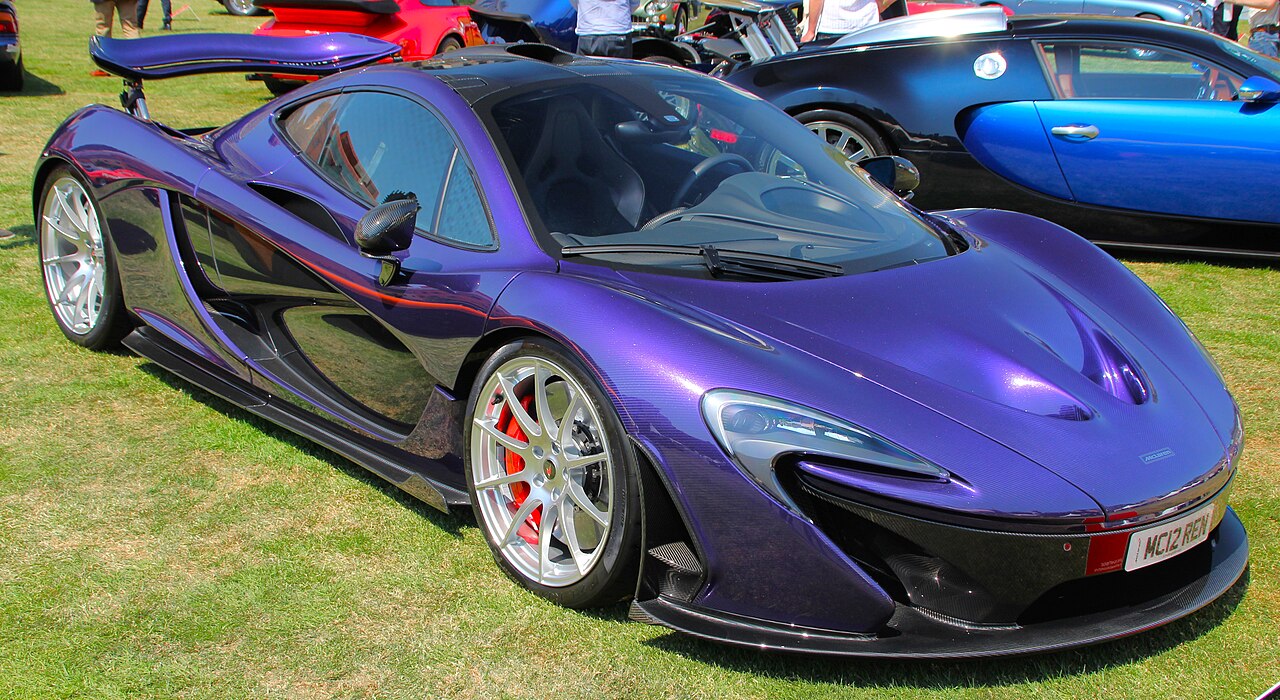
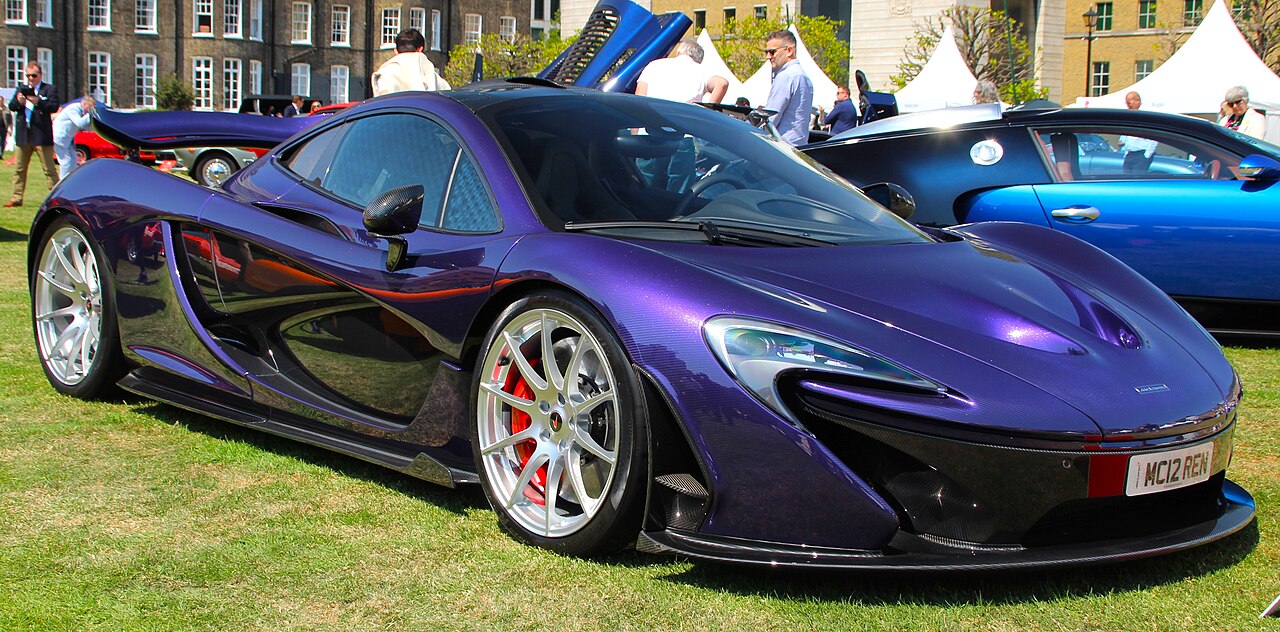
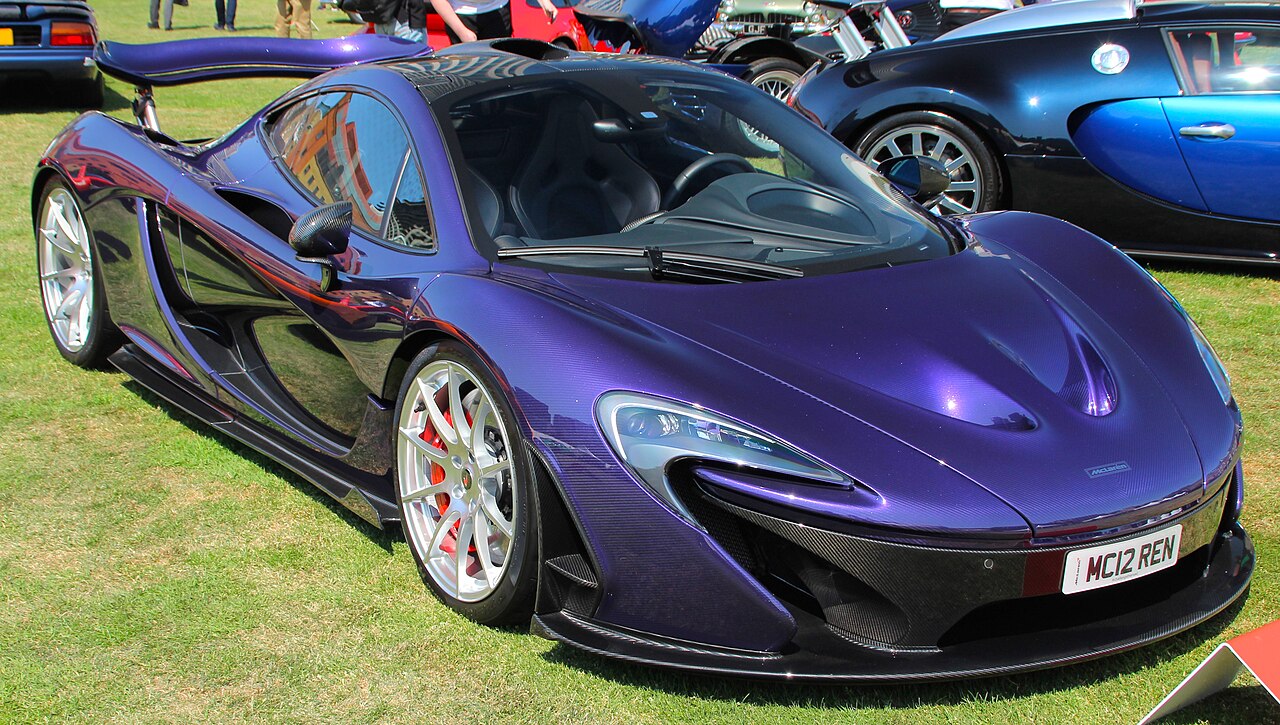
The McLaren P1, known internally as the P12, is a flagship sports car from the British manufacturer McLaren Automotive. Its exterior was designed by American Frank Stephenson, and it represents the second model in McLaren’s Ultimate Series, following the McLaren F1. Viewed as the F1’s spiritual heir, the P1 was among the first high-performance production cars to use hybrid technology. It arrived alongside the LaFerrari, while the Porsche 918 Spyder had already begun accepting orders. A concept version debuted at the 2012 Paris Motor Show, marking the F1’s 20th anniversary, and the final production car was unveiled at the 2013 Geneva Motor Show.
Like the F1, the P1 has a mid-engine, rear-wheel-drive layout and a carbon-fibre monocoque. Stephenson took design cues from a sailfish he saw while on holiday in Miami. A total of 375 units were built, with limited-run special editions like the track-only P1 GTR and the P1 LM. Some pre-production prototypes used for testing were later refurbished, modified, and sold to customers.
After the F1 ended production in 1998, McLaren Automotive (then called McLaren Cars) became inactive until 2010. The company’s first post-F1 model was the McLaren 12C, launched in 2011. That same year, McLaren announced a new factory, the McLaren Production Centre, and mentioned plans for “game-changing high performance cars.” British magazine *Autocar* reported that a flagship model, codenamed “Mega Mac,” was in development, limited to 500 units, with a 5.0-litre V8 producing 799 hp and performance aimed at the Bugatti Veyron. A teaser appeared in September 2012, followed by reports that Frank Stephenson would design the exterior and that the engine would be an upgraded M838T unit with a KERS system. The first photos of the concept emerged days before its Paris debut.
At the 2012 Paris Motor Show, the concept revealed aerodynamic details: 600 kg of downforce “well below maximum speed,” a drag coefficient of 0.34, and active aero components. Powertrain specifics were scarce, but *MotorTrend* reported a plug-in hybrid setup, consistent with earlier *car* magazine reports. McLaren clarified it had “no interest in out-Veyroning the Veyron,” instead aiming for track-focused performance. Managing Director Antony Sheriff stated the P1’s goal “is not necessarily to be the fastest in absolute top speed but to be the quickest and most rewarding series production road car on a circuit.” The production version appeared at the 2013 Geneva Motor Show.
The P1 uses a 3.8-litre twin-turbocharged V8 engine, boosted at 1.4 bar to produce 542 kW (727 hp) at 7,500 rpm and 531 lb-ft of torque at 4,000 rpm. It is paired with an in-house electric motor generating 132 kW (177 hp) and 192 lb-ft of torque. The combined output is 674 kW (903 hp) and 900 Nm (664 lb-ft). The electric motor can be engaged manually or left in automatic mode, where the car’s ECUs “torque fill” gaps in the petrol engine’s output, effectively eliminating turbo lag and creating a powerband of nearly 7,000 rpm. The car is rear mid-engine, rear-wheel drive, and uses a seven-speed dual-clutch transmission from Graziano Trasmissioni.
Power for the electric motor comes from a 324-cell lithium-ion battery pack behind the cabin, developed by Johnson Matthey Battery Systems. It can be charged by the engine or via a plug, reaching full charge in two hours. The P1 can run on petrol, electric power, or both. Its all-electric range is at least 10 km (6.2 miles) on the European cycle, and 19 miles (31 km) on the EPA cycle. In EV mode, petrol consumption is 4.8 gallons per 100 miles, so the EPA rates the all-electric range as zero. Total range is 330 miles (531 km). Combined fuel economy in EV mode is 18 MPGe, with energy consumption of 25 kWh per 100 miles and petrol consumption of 4.8 gallons per 100 miles. Running only on petrol, combined economy is 17 mpg-US (14 L/100 km), with 16 mpg-US city and 20 mpg-US highway.
The P1 incorporates Formula 1-derived features: the Instant Power Assist System (IPAS) for an instant acceleration boost via the electric motor, a Drag Reduction System (DRS) that operates the rear wing to increase straight-line speed, and a KERS system. Both IPAS and DRS are controlled by two buttons.
- Manufacturer
- McLaren Automotive
- Engine
- 3.8 L twin-turbocharged V8 plus electric motor
- Layout
- Rear mid-engine, rear-wheel drive
- Designer
- Frank Stephenson
Lore & Background
The first teaser appeared in September 2012, and Frank Stephenson was confirmed as exterior designer. McLaren stated the P1's aim was not top speed but to be the quickest on a circuit.
Reader's Guide
Its Formula 1-derived features, including IPAS, DRS, and KERS, underscored its track-focused philosophy. Its significance lies in proving that hybrid technology could enhance rather than compromise supercar performance, influencing subsequent generations of high-performance vehicles. The P1's limited production and rapid sell-out across global markets demonstrated strong demand, and its legacy endures through special editions like the track-only P1 GTR and P1 LM.
Did You Know?
- The P1's design was inspired by a sailfish Frank Stephenson saw while on holiday in Miami.
- The P1 accelerates from 0–300 km/h in 16.5 seconds, approximately 11.5 seconds faster than the McLaren F1.
- The P1 has an all-electric range of at least 10 km on the combined European drive cycle.
Design Heritage & the Sailfish Muse
The McLaren P1, developed under the internal codename P12, occupies a singular place in the British marque's history as the second car to carry the Ultimate Series badge following the legendary F1. Styled by American designer Frank Stephenson, the P1 was conceived as a spiritual continuation of the F1's philosophy, sharing its mid-engine, rear-wheel-drive architecture and carbon-fibre monocoque construction. Yet the P1's visual language drew from an unexpected source: Stephenson has spoken of a sailfish he encountered while on holiday in Miami, which influenced certain flowing elements of the exterior. The car first appeared to the public as a pre-production concept at the 2012 Paris Motor Show, timed to coincide with the twentieth anniversary of the F1's launch, before the production version was formally unveiled at the 2013 Geneva International Motor Show. As one of the earliest high-performance road cars to integrate hybrid powertrain technology, the P1 arrived alongside the LaFerrari and in the wake of the Porsche 918 Spyder, marking a new era for the supercar segment.
Hybrid Powertrain Engineering
The system allows the driver to run the car on petrol alone, electric power alone, or a blend of both, with an all-electric range of at least ten kilometres under the European test cycle. In automatic mode the car's electronic control units use the motor to torque-fill the gaps left by turbo lag, stretching the effective powerband to nearly seven thousand rpm. The P1 also borrows Formula 1-derived features including an Instant Power Assist System and a Drag Reduction System, both triggered by buttons on the steering wheel.
Track-First Performance Philosophy
McLaren deliberately positioned the P1 away from the top-speed arms race that defined rivals like the Bugatti Veyron. Managing Director Antony Sheriff made the brand's intent explicit at the Paris debut: the goal was not to be the fastest in absolute terms but to deliver the quickest and most rewarding series-production road car on a circuit. The numbers back up that philosophy. The P1 sprints from zero to one hundred kilometres per hour in 2.8 seconds, reaches two hundred in 6.8 seconds, and hits three hundred in 16.5 seconds, making it a full 5.5 seconds quicker than the F1 over the same range. The active rear wing, controlled through the Drag Reduction System, further enhances this balance between grip and speed, reinforcing the P1's identity as a car built first and foremost for the circuit.
Limited Production & Special Editions
Beyond the standard road-going model, the P1 family expanded through several special editions with smaller production runs, including the non-road-legal P1 GTR and the P1 LM, each tailored for specific motorsport applications. Several pre-production prototypes that McLaren used during its testing programme were later refurbished, modified, and offered to customers, adding a unique provenance to those particular cars.
Common Misconceptions (Editorial)
Some believe the McLaren P1 was designed for top speed, but McLaren stated the P1's aim was to be the quickest on a circuit, not to achieve the highest top speed. Others may assume it was the first hybrid hypercar of its generation, but the Porsche 918 Spyder had begun taking orders before the P1 was introduced.
Why It Matters (Editorial)
The McLaren P1 matters because it represents a pivotal moment when hybrid technology was fused with extreme performance, proving that electrification could enhance rather than compromise a supercar's capabilities. As the spiritual successor to the legendary McLaren F1, it also marks a rare chapter where a single designer—Frank Stephenson—shaped the identity of an entire legacy model, drawing direct inspiration from the natural world.
Gallery


Frequently Asked Questions
What is the McLaren P1?
The P1 is a limited-run hybrid supercar from McLaren Automotive, sitting at the top of their Ultimate Series alongside the earlier F1. It was penned by designer Frank Stephenson and entered production in 2013.
How does the McLaren P1 relate to the McLaren F1?
McLaren treats the P1 as the F1's modern heir, carrying the same driver-first, single-seat philosophy into the hybrid era. The P1 concept was revealed at the 2012 Paris Motor Show to mark the F1's 20th anniversary.
More in Supercars 1-20
Spotted an error? Know more?
This is a living reference — every entry is fact-audited, and reader corrections feed straight into our audit queue. Suggest an edit · See this site's audit record