Souda (island)
Fortified Venetian islet in Souda Bay, Crete.
Last updated
Souda (Greek: Σούδα) is a small island located in Souda Bay, off Crete’s northwestern coast. In antiquity, it was one of two islets collectively called Leukai (Λευκαί), meaning “white ones”; the other is now known as Leon.
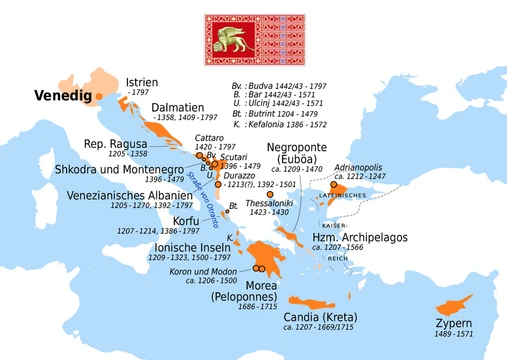
Because of its position controlling the entrance to Souda Bay’s anchorage—still a key Greek and NATO naval base—the Venetians built fortifications there. Though the rest of Crete fell to the Ottomans during the Cretan War (1645–1669), the fortress on Souda, along with those on Gramvousa and Spinalonga, stayed under Venetian control until 1715, when they too were taken by the Ottomans. During that period, the islet provided shelter for Cretan rebels.
Lore & Background
In ancient times, Souda and the nearby islet Leon were together called Leukai (Greek for 'white ones'). Their name comes from a Greek myth about a musical contest between the Sirens and the Muses. According to Stephanus of Byzantium, after losing the competition, the Sirens lost their wings, turned white, and threw themselves into the sea at Aptera ('wingless'), forming the islands in the bay called Lefkai.
During the Cretan War (1645–1669), the rest of Crete fell to Ottoman control, but the fortress of Souda—along with the island fortresses of Gramvousa and Spinalonga—remained in Venetian hands until 1715, when they too fell to the Ottomans. During this time, the island served as a refuge for Cretan insurgents.
On the northwest side of the islet, a small distance away, there is another island almost round in shape, referred to on medieval Venetian maps as Rabbit Island (known as Nisi and Leon today).
Reader's Guide
Souda island's significance lies in its strategic military position controlling the entrance to Souda Bay, a role that persisted from Venetian fortification through Ottoman conquest and into modern times as a Greek and NATO naval base. Its history illustrates the prolonged Venetian resistance in Crete: while the main island fell in the Cretan War (1645–1669), Souda's fortress held out until 1715, alongside Gramvousa and Spinalonga.
During that period, it provided refuge for Cretan insurgents. The island also carries mythological weight as one of the Leukai, formed from the Sirens' transformation after losing a musical contest to the Muses. This dual legacy—as a military stronghold and a site of ancient myth—makes Souda a notable feature of Cretan history, bridging classical legend and early modern geopolitics.
More in Stato da Màr
Sources
Compiled from Wikipedia and the sources listed below. Text from Wikipedia is available under CC BY-SA 4.0; this entry is adapted from it.
- Wikipedia: Souda (island) (CC BY-SA 4.0).
Spotted an error? Know more?
Reader corrections go straight into our review queue. Suggest an edit · How this site is sourced